

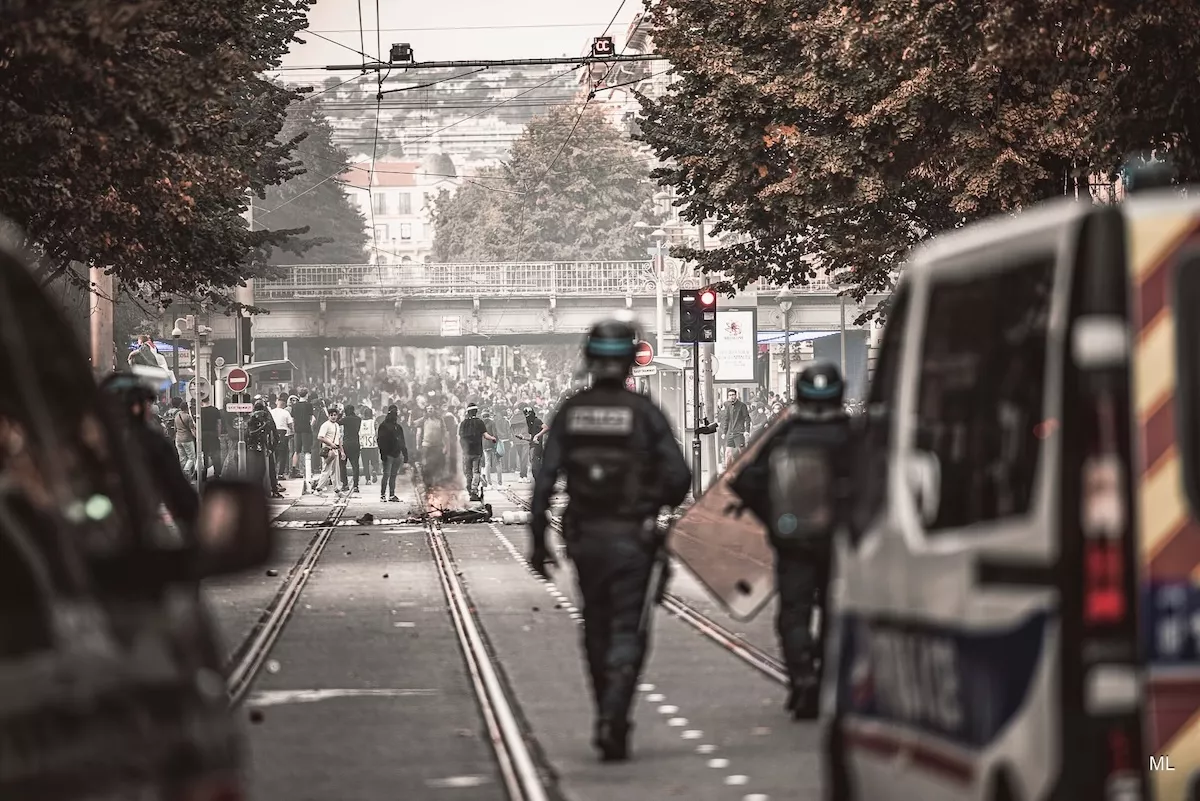
Shops were looted, police vehicles attacked and officers injured as Saturday’s demonstration against the cost of living erupted into violence in central Nice. By Sunday, prosecutors reported 85 people in police custody, including 40 minors, while Mayor Éric Ciotti demanded prison sentences and President Emmanuel Macron ordered answers over the handling of unrest across France.
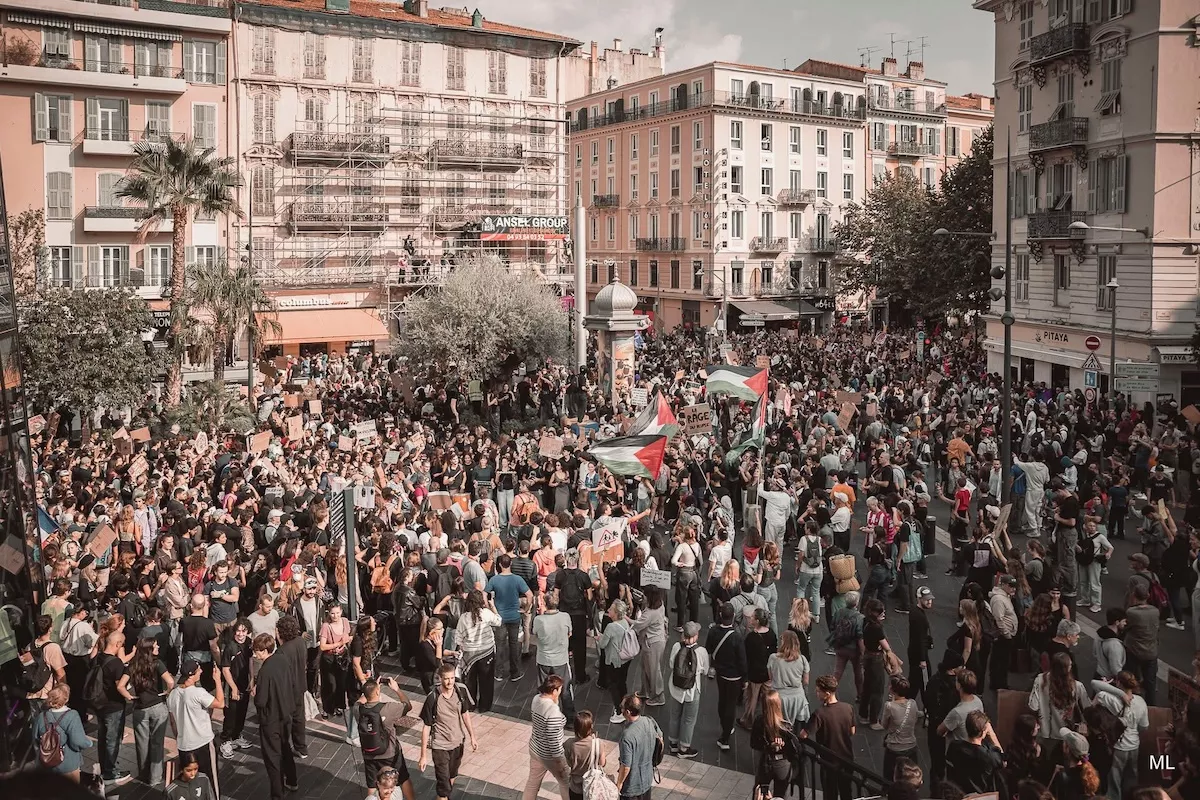
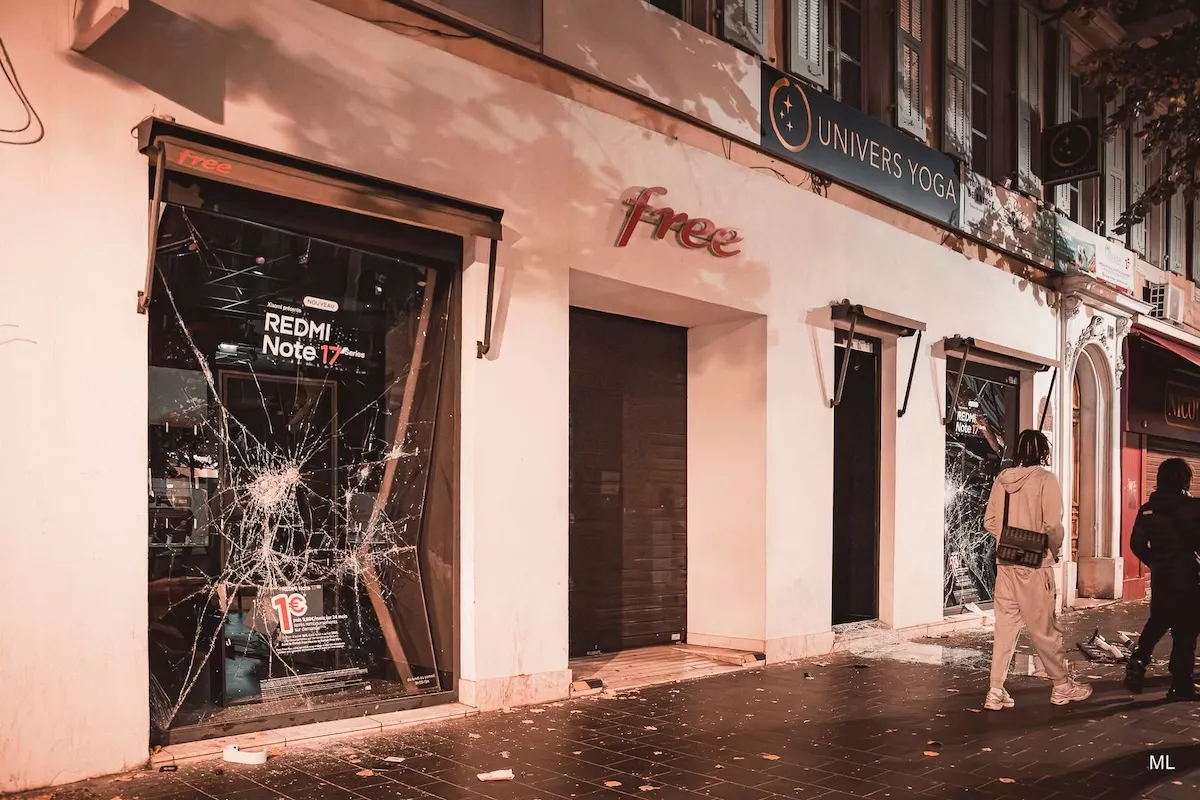
Around 3,800 people marched through the city centre of Nice on Saturday 17th October, setting off from Place Masséna. What began as a largely peaceful gathering, which the authorities said had not been declared, was later disrupted by masked groups dressed in black. According to the Alpes-Maritimes prefecture, around a dozen businesses were damaged and looted during the afternoon, most of them on Avenue Jean-Médecin, among them JD Sports, Decathlon and Micromania.
Among the most widely shared images from Nice was footage of Pierre, a Micromania employee, standing guard at the shop’s entrance with a manga character looming behind him in the window display.
The striking backdrop gave his stand an almost cinematic quality, but the violence was real: he was kicked from behind and targeted with projectiles while trying to prevent the shop from being looted. The footage has since circulated internationally, prompting a wave of support for the employee.
Arrests and injuries in Nice
Bus shelters and street furniture were damaged, bins were set alight and three municipal police vehicles were damaged, one of them outside the city’s video surveillance centre on Place du Général-de-Gaulle. A police post in the Moulins district was also targeted.
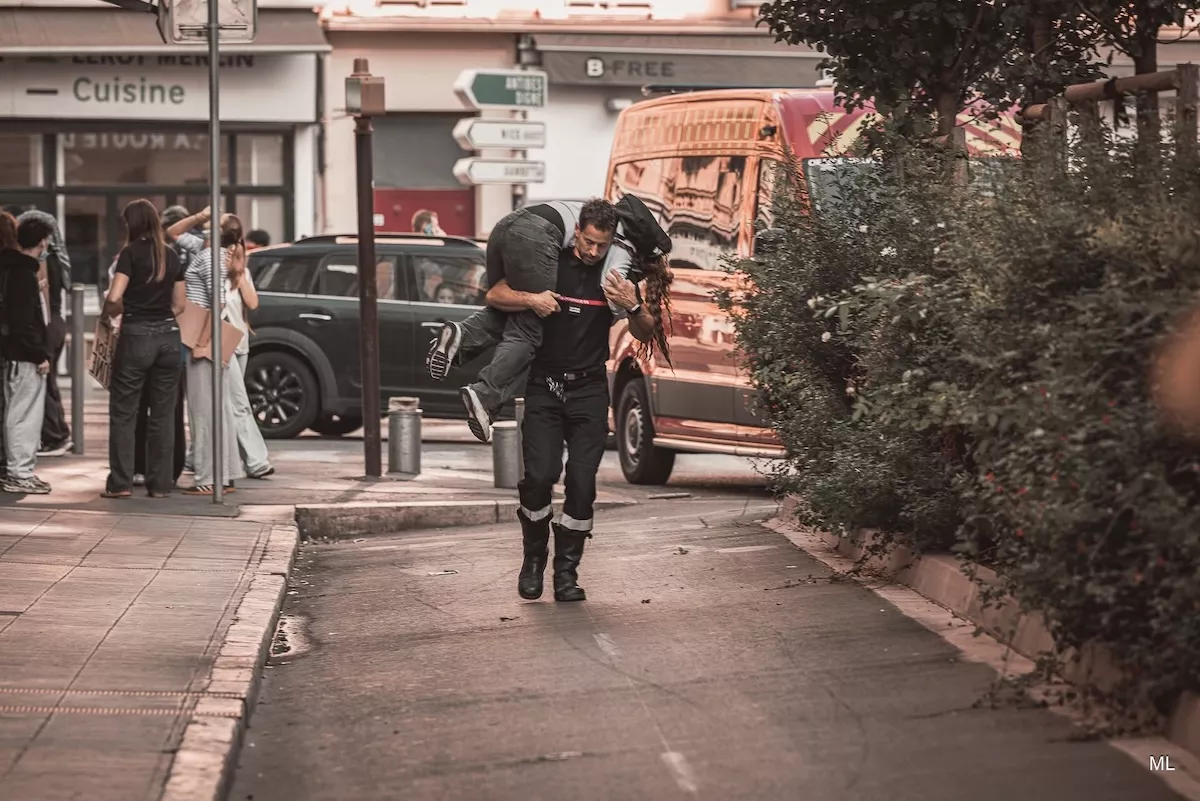
Riot police from the CRS and three units of gendarmes were brought in to reinforce officers on the ground. Nine members of the security forces were injured, and firefighters treated around ten protesters, one of whom was seriously hurt while trying to kick in a shop window.
Nice’s public prosecutor, Damien Martinelli, said 85 people had been taken into police custody, 40 of them minors.
The prefect condemned what he described as “urban violence” and urged protesters to distance themselves from the rioters.
‘The Republic is under attack’
Nice Mayor Éric Ciotti visited shopkeepers on Avenue Jean-Médecin and called for tough sentences, including prison terms for looters. “It is the Republic that is under attack,” he said, adding that those who attacked police officers should face trial in the assize court.
Local opposition figures have challenged the handling of the demonstration, arguing that the deployment failed to protect protesters, residents and businesses. Others have accused police interventions of contributing to the fragmentation of the crowd.
Nationally, Interior Minister Laurent Nuñez acknowledged on Monday a lack of anticipation and a loss of control in some cities. The turnout substantially exceeded intelligence estimates reported before Saturday’s mobilisation.
Unrest across France
The protests were sparked by anger over the rising cost of living and the decline of public services, following several weeks of demonstrations by secondary school students over teaching conditions. Unions, students, citizens’ groups and some former ‘gilets jaunes’ joined the marches.
The Interior Ministry counted 550,000 demonstrators nationwide, while organisers claimed 800,000. The ministry said 2,397 people were arrested and 997 police officers and gendarmes injured, seven of them seriously. In Limoges, much of the 19th-century city hall was destroyed by a fire that the local prefect said had been started deliberately.
The French retail federation, the Fédération du commerce et de la distribution, estimates that around 1,500 businesses were directly affected, with damage that could run to several hundred million euros.
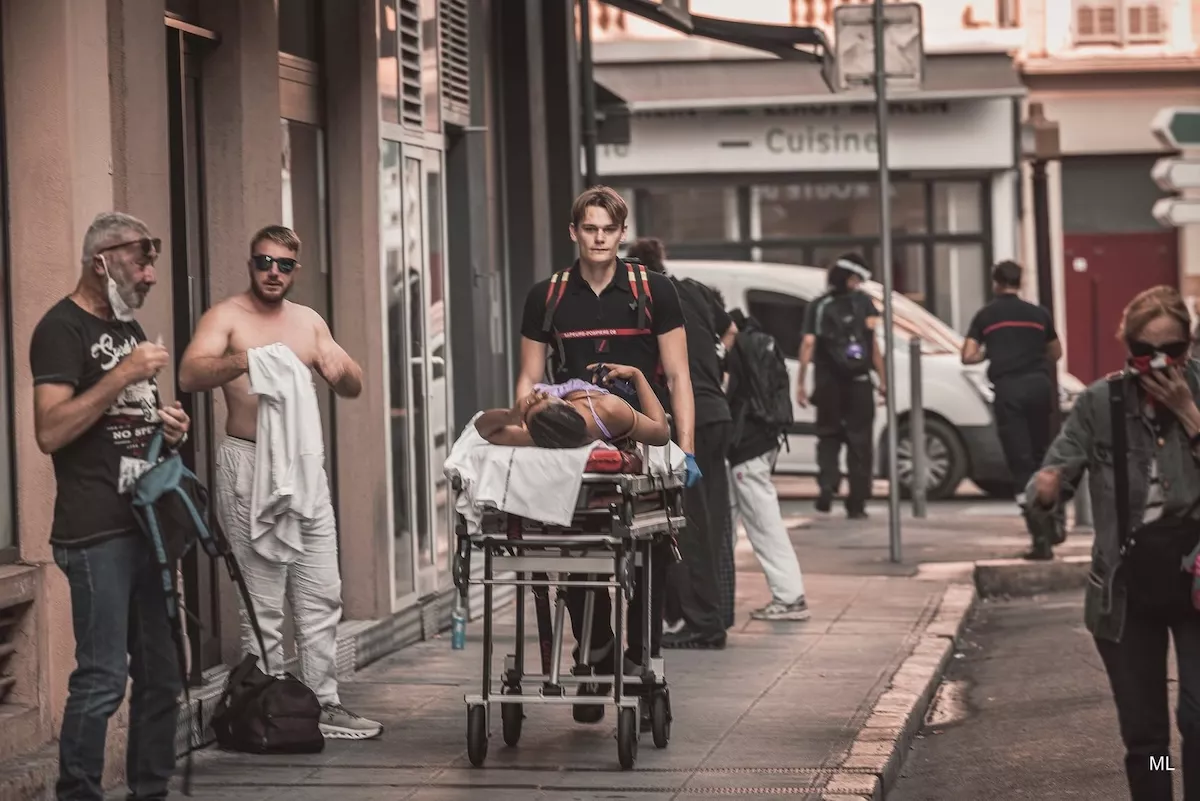
President Emmanuel Macron, who addressed the nation at 8pm on Sunday, said “Those who have destroyed must pay. Those who have looted must reimburse”. He blamed “insurrectionist elements from radical far-left groups, joined by numerous criminals”, adding that prefects could restrict or ban gatherings depending on the risks identified, but stopped short of declaring a state of emergency.
Prime Minister Sébastien Lecornu has been tasked with holding talks with political parties, unions, student representatives and local authorities.
Monaco Life is written by qualified journalists, writing original content. Sign up for our free newsletter, listen to our podcasts on Spotify, and follow us across Facebook, Instagram, LinkedIn, and Tik Tok.
All photos credit: Marc Lapollo