
Saturday 30 December, 8 pm, Monte-Carlo Opera – Salle Garnier
Concert – Piaf! Le spectacle (Piaf! The Show)
Information: +377 98 06 36 36

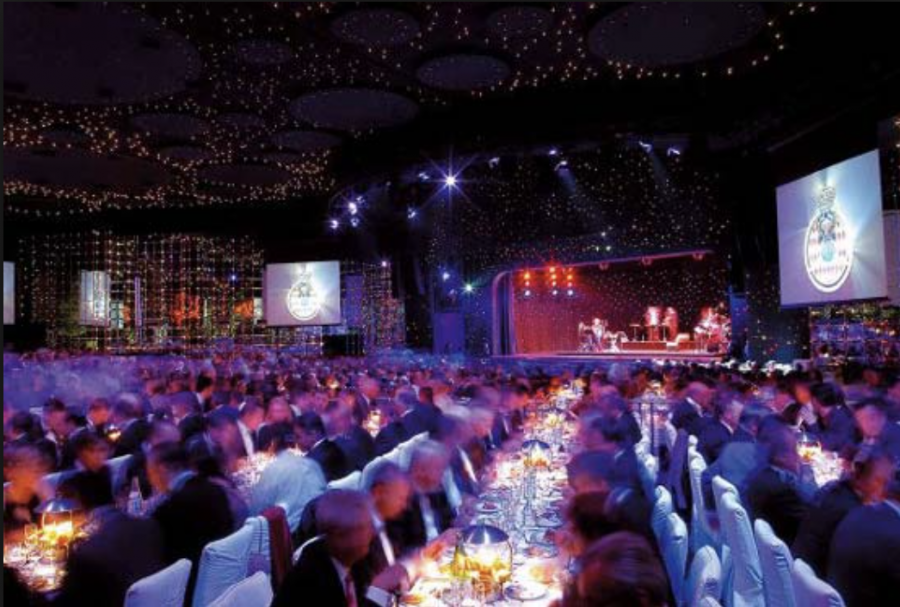
Saturday 30 December, 8 pm, Monte-Carlo Opera – Salle Garnier
Concert – Piaf! Le spectacle (Piaf! The Show)
Information: +377 98 06 36 36
Sunday 31 December, 9 pm to 3 am, Port of Monaco
New Year’s Eve festivities with DJs and fireworks at midnight
Information: +377 93 15 06 02
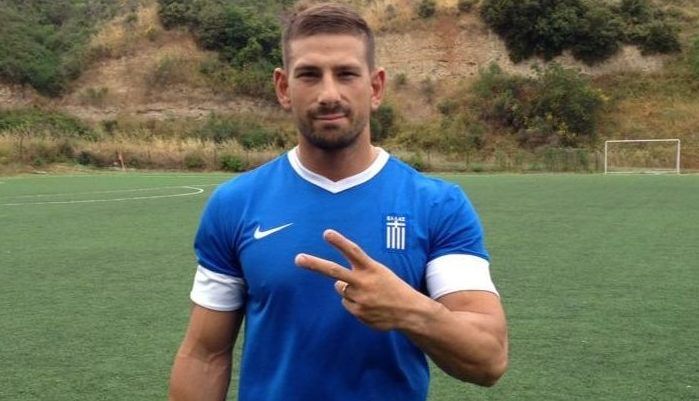

ML: There are a many “personal coaches” in Monaco. What makes a trainer successful?
CF: To be a really successful coach you need to be a role model. People need to look up to you. For example, I’ve taken on Holly Fischer, who is ranked best for age by the International Tennis Federation. After one week of training her, she told her mom, “This coach is not joking. It’s very hard, but I can get really fit with him”.
I show her the drills. I show her how to do it. I can’t just say to her “I was a champion, I was fit.” I continue to train myself, even after training my clients all day. I can’t help other people get fit and leave myself behind. It doesn’t work.
ML: You launched Elite Fitness. What makes you as a trainer different than the others?
CF: I try to train each of my clients like an athlete of his or her level. I believe that other coaches may have my knowledge but my experience from my sporting career shows me where I can push someone physically and mentally. If a client tells me, “Chris, this exercise hurts”, I respond that if you do it properly, it won’t hurt. Another coach might try and change the exercise, to make it lighter when the client starts whining. I’m not like this.
I am the coach. People don’t tell me what to do. If they don’t like it, they can find another coach. But this has never happened.
I prefer that people say I’m a hardcore coach. I’m not a trainer that will sit around watching you work on a treadmill or kicking some elastics.
ML: You say that you make training an everyday thing for your clients, that it’s not bootcamp but a long-term commitment. How do you want to develop Elite Fitness?
CF: My dream is to stay with a couple of professional athletes. It’s not about money. I want to give people what was not given to me as an athlete, which could have made a difference.
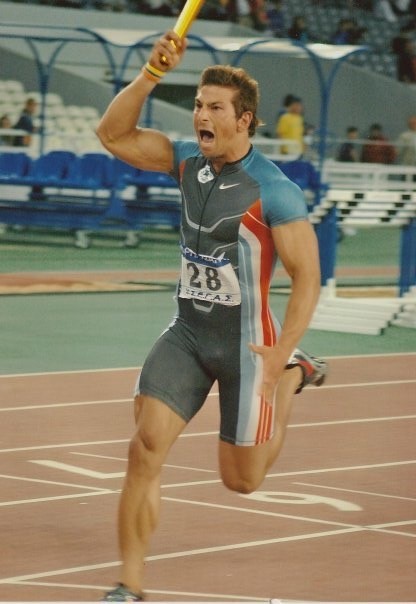 ML: How did you get involved in athletics?
CF: I started off playing football in Crete, where I grew up. I was selected for a southern Greece conference when I was 14. We won a championship and they gave us alcohol. When I went back home, I wasn’t drunk but my dad went to my coach and said “You gave beer to Chris. You are not going to see him again. It’s finished”
My parents weren’t exactly against sport, but school was more important for them. I was a decent student, 18/20, but they were not happy. They always pushed me to do more. I always had to be perfect, very good at sports, very good at school. And this was very good for me in life. I never settled for less, I always wanted more. Not to prove to other people, but to prove to myself.
My first athletic coach on the Island of Crete came and did tests in schools and saw I had talent for athletics. I was not good when I started, finishing 8th in the regional championships. I remember I said to my coach, “You told my parents that I had talent, but I’m coming last.” He replied it’s because I hadn’t trained while the other kids had already been training three years or more.
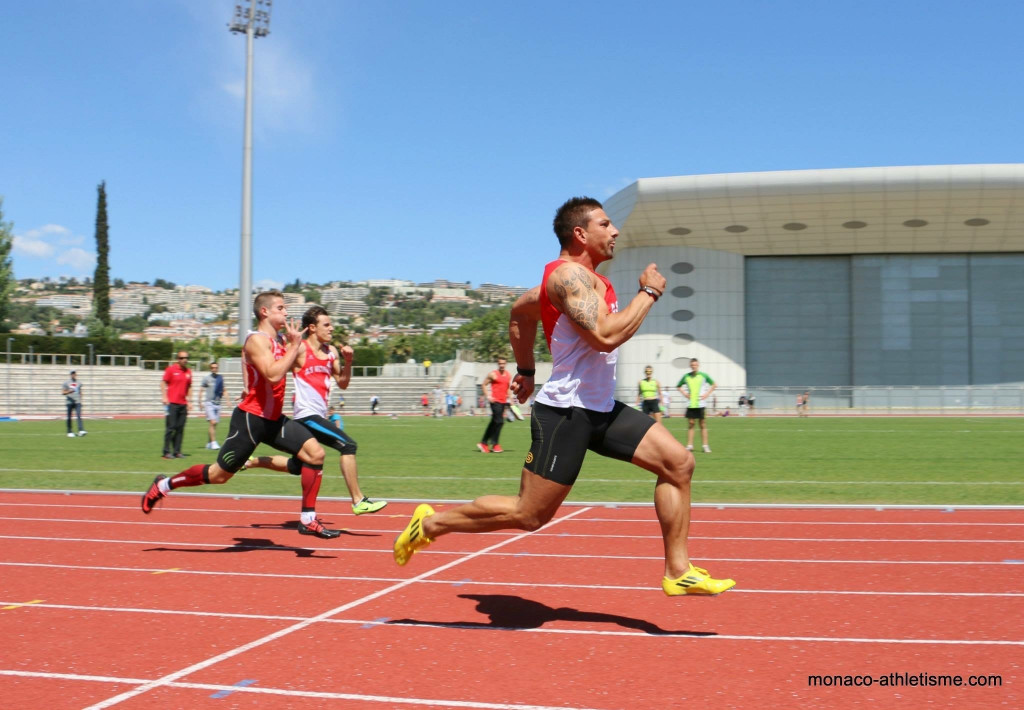
ML: And did you improve over time?
CF: The following year, at 15, I was in the medals of the Greek championship for 150m. Then I did a pentathlon and they saw that I was good at hurdles. I went on to win the Greek championships in hurdles as a junior, then won 2nd place in the 60m sprint.
I was training everyday, by this time, and was about to turn 18. I was attending a sports school, so we had double training everyday – early morning training before school and then at 5pm. I really got into it and it became an addiction.
ML: Would you say you are super competitive?
CF: I like to win, but I am a realistic athlete. I know my limits and when I compete, I like to compete more with myself than with others. In training I would have amazing times, and then in the race I didn’t perform so well, but at the end of the day, I’m not too hard on myself.
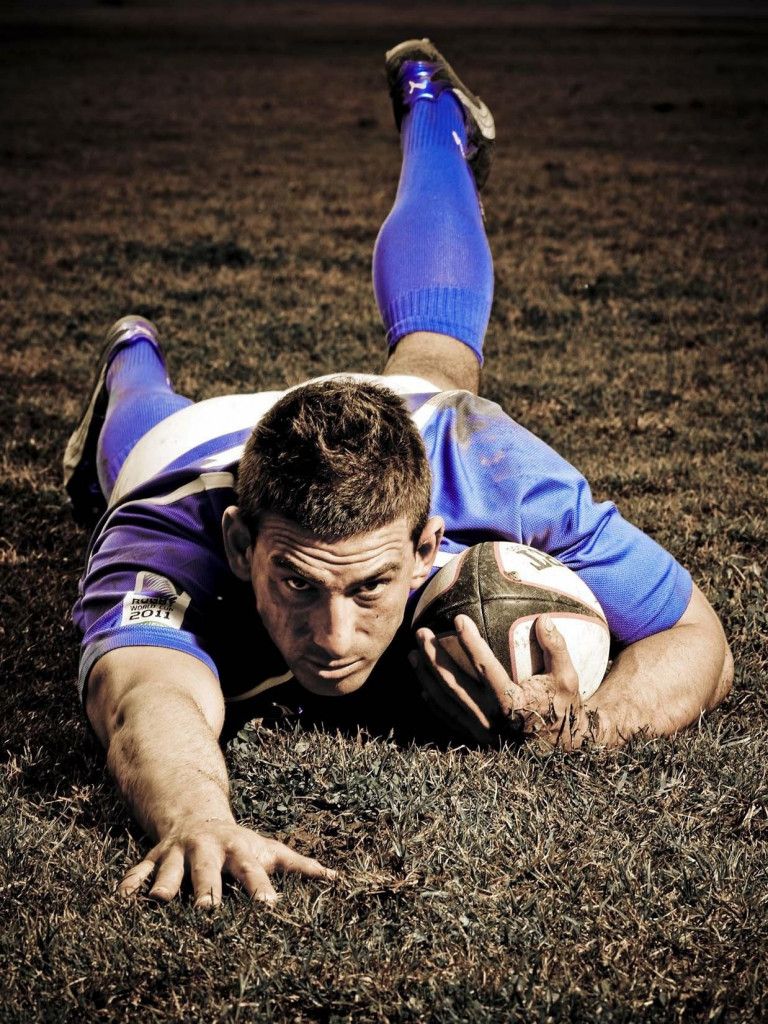
ML: How far did your career in athletics take you?
CF: In 2004, I tried out in Greece for the Olympics and made it for the 4×100, but didn’t qualify for the 100m. I was really disappointed and stopped sports for three months. When I came back, I found out that the Greek rugby team had just formed. I’d played some American football and, of course, was a top sprinter, so I was asked to join.
It’s funny because when I was in Pretoria, I saw the guys from the Blue Bulls – they were all 2m. I am not short – 1m84 – but I didn’t think that that rugby was for me. Also, at that time, the sport wasn’t very popular and when I started playing, I saw that other players had a higher level, but physically, I was above everybody.
I picked the game up quickly. A scout from England saw me playing in a friendly match, it was my 3rd or 4th, and I was asked to join the Wanderers, the 2nd team of the Northampton Saints at the end of 2006. I was thrown into the deep end and it was really tough.
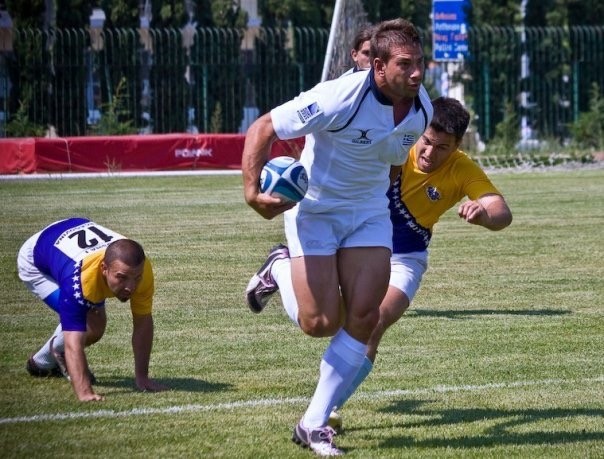
I was fast, but I was 26 with zero experience. And the others were thinking, who is this guy, a Greek, playing rugby? I stayed for 8 months then went back and played for my national team. I have 65 caps and I am still the biggest try scorer for my national teams in 7s and 15s.
ML: You went to university in California and got a master’s degree in sports science in 2004 but have been in Monaco for nearly ten years. How did you end up here?
CF: Playing against Monaco in Menton, where I scored 3 tries for Greece, Anthony Hill, the manager from Nice saw me and asked me if I’d be interested in playing for them. I stayed for 3 years.
During that time, a bunch of the guys asked me to help them train, and Dan Luger, my team mate in Nice, suggested I do some training for corporate clients in my free time. By the time I met my wife around 2010, I had to decide whether to continue to play rugby or to start my own training business. I had a good base, was not far from my country, and was starting to speak the language. Plus, my clientele was growing and I realised I could make a living so I stared Elite Fitness.
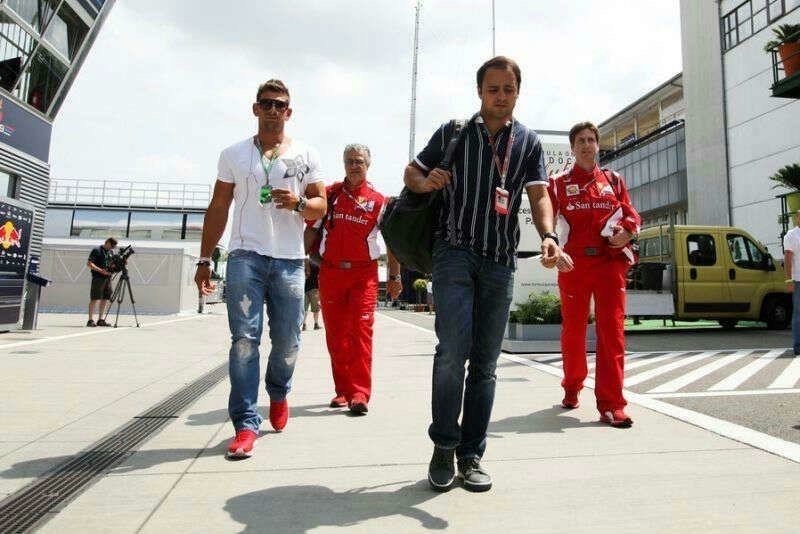
ML: How did you end up training Monaco resident and F1 Williams driver Felipe Massa?
CF: Felipe Massa saw me working with one of my clients and at the time he didn’t have a trainer. It was 2010/11 and he was struggling in Ferrari. I took him for 10 days before the Monaco GP, a year before he renewed another year with Ferrari before going to Williams.
I worked with him gradually, as it’s very hard to change the habits of an athlete at the age of 30.
Now, sometimes when he brings some of his friends along, he makes fun of them because they want to throw up. But when he started, I remember I gave him 2.5kg dumbbells to work with and he said, “No, I can’t … they’re too heavy … my shoulders … I have to drive …” He had a lot of back pain so I tried to strengthen his back. He hated to stretch. I had to change his complete mentality. It’s funny to see him train now and even some of the other drivers are surprised to see how he trains now. They never would have believed it.
ML: How is training and FI driver different from other clients?
CF: F1 training is not just physical, it’s also mental. You have to learn not to give up. You have to keep pushing, no matter what.
They need to stay fit to keep their weight down. I give guidelines about eating and keeping fit, but it’s long-term. It’s not a 4-week programme but a lifestyle. You can lose 3 kilos, but you will put them back on, and I cannot sell fake dreams to people. In the media, on billboards, everyone is misleading about being fit and having a great body.
ML: Can you tell us about training Princess Charlene?
CF: I respect her as a princess, but I train her like an athlete. An athlete’s life is very disciplined and Princess Charlene trains very hard, always setting tougher goals.
She wants to be fit for her mental strength and also physically fit for her challenges – the Riviera Water Bike Challenge next week and the upcoming paddle charity race.
Princess Charlene is a mother first, a philanthropist and athlete second, and a princess third.
Article first published May 25, 2017.
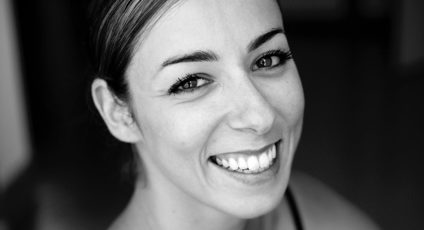
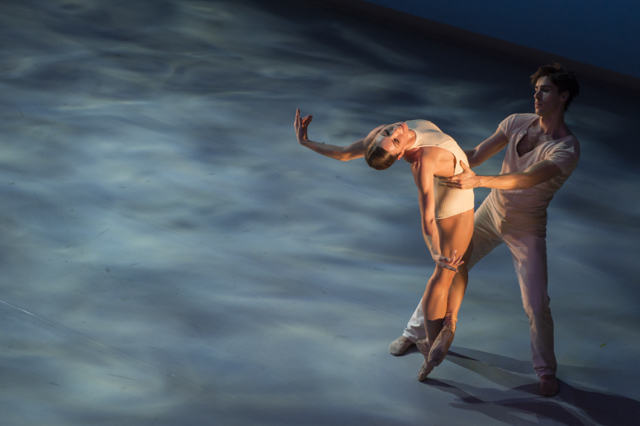
ML: You grew up in Terrebonne, an off-island suburb north of Montreal, and attended the Jeune Ballet du Québec. Did you always want to be a ballerina?
MS: Le Jeune Ballet du Quebec was a young company that was still part of my school. We got to work with choreographers, tour around the world and dance on so many different stages, which was such a great experience for us as pre-professionals.
From what I can remember, I always wanted to be a ballerina, but I also wanted to be princess so … My dream was just to make it as a professional dancer and I worked as hard as I could to reach my goal.
ML: Soon after graduating, you joined Les Ballets de Monte-Carlo. How did this opportunity happen?
MS: In fact, I never graduated from school because I didn’t finish my scholarship. I left as soon as I got a contract. In theory, I had still a year and a half to go. In the ballet world, the goal is to get a job, so when you get an offer, it’s hard to refuse this opportunity.
I came to Monaco to visit a friend of mine that got hired the year before. I wanted to see how an overseas company worked, what was the level of the dancers, and so on. I took a ballet class with the company members and it actually became an audition. I was filmed by the ballet masters and a little later in the year, I got a call back from them telling me that they would like to offer me a contract to join Les Ballets de Monte-Carlo!
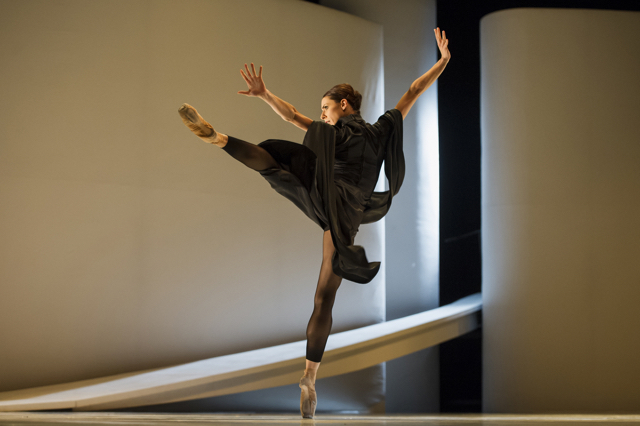
ML: You became a Soloist in 2010. Can you describe the feeling of your first solo performance?
MS: I remember my first performance like it was yesterday, it was the very first time I danced the nurse in Romeo and Juliet … I got to be Bernice, the star of the company at the time! I was so intimidated and I wanted to do well. I was so moved and I felt such an adrenaline rush … it’s very hard to put into words. I have to say that I still get that same rush a few seconds before putting my first foot on stage!
ML: How disciplined is the life of a ballerina, as a teenager and as an adult?
MS: Well, as a teenager and as an adult, the discipline stays the same. It’s an art form that requires very hard work everyday to maintain a high level of quality. The only difference for me is that as a teenager you get pushed a lot by your teachers but as an adult, you must take charge of yourself. You have to be your own motivator.
ML: How much do you rehearse every day/week?
MS: Our schedule is set. Ballet class from 10:30 am to noon, then we rehearse whichever ballet we need to prepare from 12:15 to 2 pm. After a lunch break, we rehearse again from 3- 6:30 pm from Monday to Friday and on Saturday, we finish at 2:30 pm.
ML: Does nutrition play a role in your life?
MS: I have a very specific way of eating. I avoid all processed foods and am on a high protein diet plus I take high-quality supplements. Also, I try to get a good amount of sleep to ensure my body recovery.
ML: What is something about the life of a ballerina that would surprise people?
MS: I think people have this image of us being so serious and focused, which is true… but I think they’d be surprised by how goofy we can be in the studio! Sometimes we can get pretty wild … I guess we are still kids trapped in grown up bodies.
ML: Are other dancers in the company like family?
MS: We are a kind of family, yes. We can relate to each other because we all go through the same joys, pains, deceptions and glories, and understand each other so well. It creates an immediate bond.
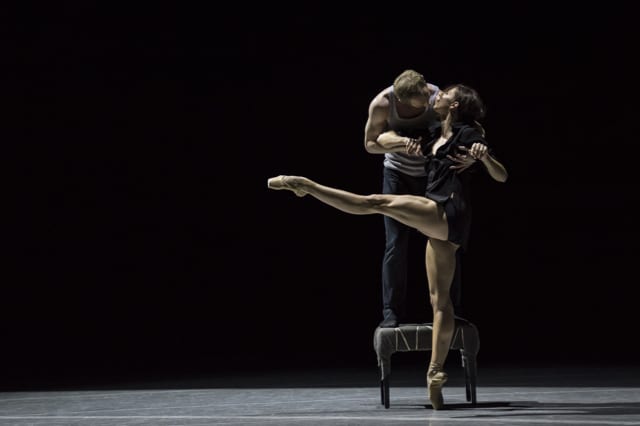
ML: What are some of your greatest performance memories?
MS: All performances are special to me. What comes to my mind though is dancing with Christian Tworzyanski in “Aleatorio” … it was very emotional because we created this ballet together and it was such an intimate moment between us on stage. It felt like we were alone in the world for a little while. These moments are precious, just thinking about it makes me emotional all over again.
ML: What have you learned about yourself as a dancer?
MS: That’s a good one. I am still learning about myself everyday … I’ve learned that I’ve become a strong woman and I am proud of what I have accomplished. I just hope to keep growing as an artist and I hope one day I can share my experiences with younger generations!
ML: You have lived in Monaco for a decade. What do you most appreciate about calling Monaco home?
MS: The weather is amazing on the Coast. We are blessed and I appreciate the fact that I can go to the sea and I can also take my car up to the mountains to go play in the snow like a real Canadian!
ML: What’s your favourite hangout in Monaco?
MS: I don’t have a favourite hangout. I quite like to have a coffee on the terrace of Starbucks on top of NiBox. The view is just so pretty.
ML: Why are Canadians unique?
MS: We are just so cool! We are tolerant, kind, peaceful, welcoming … everyone loves us.
ML: What does it mean to you to be Canadian?
MS: To be Canadian means to be true to yourself and to your roots. It’s very important to me. I love Canadians and what we represent and I carry that image proudly.
ML: What do you miss about Canada?
MS: What I miss most about Canada is … Canada! …all of it! I really love my country! It’s just in my heart.
Article first published February 8, 2017. Photos: Alice Blangero
READ ALSO: Canada 150: A Monaco Life Original Series, Stephan Bourgond
READ ALSO: Canada 150, A Monaco Life Original Series, Shale Wagman
READ ALSO: Canada 150: A Monaco Life Original Series, Valerie Chiasson
READ ALSO: Canada 150: A Monaco Life Original Series, France Shapiro
READ ALSO: Canada 150: A Monaco Life Original Series, Dr Gervais Dionne
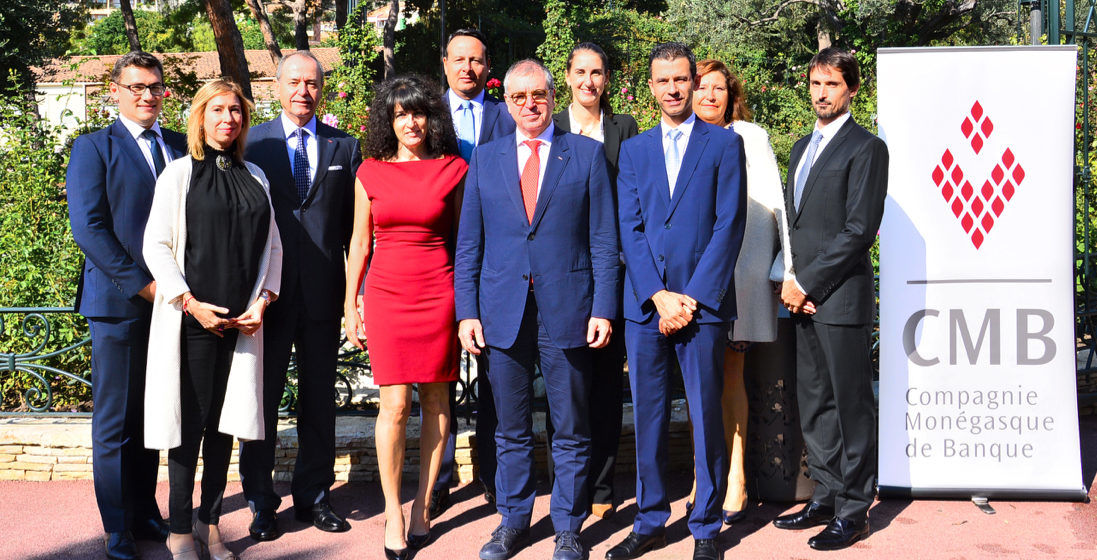

On Tuesday, October 24, Compagnie Monégasque de Banque (CMB) hosted the first session of the Philanthropy Academy, a response to a growing demand from its clientele in the Monaco area, at the Meridien Hotel.
“Philanthropy means being committed to working for the well-being of humanity,” said Werner Peyer, CEO of CMB, adding “an institution like ours has a duty to get involved in the future of the next generations”.
The six-module course covers all the topics that a philanthropist needs to understand in order to embark on the adventure: evaluation criteria, vision, opportunities, resources and partners, in short, all the ingredients necessary for the success of his or her project.
CMB’s team of lecturers is also supported by external experts and guest speakers who will shed light on topics, such as taxation specific to philanthropic activities.
For its kickoff, the first guest speaker was HE Bernard Fautrier, Vice-President and CEO of the Albert II Foundation. Other well-known personalities will come to share their experience, including Sir Stelios Haji-Ioannou, founder of the Stelios Philanthropic Foundation and of easyJet.
This new Academy will allow CMB to contribute to the education of a public that is aware of the values of philanthropy, and offer it a new investment axis for its strategies.
The Philanthropic Academy is in line with its older sister, the Academy for Women and Finance.
Building on their success, the CMB Academies will unveil new projects in 2018. CMB, the Monegasque private bank founded in 1976, specialises in investment advice. The bank offers a diversified range of tailor-made products and services, including asset and wealth management as well as financing adapted to the specific needs of each investor.

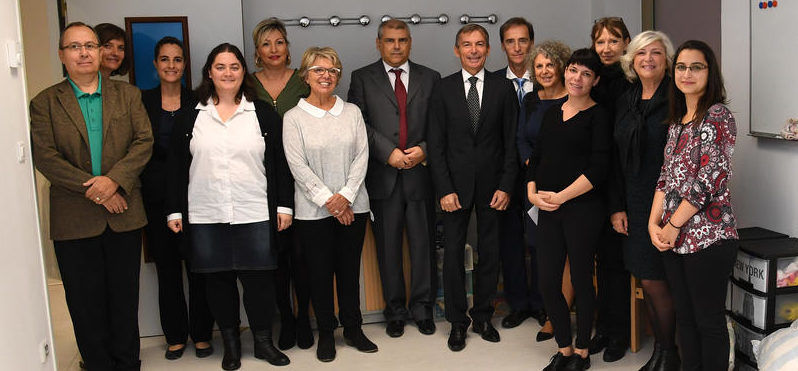

Didier Gamerdinger, Monaco’s Minister of Health and Social Affairs, has visited the staff of Centre Plati, a medical and psychological centre for children and adolescents to meet staff and to learn more about its work.
The Centre Plati supports children domiciled or schooled in the Principality who have psychological difficulties or learning disorders. The centre consists of three units: The Medical-Psychological Centre (CMP); The Partial-Time Therapeutic Reception Centre (CATTP); and the Centre for Screening for Learning Disorders (CDTA).
Dr Filippo Giulioni, a child psychiatrist, is in charge of the Medical-Psychological Centre, whose mission is to help children suffering from psychological disorders. Composed of a team of 12 people, the CMP offers individual care between the child and a therapist. Nearly 333 children and teenagers have so far benefited from an individualised follow-up by these professionals.
Parents, as decision-makers, are regularly informed about the child’s progress. “Parents are active and attentive partners in monitoring children,” the minister said.
The Partial Therapeutic Hospitality Centre and the Centre for Screening for Learning Disorders, under the responsibility of child psychiatrist Dr Marcelline Renaud-Yang, treat 200 children a year referred by a school doctor, a city doctor or the Princess Grace Hospital.
The CATTP is made up of a multidisciplinary team of 11 people and carries out treatment groups with other young people. Created at the end of 2012, the Centre for Screening for Learning Disorders now has 28 therapeutic groups, which makes it possible to anticipate and detect learning disabilities of children with socialisation difficulties.
Dr Renaud-Yang says that this is about employing techniques that help the child to decrypt his emotions to better focus.
Sign up for the Monaco Life email newsletter.