What Monaco’s record-breaking GDP per employee really says about its economy

Monaco now produces more economic output per worker than ever before, with new data showing GDP per employee hit €152,277 in 2024. It’s a striking number — not only because it’s a record, but because of what it says about how Monaco’s economy really functions.

In most countries, GDP per employee is a useful benchmark for productivity — how much value each job generates in real terms. But in Monaco, where the population is small, space is limited, and the labour market is highly specialised, that figure becomes even more revealing.

According to the latest figures from IMSEE, Monaco’s total GDP in 2024 reached €10.28 billion, an 8.8% increase over the previous year. Employment also grew, with more than 60,700 jobs recorded in the private sector. But GDP grew faster than the job count — and that’s why output per employee has risen so sharply.

Monaco’s productivity is built on a few powerful sectors

More than half of Monaco’s GDP is concentrated in three sectors: scientific and technical services, financial and insurance activities, and wholesale trade. These aren’t large employers by headcount, but they generate enormous value.

The scientific and technical sector — which includes business services, consulting, legal, accounting and administrative support — produced over €3 billion in GDP. The financial sector, meanwhile, expanded by nearly 12% and added another €197 million in value. These are the kinds of industries that don’t need thousands of workers to make an impact. They need expertise.

That’s what gives Monaco its productivity edge: high-value services delivered by highly skilled professionals — many of whom commute daily from France and Italy to take up roles in banking, consulting, biotech, and other specialist fields.

This isn’t about wages — but it hints at earning potential

It’s important to understand what GDP per employee is not. It doesn’t tell you how much people are paid. It doesn’t reflect wealth per person. Instead, it’s a measure of how much economic output is being generated, on average, by each person working in the country.

But in a place like Monaco, where personal and institutional wealth go hand in hand with global finance, asset management and elite professional services, a high GDP per employee often does suggest there’s strong potential for high salaries, capital investment, and continued economic resilience.

It also helps explain why Monaco consistently outpaces larger neighbours. Since 2015, Monaco’s economy has grown by nearly 53% in real terms — compared to just 11% in France and 13% in the eurozone.

Talent, not territory

The 2024 figures reinforce an economic model that’s already familiar to residents and investors: Monaco does more with less. It has no industrial sprawl, no agricultural sector, and very little land to build on. What it does have is a compact economy built on intellectual capital, financial strength, and cross-border labour.

That model comes with challenges — notably in housing, transport, and infrastructure — but it also creates a system where even modest increases in headcount can translate into large gains in GDP.

It’s an economy built for performance, not volume. And the data suggests it’s working.

See also: 

Monaco GDP surpasses €10 billion for first time

Stay updated with Monaco Life: sign up for our free newsletter, catch our podcast on Spotify, and follow us across Facebook,  InstagramLinkedIn, and Tik Tok.

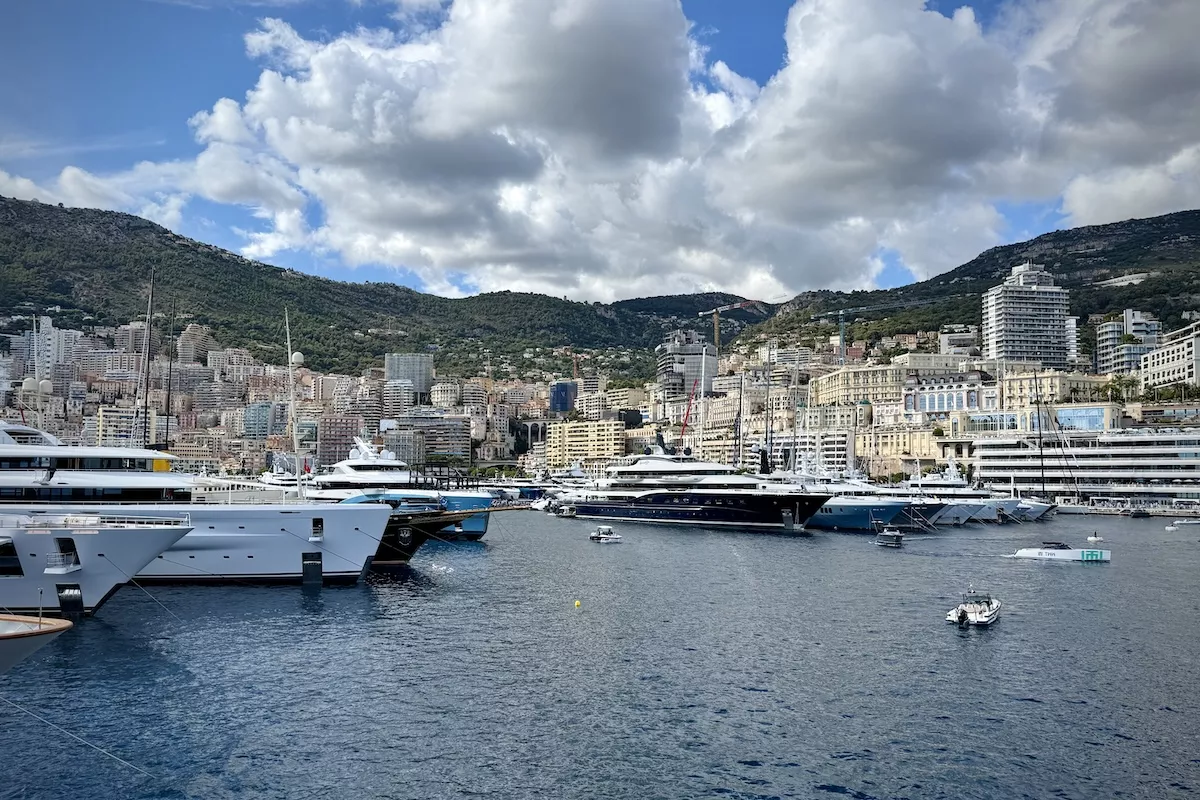
Photo credit: Cassandra Tanti, Monaco Life
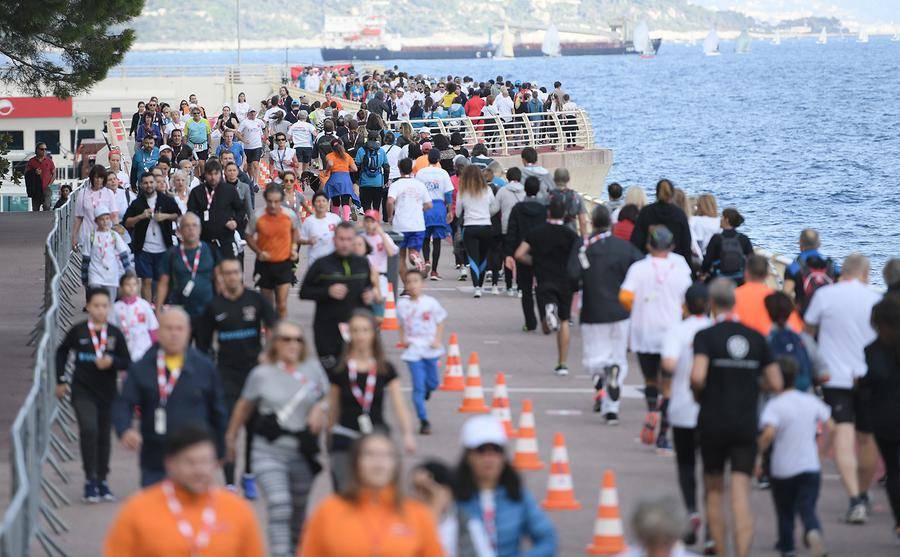
Monaco’s No Finish Line to welcome 100-strong Nice team running for inclusion and equality

© Directorate of Communication / Manuel Vitali

Over 100 runners and walkers from Nice are preparing to take on Monaco’s No Finish Line challenge, which kicks off on 15th November. But this is no ordinary running team. United under the name Main dans la Main pour le Bonheur de Chacun (Hand in Hand for Everyone’s Happiness), this diverse group — from elite athletes to everyday walkers — is lacing up not just for the kilometres, but for a powerful cause: supporting athletes with disabilities and promoting inclusion through sport.

Behind the initiative are two local associations: ANICES, which works with visual impaired young people, and ALPA Côte d’Azur. Together they’re raising funds for two causes close to their hearts – a carbon fibre brace that will allow parasport athlete Olivier Zampatti to keep running, and a special trip for young visually impaired athletes from ANICES.

For Zampatti, the event represents something deeply personal. Four years ago, his life changed overnight. He was a promising football player playing at a high level in the United States, when he suffered a serious knee injury. But it was what happened next that truly tested him… a medical error during surgery severed a branch of his sciatic nerve, resulting in drop foot syndrome.

“I had to stop everything,” he recalls. The injury could have ended his sporting dreams, but Zampatti refused to give up. Using just a plastic brace, he’s already completed incredibly difficult challenges, including an Iron Man triathlon and the Nice Marathon.

For now, he’s planning to run a marathon distance every single day throughout the week at No Finish Line. “As someone with a disability, I want to prove that anything is possible,” he said. “Today my goal is to continue my sporting challenges in the best possible conditions and in complete safety. For that, I need a custom-made carbon brace designed specifically for sport.”

Because carbon wears out quickly, he’ll need to invest in several adapted braces, which is where the fundraising comes in.

Sébastien Filippini, president of ANICES, sees the event as something bigger than just kilometres clocked. “Every metre covered is a victory, every smile is a step towards a more caring society,” he said.

The young visually impaired athletes his association supports, aged 10 to 15, are coached by Laurence Bertrand. If the fundraising succeeds, they’ll experience an unforgettable trip to compete in Torball.

No Finish Line, now in its 26th year, sees participants rack up as many kilometres as they can on a looped course in Monaco. Prince Albert II traditionally launches proceedings at the opening ceremony. Gilles Veissiere, president of APLA, summed up the spirit: “Reaching out is such a simple thing when people are genuine. This adventure makes my heart sing.”

Stay updated with Monaco Life: sign up for our free newsletter, catch our podcast on Spotify, and follow us across Facebook,  InstagramLinkedIn, and Tik Tok.

Photo credit: Manuel Vitali, Government Communications Department 

Harry James explores feminine strength at Quai des Artistes exhibition

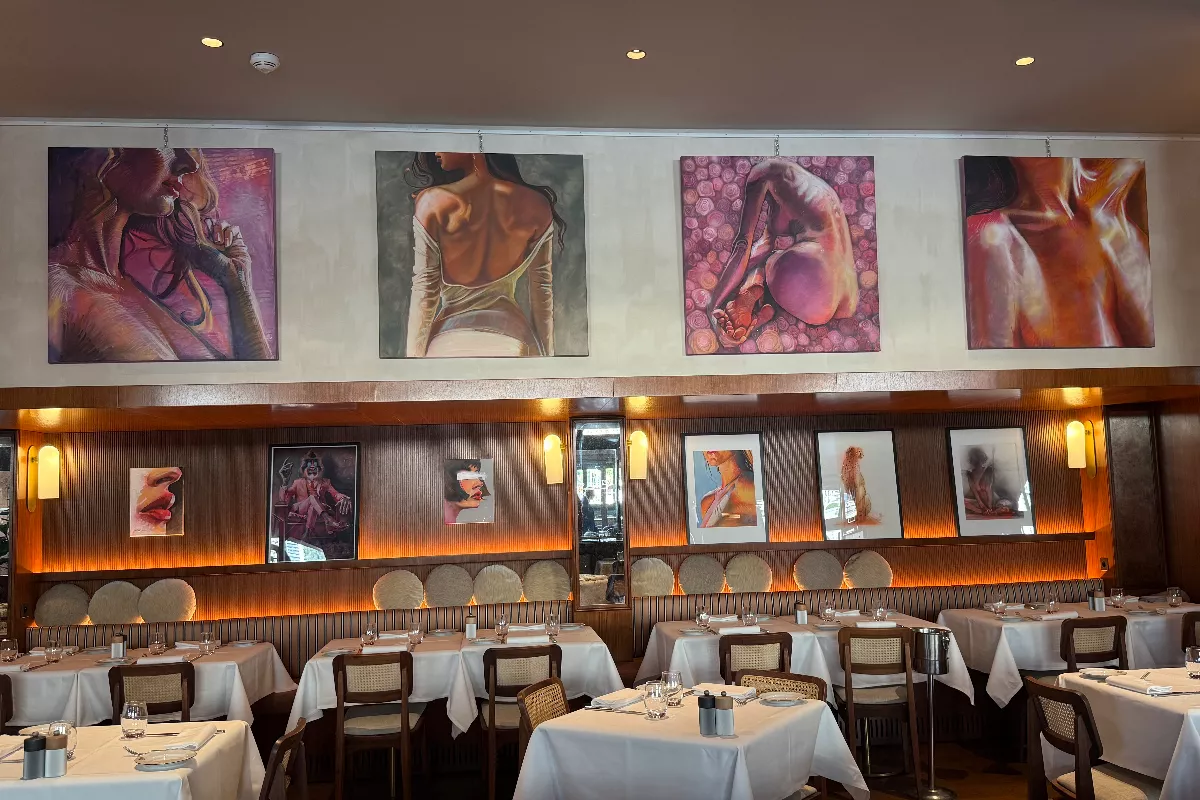
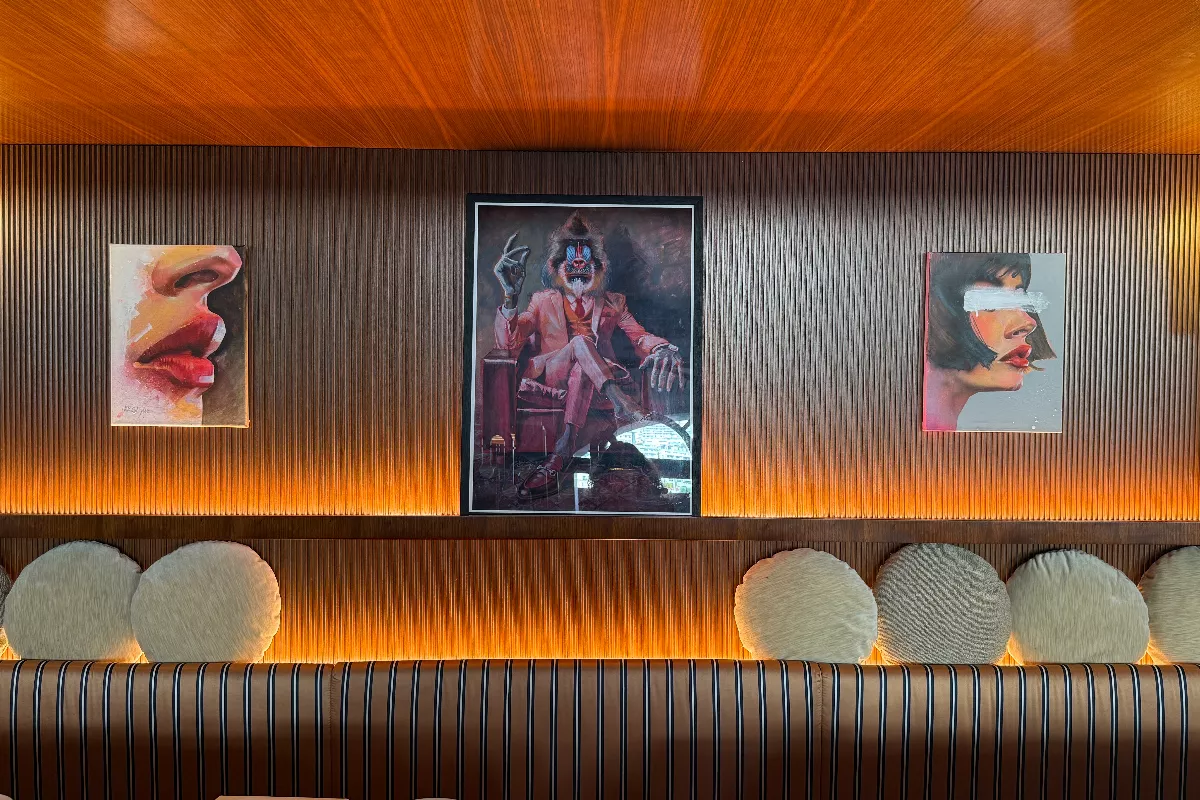
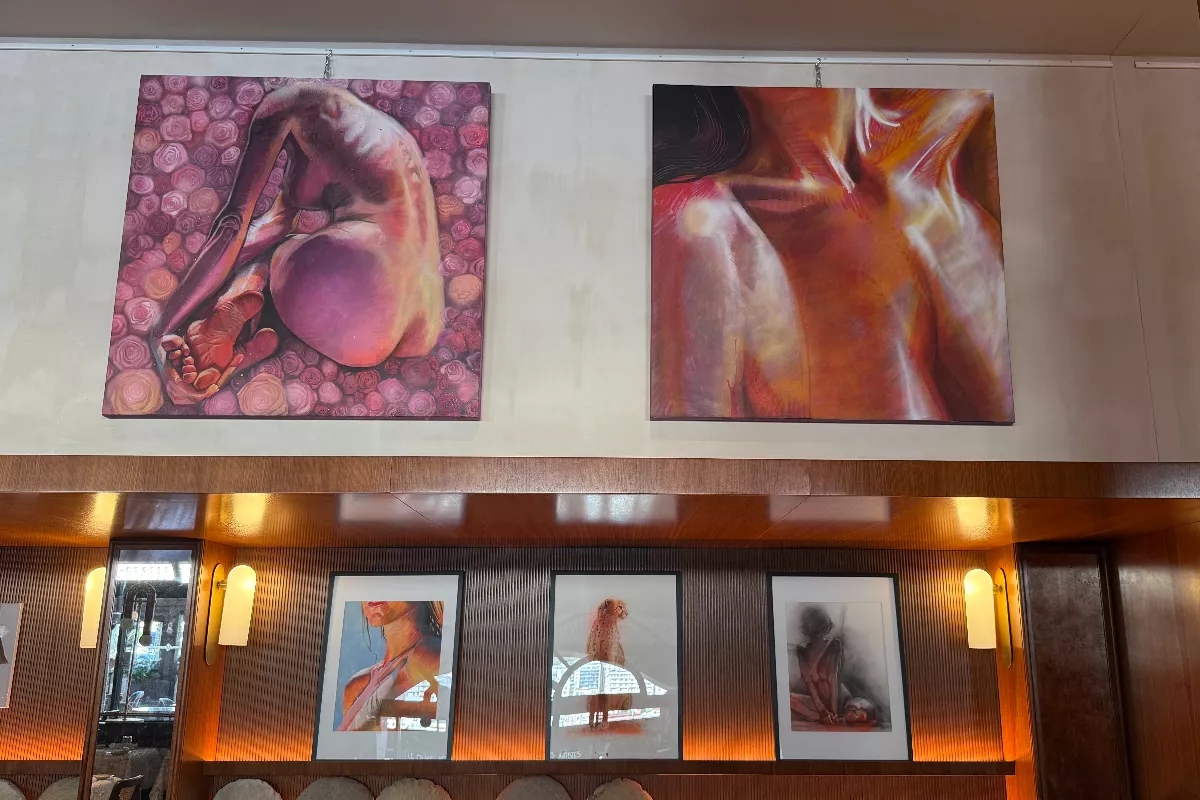
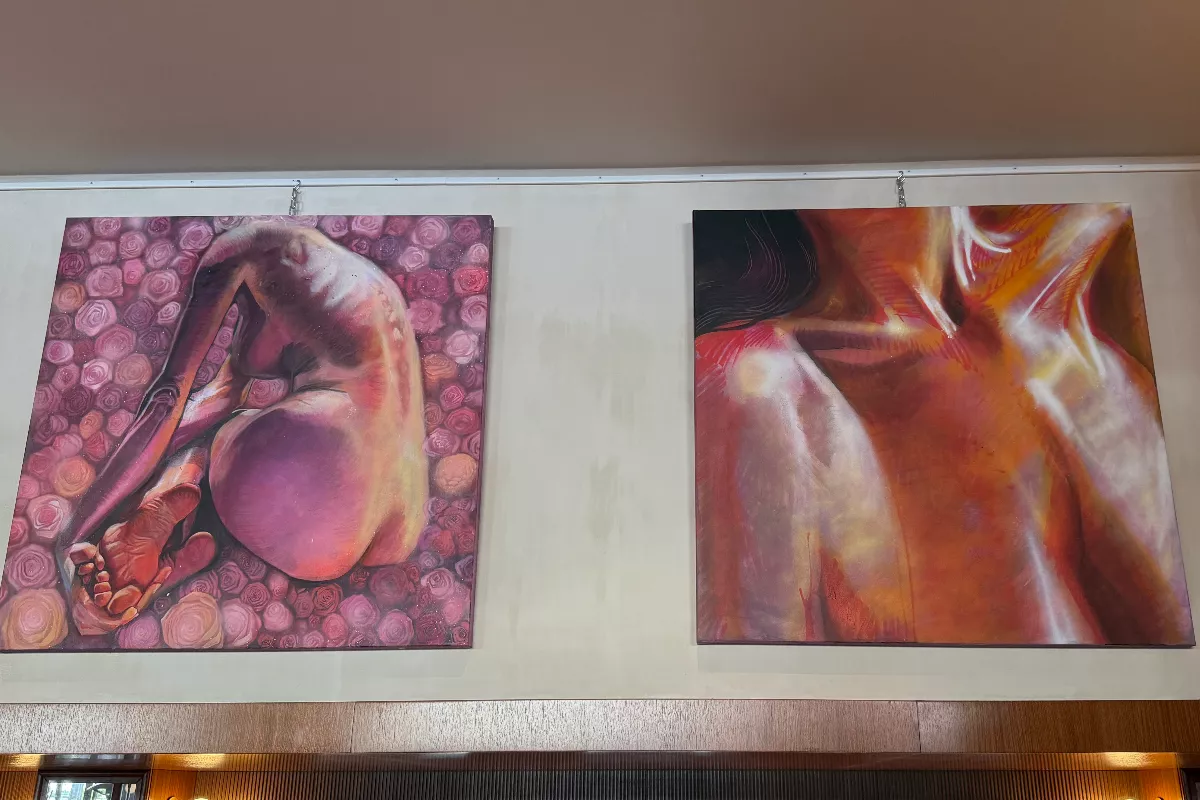
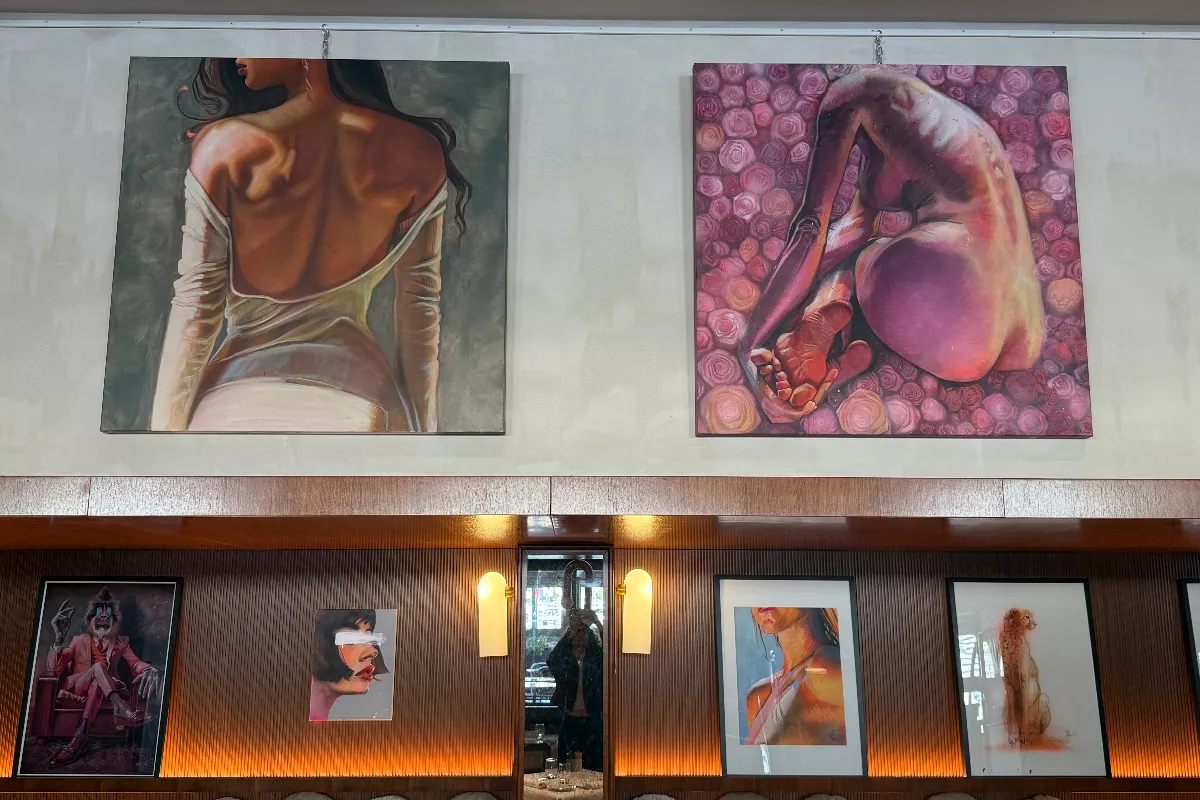
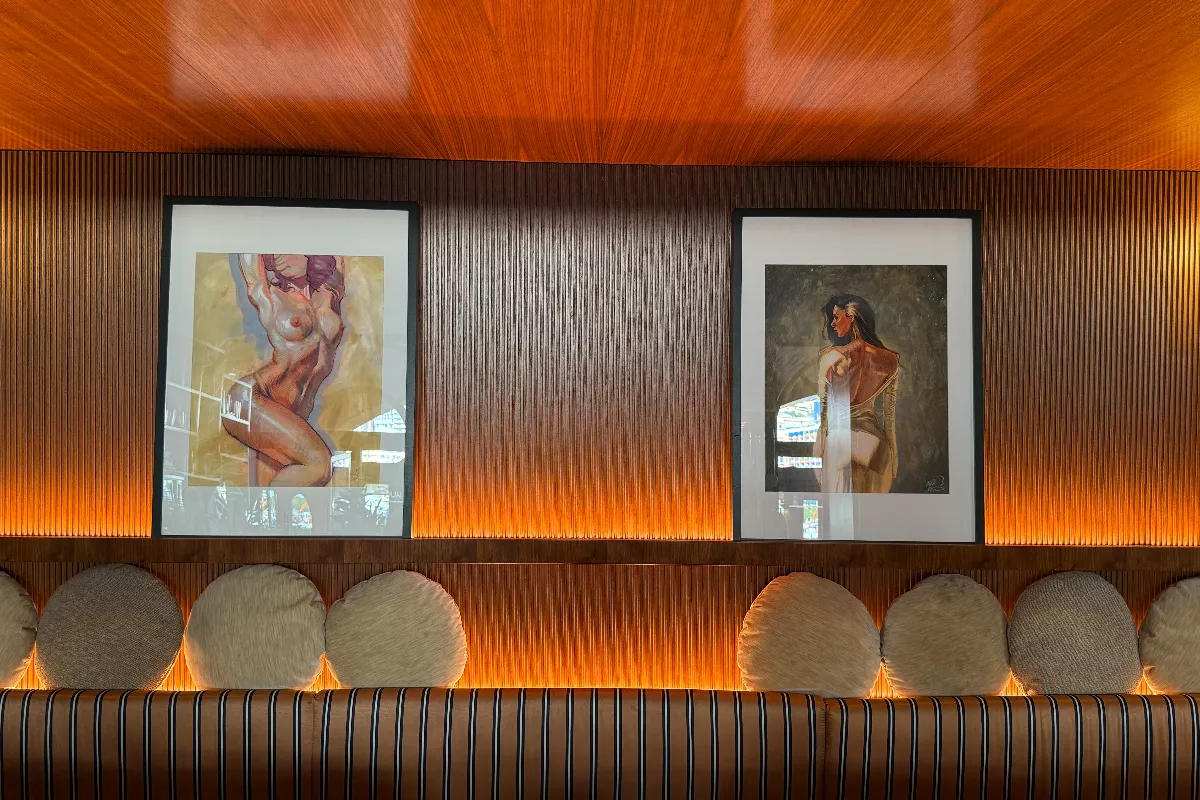
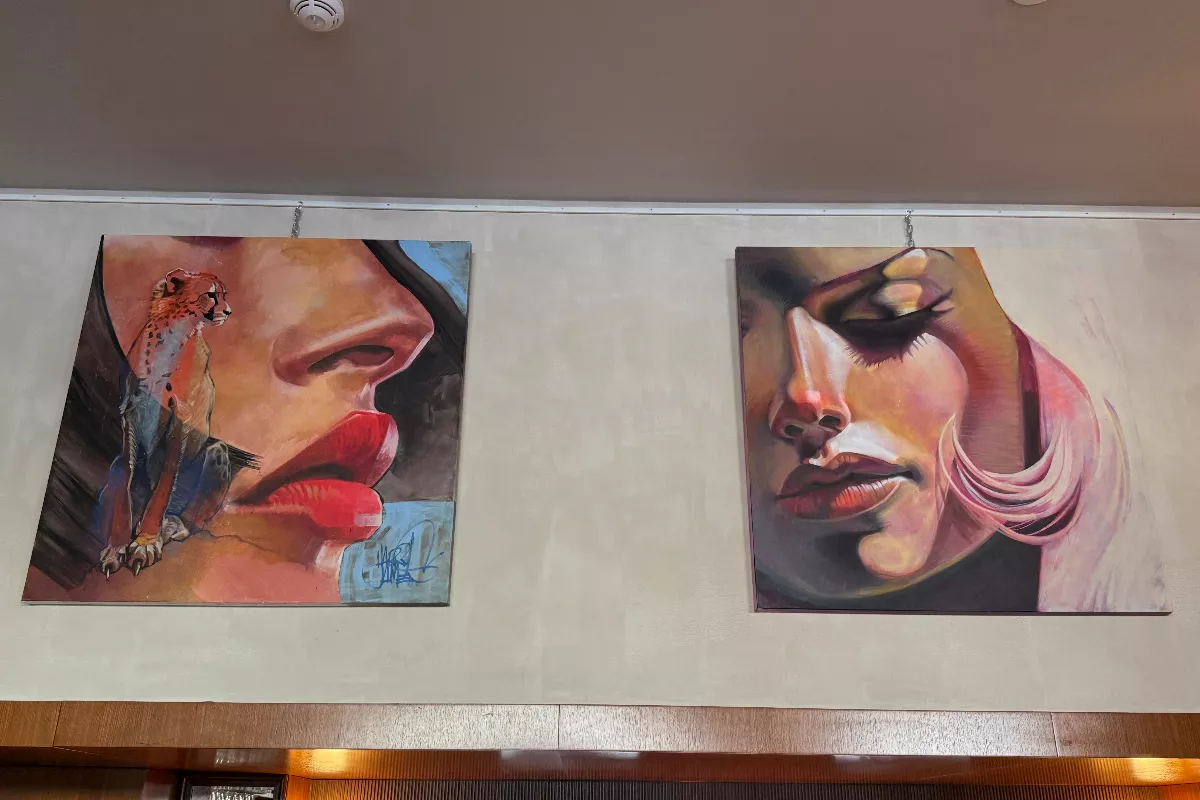
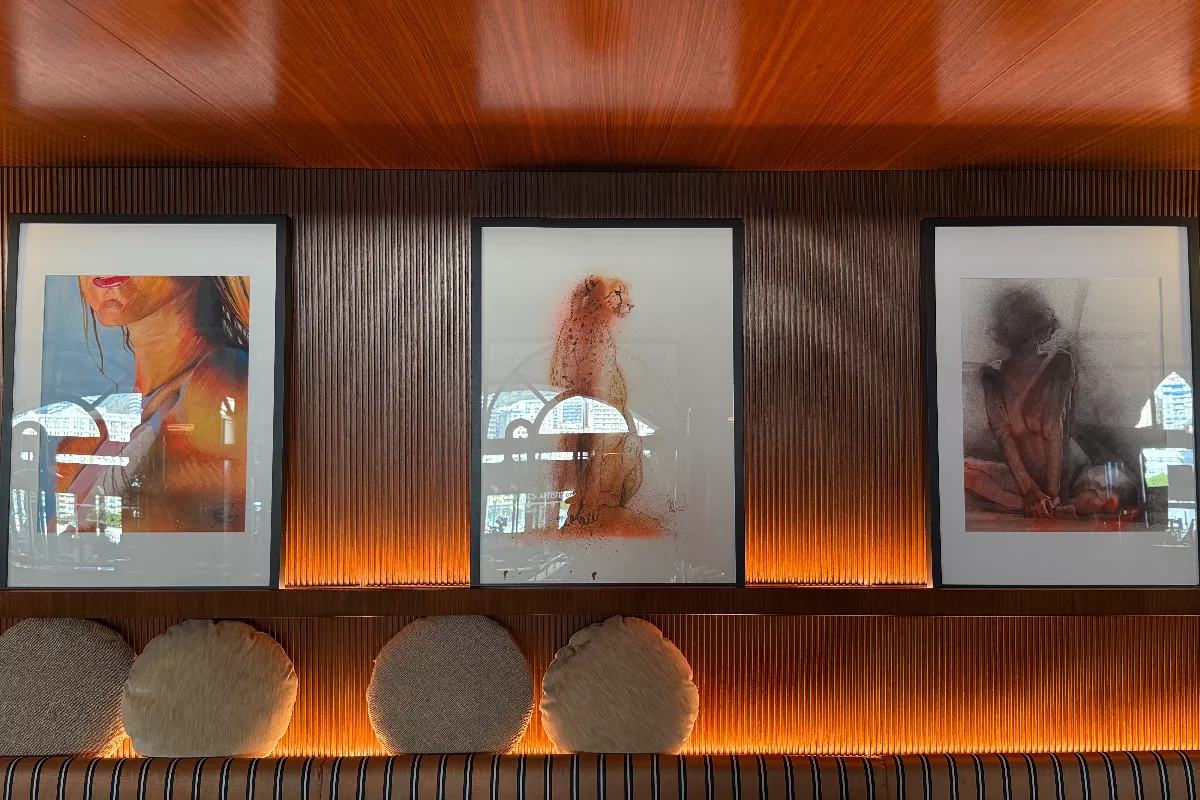
Self taught artist Harry James is showcasing his latest collection of female figures at Quai des Artistes from November 12th until December 11th.

Through his art, James manages to blend sensuality with power in a series of works that honour the female form. The exhibition, titled ‘Inconnues’, is the second in a monthly series at Quai des Artistes, part of the venues effort to revive the quartier through art.

The French artist, whose career has spanned everything from designing for Disneyland Paris to creating costumes for live performances, has developed a distinctive approach to depicting women. His latest works focus particularly on the female back, drawn to what he sees as the complexity of its lines, curves and depths.

“Through my art, I aim to connect femininity with felinity, force with grace,” James told Monaco Life at the exhibition opening on Wednesday.

This connection between women and felines runs throughout the collection. James paints his subjects with what he describes as a leonine quality: strong, nurturing and sensual. In a visual trick, he even incorporates subtle female silhouettes within the features of the big cats that appear in some works.

Part of Harry James’s exhibition, photo credit: Monaco Life.

Nude as a way of freedom and expression

His preferred palette includes mainly pink tones, which he finds ideal for capturing light and creating depth. However, his choice of subject matter goes far beyond aesthetic preference.

“I prefer nude, partly because of my academic background, but also because I feel that through nude, models become more confident, more comfortable with their bodies,” he explained. “It’s like they’re alone, just them and their thoughts in a meditation state.”

This understanding derives from James’s own experience as an artists’s model, a rather unusual chapter in his career that gave him insight into the vulnerability and contemplation involved in posing.

The works in ‘Inconnues’ represent what James calls spontaneous, unreflective inspiration, with figures that emerge through instinct rather than planning. These women remain mysterious, true to the exhibitions title, their identities unknown, captured in moments of private grace…

Stay updated with Monaco Life: sign up for our free newsletter, catch our podcast on Spotify, and follow us across Facebook,  InstagramLinkedIn, and Tik Tok.

Main photo credit: Monaco Life. More photos can be found in the photo gallery below…

Éric Ciotti proposes Monaco-style “free zone” near Nice to ease commuter traffic and attract investment

As part of his bid for mayor of Nice, Éric Ciotti has floated the idea of creating a special economic zone in the Plaine du Var aimed at attracting Monaco-based companies — a proposal that could reshape the economic and transport dynamics between the two neighbouring territories.

With more than 25,000 residents of Nice commuting to Monaco each day, candidate for mayor Éric Ciotti is proposing a bold — and potentially controversial — idea: a Monaco-style zone franche, or free zone, within the Alpes-Maritimes, designed to offer tax and employment conditions as advantageous as those found in the Principality.

In an interview with Nice-Matin, Ciotti said the concept is still at the idea stage, but it features prominently in his campaign message to Niçois voters ahead of the municipal elections scheduled for 15th and 22nd March 2026.

“This is about easing the pressure of daily travel for tens of thousands of workers while creating a new magnet for economic growth,” Ciotti told Nice-Matin. He believes Monaco’s lack of available territory, paired with France’s need for new job creation in the region, creates a mutually beneficial opportunity.

From La Turbie to the Plaine du Var

The proposal is not entirely new. Ciotti, who currently serves as president of the Franco-Monegasque friendship group at the National Assembly, previously explored a similar project while heading the departmental council — suggesting a business hub near the Cruella quarry in La Turbie, connected to Monaco by funicular.

Now, as a mayoral candidate, he’s turning his focus to the Plaine du Var, specifically the Éco-Vallée on the western side of Nice, which he criticised as having failed to deliver on its 2005 promise of creating 30,000 jobs. “In reality, not a single net job has been created,” he told Nice-Matin. A Monaco-linked economic zone, he argues, could reverse that trend.

A legal and diplomatic challenge

Creating a true Monaco-style economic zone on French soil would require substantial legal and diplomatic groundwork. “We’d need a treaty between France and Monaco approved by law,” Ciotti admitted in Nice-Matin. “It’s not simple — but no more complicated than building a tunnel between Nice and the Principality.”

He envisions a framework where Monaco-based businesses could operate within the Alpes-Maritimes under similarly favourable fiscal and social conditions, though he concedes that such details are far from finalised.

Reception in Monaco

Asked about reaction from across the border, Ciotti claimed that the proposal has been discussed with Monegasque counterparts “at the highest level” and suggested that H.S.H. Prince Albert II found the idea “appealing”.

Monaco’s perennial challenge — a lack of space for future expansion — could find a practical solution in a cooperative venture of this kind, granting the Principality access to additional development territory without the infrastructure costs associated with land reclamation.

Still, Ciotti recognises that the French government has yet to express enthusiasm for the idea — and is even less convinced by long-discussed alternatives, such as a cross-border metro system, which he described as “extremely costly” and unlikely to materialise for another two decades.

An idea in motion

While a maritime shuttle and other mobility options remain on the table, Ciotti presents this free zone as “one more solution” that could both relieve congestion and attract high-value employers. “The gain would be twofold: job creation and improved quality of life for thousands of workers stuck in traffic every day,” he told Nice-Matin.

Stay updated with Monaco Life: sign up for our free newsletter, catch our podcast on Spotify, and follow us across Facebook,  InstagramLinkedIn, and Tik Tok.

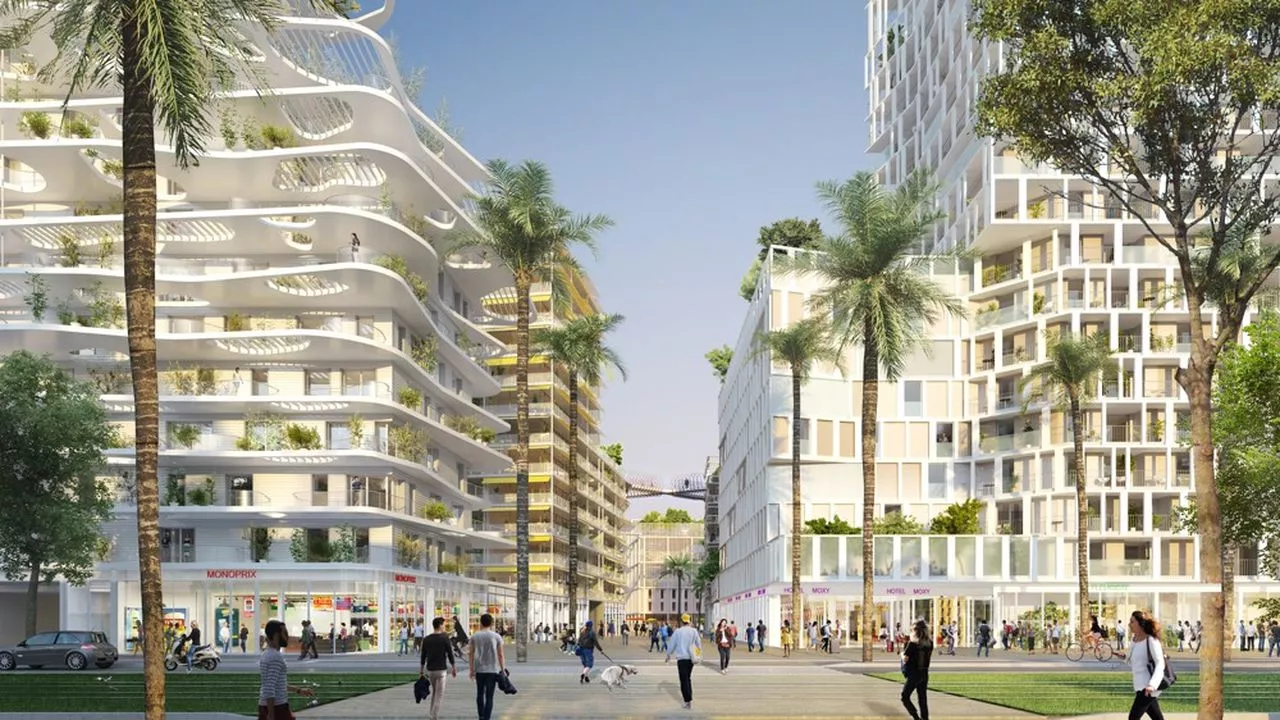
Main photo: Joia Merida, one of the Eco-Valley programs in Nice. Sou Fujimoto – Chartier Dalix – Cino Zucchi

Monaco donates 2,700 school laptops and tablets to charities and families

Rather than letting old school laptops and tablets gather dust or head to landfill, Monaco is giving thousands of them a second life — and in doing so, tackling digital inequality, reducing waste, and supporting local charities.

Since 2020, all students enrolled in Monaco’s public secondary schools have been loaned personal computers to aid their learning and build digital literacy. This initiative forms part of the Principality’s broader digital transition strategy for education.

Now, as part of the scheduled renewal of school IT equipment, over 2,700 devices — including laptops, tablets, keyboards and accessories — are being given a second life rather than sent for disposal.

This latest operation – titled Opération 2nde vie – is a joint initiative led by the Interministerial Delegation for Digital Transition and the Department of Education, Youth and Sports, with a focus on environmental responsibility and social impact.

Reducing waste, supporting communities

The benefits of this scheme are twofold. On the environmental side, the extended use of equipment helps reduce greenhouse gas emissions and the demand for raw materials. The reuse of the current batch of devices is expected to save the equivalent of 150 tonnes of CO₂ — roughly the same as driving from Monaco to Paris and back 495 times.

On the social side, the reconditioned equipment is being donated to local associations working in the fields of child protection, digital inclusion and housing support. Beneficiaries include AMADE, Galice 06, and Banque du Numérique 06, all of which assist vulnerable populations in gaining access to technology and essential services.

A collective effort for a greener digital future

Several Monaco-based organisations are contributing to the effort. Green Monaco inspects the condition of each device, AMAPEI helps with inventory management, Actif Azur ensures full data erasure, and Monaco Green Box provides reusable crates for a zero-waste logistics chain.

The initiative also contributes to employment reintegration through its collaboration with a partner organisation that engages people returning to the workforce.

Looking ahead, the Principality aims to embed this reuse model into its long-term digital and environmental strategies.

Stay updated with Monaco Life: sign up for our free newsletter, catch our podcast on Spotify, and follow us across Facebook,  InstagramLinkedIn, and Tik Tok.

Photo credit: Manuel Vitali, Government Communications Department 

Serena di Lapigio dominates Monaco Sportsboat Winter Series opener

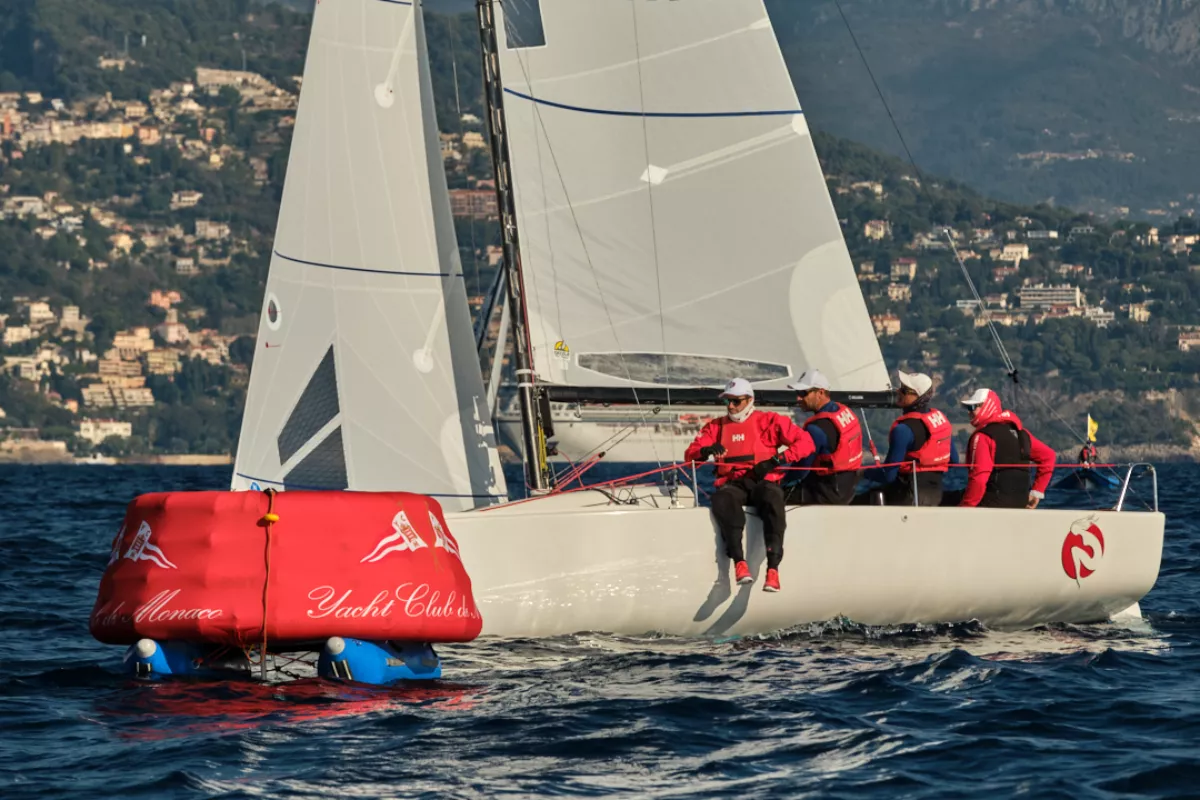
The first round of the Monaco Sportsboat Winter Series wrapped-up this week with a commanding victory for local sailor Giangiacomo Serena di Lapigio aboard G-Spot.

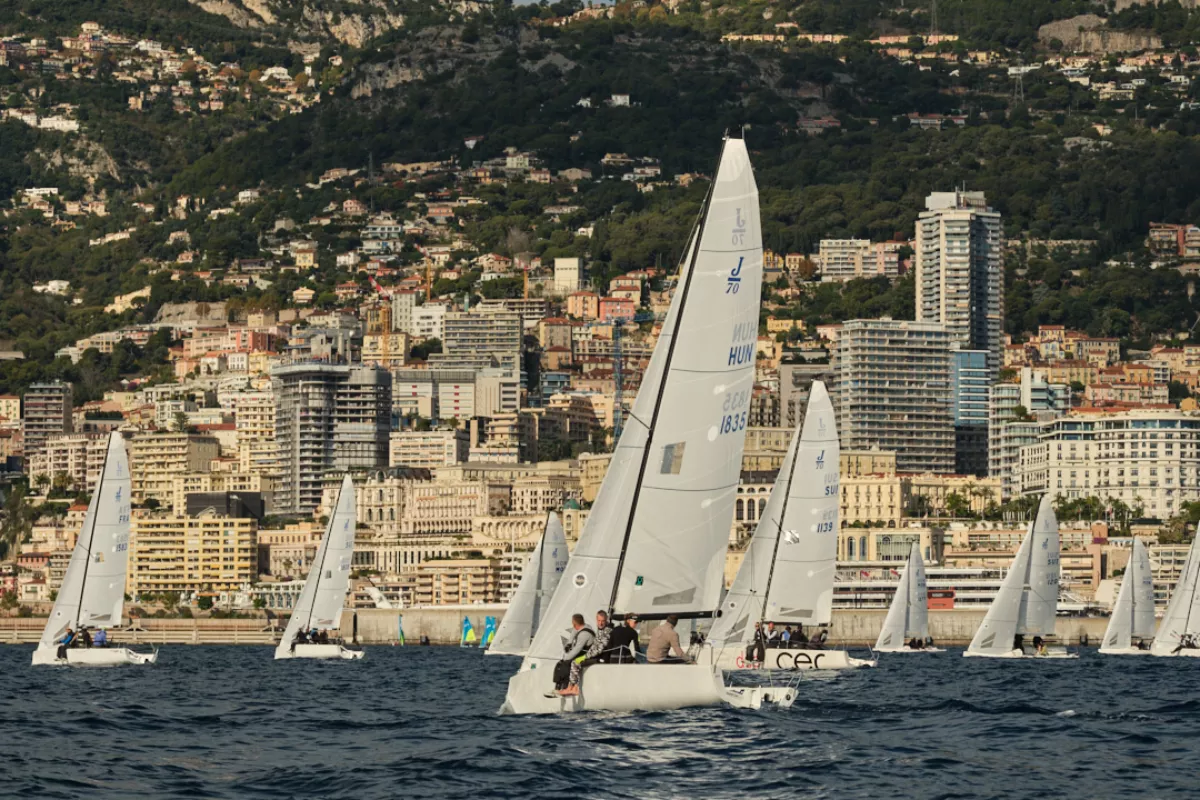
Twenty-three J/70 crews competed for three days of back-to-back racing, from November 6th to 9th, putting up with shifting weather patterns that demanded tactical flexibility.

Serena di Lapigio, who sails out of Yacht Club de Monaco, seized control from early on and never looked back. His crew won five races, and maintained strong form throughout, finishing nine points ahead of the nearest competition, the Italian team on Alice.

Meanwhile, the French squad sailing Euro-Voiles secured third place after a particularly impressive performance on the final day. However, the battle for positions remains wide open, with minimal points separating the leading ten boats heading into the next round.

The boats during the competition, photo provided by YCM

In the amateur Corinthian division, Euro-Voiles again came out on top, through Swiss teams Tarte-3Nuits.com and Rhubarbe-3Nuits.com pushed them hard with several races finishing in tight clusters.

The winter championship is a crucial preparation ahead of the 42nd Primo Cup-Trophée UBS in March, a prestigious event created by Prince Albert II.

Competition now resumes December 4th to 7th for Act II, where  judging from how close in points the leading boats are, any mistake could prove costly.

However, for now, the Yacht Club turns its attention to the Navicap Challenge scheduled for later this month from November 28th to 30th, an inclusive regatta where sailors with and without disabilities compete together in Hansa 303 dinghies.

Stay updated with Monaco Life: sign up for our free newsletter, catch our podcast on Spotify, and follow us across Facebook,  InstagramLinkedIn, and Tik Tok.

Main photo credit: YCM