AMADE reports a record year, reaching over 354,000 children worldwide in 2024

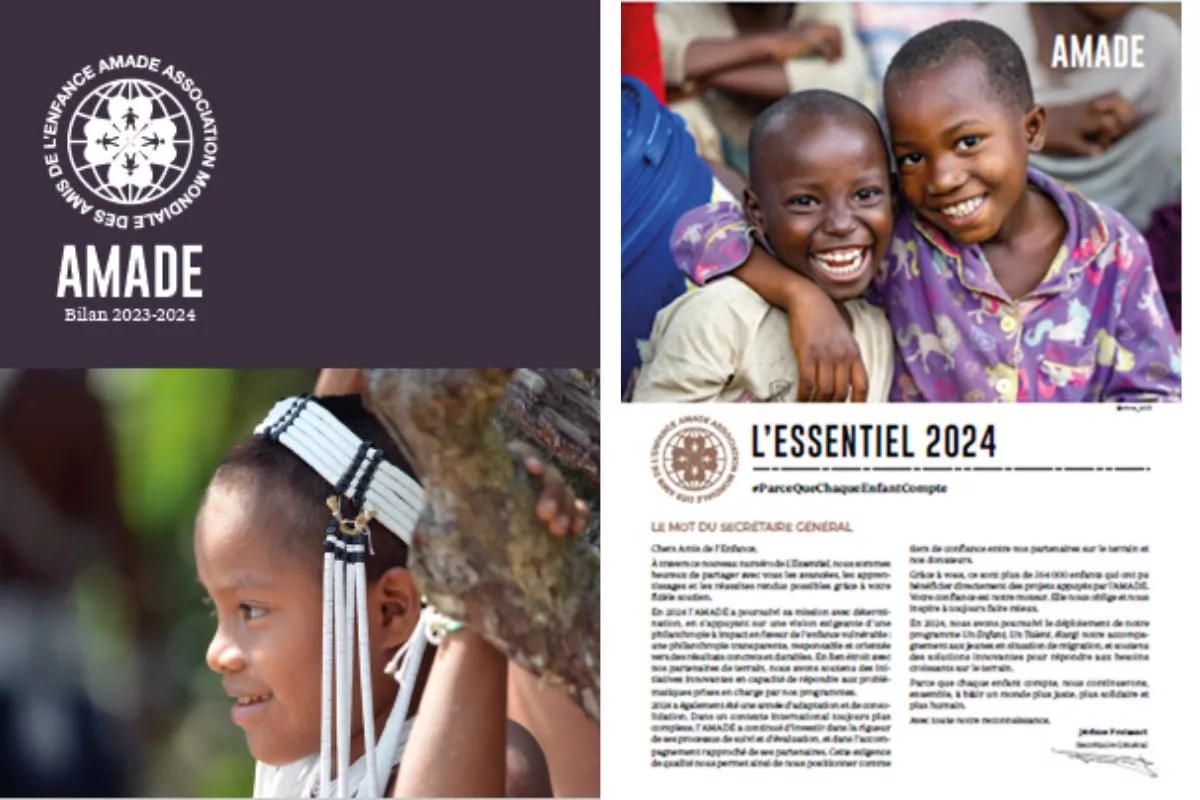
Monaco’s AMADE (Association Mondiale des Amis de l’Enfance), one of the Principality’s most respected humanitarian organisations, has published its 2024 bilan report, revealing an impactful year that delivered support to over 354,000 children globally. With operations spanning Africa, Europe, and Asia, AMADE remains a leading force in child protection, education, health, and empowerment.

In a message introducing the report, Secretary General Jérôme Froissart said the year was marked by both innovation and consolidation. “In an increasingly complex international context, AMADE continued to invest in rigorous monitoring, evaluation, and close partner support,” he wrote. “This demand for quality allows us to position ourselves as a trusted intermediary between local partners and our donors”.

In total, €831,632 in direct funds were deployed across 23 projects in 2024, backed by a broader €2 million commitment. Partner organisations mobilised nearly €4.8 million more for these shared efforts.

Five core programmes, one shared mission

AMADE’s work in 2024 focused on five strategic programmes: Un Enfant, Un Talent (child development through art, sport and mentorship), Un État Civil pour Tous (access to civil registration), Dignité pour les Femmes (support for vulnerable girls and menstrual health), L’Énergie de l’Espoir (renewable energy for education), and assistance for unaccompanied migrant minors.

The charity also stepped up its work in emergency response and post-crisis recovery, with €138,060 dedicated to these areas last year.

Local partnerships, lasting impact

AMADE’s approach is rooted in partnership. Rather than implementing projects directly, it supports NGOs and social entrepreneurs on the ground. “We prioritise the empowerment of those with proven expertise and strong local leadership,” the organisation stated in its report.

One such partnership is with the FVS-Amie des Enfants in Burundi, which enabled Floride Ikizakubuntu, once forced to abandon school, to pursue a dream of becoming a doctor. “Today, I am no longer a forgotten girl, but a future paediatrician, standing tall, confident, ready to serve,” she said.

In Senegal, the Yéré network, supported by AMADE and implemented by Le Partenariat, has empowered women entrepreneurs like Coumba Diop to deliver solar lighting and digital education to remote rural communities. “Each day, I see the impact of our actions on children and women—and it drives me to do more,” she shared.

Financial transparency and trust

AMADE’s commitment to transparency is underscored by double financial oversight—both by an external auditor and Monaco’s public financial watchdog. Thanks to government subsidies covering operational costs, 100% of donor contributions go directly to project implementation.

The charity’s income in 2024 totalled €1.29 million, with nearly half coming from public generosity. A further 15% came from state subsidies, while previously earmarked funds were responsibly used to supplement budgets for ongoing programmes.

Looking ahead to 2025

AMADE plans to expand its initiatives in 2025 with a renewed focus on civil registration, menstrual health in East and West Africa, and mentorship for at-risk youth in France. It will also continue bringing solar power to schools in remote regions of northern Senegal under its L’Énergie de l’Espoir initiative.

Now in its 61st year, AMADE remains one of Monaco’s most active and impactful international charities, channelling its resources into long-term, community-driven change for vulnerable children worldwide.

Stay updated with Monaco Life: sign up for our free newsletter, catch our podcast on Spotify, and follow us across Facebook,  InstagramLinkedIn, and Tik Tok.

Bernard d’Alessandri named new President of the Monegasque Chamber of Yachting

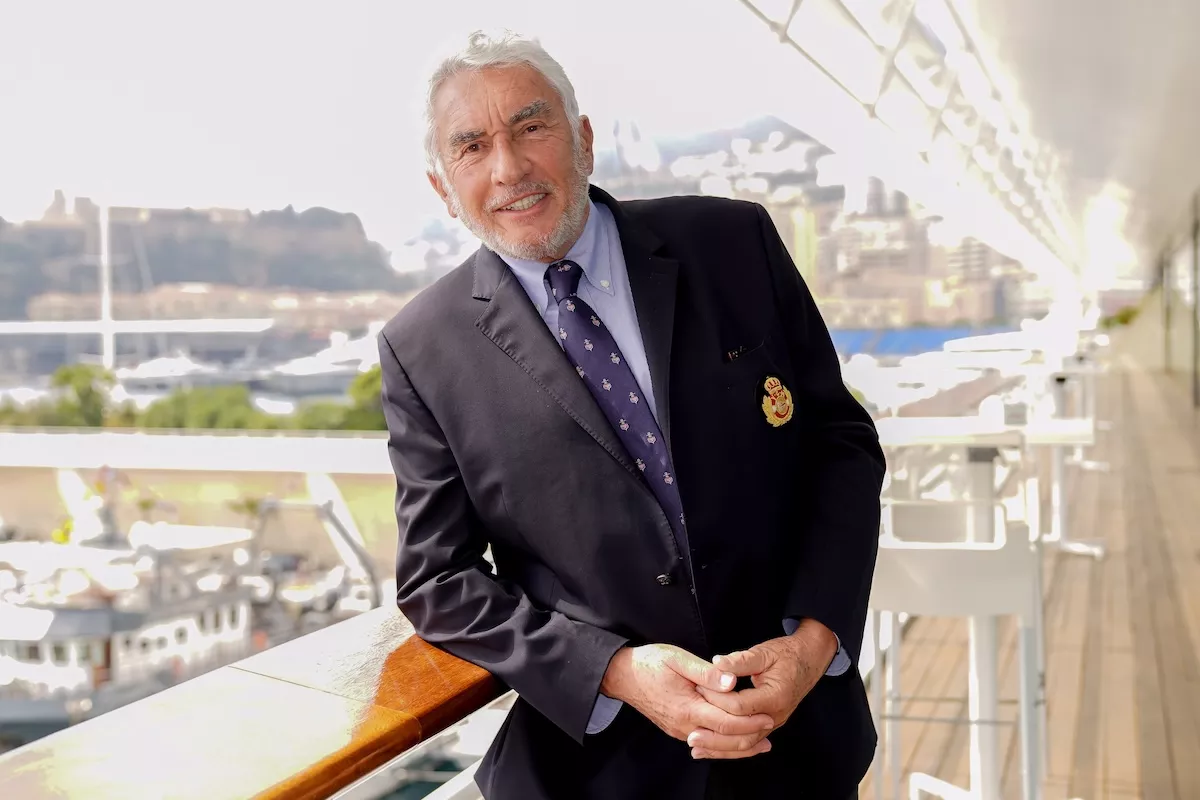
Bernard d’Alessandri, one of the most influential voices in the international yachting community, has been appointed President of the Chambre Monégasque du Yachting. The announcement, made by the Fédération des Entreprises Monégasques (FEDEM) on Thursday 20th November, places the longtime head of the Yacht Club de Monaco at the forefront of the sector’s institutional representation in the Principality.

The Chambre Monégasque du Yachting acts as the official representative body for businesses operating within Monaco’s yachting sector, liaising with government authorities on matters of industry policy and development. FEDEM President Philippe Ortelli said the appointment reflects the importance of the sector to Monaco’s economy, highlighting that yachting generates around €600 million in annual revenue and supports 1,500 skilled jobs.

“It is essential that the sector is fully represented in FEDEM to defend its interests, promote its values and support sustainable development,” Ortelli said.

A career built on maritime strategy and innovation

D’Alessandri has served as General Secretary and Managing Director of the Yacht Club de Monaco since 1990, and is credited with shaping Monaco’s international yachting reputation over the past three decades. He is behind major initiatives such as Monaco Classic Week-La Belle Classe, the Monaco Energy Boat Challenge and the Sea Index sustainability label for superyachts.

He also chairs Cluster Yachting Monaco, a business network of over 100 industry stakeholders, and leads the ‘Monaco, Capital of Yachting’ commission within the Principality’s strategic planning council.

“A model of excellence, innovation and sustainability”

“My commitments have always been guided by my passion for the sea and yachting,” said d’Alessandri. “Through this new position, I hope my experience can benefit a sector which is Monaco’s strength and sets it apart. The Principality occupies a unique place in the yachting world as a model of excellence, innovation and sustainability that we live and breathe each day at the Yacht Club de Monaco.”

Stay updated with Monaco Life: sign up for our free newsletter, catch our podcast on Spotify, and follow us across Facebook,  InstagramLinkedIn, and Tik Tok.

Photo credit: Simone Spada

Portuguese president makes historic first official visit to Monaco

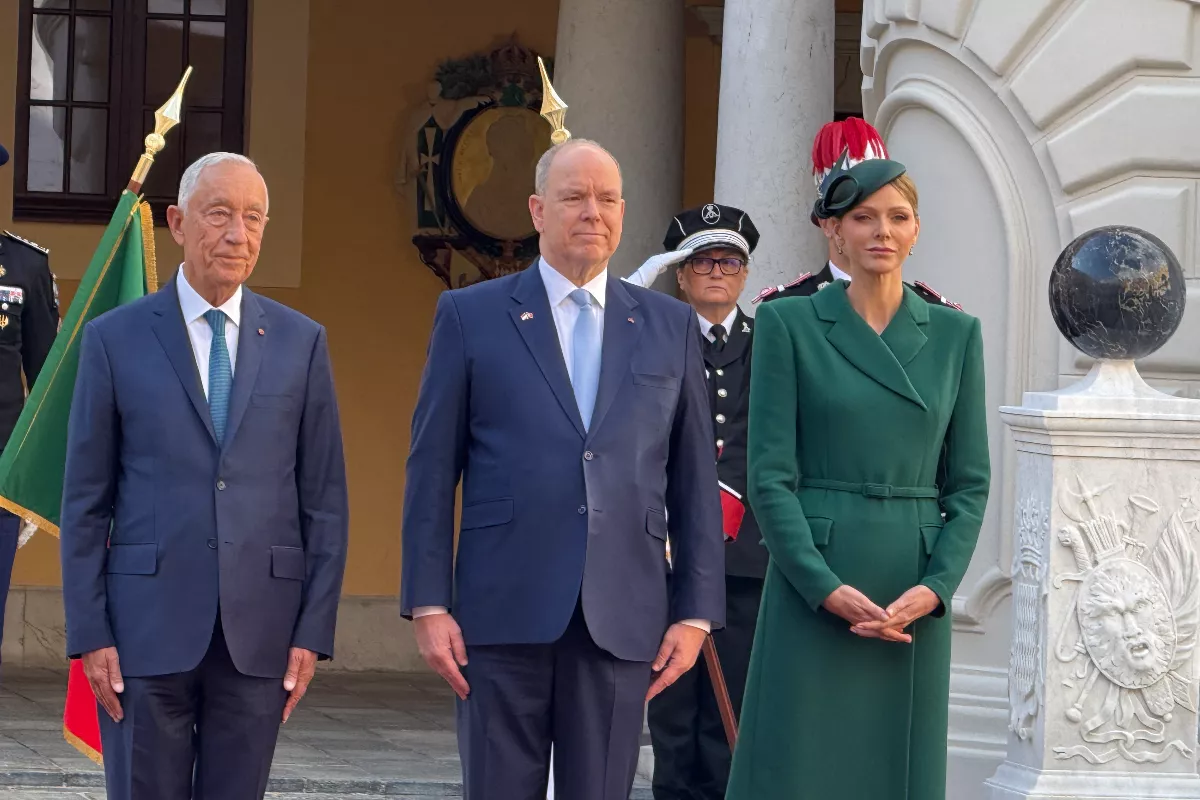
Prince Albert II and Princess Charlene welcomed President Marcelo Rebelo de Sousa in the Principality Friday morning, in a visit that constitutes a significant chapter in the two countries’ bilateral relations. 

While diplomatic relations between Monaco and Portugal were formally established in November 2007, consular ties date back to 1871. The Portuguese community also has a significant presence in Monaco, with 418 residents and around 4,300 workers.

Nevertheless, the Portuguese Head of State’s official visit marks a historic milestone, as it is the first time a sitting Portuguese president has made a state visit to the Principality.

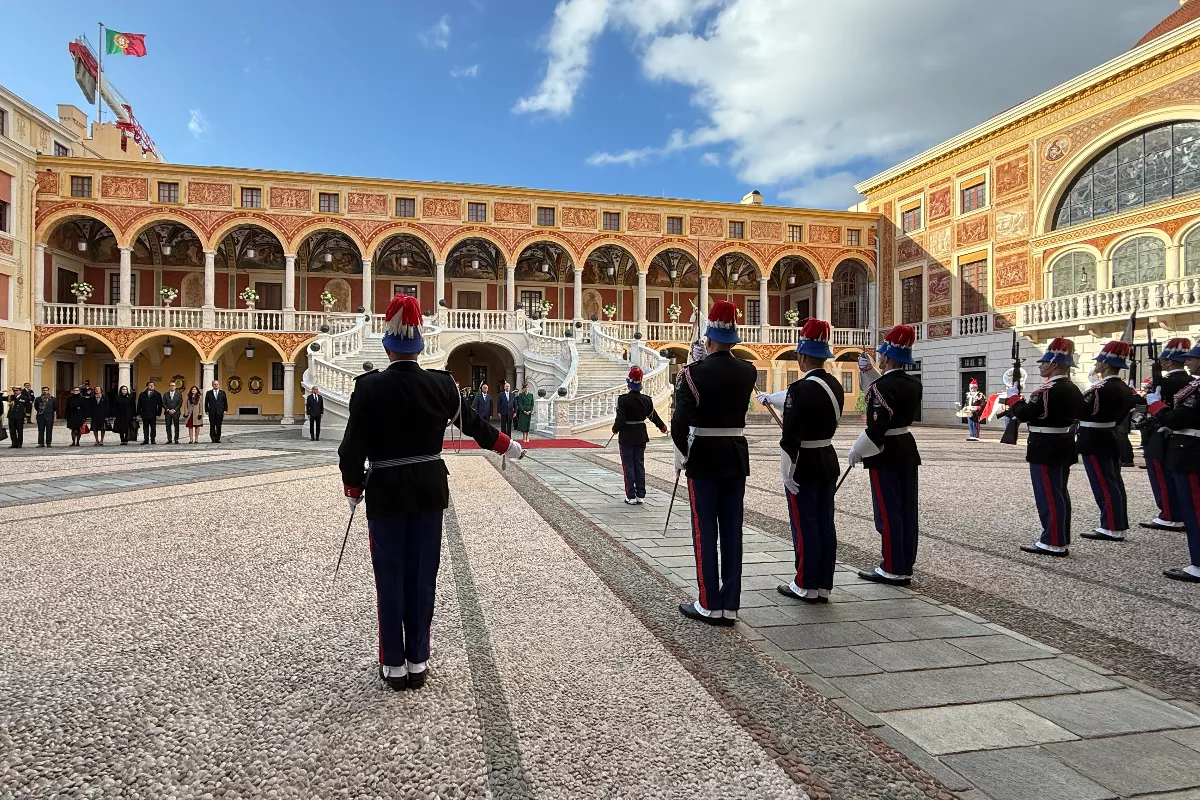
The day began at 10:15am with full military honours in the Palace’s Cour d’Honneur, where Prince Albert II and Princess Charlene welcomed President Marcelo Rebelo de Sousa. After the national anthems of both countries were played, the Prince and President reviewed a military detachment led by Colonel Tony Varo, Commander of the Public Force.

Prince Albert II, Princess Charlène and President Marcelo Rebelo, photo by Monaco Life.

Following a bilateral meeting, the two Heads of State exchanged official gifts and conferred national honours. Prince Albert II bestowed upon President Rebelo de Sousa the Grand Cross of the Order of Saint-Charles, while the Portuguese president presented the Prince with the Grand Collar of the Order of Christ and awarded Princess Charlene the Grand Cross of the same order.

Later, during an official luncheon, both delegations finalised and signed a framework cooperation agreement that had been under negotiation since 2018.

The Palace Courtyard during the reception of the President, photo by Monaco Life.

Exploring the historical ties between Monaco and Portugal

The afternoon programme underscored the historical connection between the two nations through oceanographic research. At the Saint Martin Gardens, the leaders unveiled a bust of Dom Carlos, the Portuguese king who, like Prince Albert I, was a pioneering oceanographer. In a heartfelt moment, students from the Lycée Albert Ier performed a dramatic dialogue between the two royal scientists before wreaths were laid at Prince Albert I’s statue.

Then, the visit concluded at Monaco’s Oceanographic Museum, where Prince Albert and President Rebelo de Sousa toured the ‘Monaco et l’Ocean’ exhibition, viewing exhibits highlighting Portuguese-Monégasque maritime links. The two leaders also witnessed the signing of a protocol agreement between the Academy of the Sea and the Atlantic Center.

Monaco Life was there. See more in our video reel below…

Stay updated with Monaco Life: sign up for our free newsletter, catch our podcast on Spotify, and follow us across Facebook,  InstagramLinkedIn, and Tik Tok.

Main photo by Monaco Life.

How Monaco could become Europe’s smallest – but smartest – investor in Women’s sport

Monaco has long used sport to project excellence on a global stage. From the Grand Prix to the Monte-Carlo Masters and the success of AS Monaco, the Principality has built a reputation as a home for elite performance, organisation and international visibility. Few places are able to combine vision and discipline so seamlessly. Now, a quieter development is beginning to emerge – one that could shape Monaco’s sporting future in a different way: the growth of women’s sport.

The arrival of Monaco United’s women’s football team, renewed backing for AS Monaco Women, and increasing interest from private stakeholders indicate the beginning of a shift. These are early steps, but they ask a broader question: could women’s sport become not just a feature in Monaco, but part of its strategy and identity?

Beyond visibility and sponsorship

Across Europe, women’s sport is moving from symbolic support to serious investment with serious returns. Audience numbers are breaking records, broadcast deals are being signed, and leagues are becoming more professional. The UEFA Women’s Champions League final now draws audiences in the tens of millions. Volleyball and basketball leagues are selling out arenas that only a few years ago struggled to fill a stand. Investors and broadcasters are beginning to recognise that this is not a side show, but growth.

But in many countries, progress still stops at sponsorships or marketing campaigns rather than building long-term, durable systems. Visibility alone cannot sustain athletes or attract the capital needed to build facilities and develop coaching talent.

True development requires investment in infrastructure, coaching, medical support, media coverage, and full-time opportunities for athletes. It means treating women’s sport as an economic ecosystem in its own right – not as an afterthought. Here, Monaco has an advantage. 

A principality that can move faster than nations

Monaco’s size allows it to act more quickly than larger countries. Decisions involve fewer institutions, partnerships can be created more directly, and pilot projects can be launched without being slowed down by bureaucracy. Where others talk about equality in sport, Monaco could test models and implement them within a single season.

A “Monaco model” for women’s sport wouldn’t have to mean creating a full national league. Instead, it could link what already exists: AS Monaco, Monaco United, organisations such as Peace and Sport, local broadcasters, philanthropic foundations and partnerships with European clubs and investors. The city-state’s concentration of talent, capital and communication channels makes coordination easier than anywhere else in Europe.

The Principality has done this before – in environmental diplomacy, motorsport, and culture. Women’s sport could be another example. Just as Monaco has championed sustainability through the Prince Albert II of Monaco Foundation or positioned itself as the capital of motorsport innovation, it could quietly define excellence in the governance and growth of women’s sport.

Why this moment matters

There are three reasons this conversation is timely. Firstly, local momentum. Monaco United and AS Monaco Women are early signs of commitment, even if still modest in scale. They provide visible examples around which a national framework can grow.

Private interest is also growing. Across Europe, women’s leagues are beginning to attract investors who see them as long-term growth assets, not marketing tools. The recent surge in valuations for women’s football clubs in England, Spain and Italy shows how quickly the market is maturing.

Finally, soft power is evolving. Influence today is built through values, innovation and example. For a country known for elegance, precision and discretion, leadership in women’s sport would be a natural extension of its global identity.

What leadership could look like

This wouldn’t require a major initiative or announcement at first. It could begin with a focus on improving training facilities and providing high-performance coaching for women’s teams, while building partnerships with schools to create clear athlete pathways for girls in the Principality. Agreements with local and international broadcasters could ensure regular visibility for women’s matches, helping audiences to grow naturally. 

At the same time, Monaco could host roundtables or workshops during major events such as Sportel, Peace and Sport, the Monte-Carlo Masters or even the Grand Prix weekend, bringing European voices to the Principality and positioning it as a convening hub for the future of women’s sport. Each of these steps would build credibility while maintaining Monaco’s characteristic discretion and precision.

A strategic opportunity for Monaco

Monaco has never been defined by its size, but by its ability to set standards others aspire to – in sport, diplomacy, culture and excellence. Its success has always rested on vision executed quietly, but to perfection. If the Principality backs women’s sport with the same conviction it has shown in these areas, it wouldn’t be following a trend but setting the benchmark for Europe: discreet in scale, unmistakable in influence.

Main photo of Monaco United, credit: Liam Fabre

This article was contributed by Countess Nicole Brachetti Peretti, a European investor and founder of NJF Holdings. She leads NJF Sports & Media, owner of Italy’s professional women’s volleyball league, Lega Volley Femminile. She was an early investor and Vice-Chair of Infront Sports & Media, helping shape one of Europe’s leading sports rights businesses. Beyond investment, she serves as a Visiting Professor in Practice at Lancaster University, focusing on technology, innovation and entrepreneurship.