Michael Jackson’s 120 artworks worth $1.6 billion heading to new French Riviera gallery

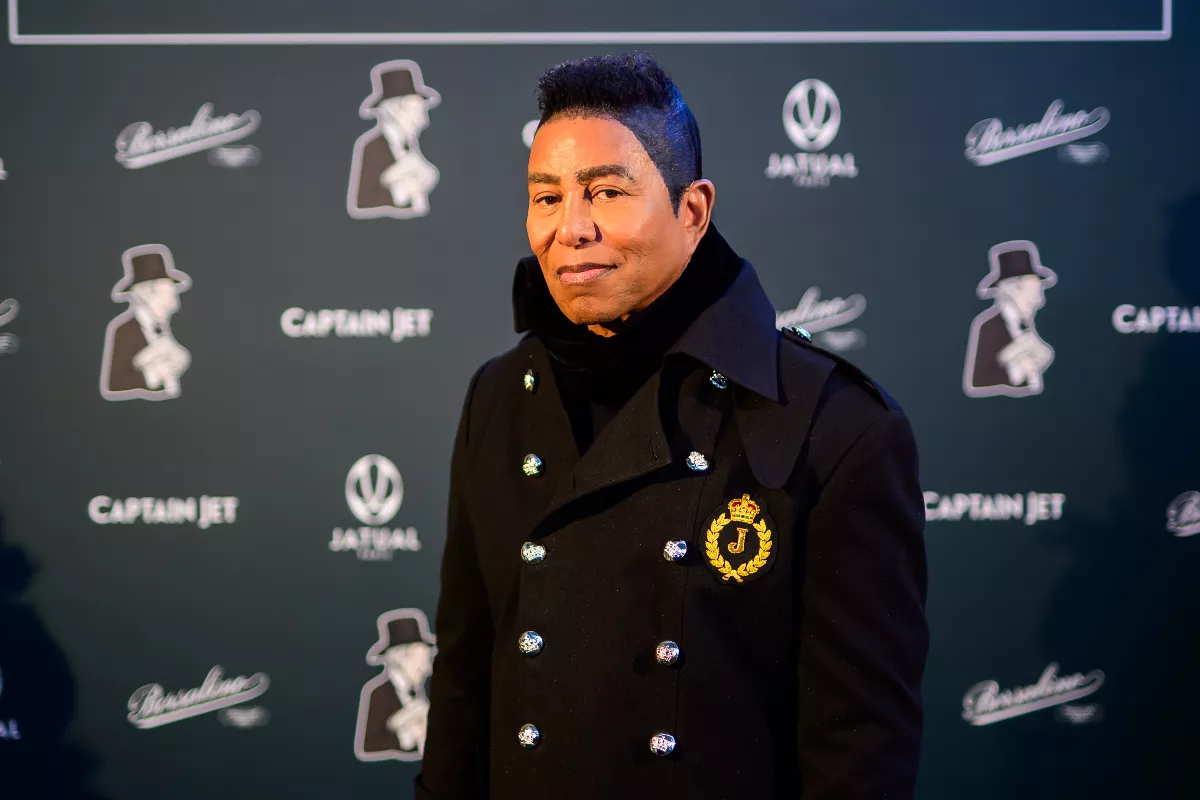
Jermaine Jackson has chosen Monaco to unveil something the world wasn’t expecting: a gallery museum dedicated to a side of Michael Jackson very few knew existed. 

For decades, while the King Pop was breaking records and redefining music, he was quietly pursuing another passion… painting. Working with mentors like Sir Brett-Livingstone Strong and collaborating with artists including Andy Warhol, Michael built a collection of around 120 works. All this time, they’ve been sitting largely unseen, in a secure facility in Washington, D.C, valued at $1.6 billion.

Now, five years in the making, The Jackson Museum is coming to the French Riviera.

More than just walking through galleries

Jermaine Jackson, speaking at The Monégasque Christmas Gala on Wednesday 3rd December, revealed plans for a new exhibition that promises to be anything but conventional. Rather than presenting a traditional gallery of framed works, he aims to create a dynamic, immersive experience.

“We would like to do things a bit differently rather than just have a museum. We would like to create a show at the same time,” he said.

His vision features live narration of the artworks, accompanied by a DJ mixing Jackson 5 classics and Michael Jackson’s solo hits. “15 seconds of looking back to ’87, we go back into the narrative music that tells a story all the way up to when we first started.”

“Exhibitions for me should be different. I would like to narrate the paintings and tell a story,” Jermaine explained.

The artworks themselves depict defining moments in the Jackson family’s legacy: “All that is on canvas.”

The secret artist

Michel’s collection reveals an artist with extraordinary range. His works span from impressionism to surrealism. There are portraits of the White House, portraits of U.S. Presidents commissioned by President Reagan himself, and Disney characters reimagined through Michel’s lens.

One series, titled ‘Treasures Collections’, features portraits of inspiring figures Michael met throughout his life. There’s even a chair he painted himself, reflecting his love for design.

However, perhaps the most striking piece are two Marilyn Monroe portraits co-signed with Andy Warhol. One alone was valued at $160 million two years ago. It was a collaboration between two artists who saw themselves as outsiders, each finding something exotic and different in the other.

The complete collection of over 200 will also be published in an art book with a planned three million copy print run.

“We are one”

For Jermaine, this project is deeply personal. “It’s all about legacy and who we are as a family,” he said. The museum will feature not just Michael’s work, but also a collection Jermaine created with an Iranian artist, his entire life story on canvas.

From their childhood performances to that final, heartbreaking image, “you know, the one you saw of us carrying him at Staples centre”, it’s all there, transformed into art.

As for the artworks, none of them are for sale, he said. This isn’t about money for the Jackson family. It’s about sharing a legacy the world never knew existed, in a way that’s never been done before.

Regarding the exact location on the Côte d’Azur, while he has some ideas, nothing has been revealed just yet.

Stay updated with Monaco Life: sign up for our free newsletter, catch our podcast on Spotify, and follow us across Facebook,  InstagramLinkedIn, and Tik Tok.

Photo of Jermaine Jackson credit: Arsi Sebastien
Scientific leadership in transition: Monaco’s CSM welcomes expert committee review and new governance

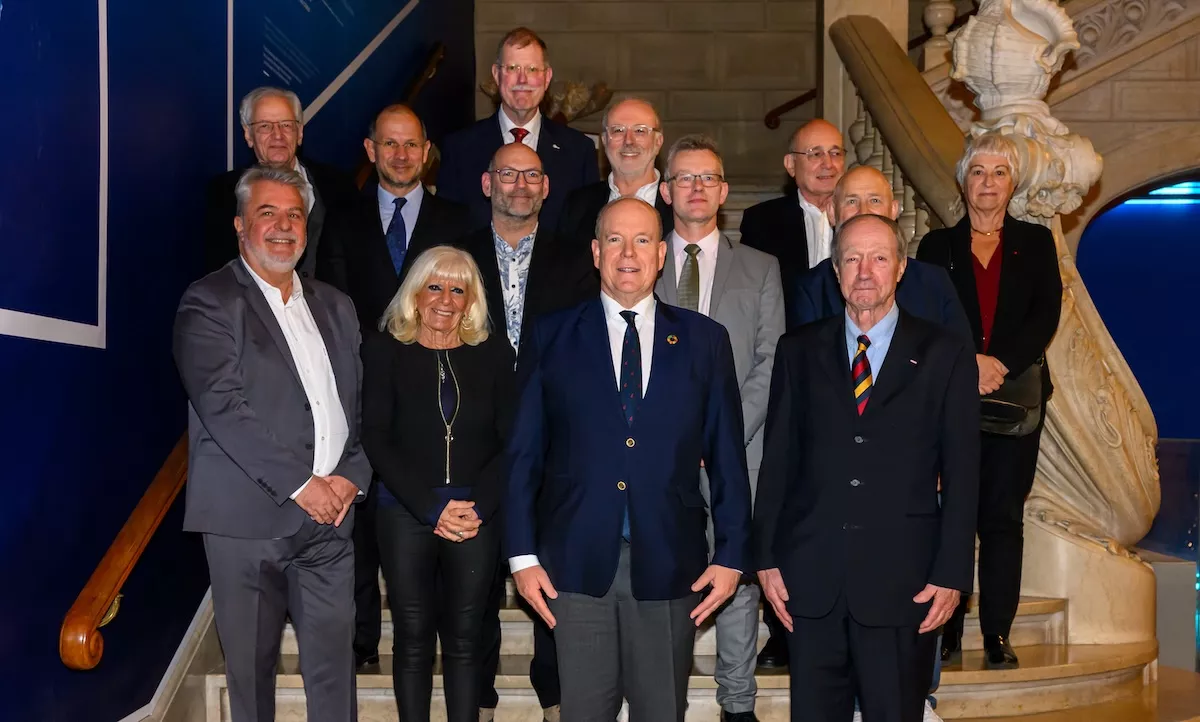
The Centre Scientifique de Monaco (CSM) recently hosted its Comité de Perfectionnement – a scientific advisory board composed of distinguished researchers from leading French and European institutions – for a comprehensive review of its strategic direction and scientific output. Held from 26th to 28th November 2025, the session marked a pivotal moment for the institution as it enters a new phase of leadership and interdisciplinary expansion.

This year’s committee coincided with significant changes in governance at the CSM, including the appointment of a new Chair of the Board, a new Scientific Director, and a new Secretary General. The committee, presided over by Professor Dominique Doumenc of the Muséum National d’Histoire Naturelle in Paris, assessed the work carried out across the marine biology, polar biology, medical research, and molecular biology departments.

Multi-disciplinary science aligned with Monaco’s environmental mission

The committee acknowledged numerous advancements achieved by CSM’s teams over the past four years, highlighting progress in emerging scientific fields, the expansion of international research collaborations, and the Centre’s commitment to science communication and training. Special attention was paid to the growing integration of cross-disciplinary methods that link biodiversity with human health.

“This was an intense and inspiring moment for us to present our achievements and future scientific vision to such a high-level panel of experts,” said Dr. Sylvie Tambutté, the CSM’s new Scientific Director. “In a time of increasing environmental pressures, research into life systems is more essential than ever. Being able to rely on the committee’s independent, forward-looking insights is a major strength for our work.”

The committee praised the CSM’s proactive approach in strengthening synergies across departments and its responsiveness to global scientific priorities. Their final recommendations, expected in the coming weeks, will help shape the next stage of the CSM’s mission.

Supporting Monaco’s role in global science

Following the review, Professor Doumenc noted that the CSM remains “a major tool for the Principality to respond to the effects of global physical changes on ecosystems and living beings – from the molecular scale to human health.”

The 2025 committee brought together a wide range of experts from institutions such as INSERM, CNRS, Sorbonne Université, Université Côte d’Azur, and the Institut de Recherche pour le Développement, as well as representatives from Monaco’s own Department of Social Affairs and Health.

Stay updated with Monaco Life: sign up for our free newsletter, catch our podcast on Spotify, and follow us across Facebook,  InstagramLinkedIn, and Tik Tok.

Photo source: CSM 

Interview: Gaël Rivière on sport as “a weapon of mass inclusion”

Speaking at Monaco’s Handipact event on Wednesday December 3rd, Olympic cécifoot champion Gaël Rivière delivered a powerful message about how sport can change perceptions of disability.

The President of the French Handisport Federation and practising corporate lawyer was the keynote speaker at the Méridien Beach Plaza gathering, which marked the International Day of Persons with Disabilities and reviewed two years of the Principality’s Handipact policy.

Rivière shared his conviction that “sport can be a weapon of mass inclusion” drawing on both his professional experience as a lawyer and his sporting journey from silver at London 2012, through failing to qualify for Rio, finishing last at Tokyo 2010, to finally winning gold at Paris 2024.

The presumption of incapacity

Rivière described what he calls a “generalised presumption of incapacity” that people with disabilities frequently encounter. He gave the examples of renewing his passport, when the official asked his ‘companion’ – who happened to be a stranger in the waiting room – for Rivière’s personal details; and when buying his first property – despite being a qualified lawyer – the notary insisted that random people from the waiting room witness his signature.

“These attitudes show that people naturally associate visual impairment with the idea that you’re incapable of knowing your name and address; incapable of signing; incapable of moving around,” he said.

He highlighted the importance of focusing on the “situation of disability” rather than defining people by their condition.

In his legal work, Rivière uses screen-reading software with a synthetic voice that he can accelerate to a speed faster than most people can read visually. As a result, he often processes information more quickly than his sighted colleagues. Most of his clients work with him remotely and are unaware of his visual impairment. “It’s satisfying to know that clients can’t tell whether I have a disability,” he said. “The way I work, the quality of what I deliver — I make mistakes like anyone, but not because I can’t see.”

How sport changes everything

The Paris Paralympics demonstrated sport’s power to shift perceptions. The public created silent waves of applause to support the athletes. One child told Rivière afterwards: “Honestly sir, you’re really great, even if you didn’t touch the ball much during the final.”

“I find something superb in this somewhat painful compliment,”Rivière explained, “because it shows the only thing that mattered to this kid was the sporting performance. There was no more compassion; no more benevolence.”

He quoted his coach’s philosophy: “Are we the best in the world? We’re not the best in the world footballistically. Do we need to be the best to win? We don’t need to be the best to be winners.”

Stay updated with Monaco Life: sign up for our free newsletter, catch our podcast on Spotify, and follow us across Facebook,  InstagramLinkedIn, and Tik Tok.

Main photo of Gaël Rivière by Monaco Life.

The great wealth transfer begins: billionaire heirs inherit nearly $300 billion in one year

The world’s wealthiest families are entering a new era, as bold entrepreneurship collides with the largest inheritance wave ever recorded. According to UBS, global billionaire wealth hit an all-time high in 2025 – but it’s what happens next that may redefine legacy, leadership and where the smart money flows.

Global billionaire wealth has surged to a record US$15.8 trillion in 2025, up 13% in just 12 months, according to UBS’s eleventh Billionaire Ambitions Report. While 196 self-made billionaires were responsible for adding US$386.5 billion to this total, it was a parallel force – inheritance – that made headlines: 91 heirs inherited US$297.8 billion, marking the largest transfer in the history of the report.

Speaking at a virtual roundtable on Thursday, Benjamin Cavalli, Co-Head of EMEA at UBS Global Wealth Management, described the trend as “a fresh wave of wealth creators and inheritors… heralding a new era that will transform family dynamics, increase global collaboration, and unlock opportunities across borders.”

UBS also revealed that 860 families now qualify as multi-generational billionaire dynasties, collectively managing US$4.7 trillion, and that this legacy wealth is expanding rapidly: fourth-generation billionaire families grew by over 10% this year alone.

Women and ‘Next in Line’ heirs take greater control

The face of global wealth is also becoming more diverse. This year, 43 women became billionaires – 27 via inheritance and 16 through self-made success – and women’s average wealth grew by 8.4%, more than double the rate of their male counterparts.

“We’ve observed that wealth is increasingly passed not just to children but also to spouses or partners, especially widows and second-generation inheritors,” said Cavalli. “This is why we talk not just about the ‘Next Generation’, but the ‘Next in Line’.

Women are managing wealth with “more disciplined, risk-aware approaches”, he said, and are showing a strong preference for diversified, impact-focused portfolios.

While many female billionaires continue to hold wealth in consumer and retail sectors – often through inherited businesses – Asia-Pacific stands out for producing a growing number of self-made female billionaires, often in tech or finance.

Heirs seek independence over entitlement

UBS found that more than 80% of billionaires with children want them to succeed independently, not rely solely on inheritance. Many are encouraging personal ambition and philanthropy over tradition, even as they prepare to pass on staggering levels of capital.

“The real legacy of the family is not the business itself, but the values bestowed on the next generation,” one billionaire told researchers. Another added, “My wish is that they choose paths that make them happy – not simply focus on money or tradition.”

Yet, 43% still want to see their children grow the family business or preserve the family name, suggesting the line between legacy and evolution remains delicately drawn.

AI, longevity and social impact now top priorities

At the roundtable, Michael Viana, head of strategic client coverage at UBS, shared that 75% of billionaire clients believe artificial intelligence is the single most important social challenge facing the next generation – ahead of climate change and inequality. In Asia-Pacific, that number rises to 90%.

UBS has also included longevity for the first time in its report. “Almost half of respondents expect to live longer than they did just a decade ago,” said Viana. This is already influencing how families update trusts, estate structures and portfolio strategies, especially across Europe and Asia.

Billionaire mobility and new investment focus

Wealth isn’t just changing hands – it’s changing postcodes. 36% of billionaires have already relocated, with another 9% considering a move. Quality of life, geopolitical risk and tax efficiency were the top reasons cited, adding new layers of complexity to family governance and global estate planning.

“Families must now navigate legal, cultural and financial challenges across borders,” said Maximiiian Kunkel, Chief Investment Officer – Global Family and Institutional Wealth within UBS Global Wealth Management. “When it comes to Europe, certainly Switzerland, Monaco, and Italy are among the top choices. In the Middle East, we’re seeing Abu Dhabi and Dubai emerge as major relocation hubs. And in Asia-Pacific, Singapore remains the most preferred destination.”

When it comes to investment, billionaires remain remarkably optimistic. According to Kunkel, 40% plan to increase equity exposure, and only 2% intend to reduce emerging markets holdings, suggesting long-term confidence in economic fundamentals.

While North America remains the top investment destination, optimism for Western Europe and Greater China has grown significantly. Over 40% now cite Western Europe as the most attractive region for returns, reflecting what UBS calls the “three Ps”: policy, positioning and profit development.

In terms of asset allocation, private equity, infrastructure and hedge funds remain popular, while a third of billionaires plan to increase gold exposure – a clear signal of caution amid market uncertainty.

Billionaire portfolios shift focus to long-term growth and resilience

UBS anticipates that future billionaire portfolios will be increasingly shaped by structural shifts rather than short-term cycles. In the coming year, many plan to expand their exposure to private equity, hedge funds, infrastructure, and emerging markets — signalling a pivot towards strategies that can navigate complexity while capturing long-term growth. As new generations take on greater responsibility, investment decisions are expected to reflect not only financial objectives but broader concerns around innovation, resilience and global impact.

Stay updated with Monaco Life: sign up for our free newsletter, catch our podcast on Spotify, and follow us across Facebook,  InstagramLinkedIn, and Tik Tok.

Monaco launches real-time parking app in two-year Handipact review

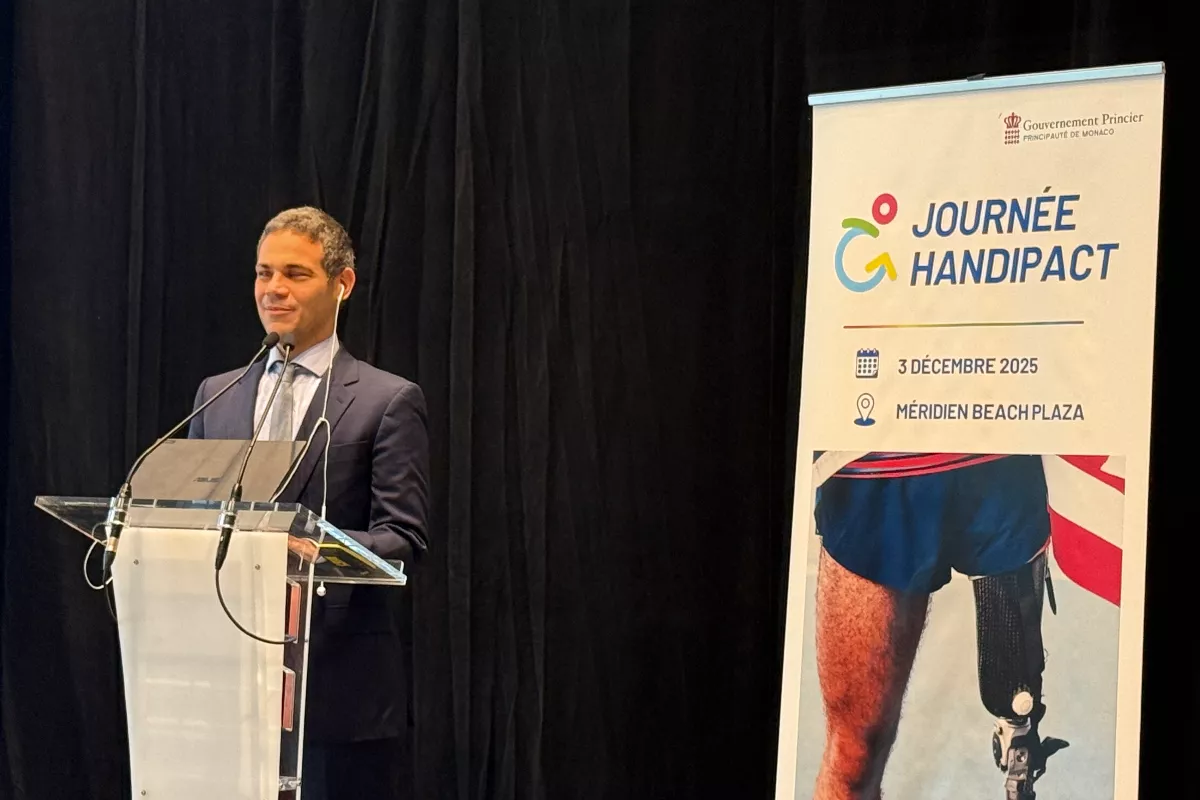
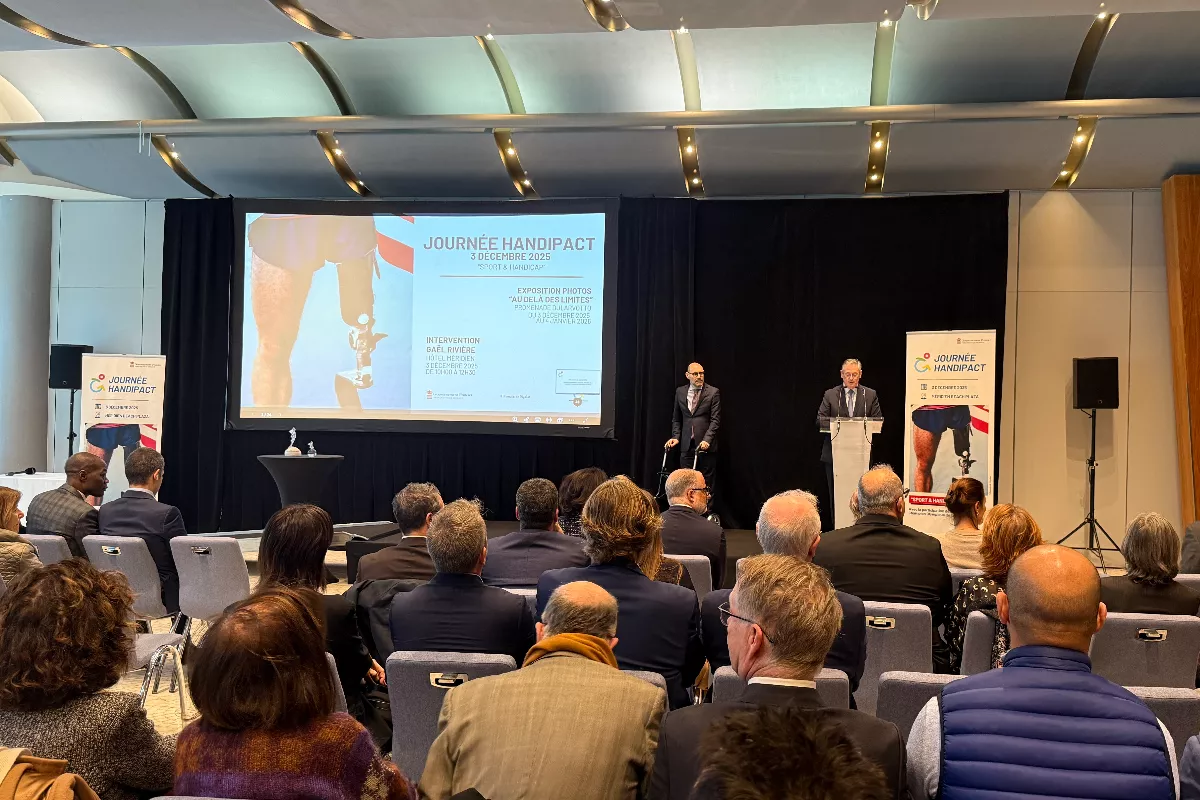
On December 3rd at the Méridien Beach Plaza, Lionel Galfré, Monaco’s Delegate for Disability, presented a review of the Handipact policy launched two years ago. The initiative was built on a fundamental principle: “Nothing about us without us”.

“We wanted voluntary, concerted action, with everyone, for the whole of society,” Galfré explained. “We’ve placed people with disabilities at the heart of our approach.”

The policy created a working group bringing together eight Monegasque associations representing different types of disability, ensuring that those with lived experience shape the initiatives that affect them.

Nine pillars of action

Over the past two years, Handipact has delivered tangible results. A bespoke 20-minute training module on disability awareness had been created and made available to all public sector employees. Meanwhile, field testing was conducted with associations and the public car parks service to ensure theoretical accessibility translated into practical reality.

In October, Monaco also launched StreetNav, a smartphone applications that Galfré described as “a kind of Waze for people with reduced mobility”. The app provides real-time information about obstacles, lifts and accessible routes through Monaco’s challenging terrain.

“Our territory is complex, hilly and constantly evolving,” Galfré noted. “It’s essential to have information updated in real time.”

During Handipact 2025, photo by Monaco Life

Within days, another innovation will launch as well: an application identifying accessible parking spaces in real time, showing whether they’re occupied and providing geolocation. “To my knowledge, I don’t have other examples of territories doing this.” Galfré said.

The Principality has also redesigned its disability card with an internationally recognisable logo. “It’s my pass. I show it, it’s identifiable everywhere, even abroad,” Galfré explained. “It’s a tiny detail, but until you’ve experienced it, you don’t know how important it is.”

Lastly, more than 400 commercial establishments have been approached with practical guidance on improving accessibility, supported by information about government assistance and free advisory services.

International recognition

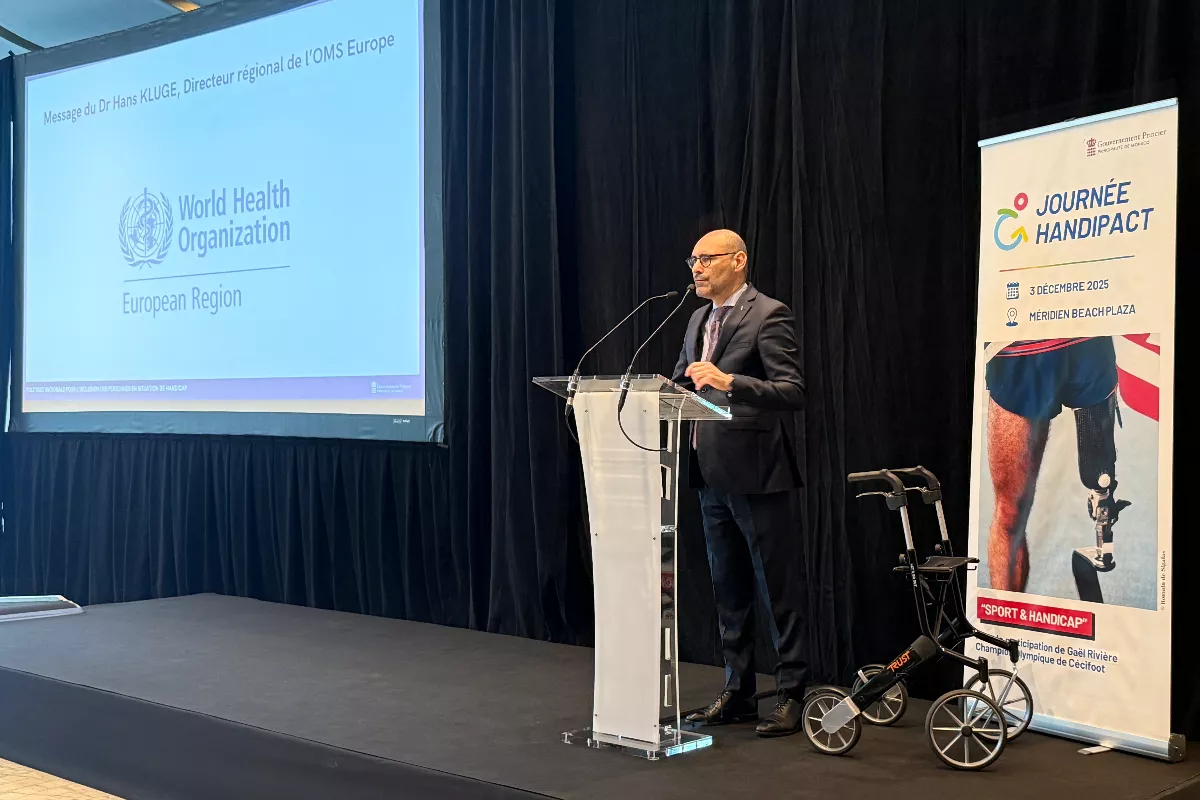
Dr Hans Kluge, WHO Regional Director for Europe, commended Moanco’s approach via video message, noting that people with disabilities die on average 20 years earlier than those without due to health inequalities. This is why he thanked Monaco for sharing data and insights from its Handipact programme, which will contribute to the WHO’s regional progress report.

“Monaco shows that a small state can have a big impact,” Kluge said.

Handipact awards

The Handipact Trophy 2025 was awarded to the Grimaldi Forum for its attention to inclusion during the ‘Couleurs!’ exhibition created by Monegasque artist Caroline Bergonzi, while a special prize went to the Association Monégasque des Handicapés Moteurs for its investment in Handipact projects throughout 2025.

The event. marking the International Day of Persons with Disabilities, forms part of Monaco’s programme as World Capital of Sport 2025.

Stay updated with Monaco Life: sign up for our free newsletter, catch our podcast on Spotify, and follow us across Facebook,  InstagramLinkedIn, and Tik Tok.

Main photo of Lionel Galfré by Monaco Life.