
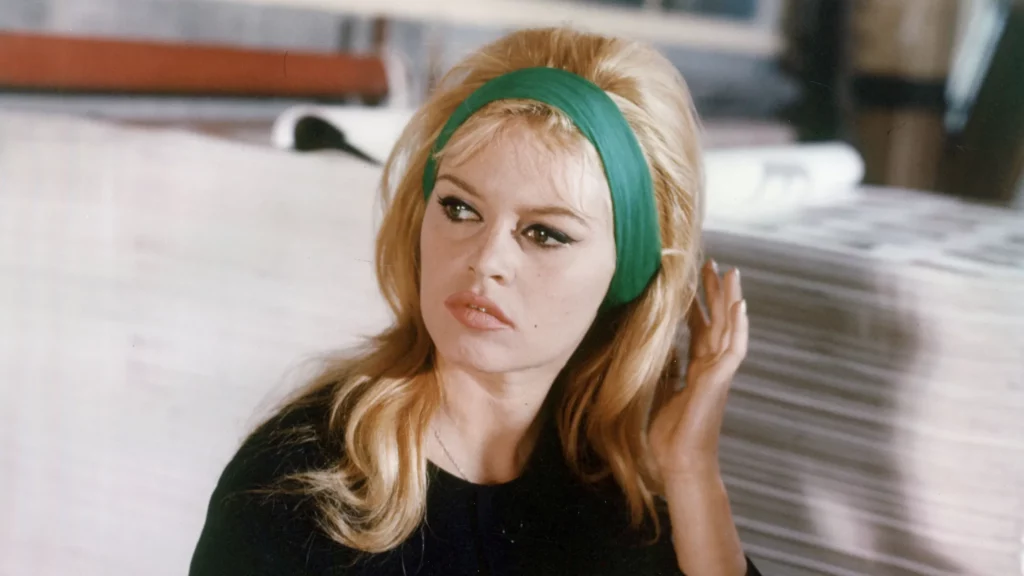
Brigitte Bardot, French screen legend, dies aged 91

Brigitte Bardot, the French actor who embodied the liberated woman of the 1960s before abandoning cinema for animal welfare activism, has died aged 91.

The Brigitte Bardot Foundation announced her death on Sunday without specifying the time or place. “The Brigitte Bardot foundation announces with immense sadness the death of its founder and president, Madame Brigitte Bardot, a world-renowned actress and singer, who chose to abandon her prestigious career to dedicate her life and energy to animal welfare and her foundation,” the statement said, according to Agence France-Presse.

Bardot shot to international fame with the 1956 film And God Created Woman, directed by her then-husband Roger Vadim. The film, in which she played an uninhibited teenager in Saint-Tropez, became a huge hit in France and internationally, catapulting her into the front rank of French cinema.

For two decades, she embodied the archetypal “sex kitten” of European cinema, appearing in high-profile films including Henri-Georges Clouzot’s Oscar-nominated The Truth, Louis Malle’s Very Private Affair opposite Marcello Mastroianni, and Jean-Luc Godard’s Contempt.

From stardom to activism

Born in Paris in 1934, Bardot grew up in a prosperous Catholic family and trained as a ballet dancer at the prestigious Conservatoire de Paris. She found work as a model whilst still a teenager, appearing on the cover of Elle in 1950 aged 15.

Her modelling work led to film roles, and at one audition she met Vadim, whom she married in 1952 after turning 18. She played Dirk Bogarde’s love interest in Doctor at Sea, before And God Created Woman made her an international icon.

Bardot inspired artists and intellectuals throughout the 1960s. The young John Lennon and Paul McCartney reportedly demanded their girlfriends dye their hair blonde in imitation of her. Simone de Beauvoir published a famous 1959 essay, Brigitte Bardot and the Lolita Syndrome, framing the actor as France’s most liberated woman. In 1969, she became the first real-life model for Marianne, the symbol of the French republic.

She also pursued a music career, recording the original version of Serge Gainsbourg’s Je T’Aime… Moi Non Plus, which he had written for her during an extramarital affair. After her then-husband Gunter Sachs discovered the affair, Bardot asked Gainsbourg not to release it. He later re-recorded it with Jane Birkin to huge commercial success.

However, Bardot found fame increasingly oppressive. “The madness which surrounded me always seemed unreal. I was never really prepared for the life of a star,” she told the Guardian in 1996.

She retired from acting in 1973 aged 39, after making the historical romance The Edifying and Joyous Story of Colinot. Her focus shifted entirely to animal protection, joining protests against seal hunts in 1977 and establishing the Brigitte Bardot Foundation in 1986.

Controversial political stance

Bardot’s animal rights activism evolved into increasingly controversial political positions. She sent protest letters to world leaders over issues including dog extermination in Romania, dolphin killing in the Faroe Islands and cat slaughter in Australia, alongside regular commentary on religious animal slaughter.

Her 2003 book A Cry in the Silence espoused rightwing politics and criticised gay men and lesbians, teachers and what she termed the “Islamisation of French society”, resulting in a conviction for inciting racial hatred.

Bardot openly supported France’s Front National, now renamed National Rally. She told the Guardian she shared party founder Jean-Marie Le Pen’s views “completely” on immigration. In 2006, she wrote to then-interior minister Nicolas Sarkozy claiming France’s Muslim population was “destroying our country by imposing its acts”.

She was married four times: to Vadim (1952-1957), Jacques Charrier (1959-1962, with whom she had a son Nicholas in 1960), Sachs (1966-1969), and former Le Pen adviser Bernard d’Ormale, whom she married in 1992. She also had high-profile relationships with Jean-Louis Trintignant and Gainsbourg.

Bardot’s legacy remains complex. She revolutionised cinema’s portrayal of female sexuality and became an icon of 1960s liberation, whilst her later activism for animal welfare influenced conservation movements. However, her embrace of far-right politics and convictions for racial hatred complicated her cultural standing in France.

Stay updated with Monaco Life: sign up for our free newsletter, catch our podcast on Spotify, and follow us across Facebook,  InstagramLinkedIn, and Tik Tok.

Photo of Brigittte Bardot in ‘Le Mepris’ (1963)
Sixty residents spend Christmas in hotels after Monaco evacuations

Sixty people woke up on Christmas morning in Monaco hotel rooms rather than their own homes, after a retaining wall monitoring crisis escalated dramatically on Christmas Eve.

Authorities ordered immediate evacuation of buildings in Monaco and neighbouring Beausoleil at 2:15pm on 24th December, giving residents barely three hours to pack before spending the festive period in emergency accommodation. By 6pm, all had been installed in a Monaco hotel offering Christmas Eve dinner and Christmas Day lunch, according to a Monaco government press release.

The dramatic intervention came after monitoring equipment detected what Minister of Equipment and Urban Development Céline Caron-Dagioni described as a “critical alert threshold” in the hours before evacuation.

“We wanted to allow families to spend Christmas in complete safety rather than with their eyes fixed on an indicator,” Caron-Dagioni told journalists at a 3pm press conference, as firefighters and police were knocking on doors in the evacuation zone.

A week of mounting tension

The Christmas Eve evacuation capped a tense week that began quietly enough. On Saturday 20th December, the government announced that 840 high school students would start January term remotely due to concerns about the retaining wall above their temporary campus at the former Collège Charles III.

By that afternoon, workers were installing active ties on the failing wall to control pressure from the embankment above. The Annonciade car park closed on Monday.

But the real alarm came Tuesday afternoon. At 5pm, the government warned residents in the “geotechnical influence zone” that evacuation might be necessary. An hour later, according to Monaco Matin, residents of the Virginia Palace and Point du Jour buildings in Monaco began receiving letters from police.

“Prepare a bag containing clothing changes for four to five days,” the letters advised, along with toiletries, essential documents and necessary medications. Across the border in Beausoleil, municipal police delivered similar warnings to residents at 24 and 26 Boulevard Guynemer.

Less than 24 hours later, the evacuation began.

On Wednesday morning, Minister of State Christophe Mirmand convened a crisis meeting. Monaco Matin reporters in the Annonciade neighbourhood spotted the first signs of mobilisation at 2pm: firefighters, police and Prince’s Carabiniers converging on the former college. At 3pm, the government summoned journalists to the Ministry of State for the press conference.

Simultaneous cross-border operation

Sixteen minutes later, the operation began on both sides of the border. Monaco evacuated Virginia Palace and Point du Jour, according to a government press release. Beausoleil evacuated 24 and 26 Boulevard Guynemer after activating its Municipal Safeguard Plan in coordination with Monaco and French state authorities, a Beausoleil municipal statement confirmed. Monaco Matin reported that 31 Rue des Orchidées residents in Beausoleil were also evacuated.

Colonel Tony Varo, Superior Commander of the Public Force, detailed the choreography: “Avenue de l’Annonciade has been neutralised and will be closed to traffic and pedestrians for obvious safety reasons. The area was secured, then firefighters and police presented themselves to residents who had been identified beforehand.”

Prince’s Carabiniers ferried residents to the hotel in two specially chartered minibuses, Monaco Matin reported.

The minister explained what monitoring equipment had detected: “The pressure observed in recent days on the wall has been stabilised, but at a level that remains too high in terms of prevention.” She confirmed the nearby Tour Odéon tower, structurally independent, remained outside the safety perimeter.

Minister of Social Affairs and Health Christophe Robino told the press conference that multiple government departments had mobilised to support evacuees throughout the process, with teams ready to redirect anyone who hadn’t been contacted and might arrive seeking help.

Decades of surveillance

The wall has been monitored since the 1970s and equipped with sensors since the 2000s. Reinforcement work began in July 2025, with surveys during October half-term. But recent monitoring revealed accelerated deformation requiring urgent intervention.

Authorities are finalising studies to identify an alternative site for the 840 Albert I High School students, whose remote learning “will be temporary”, the government stated. Details will be announced early this week.

The government is expected to provide another update on Monday before confirming where students will continue their education.

Stay updated with Monaco Life: sign up for our free newsletter, catch our podcast on Spotify, and follow us across Facebook,  InstagramLinkedIn, and Tik Tok.

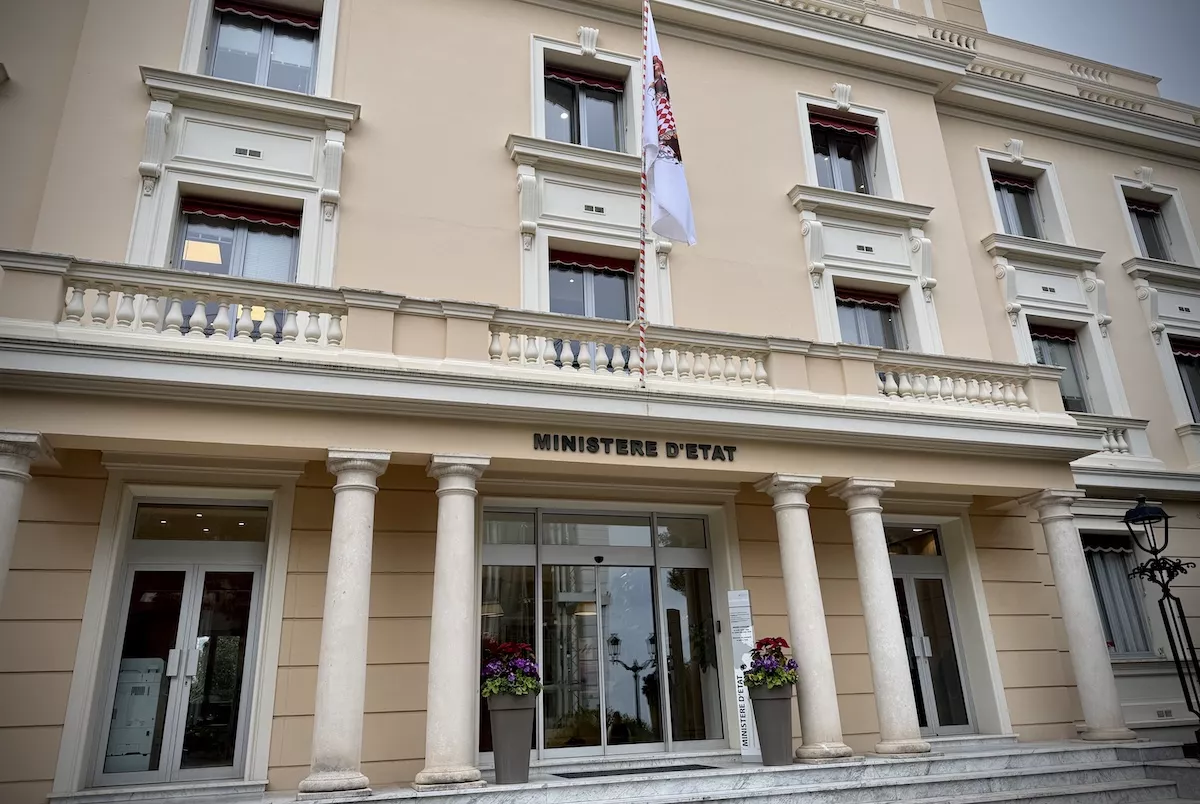
Photo of Monaco’s Ministry of State, credit Cassandra Tanti