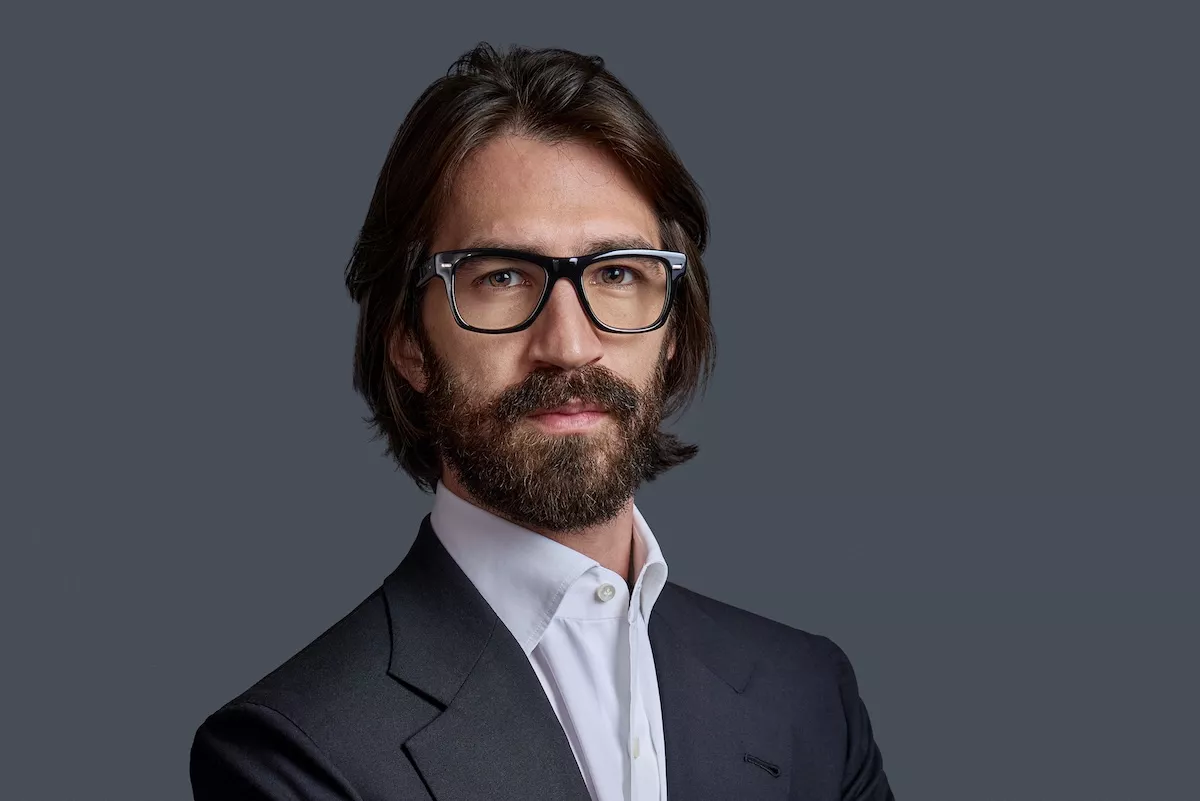
Ray-Ban President to receive top honour at Monte-Carlo Fashion Week

The President of Ray-Ban will receive the Monte-Carlo Fashion Week Award 2026 in a ceremony that celebrates the fusion of entrepreneurial vision and positive social change.

Leonardo Maria Del Vecchio, who leads the iconic eyewear brand whilst serving as Chief Strategy Officer of EssilorLuxottica and President of the OneSight EssilorLuxottica Foundation in Italy, will accept the honour on 17th April during Monaco’s premier fashion event.

The award recognises executives who demonstrate what organisers call the balance between business achievement and social responsibility. EssilorLuxottica, formed from the 2018 merger of Italian eyewear giant Luxottica and French lens manufacturer Essilor, is one of the world’s largest eyewear companies with brands including Ray-Ban, Oakley and Persol.

Federica Nardoni Spinetta, who founded Monte-Carlo Fashion Week and leads the Chambre Monégasque de la Mode, said the event aimed to highlight those who “transform an entrepreneurial vision into concrete positive impact on society.”

Monaco connection

Del Vecchio said receiving the award in Monaco held personal significance. “Receiving it in Monte-Carlo, a city to which I have been deeply attached since childhood, makes it even more meaningful,” he said in a statement.

He added that his company would continue focusing on “people, innovation, responsibility and accessibility.”

Fashion week’s evolving focus

Monte-Carlo Fashion Week has increasingly emphasised sustainability and social responsibility alongside traditional fashion showcasing. The event, which receives official backing from the Principality, seeks to distinguish itself from larger fashion weeks by focusing on what it describes as ethical and responsible fashion practices.

The 2026 edition continues this approach, with organisers stating the event gives voice to designers working on inclusive and sustainable practices. It comes as the fashion industry has faced scrutiny over “greenwashing” claims, with critics questioning whether sustainability messaging matches actual environmental and social impact.

Del Vecchio’s award reflects a broader trend in fashion industry recognition extending beyond design creativity to include corporate social responsibility initiatives. The OneSight Foundation, which he leads in Italy, provides vision care services in underserved communities, though the foundation is funded by EssilorLuxottica, which benefits commercially from increased awareness of vision needs.

Stay updated with Monaco Life: sign up for our free newsletter, catch our podcast on Spotify, and follow us across Facebook,  InstagramLinkedIn, and Tik Tok.


Monaco warns residents of scam targeting Espace Lamartine membership

The Monaco Mairie has issued a fraud alert after a scammer began targeting residents by falsely claiming to represent the municipal social services and offering membership to Espace Lamartine.

The fraudster contacts victims claiming to be a social services manager and proposes membership to the community facility, mentioning a partnership with a bank. The person tells targets they will visit their homes to finalise the membership and offers a box of chocolates as a “welcome gift”.

The town hall confirmed the approach is a scam attempt and warned residents not to respond.

No home visits for membership

According to the Mairie, no municipal agents conduct home visits for membership applications. All membership requests must be made directly through official channels, not at private residences.

The municipality also clarified that no bank partnership is involved in Espace Lamartine membership procedures.

Espace Lamartine serves as a community centre providing social activities and services to Monaco residents. Legitimate membership information is available through official town hall channels.

How to respond

Residents who are contacted by someone claiming to offer Espace Lamartine membership should not engage with the caller and should immediately report the incident to relevant authorities.

Stay updated with Monaco Life: sign up for our free newsletter, catch our podcast on Spotify, and follow us across Facebook,  InstagramLinkedIn, and Tik Tok.

Monaco edge past Real Madrid in thrilling EuroLeague game

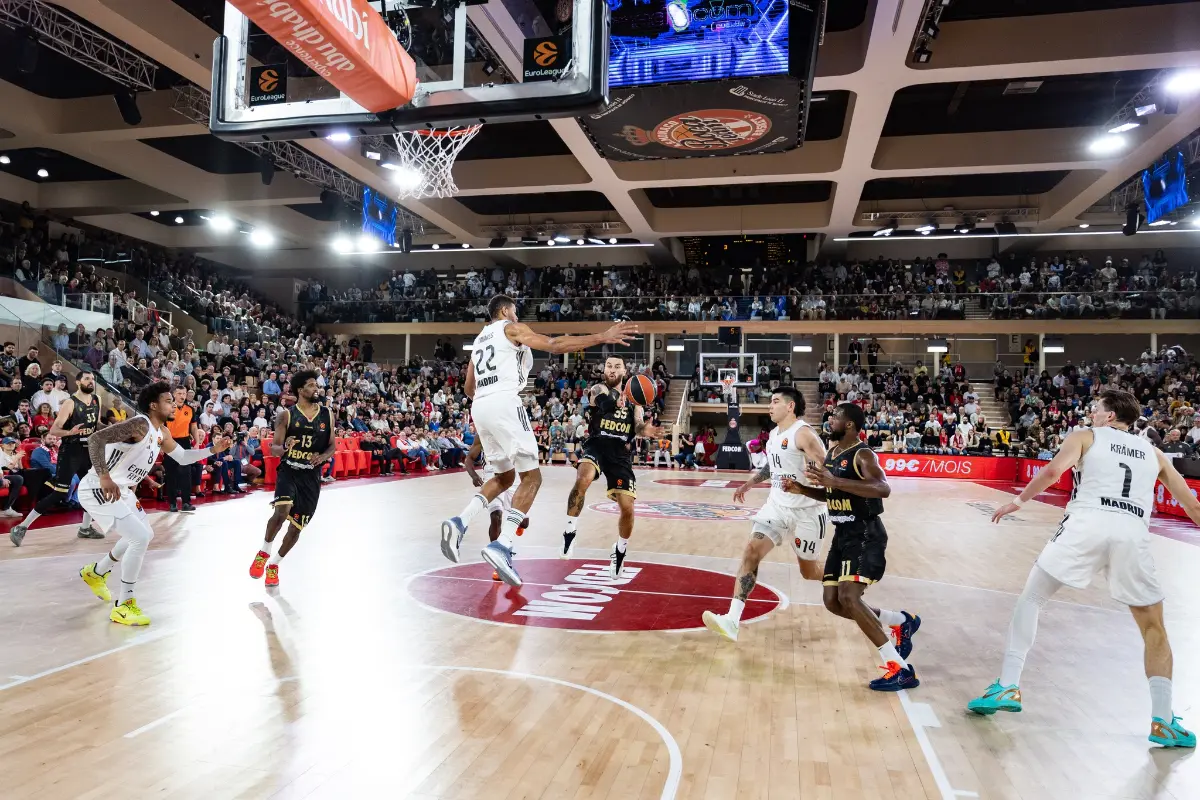
AS Monaco Basket claimed a thrilling 100-95 victory over Real Madrid in a tense EuroLeague basketball match at the Gaston Médecin arena, securing an important win in front of their first sell-out crowd of the season.

The result keeps the home side in sixth place in what’s proving to be a tight EuroLeague campaign. Both teams came into the game with identical 10-7 records, and the match lived up to the fans’ anticipation between two evenly matched sides.

Real Madrid’s Facundo Campazzo was the game’s standout performer with 28 points, repeatedly threatening from long range. Centre Walter Tavares also stood out from early on, dominating with 21 points and 11 rebounds that caused Monaco problems throughout the first half.

However, Monaco’s strength lay in their balanced attack. Elie Okobo led the scoring with 22 points, while Mike James led the offence with 15 points and five assists. Matthew Strazel and Nemanja Nedovic both contributed 12 points, with Alpha Diallo adding 11 in a solid all-round display.

The contest remained on a knife-edge for three quarters, with the teams locked at 70-70 heading into the final period. It was then that Monaco found another gear. Nedovic and Nikola Mirotic took control, with the latter’s back-to-back three-pointers managing to establish a 10-point cushion at 85-75.

Campazzo continued to fire from distance in the closing stages, but Monaco’s defence held firm under pressure to close out the victory in front of their home crowd.

Strazel, who spent much of the evening battling Campazzo defensively, said afterwards: “I feel like I did a great job on him, but he still finished with 28 points. Defensively, we made the right stops at the right moments.”

Monaco coach Vassilis Spanoulis praised his team’s work on the boards during difficult stretches. “It’s a great victory for us,” he said, though he acknowledged the challenge ahead with four players due at the All-Star Game before their next fixture against Barcelona.

The win keeps Monaco in the playoff places in what has been an unusually competitive EuroLeague season, where staying in the top eight requires consistent performances at home.

Stay updated with Monaco Life: sign up for our free newsletter, catch our podcast on Spotify, and follow us across Facebook,  InstagramLinkedIn, and Tik Tok.

Main photo credit: Direction de la Communication – Manuel Vitali

Winter sales 2026: when the bargains begin in Monaco and France

Every year after the Christmas holidays end, people start to look forward to the winter sales: four weeks of shopping therapy with official discounts starting in early January. 

In Monaco, like any other year, the winter sales kick off slightly earlier. Most shops begin their sales on Thursday 2nd January 2026, while sports retailers start later on Saturday 15th February.

Across most of mainland France, including the Côte d’Azur, the winter sales will take place from Wednesday 7th January until Tuesday 3rd February 2026, starting at 8am on the opening day.

Online shops must follow these same dates, no matter where they’re located.

However, shops in four departments along France’s eastern frontier get a one-week head start – beginning Friday 2nd January and finishing Thursday 29th January. This earlier schedule helps them stay competitive with retailers just across the border. The departments are: Moselle, Meurthe-et-Moselle, Meuse, and Vosges.

The rules behind French sales

France’s sales periods operate under strict regulations. Retailers can only reduce prices on goods they had in stock before the sales started, and all discounted items must be clearly labelled.

Price cuts must be measured against whatever the shop charged during the month beforehand, and businesses can only use the term ‘soldes’ during official sales windows.

Standard consumer rights apply throughout. While physical shops only have to accept returns on defective items, online purchases come with the usual fortnight to change your mind.

Reductions are set to reach 50% at shops across the region, with some retailers dropping prices further as the month progresses.

Stay updated with Monaco Life: sign up for our free newsletter, catch our podcast on Spotify, and follow us across Facebook,  InstagramLinkedIn, and Tik Tok.

Main photo credit: Ron Lach, Pexels. 

Louis Sarkozy proposes removing road signs to improve driver safety

Louis Sarkozy has called for removing traffic lights, road markings and signage to make drivers more responsible, citing European examples where accident rates dropped after signalisation was simplified or eliminated.

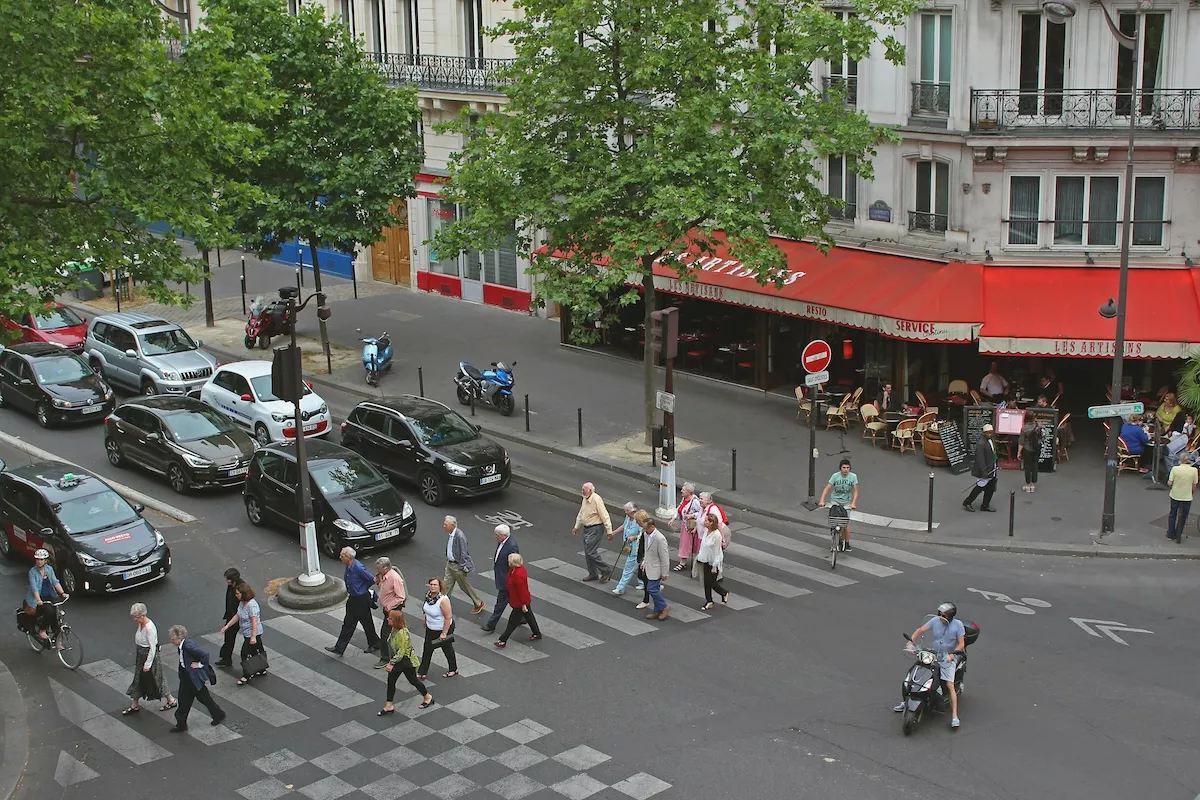
Speaking on RMC on 3rd December, the son of former French president Nicolas Sarkozy responded to a new VINCI Autoroutes study showing widespread rule-breaking by European road users. The fifth edition of the study, surveying 12,000 Europeans including 2,400 French respondents, found that 58 percent of French drivers fail to use indicators, 40 percent of cyclists admit running red lights, and 70 percent of pedestrians cross against signals.

“The solution here, as elsewhere, is more freedom, not less. What kills motorists is dependency,” Sarkozy said from his Menton home studio, where he regularly broadcasts commentary.

Naked roads concept

Sarkozy advocates for what he termed “an immense simplification of our roads: remove traffic lights, white lines, signage panels. In short: make citizens responsible for their own driving, instead of delegating it entirely to the highway code.”

The concept draws on “naked roads” pioneered by Dutch engineer Hans Monderman, which relies on fear of other road users to heighten attention and caution. According to Le Figaro, Sarkozy argues that without signalisation, drivers slow down, observe more carefully and anticipate better.

“Look at the survey: 95 percent of road users fear the behaviour of others. Naked roads use precisely this fear,” he said. “When there are no pavements, no traffic lights, no white lines, everyone pays more attention, citizens take responsibility, and what researchers call ‘implicit negotiation between users’ emerges. They become two to three times more cautious.”

International examples

Sarkozy cited Drachten in the Netherlands, where removing signalisation reportedly reduced accidents by 40 percent. He also claimed that London’s Kensington High Street saw a 44 percent accident reduction over three years after simplifying signalisation.

The philosophy contrasts sharply with French metropolitan traffic management. “When you make people responsible, they naturally become slower, more attentive and more generous with each other,” Sarkozy said. “It’s exactly the opposite of Parisian bureaucratic authoritarianism: you increase freedom and observe improved behaviour.”

He acknowledged one limitation: “It seems the only real problem with these ‘naked roads’ is that they work less well for elderly people and the visually impaired, but that’s about it.”

Road safety context

The VINCI Autoroutes study highlighted that nearly one in two road deaths in Europe involves vulnerable users such as pedestrians, cyclists or motorcyclists. The foundation’s research reveals a significant gap between traffic regulations and actual behaviour, with substantial percentages of all road user categories admitting to rule violations.

Sarkozy’s proposal represents a radical departure from current French road safety policy, which has increasingly relied on automated enforcement, reduced speed limits and expanded signalisation. The naked roads concept has been implemented in limited areas internationally, primarily in residential zones and town centres rather than main roads or motorways.

The approach remains controversial among traffic safety experts, with proponents citing reduced accident rates in trial zones whilst critics question applicability to high-traffic areas and express concerns about vulnerable road users including the elderly, visually impaired and children.

Stay updated with Monaco Life: sign up for our free newsletter, catch our podcast on Spotify, and follow us across Facebook,  InstagramLinkedIn, and Tik Tok.

Photo credit: J Shim, Unsplash


International school expansion drives private education boom as Monaco public enrolment drops

Monaco’s private school sector has grown 20% over the past decade, driven largely by the expansion of international schools catering to the Principality’s cosmopolitan population, whilst public school enrolment has declined to its lowest level in ten years.

The 2025-26 academic year saw 6,566 students enrolled across 16 schools, with private institutions now educating 2,427 students compared to 4,139 in public schools, according to statistics released by IMSEE in December. The private sector added 89 students this year whilst public schools lost 88 students, continuing a trend that has reshaped Monaco’s educational landscape.

International schools reshape the sector

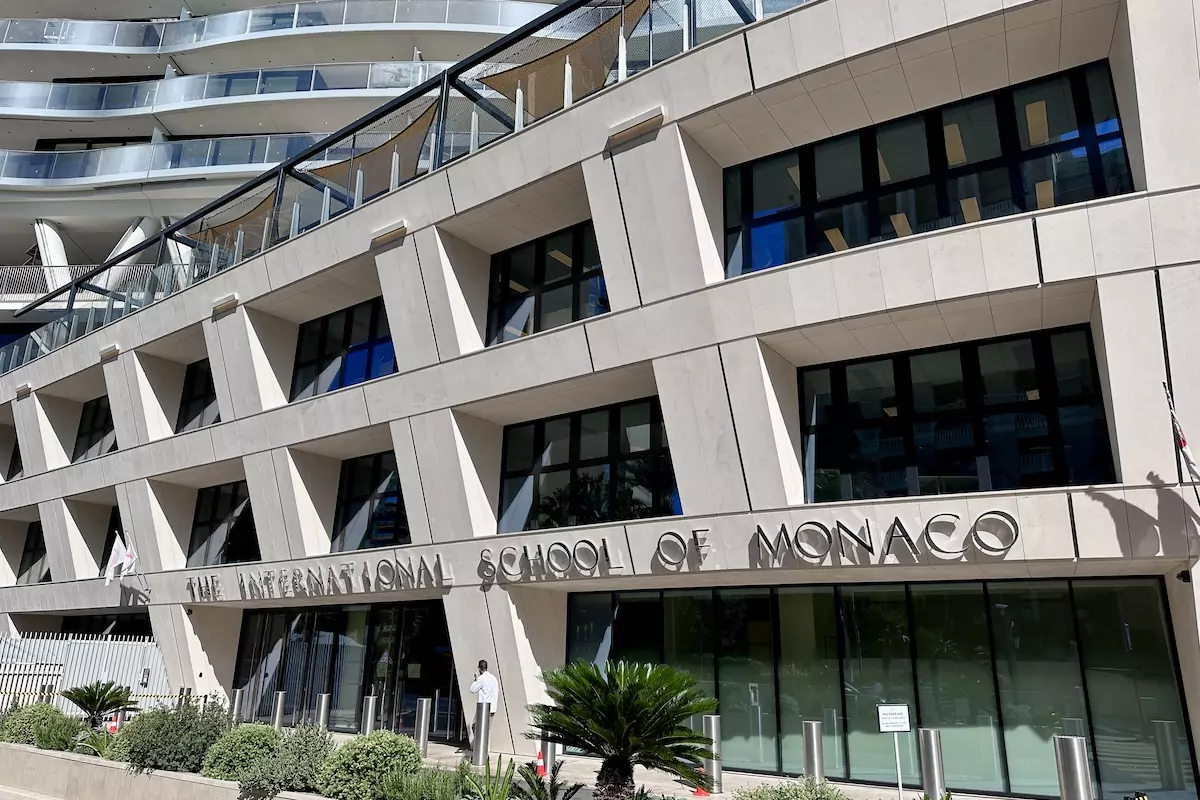
The opening of the British School of Monaco and the expansion of the International School of Monaco into larger premises explains much of the recent growth. Between 2022-23 and 2023-24, these two schools alone accounted for 102 of the 113 additional students registered across Monaco’s entire education system.

The International School of Monaco now serves 848 students, making it the third-largest school in the Principality after the Institution François d’Assise – Nicolas Barré (1,182 students) and École Saint-Charles III (1,125 students). The British School has grown to accommodate 399 students.

This expansion responds to Monaco’s increasingly international character. The student body represents 92 nationalities, with French students comprising 38 percent, Monegasques 20 percent, Italians 12.7 percent, British 5.9 percent and Russians 2.4 percent.

Nationality patterns reveal distinct educational preferences. British students show the strongest preference for private education, with three-quarters attending private institutions. In contrast, Monegasque, French and Italian students remain predominantly in public schools, though private schools are gradually gaining ground even among these traditionally public-leaning groups.

Public education contracts

Whilst private schools flourish, public education faces sustained contraction. Public school enrolment has dropped from around 4,350-4,400 students in 2019-20 to 4,139 students in 2025-26, the lowest level of the decade. The decline accelerated from 2020-21, with the steepest drops coinciding with the pandemic period and subsequent expansion of private alternatives.

The public sector still educates 63% of Monaco’s students and includes the Principality’s largest schools. However, the trend suggests public institutions are losing market share to private alternatives offering international curricula, English-language instruction and globally recognised qualifications.

Monaco residents favour private schools

Students living in Monaco show stronger preference for private education than those commuting from neighbouring communes. Among Monaco residents, 74.6% of those in private schools live in the Principality, compared to 65.7% in public schools.

For the 23.6% of students commuting from Beausoleil, Cap-d’Ail, La Turbie and Roquebrune-Cap-Martin, the pattern reverses: they represent 26.6% of public school students but only 18.4% of private school enrolment.

Nearly 70% of all students live in Monaco, reflecting the Principality’s appeal to international families seeking quality education in a compact, multilingual environment.

Diverse educational offerings

Monaco’s 16 schools accommodate varied educational needs. Elementary education serves 2,071 students (31.5%), whilst secondary education accounts for 3,511 students (53.5%). Secondary students are split between collège with 1,848 students, academic and technological tracks with 1,336 students, and vocational programmes with 282 students.

Additionally, 63 students benefit from adapted education through specialised programmes, representing 1% of enrolled students.

The system maintains gender balance with 50.7% boys and 49.3% girls across all schools.

See also: 

Inside the new state-of-the-art International School of Monaco campus

Stay updated with Monaco Life: sign up for our free newsletter, catch our podcast on Spotify, and follow us across Facebook,  InstagramLinkedIn, and Tik Tok.

Photo of the International School of Monaco by Cassandra Tanti