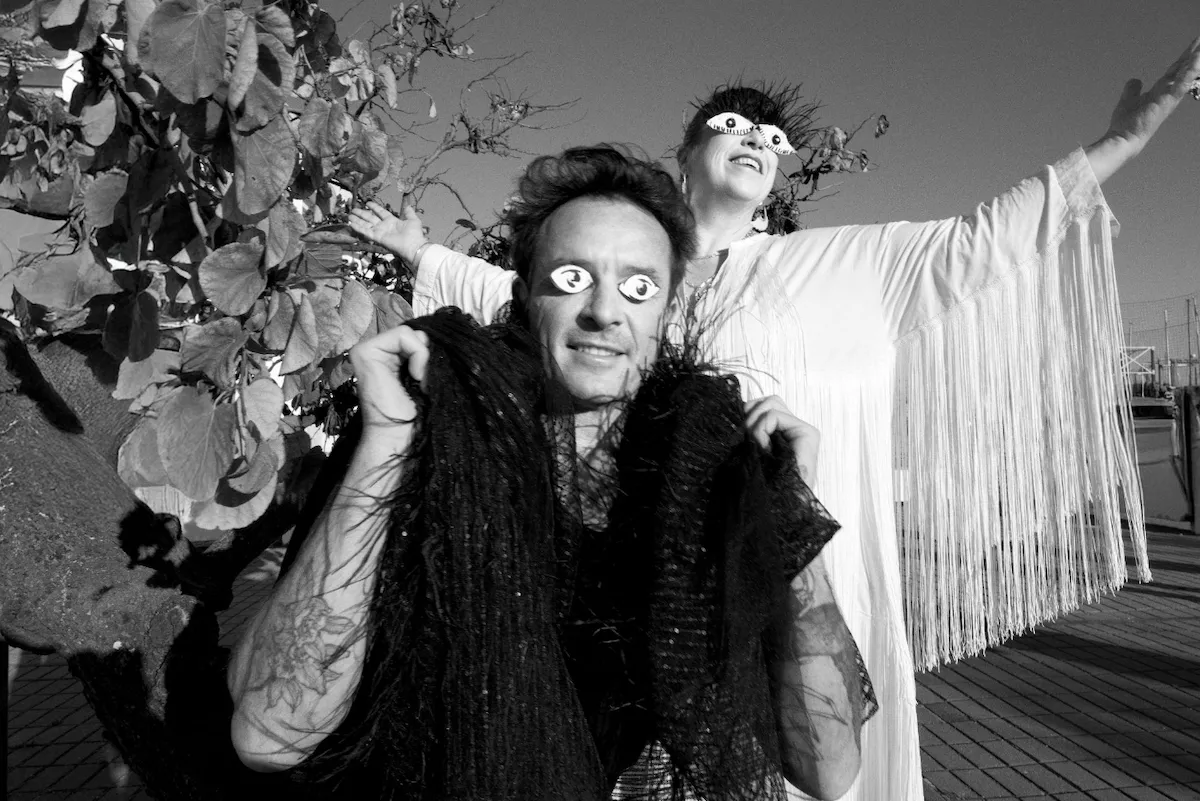
Belgian sculptor Arne Quinze will present a major exhibition at the Citadel of Villefranche-sur-Mer this summer, inviting Portuguese artist Joana Vasconcelos to collaborate on a body of work exploring the poetic, surreal and unexpected.
L’Absurde et le Rêve (The Absurd and the Dream) draws inspiration from Jean Cocteau, whose legacy remains deeply rooted in Villefranche-sur-Mer. The exhibition uses surrealism and dreamscapes to examine contemporary culture’s growing disconnection from nature, which Quinze considers profoundly damaging.
Exhibition spans indoor and outdoor spaces
Curated by Camille Frasca, director of La Citadelle, and Selcan Atilgan, founder of ARTSA Consultancy, the exhibition will occupy the entire Citadel complex through monumental outdoor installations and intimate interior environments.
Vasconcelos brings domestic objects into public spaces, liberating items traditionally associated with private interiors and projecting them into open environments. Her work challenges established perceptions between interior and exterior, private and collective, intimate and monumental.
By introducing artisanal elements and household objects into outdoor settings whilst playing with scale and dimension, she creates an absurd and dreamlike dialogue that transforms familiar objects into unexpected experiences.
Collaborations and new works
Visitors will encounter sculptures, installations, video and sound works, alongside collaborations with the renowned Berengo Studio (Murano glass) and Atelier Vierkant (ceramics). These partnerships allow Quinze to push the boundaries of material expression and realise his most ambitious visions.
The exhibition will premiere previously unseen joint works by Quinze and Vasconcelos, weaving together their distinct artistic universes.
Cocteau-inspired approach
In the spirit of Cocteau, the exhibition dissolves boundaries between the rational and the fantastical, embracing the absurd, poetic and dreamlike. Each space becomes a living canvas, reconnecting history, art and nature whilst inviting visitors into territory of reflection, curiosity and wonder.
Three days before her 20th birthday, Dilara Akhundova’s life ended in a car crash in Monaco. But her voice, her art, and her message are now reaching audiences she never got to meet – thanks to artificial intelligence.
On 17th December 2023, Dilara sat in the front passenger seat of an Audi RS4 speeding through Monaco at 107 kilometres per hour. The driver, a 24-year-old man who recorded a blood-alcohol level almost four times over the legal limit, had disabled the front seatbelt. When the car struck a tunnel wall, Dilara and her friend Ayana, both 19, were killed. Two other passengers were seriously injured.
Two years later, Dilara appears on screen—speaking, singing, sharing the words she wrote but never got to finish. It’s both haunting and beautiful, a testament to what technology can do when grief meets determination.
A voice warning others
Gianni Angelini is a local filmmaker and computer specialist who has been working with AI for five years. He met Dilara’s family during their fight for justice in Monaco.
He suggested using AI to create testimony from Dilara that could be presented in the court case against her killer. While that was not legally possible, it did spark a different idea: a road safety awareness campaign where Dilara could speak directly to viewers, warning them about the consequences of drunk and reckless driving.
“When you almost lose everything, what you have left is faith and belief,” Gianni says. “For these parents, it’s a mission, a mission for her message to prevail and stop others from doing the same. That’s what led me to create this video.”
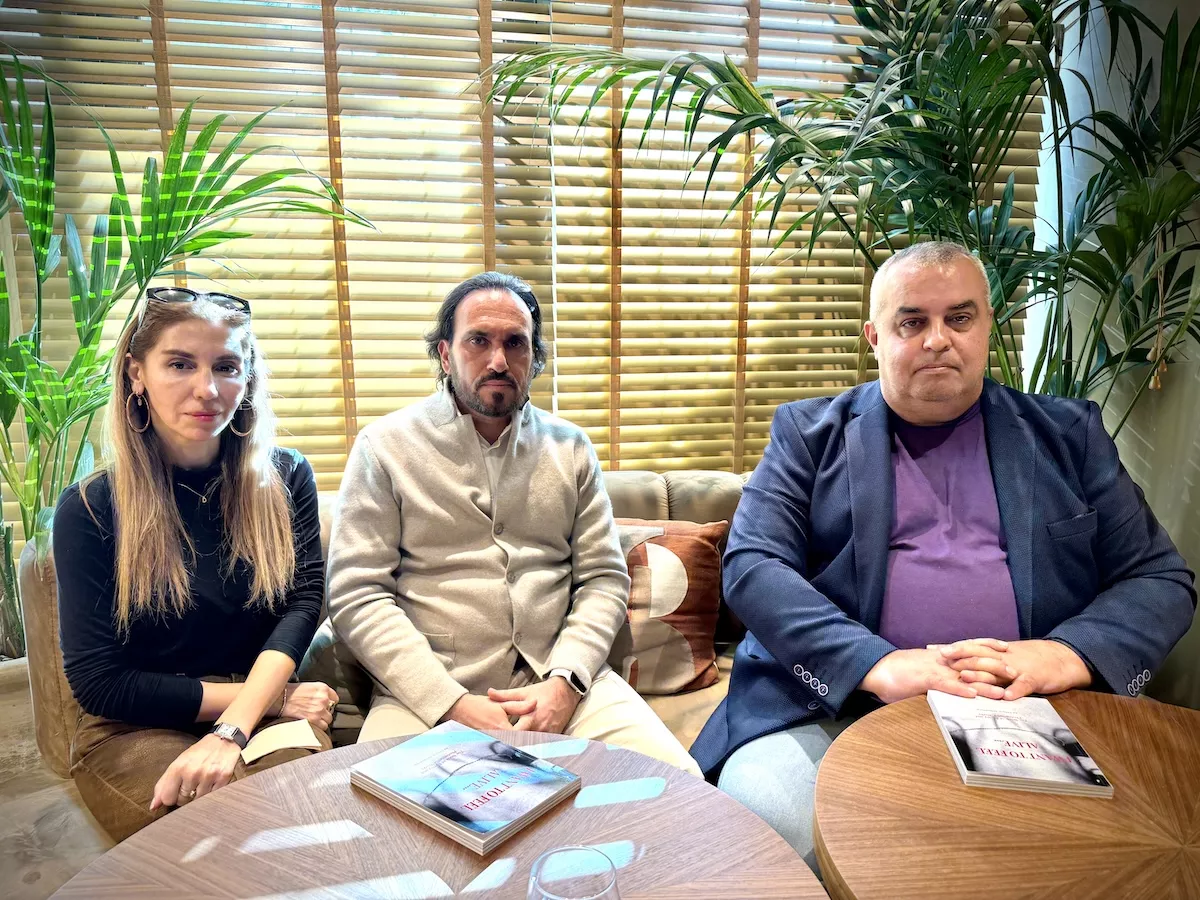
From left to right: Dilara’s mother Nargiz, Gianni Angelini, and Dilara’s father Vugar Akhundova
Using photos, videos, and Dilara’s own words, he created a powerful first-person perspective that puts viewers in the car with her that fateful night, hearing the warning she never got to deliver.
“When we started this campaign we were thinking about how to do it in the best way,” Vugar Akhundova, Dilara’s father, explains. “We thought that if we could talk to the people with the voice of Dilara and address the public, the community, with her voice, it would be much better than my own voice.”
The result stunned them. “I couldn’t even imagine the possibility of such a thing, but when we saw the clip we were surprised by the quality of performance and the idea itself.”
A discovery in the aftermath
Just two months before her death, Dilara had shared with her mother that she’d been writing poetry. “Most of them are kind of sad, but they don’t reflect my soul,” she told her. “I am not sad, I am a happy, joyful person.”
After the accident, her parents found the notebooks in Monaco. They were filled with poems. They also came across all of the photographs she’d developed in darkrooms, and the music compositions she’d never finished. She’d been creating prolifically during her time in Monaco — a place she’d fallen in love with at age 11 and called her “fairytale”.
To honour their daughter’s creativity and legacy, they took everything and turned it into a book.
“There were words in her poems ‘I want to feel alive’,” Vugar explains. “We decided to use this as the title of the book”.
A photograph created by Dilara
Beyond the campaign: finishing what she started
When Dilara’s parents shared her book of poems, photographs, and music compositions with Gianni, he had another idea.
“In the beginning, I didn’t know that there were so many poems and so many photographs,” Gianni says. “For me this book is such a fantastic data asset. I want to bring her back, to be alive, and express and finish her melody, finish her compositions and finish her enthusiasms.”
He proposed creating a music video using Dilara’s own poem as lyrics, her own musical composition, illustrated with her photographs, and voiced by an AI recreation of her singing voice.
“Since I’m also interested in music and composition, and consider myself a creative person beyond just computers, I said, ‘OK, we have to train the AI on this book—the images, the poem, everything—and then create a video and the music.'”
The result is a haunting piece of art that showcases the depth of talent Dilara possessed — talent the world would never have known without this technological intervention. It is titled ‘I feel’.
“And we can do more,” says Gianni enthusiastically. “There are more compositions, more photographs, more poems — which are all beautiful.”
Who was Dilara?
To understand the significance of what’s been preserved, you need to know who Dilara was.
Born in Baku, Azerbaijan, on 23rd December 2003, Dilara was what her father describes as “an incredibly talented person, even since early childhood.” She read voraciously, from Tolstoy’s Anna Karenina to American literature. She studied piano professionally for seven years and earned certificates in chess. She spoke fluent English and collected 40 certificates and awards during her academic career.
At Akademia High School in Warsaw, one of Poland’s top schools, she specialised in photography. “She loved photography and studied it professionally — she would spend hours in the photo lab in the dark room, printing, developing, she knew all of the technical aspects.”
She had what her vocal coaches identified as a promising mezzo-soprano voice. Yet despite all this talent and sophistication, she remained, in her father’s words, “very childish”.
She loved Christmas because her birthday fell on 23rd December. “She believed in Santa until about 17 years of age, she wrote letters to send to Santa every year and asked me to post it, and would await gifts from Santa just like a child.”
She loved people from every background, every religion, every social group. “Nothing mattered to her, she only ever saw the heart in everyone,” her mother Nargiz recalls.
Dilara in Monaco
Monaco: her fairytale dream
Dilara had dreamed of living in Monaco since she was 11-years-old. She considered it a fairytale land. She arrived at the International University of Monaco in September 2022 and was “full of excitement”, according to her mother.
“Sometimes I would ask Dilara — ‘how are you, how are you doing?’ And she answered ‘Mum I am so happy here. I have found myself in this country’. This was her attitude to Monaco. It was her conclusion,” her mother says. “I think it was mystical, because she always wanted to live here since her childhood, and she achieved her dream, nine years later. But unfortunately it was ended by this tragedy.”
A voice from beyond
The majority of Dilara’s poems were actually written in Monaco. One passage from her book reveals the philosophical depth of her thinking:
“Two trillion galaxies, billions of stars, eight planets in our solar system orbiting around a sublime sphere of hot plasma radiating energy in order to keep us breathing… Then I could not help but wonder, ‘Do we really live?’. We shall make use of the air our planet provides for us each day and start living to the fullest… Fall in love with life on an unfathomably profound level, open your eyelids at dawn with a euphoric feeling in your chest making your heart dance to the rhythm of its beat, sing at the top of your lungs, read literature, make music, draft poems in hope of one day making your life a memorable piece of art.”
Dilara with friends in Monaco
Justice and legacy
In court, the driver — a 24-year-old Finnish national — was convicted of involuntary manslaughter and sentenced to five years in prison, close to the maximum six-year sentence possible in Monaco.
During the trial, Vugar spoke about his daughter’s talents and legacy. “I told the court that Dilara lived a very short life, but she left behind a legacy — it may not be a very big one, but a legacy.”
Now, watching the AI-generated videos of their daughter is an experience that brings both pain and pride.
“It is sad, and sometimes it makes us cry because we can see her, hear her voice. The images are very realistic, the voice is very realistic. But at the same time, we are proud that we had this kind of daughter. She didn’t leave us without a trace – she left something behind, and this video will help to preserve her legacy,” says Vugar.
“We intend to make more films like this, and perhaps combine them into one to present here in Monaco, and also in our country, so people will not forget — for as much as we can, for as long as we can.”
One of Dilara’s photographs
Keeping Dilara’s voice alive
Dilara wrote that she was “designated to make my life a memorable piece of art”. Through the intervention of technology and the dedication of those who loved her and believed in her talent, that’s exactly what her life has become — a piece of art that will outlive the tragically short time she spent on Earth.
Her voice, once silenced, now speaks to thousands. Her music, left unfinished, now plays. Her photographs, developed in darkrooms with meticulous care, now illustrate her own poetry set to her own melodies.
Dilara Akhundova wanted to feel alive. Thanks to AI, in a way she never could have imagined, she still is.
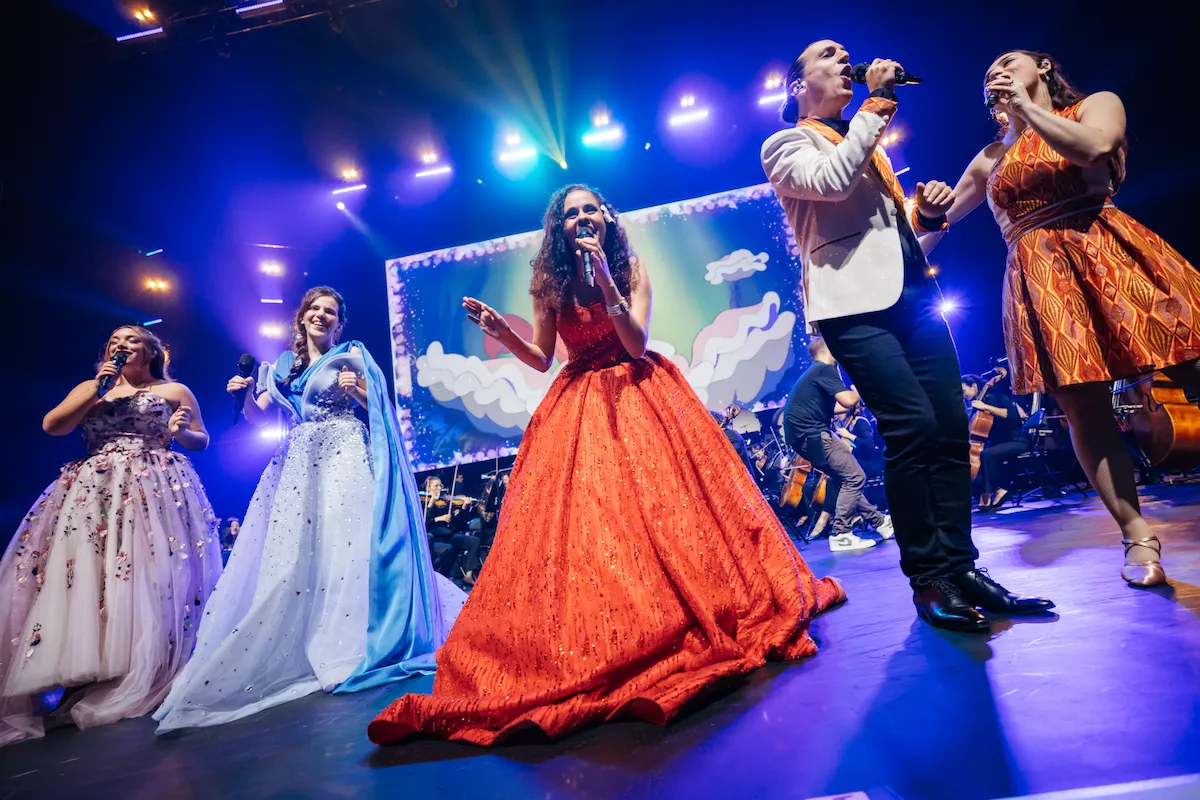
The Grimaldi Forum will host Disney en Concert – Suivez vos Rêves (Follow Your Dreams) on 24th October, bringing together a symphony orchestra, singers and dancers for a journey through classic Disney soundtracks.
The musical and visual spectacular combines live performance with iconic imagery from Disney films projected on giant screens, creating what organisers describe as an immersive family experience.
The show takes place in the Salle des Princes at 6pm on Saturday 24th October 2026.
From Simba’s kingdom to Elsa’s frozen lands
The production promises to take audiences through multiple Disney worlds, from the Pride Lands of The Lion King to the icy realm of Frozen, from the Pacific islands of Moana to Peter Pan’s Neverland.
The concert format pairs symphonic arrangements of Disney’s timeless music with visual elements designed to evoke childhood memories across generations.
A full orchestra will perform live alongside vocalists and dancers, with large-scale screen projections featuring scenes from the films.
Aimed at families
The Grimaldi Forum is positioning the event as a multigenerational experience, combining emotion, wonder and nostalgia.
Tickets are available online through the Grimaldi Forum website or by calling +377 99 99 30 00.
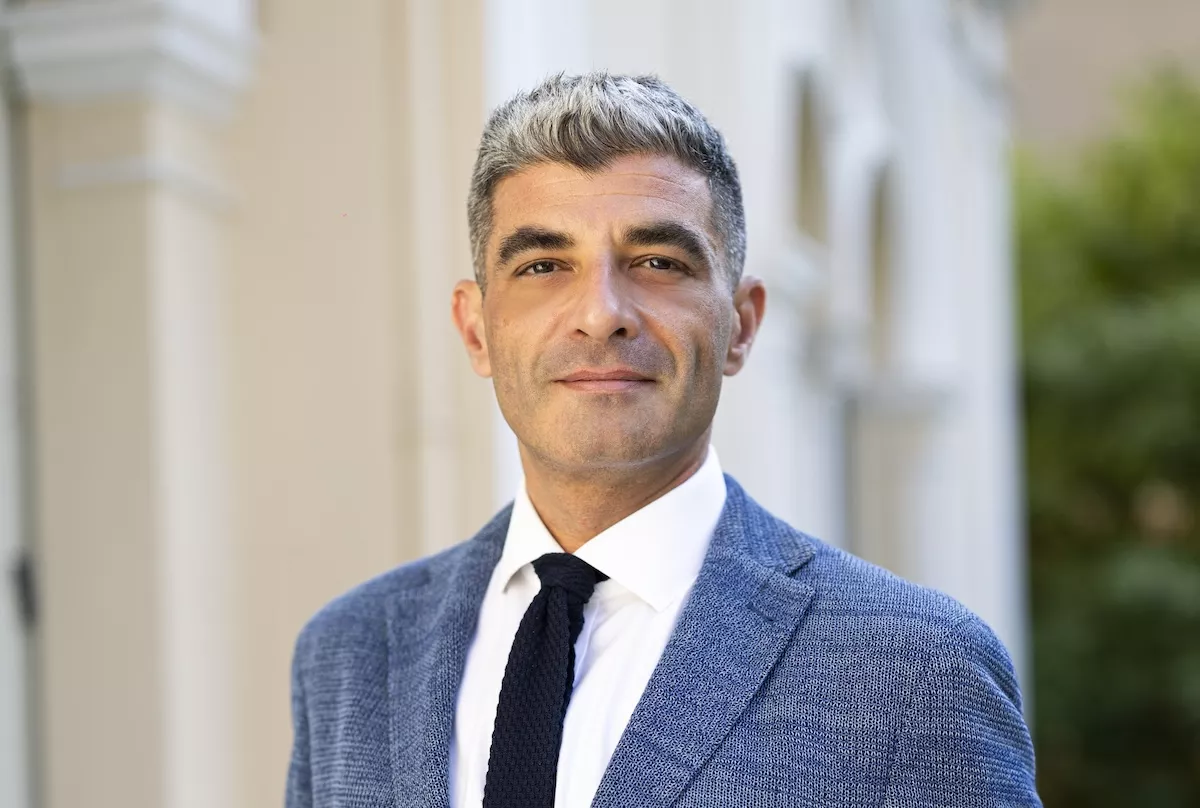
Prince Albert II has appointed Olivier Wenden as the new Director of the Prince’s Cabinet, effective Monday 2nd March 2026, according to an official communiqué released on Friday.
Wenden will succeed Christophe Steiner, who has held the position since 4th September 2023.
Currently serving as Vice-President and Managing Director of the Prince Albert II Foundation, Wenden has been with the environmental organisation since 2014. During his tenure, he contributed decisively to expanding the Foundation’s international reach and strengthening its strategic positioning on global environmental issues.
Before joining the Foundation, Wenden built a career in public service and international affairs, holding senior positions within Monaco’s National Council and the Department of External Relations and Cooperation. His experience spans both legislative and diplomatic spheres, giving him a comprehensive understanding of the Principality’s institutional framework.
The role of Cabinet Director is one of the most senior positions in Monaco’s government structure, coordinating the Prince’s official activities and serving as a key liaison between the Palace and various government departments.
“The Sovereign Prince wishes to express his keen and warm gratitude to Mr Steiner for having accepted to exercise his high functions during a particularly demanding period for the Institutions of the Principality,” said the Palace in a statement. “Through his sense of statesmanship, his loyalty and his unreserved commitment in the service of the Prince and His Family, Mr Steiner has been able to conduct the action of the Prince’s Cabinet with rigour and discernment.”
The transition comes at a time when Monaco continues to balance its traditional governance structures with modern challenges, particularly in areas of environmental policy and international relations – domains where Wenden has built considerable expertise.
France’s High Commissioner for Children has warned that artificial intelligence is creating new dangers for young people, including deepfakes used for sexual extortion and predatory behaviour on gaming platforms marketed to children as young as five.
Sarah El Haïry addressed a conference in Paris on Thursday, 29th January organised by associations Colosse aux pieds d’argile and Contre les violences sur mineurs, focusing on preventing violence against children in the digital age.
750,000 predators operating daily
El Haïry warned that 750,000 paedophile criminals operate daily on the internet with targeted and well-practised strategies, exploiting children’s vulnerability on platforms often perceived as harmless.
“I will never accept that the digital world and social networks become a jungle, with predators on one side and prey on the other,” she said. “The predators are the 750,000 paedophile criminals who operate every day on the internet. The prey are our children.”
She described herself as a “geek” who appreciates technology and gaming, but stressed that as High Commissioner for Children, her sole compass is protecting all children, everywhere and all the time.
Roblox highlighted as concern
El Haïry specifically cited Roblox, a gaming platform where users create their own games with graphics that appear child-friendly. More than 40% of its users are under 13-years-old, though the platform is officially designated for children from five-years-old.
Despite its playful appearance, serious problems have been observed on the platform, including games titled “Escape to Jeffrey Epstein’s Island” and others whose objective is to assault homeless people. The platform’s voice chat system allows strangers to contact children, frequently leading to other applications where photos are exchanged.
“Parents are often unaware that behind a graphic universe similar to Lego, very real dangers are hidden,” El Haïry said. “Predators have understood this perfectly: the more harmless a platform appears, the lower the vigilance.”
AI-generated sexual content
The commissioner referenced the scandal involving Grok, the generative AI on social network X, which allowed users to digitally undress young girls and boys on demand, visible to everyone.
“This is not a game. It is forbidden and punishable by seven years in prison, and ten years when the victim is under fifteen,” she stated.
Following discovery of these images, El Haïry contacted the European Commission’s vice-president to activate existing mechanisms. On Monday, 27th January, the Commission opened an investigation into X.
She also raised concerns about toys and stuffed animals for children incorporating conversational AI, where exchanges have been shown to quickly drift towards sexual discussions. “Who could have imagined this by looking at a simple teddy bear?” she asked.
Adolescent AI companion use
El Haïry noted that AI is transforming social interactions among young people. At age 15, 70% of adolescents use an AI companion, with 50% using it regularly.
Among 18 to 24-year-olds, 64% fear becoming victims of deepfakes, though younger children may perceive the risk as more abstract despite being most vulnerable.
Call for training and prevention
The commissioner emphasised that firmness must go hand in hand with prevention, training and awareness across the entire protection chain: children, parents and professionals.
“AI is here. So either we suffer it, or we choose to take advantage of all the opportunities,” she said, noting that AI can provide valuable time savings and support for child protection when used for data analysis.
She thanked the organising associations and stated she would closely follow the conference conclusions, which will inform public policies including the plan to combat violence against children, which she oversees.
“Everywhere there are children, including in digital space, risks exist, and our collective responsibility is never to ignore them,” El Haïry concluded.
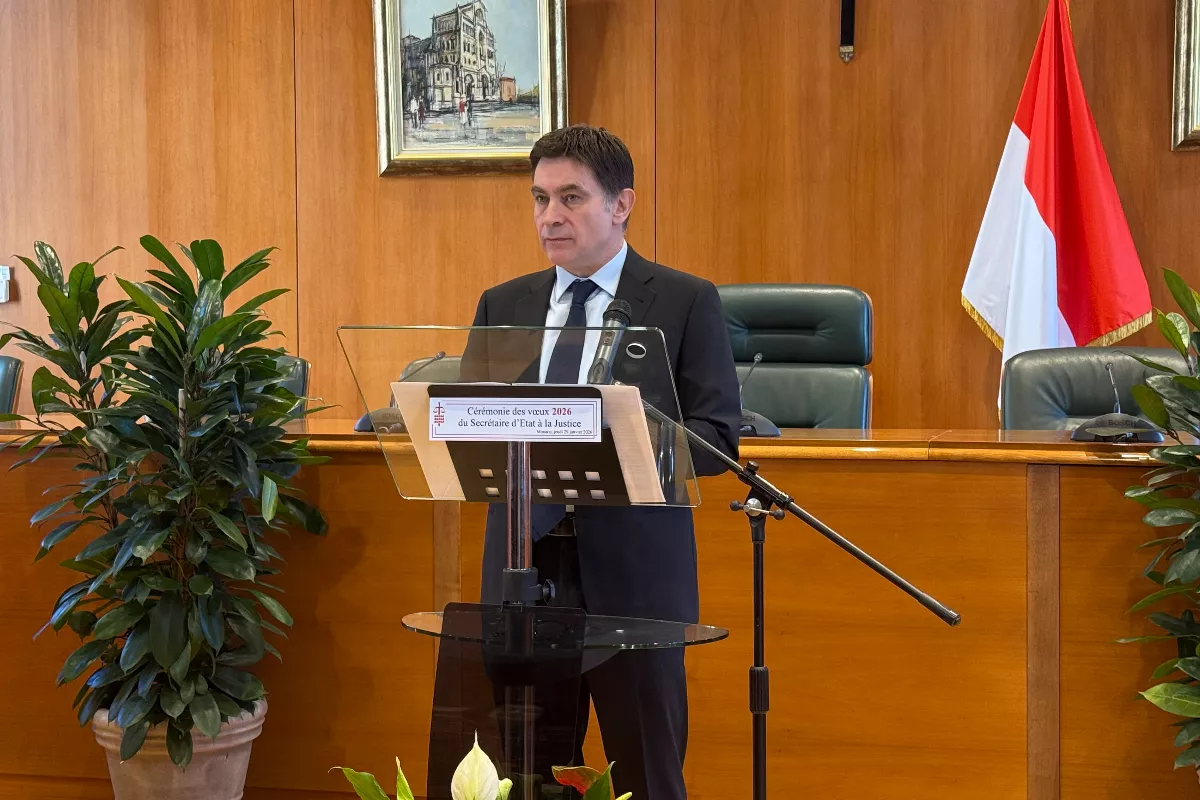
Monaco is rolling out sweeping justice reforms this year aimed at restoring public trust and tackling financial crime. Secretary of State for Justice Samuel Vuelta Simon outlined the plans during a New Year speech on Thursday, highlighting a full agenda that includes modernising institutions, strengthening legal resources, and boosting transparency.
The conference comes as Monaco assumes the chairmanship of the Council of Europe’s Committee of Ministers this spring, 22 years after joining the organisation. The role will culminate in an informal conference of European justice ministers on 16th June focused on combating money laundering.
Restoring Monaco’s image
Vuelta Simon acknowledged that Monaco’s justice system faced hard judgement and unflattering perceptions at times. However, he insisted the reality was quite different.
“I quickly discovered its true face,” he said. “It is high quality justice that motivates its decisions, that knows neither uncontrolled backlogs nor significant delays, with committed actors and professionals who genuinely love the profession they have chosen to practise.”
He explained that Prince Albert II had given him a clear mandate: to restore serenity to Monaco’s justice system, maintain its independence, and modernise it to meet both national realities and international challenges.
To improve the system’s image, Monaco now publishes legal information to make it more accessible and, back in June, it launched a new journal called ‘Monaco Droit’, to make the justice system more understandable to the public.
Strengthening resources
To reinforce resources, a financial section was established within the Attorney General’s Office in September with two experienced magistrates, responding to recommendations from international evaluators. An audit of its effectiveness will be conducted in the coming weeks.
Additionally, a judicial reserve system, approved by the National Council in November, will allow around 10 experienced magistrates to temporarily reinforce courts when needed. Implementation will begin in the coming weeks.
Lastly, the attorney general’s office recruited two new prosecutors in 2025, with additional recruitments planned for 2026, focusing on candidates with experience in areas of public concern in Monaco.
Vuelta Simon also welcomed renewed interest from Monégasque students in the judiciary, calling it a “strong signal we have all been waiting for”. Recruitment processes for several new Monégasque magistrates will open within months.
Modernisation programme
To boost digital modernisation, the Justice Secretariat will launch a website in 2026, providing information about its services and activities. The department will also relocate from its current premises to free up space for judicial recruitment.
Digitalisation will continue with the modernisation of the criminal records system, with the aim of eventually connecting to those of neighbouring countries. Paper documentation was abandoned in 2025.
Reviews of the status of prison staff, magistrates, and court clerks are also planned to improve recruitment. The statuses of superior courts, including the Supreme Court, Court of Review, and Council of State, will also be examined.
Legislative reforms
Several legislative initiatives have also been launched to modernise the legal profession. Work is underway with the Bar Council on legal aid, court appointments, and regulation of the profession itself.
Similar collaboration with the Principality’s three bailiffs has resulted in updated tariffs and reforms to property sales procedures. A bill containing provisions for guilty pleas and criminal settlements is currently under examination by the National Council.
Reforms to prevent, detect, and punish corruption amongst high-ranking officials are also planned under the Council of Europe’s GRECO programme.
Samuel Vuelta Simon explained that the reforms aim for long-term sustainability rather than simply achieving international ratings. Progress with the Financial Action Task Force showed increasing improvements at each meeting, he said, with regular exchanges demonstrating Monaco’s commitment to best practices.