
Dozens of people have died and more than 100 have been injured in a catastrophic fire that tore through a popular nightclub in the Swiss ski resort of Crans-Montana during New Year’s celebrations.
Police confirmed “several dozen” deaths following the blaze at Le Constellation bar, which broke out around 1:30am on Thursday. The Italian foreign ministry cited Swiss police suggesting approximately 40 deaths, though officials would not specify an exact figure at a morning press conference.
The victims include many young people, with Le Constellation popular among 16 to 25-year-olds who had been celebrating the start of 2026. Many nationalities are believed to be among the dead and injured, with several hundred people affected by the blaze.
Did birthday sparklers trigger the inferno?
Two French nationals who escaped the fire told BFMTV the blaze began when a waitress placed birthday candles (sparklers) on champagne bottles, one of which was then held up too close to the wooden ceiling.
“In a matter of seconds, the entire ceiling was ablaze. Everything was made of wood,” Emma and Albane said. “The flames started to rise very quickly. The entire ceiling was on fire, even the first floor was on fire as we tried to make our way outside.”
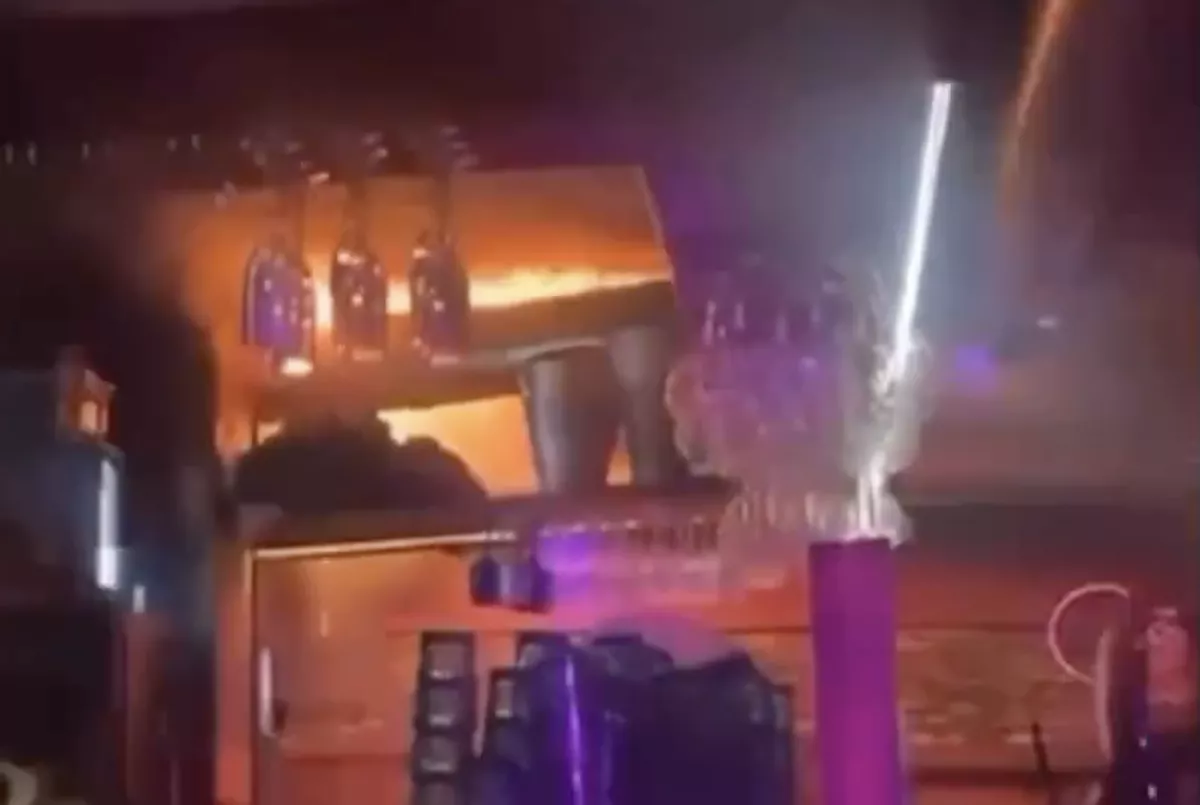
A video taken within the nightclub appears to show the blaze igniting above the bar.
🇨🇭🔥🎉 EN IMAGES – Une vidéo montre le tout début de l’incendie au bar « Le Constellation » à Crans-Montana (VS), au moment où le plafond s’enflamme. 20 Minuten) pic.twitter.com/ZfcoZt73WL
— SuisseAlert (@SuisseAlert) January 1, 2026
The pair described evacuation as “very difficult” due to narrow escape routes. “We were very lucky. There were about 200 people trying to get out within 30 seconds through some very narrow steps,” they said.
Flash fire devastation
Swiss authorities confirmed initial evidence points to a rapidly spreading “flash over” fire, in which anything combustible ignites very quickly, rather than a deliberate attack. A team of specialist forensic investigators from Zurich is now at the scene working to determine exactly how the fire started and why so many people died.
Firefighters were mobilised from across the entire region after emergency services were called when smoke was first noted at the bar. Despite rapid response, the fire’s speed overwhelmed evacuation efforts.
Many victims suffered severe burns. Local hospitals’ intensive care units are full, forcing transfer of some patients to hospitals in other cantons for urgent care. Swiss authorities have appealed to people across the country not to overburden the health service as emergency wards and burns units operate at capacity.
Identification process underway
Police emphasised it will take time to identify all victims given the number of nationalities involved and severity of injuries. The area has been completely closed off, with a no-fly zone imposed over Crans-Montana.
A police official told the press conference that everyone involved in the operation is “stunned” by this “painful moment”. As one emergency worker put it: “a time of celebration has become a nightmare.”
The disaster represents one of Switzerland’s deadliest fires in recent memory, striking at the heart of the New Year’s celebrations in one of the country’s premier ski destinations.
Prince Albert II sends condolences
Prince Albert II sent a message of condolence to Swiss President Guy Parmelin following the tragedy. “The Principality of Monaco learned with deep emotion of the fire in Crans-Montana,” the Prince wrote in an official dispatch on 1st January. “The Sovereign Prince and the Princely Government extend their support and solidarity to the Government of the Swiss Confederation, local authorities and all emergency services.” Prince Albert expressed compassion to victims, their families and all those affected by the tragedy, stating that Monaco “stands alongside the Swiss people in these difficult times”.
Stay updated with Monaco Life: sign up for our free newsletter, catch our podcast on Spotify, and follow us across Facebook, Instagram, LinkedIn, and Tik Tok.
Photo: Screenshot of the blaze taken from a video recording of the incident. Credit: Le Nouvelliste/SuisseAlert