Monaco finds classrooms for displaced students across three sites

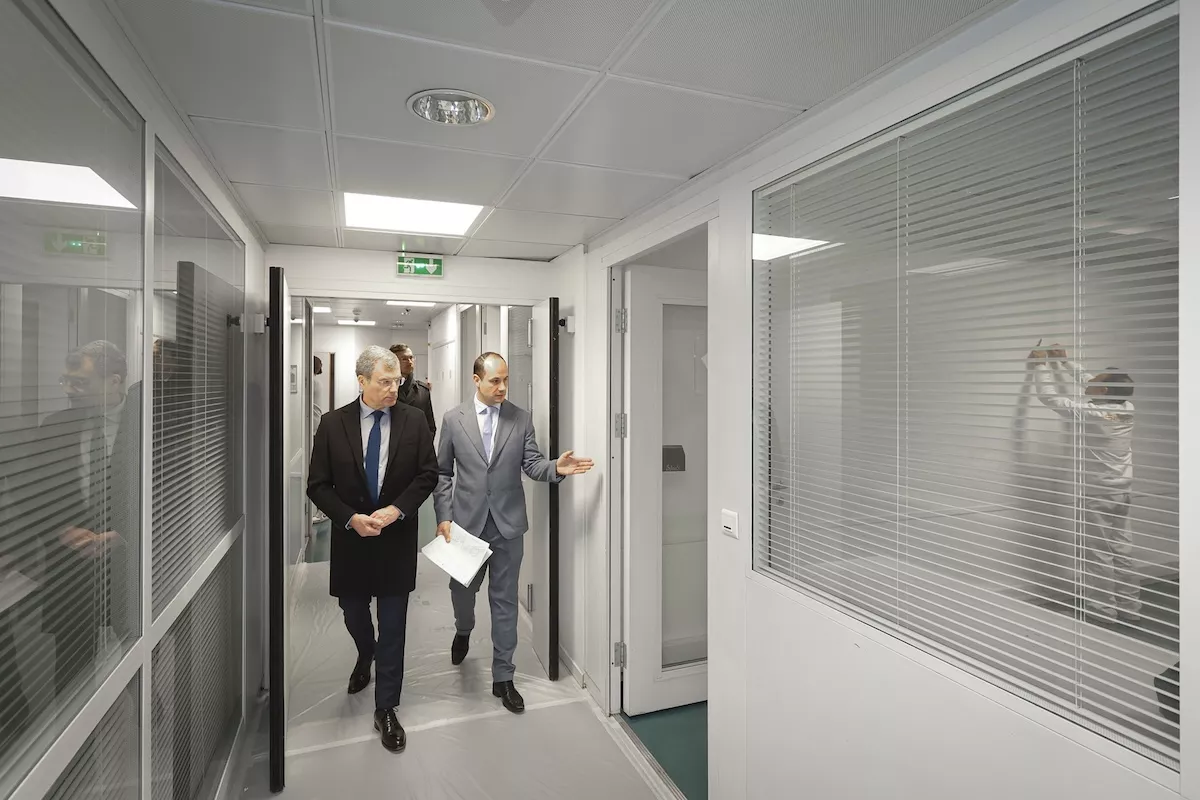
Monaco has identified new classroom locations for 840 high school students who cannot return to the former Collège Charles III due to ongoing reinforcement work on the retaining wall above the building.

The students, already informed they would begin term remotely on 5th January at 2:00pm, will move to in-person teaching as soon as new facilities are ready. The government announced on Friday it has secured sites concentrated around Promenade Honoré II.

The solution involves three elements: utilising rooms made available at Collège Charles III and Lycée Rainier III, constructing 22 temporary classrooms at Îlot Pasteur, and relocating higher education students to create additional space.

Domino effect of relocations

To free up classroom slots at Lycée Rainier III for the displaced high school students, the government will temporarily move higher education students to the Ruscino building on Quai Antoine 1er, where the International School of Monaco was formerly located.

The Ruscino building will also house essential non-teaching services for high school students, including guidance counsellors, psychologists, social workers, a library and parent reception areas.

The government has not specified when in-person teaching will resume at the new sites, saying only that the date will be communicated shortly. However, some physical education classes will begin in person from the week of 5th January, with arrangements to be detailed by the education directorate.

Ongoing wall crisis

The students had been using the former Collège Charles III since September 2025 whilst construction continued on their permanent facilities. The Christmas Eve evacuation of nearby residents highlighted critical stress in a retaining wall above the building.

Whilst residents returned home after six days once emergency reinforcement work stabilised the wall, ongoing construction makes student return impossible. The reinforcement work encroaches on the site, ruling out classroom use.

The government has not indicated how long students will remain in these dispersed locations, suggesting the arrangement could extend beyond a few weeks depending on progress with the retaining wall reinforcement.

Stay updated with Monaco Life: sign up for our free newsletter, catch our podcast on Spotify, and follow us across Facebook,  InstagramLinkedIn, and Tik Tok.

Photo credit: Stéphane Danna, Government Communications Department 


Why “2036” appeared on Paris’ Arc de Triomphe on NYE

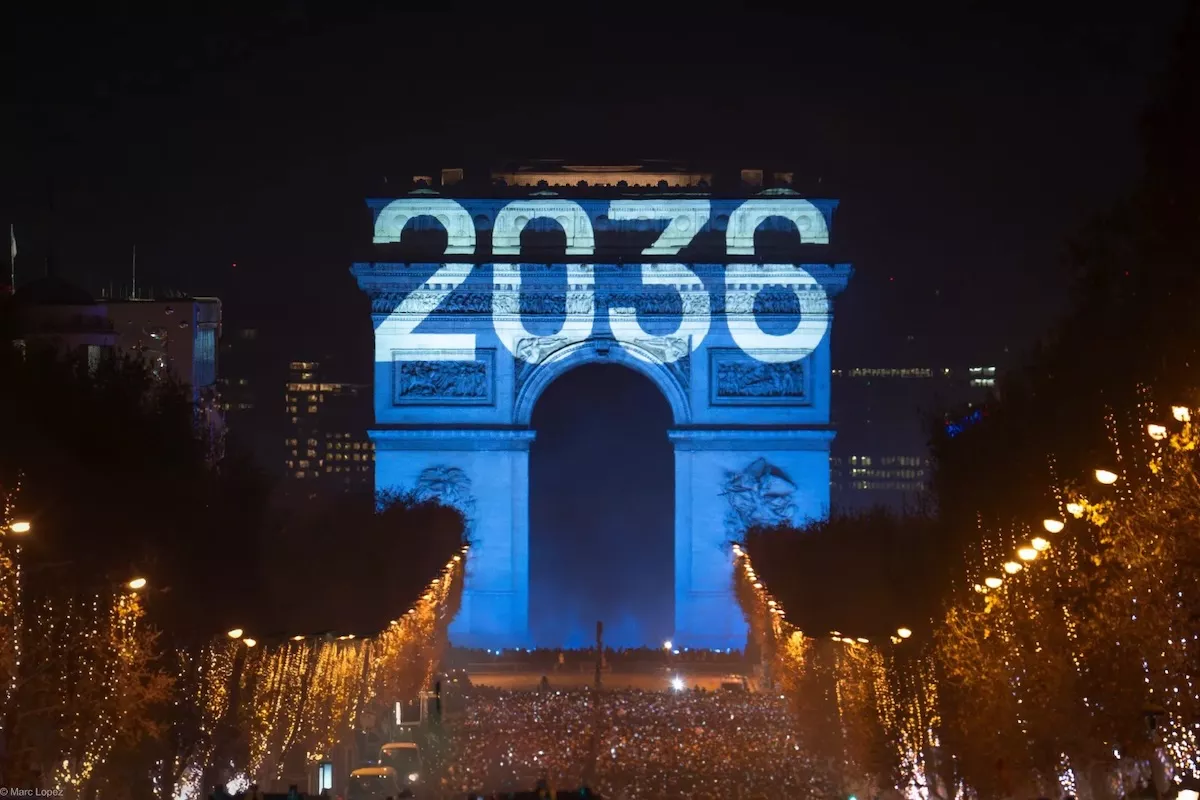
At 11:30pm on New Year’s Eve, viewers watching Paris’s traditional celebrations noticed something unusual. Instead of the expected countdown to 2026, the Arc de Triomphe displayed a different number: 2036.

The cryptic projection remained for 30 minutes as confusion spread across social media. What did 2036 mean? Was it an error? Only as midnight approached did the full message become clear: “2036. Don’t wait 10 years to celebrate your next New Year. Tonight, no alcohol or drugs behind the wheel. Take care of yourself and others.”

The number represented 2026 plus ten years—the maximum prison sentence under France’s new vehicular homicide law. The stark message, broadcast to millions watching worldwide, was the work of the Association Antoine Alléno, an organisation founded by the Michelin-starred chef behind Monaco’s Pavyllon Monte-Carlo restaurant.

A father’s three-year fight

Yannick Alléno knows intimately the cost of impaired driving. His son Antoine, 24, was killed in May 2022 by a driver under the influence of drugs and alcohol whilst riding a scooter in Paris’s 7th arrondissement. The young chef had been working alongside his father when his life was cut short.

Rather than retreat into private grief, Alléno mobilised. He established an association bearing his son’s name and began a three-year campaign to change French law. Until July 2025, vehicular homicide whilst impaired fell under the general category of involuntary manslaughter.

“This law, we fought for it tooth and nail after three years of mobilisation,” Alléno said. “Getting behind the wheel when you’re not fit to drive is a choice that costs lives.”

On 9th July 2025, France enacted new legislation recognising “homicide routier” as a distinct criminal offence carrying sentences up to 10 years imprisonment. According to Stéphanie Prunier, partner at advertising agency Havas Paris which developed the campaign, average prison sentences for similar offences jumped from 22 months to five years.

“It’s the communication that helped evolve the jurisprudence,” she said.

Hijacking the world’s attention

The Arc de Triomphe projection represented an ambitious gamble: could a prevention message break through the noise of New Year’s celebrations without dampening the festive mood?

Stéphane Gaubert, creative director at Havas Paris, defended the timing. “December 31st is a night of celebration. This wasn’t meant to ruin the party but to be a moment of prevention before the evening,” he explained.

The choice of the Arc de Triomphe was deliberate. Paris’s New Year’s Eve celebrations attract global television coverage, offering what Gaubert called “the biggest possible medium” for a campaign that couldn’t afford traditional advertising.

The timing—11:30pm rather than midnight—was carefully calibrated to deliver the warning at a moment of high emotion without disrupting the countdown itself.

Gaubert argued that rarity creates impact. “Surprise creates strength. This kind of communication stunt must remain a rare act,” he said.

For one night, France’s monument to military glory became a memorial to road traffic victims, a warning to revellers, and a bereaved father’s tribute to his son.

Stay updated with Monaco Life: sign up for our free newsletter, catch our podcast on Spotify, and follow us across Facebook,  InstagramLinkedIn, and Tik Tok.

Photo source: Association Antoine Alléno

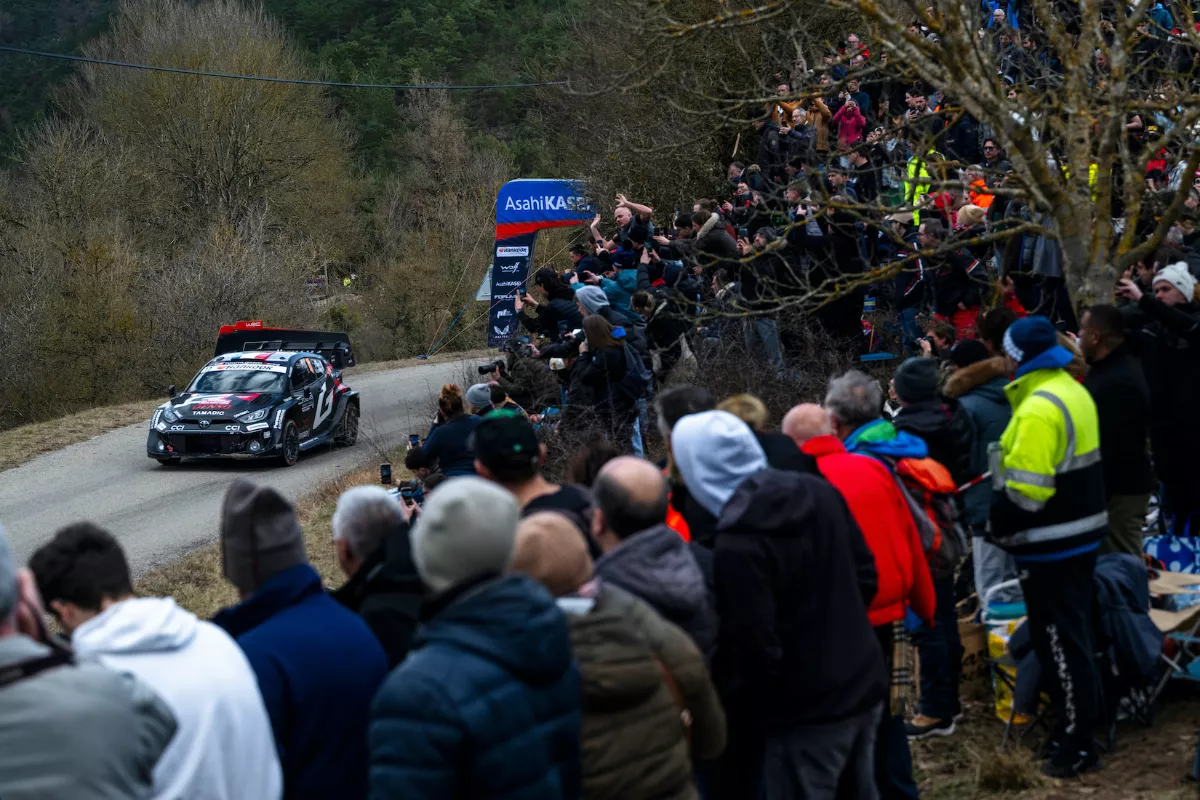
2026 Monte Carlo Rally to return to F1 street circuit with fresh route

The 94th Rallye Automobile Monte-Carlo will return from January 22nd to 25th, opening the FIA World Rally Championship season with a significantly revised and more demanding route and a special stage at Monaco’s iconic street circuit.

Preparations begin on Sunday January 18th, as teams inspect and try out the course, a process that spreads through to Tuesday January 20th. A reworked shakedown stage follows on Wednesday January 21st at 14:01, with competitors tackling an extended 4.80km test in Gap. First introduced in 2017 and extended in 2026, the shakedown now incorporates the Routes de la Garde and Rabou, offering crews a more representative test ahead of competition.

Then, the rally officially begins on Thursday January 22nd with the ceremonial kick-off taking place around 14:30 at Quai Albert 1er. The opening leg features three demanding stages, covering 61.58 competitive kilometres through the Alpes-Maritimes and Alpes-de-Haute-Provence regions. The action begins with Toudon/ Saint-Antonin (22.90km), followed by Esclangon/Seyne-les-Alpes (23.48), before concluding with Vaumeilh/Claret (15.20km).

However, the action will intensify even more on Friday, the event’s longest day, as crews face six stages totalling 129.38 kilometres across the Drôme and Hautes-Alpes. Crews will contest a loop of three classic stages run twice: Laborel / Chauvac-Laux-Montaux (17.84 km), Saint-Nazaire-le-Désert / La Motte-Chalancon (29.00 km), and La Bâtie-des-Fonts / Aspremont (17.85 km). Known for their technical complexity and unpredictable winter conditions, these roads are expected to play a crucial role in the fight for victory.

The return to Monaco’s street circuit

Following, Saturday’s programme may be shorter but no less intense, introducing a major highlight with the debut of the ‘La Bréole / Bellaffaire’ stage via the Col des Garcinets Pass, run twice. The day concludes with the much anticipated return to the Principality for the Monaco Circuit super-special, a welcome return of a spectacle not seen in nearly two decades.

The decisive final day on Sunday features four stages totalling 71.62 kilometres. Classic mountain tests ‘Col de Braus/ La Cabanette’ and ‘La Bollène-Vésubie / Moulinet’ will each be run twice, with the latter’s second pass designated as the Wolf Power Stage, offering vital championship bonus points.

The rally concludes with the podium ceremony at Port Hercule at 17pm on Sunday January 25th, crowning the first winners at the 2026 Word Rally Championship season.

Stay updated with Monaco Life: sign up for our free newsletter, catch our podcast on Spotify, and follow us across Facebook,  InstagramLinkedIn, and Tik Tok.

Main photo credit: Automobile Club de Monaco