As France freezes at -22°C, the story of 1709’s Great Frost that devastated Europe

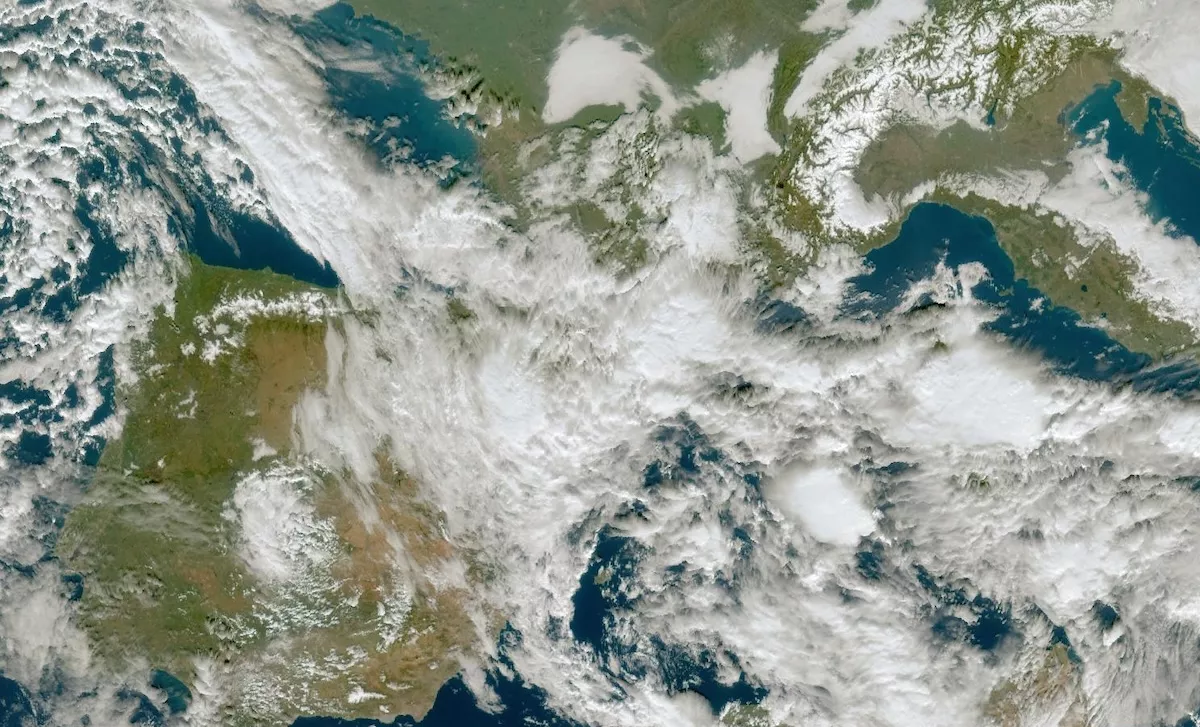
France woke on Saturday to its coldest morning in over a decade, with temperatures plunging to -22°C in the Jura mountains and numerous cities recording double-digit negative temperatures as a polar air mass from the Arctic blankets the entire country.

The commune of Les Fourgs in Doubs, in the heart of the Jura mountains on the French-Swiss border, recorded the nation’s coldest temperature at -22°C on Saturday morning. In the plains, severe frosts saw temperatures drop to -11.8°C in Aurillac, -9.5°C in Annecy, -9°C in Orléans, -8.9°C in Brive-la-Gaillarde, -8.6°C in Cognac and -8.2°C in Le Mans.

Monaco, whilst spared the extreme cold hitting eastern France, is experiencing its coldest sustained period since the “Beast from the East” brought snow to Nice in February 2018. Temperatures across the Côte d’Azur have dropped 12-15°C below seasonal averages, with Monaco’s forecast showing maximum temperatures struggling to reach 10-11°C and overnight lows of 2-5°C through mid-January.

For a principality accustomed to mild Mediterranean winters where temperatures typically range from 8-13°C and rarely drop below 4°C, the prolonged cold represents an unusual shock to residents and the region’s famed outdoor lifestyle.

The frigid conditions arrive exactly 317 years after the most catastrophic winter in European recorded history began—a freeze so severe it killed hundreds of thousands and reshaped the continent.

5th January 1709: When Europe froze solid

On 5th January 1709, Europe’s coldest winter in 500 years crept in overnight. The chill stretched from England to Russia, and this time there would be no quick thaw.

Whole trees froze and shattered. Trade came to a standstill as snow made roads impassable. The Thames River and the Baltic Sea froze solid. Copenhagen Harbour reported 27 inches of ice. Flocks of birds froze mid-air and fell from the sky. Temperatures plummeted to -21°C.

This was long before weather forecasting, so people had no warning. The Great Frost—as it came to be known—would reshape the continent for a generation.

France was hardest hit. At least 600,000 people died from cold, famine and disease that year alone. The government formed a commission to manage grain distribution as prices rose sixfold in some places. Punishments for hoarding grain were severe—up to and including execution.

Wine froze solid in barrels. Bread turned so hard it had to be cut with an axe. Livestock died in frozen fields. Fish died beneath frozen rivers and lakes. Wheat crops failed across the continent. Agriculture collapsed. Each loss compounded the famine to come.

Some residents adapted creatively, moving provisions by cart via newly formed ice routes and burning furniture for warmth. In Venice, people used ice skates to navigate the frozen canal network. But for many, adaptations weren’t enough.

The cold disrupted two wars. The War of the Spanish Succession stalled completely. The Great Northern War—Russia versus Sweden—ended in defeat for the weakened Swedish army, helping vault Russia to world-power status and redrawing the political map of Europe.

When the continent finally thawed in spring, flooding devastated low-lying areas. All that meltwater had to go somewhere, and the ground was frozen more than three feet down, unable to absorb the deluge.

What caused the Great Frost?

Climatologists are still debating the exact cause. Some blame volcanic eruptions in preceding years, which may have created a dust veil high in the atmosphere that blocked the sun. Others cite an extended period of low solar activity—the weakest in millennia—that coincided with the freeze.

What’s certain is that the atmospheric patterns that winter created a scenario similar to what meteorologists are seeing now: a fundamental disruption forcing Arctic air far south of its usual range.

2026: A disrupted Polar Vortex

The current cold snap, whilst incomparable to 1709’s catastrophe, shares a similar meteorological trigger. The Polar Vortex—an enormous ring of powerful winds circulating around the North Pole at 20-50km altitude—has been severely disrupted by a stratospheric warming event.

When strong, the vortex traps cold air in polar regions. When disrupted, that air escapes into mid-latitudes.

“This expansive ridge of high pressure acts as a meteorological dam, forcing a deep reservoir of Arctic air to spill southward across Europe,” meteorologist Marko Korosec explained. “The result is a sustained disruption of the Polar Vortex, setting the stage for an extended period of winter weather dominance across the continent.”

Temperatures across France are currently 10 degrees below seasonal norms for early January, with the polar air mass extending as far south as North Africa. Weather models show potential snowfall in higher terrain in northern Algeria.

As frigid Arctic air collides with the Mediterranean Sea’s lingering warmth and high moisture content, it’s triggering intense storms. Forecasters term these “Balkan snow bombs”—powerful Mediterranean cyclones bringing deep snow accumulations and whiteout blizzards across southeastern Europe.

Cold weather history

The region has weathered cold snaps before, though nothing approaching 1709’s severity or even the current conditions in eastern France. The most extreme modern winter struck in 1985, when temperatures plunged to -11°C in Hyères, -12°C in Cannes, and a record 38cm of snow fell on Nice.

The early 2012 European cold wave buried the Mediterranean coast in deep snow by late January, with Corsica receiving 40cm. Most recently, the February 2018 Beast from the East brought snow to Nice for the first time in six years.

Stay updated with Monaco Life: sign up for our free newsletter, catch our podcast on Spotify, and follow us across Facebook,  InstagramLinkedIn, and Tik Tok.

Photo source: Meteo France
 

Swiss bar managers under investigation as first victims identified in fire that killed 40

Swiss authorities have placed two managers of Le Constellation bar under criminal investigation as the first victims of the New Year’s Eve fire that killed 40 people were formally identified and returned to their families.

Regional police said on Saturday that four victims — two aged 16, an 18-year-old and a 21-year-old, all Swiss nationals — had been identified and their bodies handed over to relatives. By Sunday, authorities confirmed 16 new bodies had been identified and returned to their families, including nine people aged under 18 and a 39-year-old French national.

The two bar operators, identified in French and Swiss media as Jacques and Jessica Moretti, are suspected of negligent homicide, negligent bodily harm and arson by negligence, prosecutors in Valais canton said in a statement on Saturday. The French couple bought the bar in 2015, according to the Valais company registry.

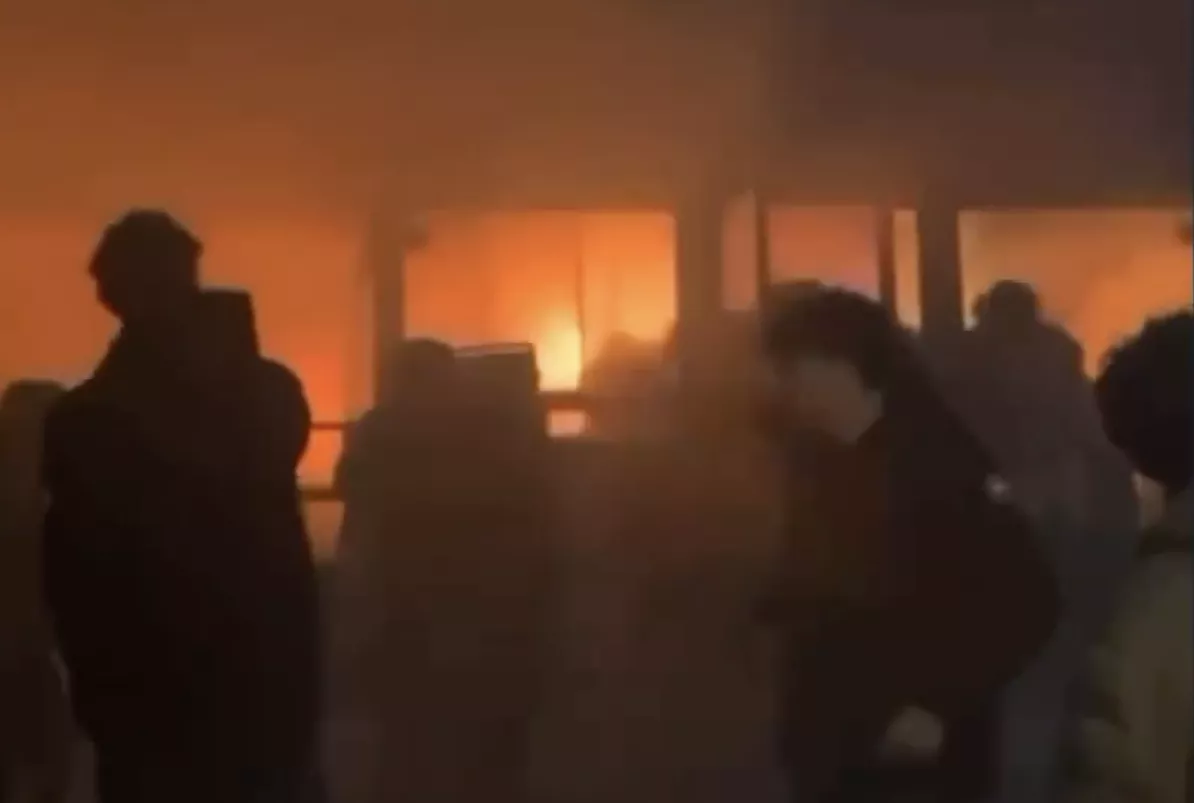
Officials said on Friday that sparklers on champagne bottles carried too close to the ceiling likely ignited the blaze, which also injured 119 people.

“Everyone knew this would go wrong”

Criticism of the bar’s safety measures has intensified as survivors described a chaotic evacuation hampered by blocked exits and narrow staircases.

A 31-year-old bartender from Crans-Montana told German newspaper Bild there was only one combined entrance and exit, plus one emergency exit which “was always blocked during my visits”. The emergency exit was located in a separate room used for smoking.

“Everyone in the town knew that this would go wrong at some point,” he said.

Eyewitnesses described a massive crush on a narrow staircase leading from the basement to the ground floor as people tried to escape the rapidly spreading fire.

Fire safety experts Peter Wilkinson and Edwin Galea told the BBC that sound-absorbing polyurethane foam on the ceiling had probably ignited during the fire. This highly flammable material can emit dense, toxic smoke, significantly reducing escape time.

Chief prosecutor Beatrice Pilloud said indications were that sparklers got too near the ceiling. “From there, a rapid, very rapid and widespread blaze ensued,” she said on Friday.

Investigation scope

Investigators are examining the bar’s renovations, fire extinguishing systems, escape routes and the number of people inside when the blaze began. Prosecutors are also looking into whether the acoustic foam was “the cause of the problem” and the bar’s compliance with regulations.

Owner Jacques Moretti told Swiss newspaper Tribune de Genève on Friday that all renovations had been carried out “in accordance with regulations” and the establishment had been inspected three times over the past decade.

Attorney general Beatrice Pilloud said the couple had not been interviewed under caution but added: “If there is a flight risk, it is possible for us to take the measures needed.”

Swiss justice minister Beat Jans, standing in front of the cordoned-off bar, said: “It was an enormous tragedy. We’re all so sorry that this had to happen.”

Agonising wait for families

The families of the 40 killed have faced an agonising wait for information, with several saying they have received no details in the days since the fire.

“I’m living a nightmare, a nightmare. Either I find my son in the morgue, or I find him in critical condition. It’s terrible,” Laetitia Brodard-Sitre told Le Temps after searching hospitals for her 16-year-old son Arthur.

According to two people familiar with the investigation, some victims may be under 16. Local residents said the bar was popular with young people. Beer and wine can be drunk from age 16 in Switzerland.

Residents have welcomed the criminal investigation. Patricia Mazzoni, 55, said: “We need a moment to reflect. But afterwards, I’d like an independent investigation. An independent investigation to find out who failed here.”

The area around Le Constellation remains cordoned off with a no-fly zone imposed over Crans-Montana as the investigation continues.

Stay updated with Monaco Life: sign up for our free newsletter, catch our podcast on Spotify, and follow us across Facebook,  InstagramLinkedIn, and Tik Tok.

Photo taken from video taken at the scene of the blaze

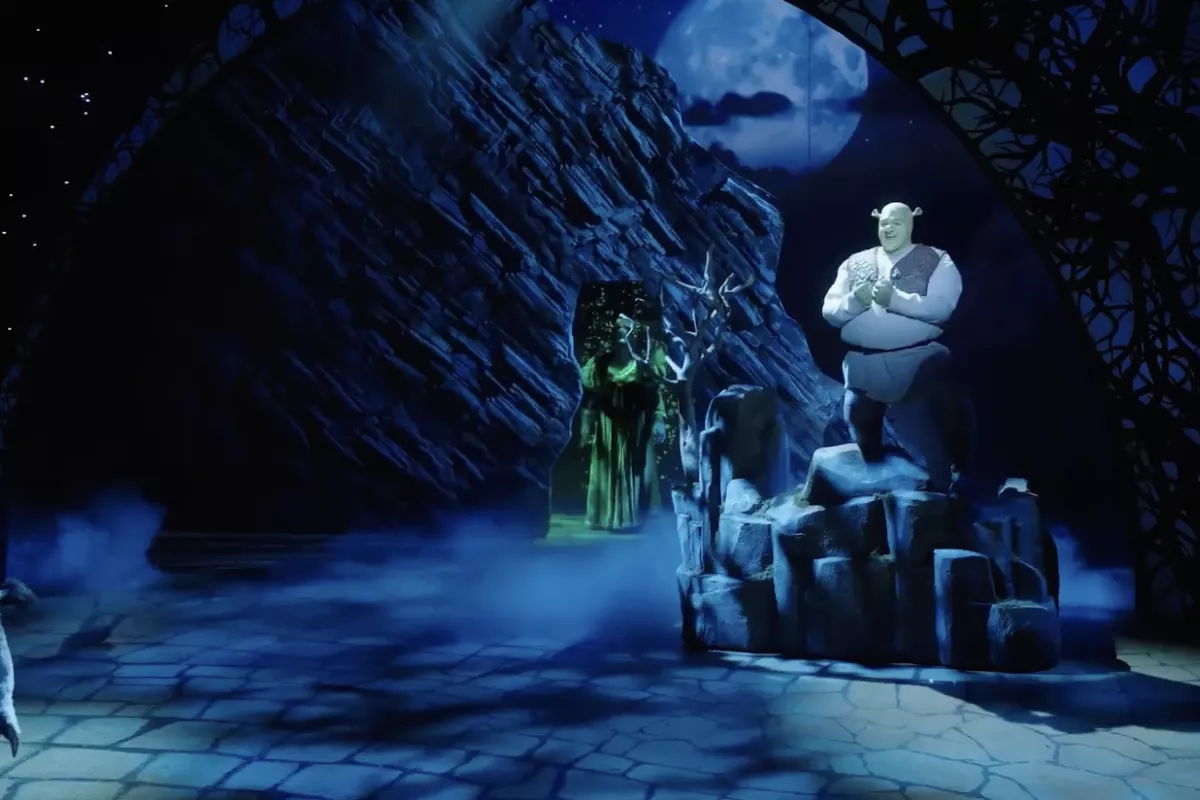
Grimaldi Forum unveils ‘Shrek’ the musical for 2026

Lovers of Shrek the animation will have the chance to see the award-winning Broadway adaption when it arrives at the Grimaldi Forum next December.

The musical, based on the hit animation, brings what producers call “the greatest fairy tale never told” to the stage with its cast of beloved characters, from the grumpy green ogre himself to his wisecracking donkey sidekick and a princess with a few surprises up her sleeve.

Running from 11th to 13th December 2026, the production will take over the Salle des Princes for five performances across the weekend.

The stage version stays true to the film’s unique humour that has left its audience crying of laughter when it first aired in 2001, all while adding theatrical spectacle through elaborate sets and costumes. At approximately two hours plus interval, it provides entertainment for the whole family.

Audiences should note the production will be performed in English, though French subtitles will be provided throughout.

Tickets are priced from €47 and can be booked through the Grimaldi Forum box office on +377 99 99 30 00, which operates Tuesday to Saturday between noon and 7pm. Bookings are also available online at montecarloticket.com

Stay updated with Monaco Life: sign up for our free newsletter, catch our podcast on Spotify, and follow us across Facebook,  InstagramLinkedIn, and Tik Tok.

Main photo provided by the Grimaldi Forum