
French doctors launch mass strike affecting Côte d’Azur as 85% prepare to walk out

French general practitioners across the Côte d’Azur have joined a nationwide strike that began on Monday and will continue through 15th January, with an estimated 85 percent of doctors participating in protest against proposed social security reforms.

The walkout, which has already seen over 15,500 physicians register as strikers across France, will cause considerable disruption to healthcare services. Surgeries will be postponed, prescriptions will be difficult to obtain, and sick leave authorisations will be delayed as doctors close practices to all but chronically ill patients.

The action targets proposed social security financing legislation that would give government power to modify reimbursement rates for certain procedures and increase control over sick leave authorisations.

Alternative solutions for patients

Patients unable to obtain prescription renewals can approach pharmacists, who now have authority to extend treatments for chronic conditions. Recent pharmacy reforms grant pharmacists access to patient care histories, allowing them to continue necessary medications without doctor consultation.

However, treatments requiring medical examination or where renewal is not automatic will prove more complex. Teleconsultation booths recently installed in some pharmacies offer another option, though wait times outside strike periods already reach 45 minutes to 90 minutes, and could extend to three to four hours during the walkout.

Government requisitions

Health Minister Stéphanie Rist announced on Sunday that measures have been implemented to organise continuity of care with regional health agencies and healthcare establishments. Prefects can issue requisition letters to striking doctors, legally requiring them to provide care and suspending their right to strike.

Requisitions are determined by local healthcare availability. If regional authorities identify high strike participation threatening care access, they can compel specific practices to remain open. Doctors cannot refuse requisition orders.

Emergency services under strain

Patients requiring urgent care should call SAMU (15) before attending emergency departments, according to regional health agencies. Already hospitalised patients will continue receiving treatment, but those arriving at emergency departments or maternity wards will be transferred to public hospitals except in life-threatening situations.

Emergency services are expected to experience intense saturation during the 10-day period. SOS Médecins France, which supports the strike, will operate with some structures closed and others providing minimum service.

Strike tactics

Beyond practice closures, participating doctors are conducting a coordinated withdrawal from administrative systems. The strike includes refusal to use the Carte Vitale electronic health card system, forcing reversion to paper reimbursement forms, and rejection of the shared medical file (DMP) database that doctors are refusing to complete.

The peak impact is expected between 10th and 15th January, when the highest number of doctors will be off work simultaneously. Medical unions acknowledge the mobilisation will penalise patients but maintain they attempted to anticipate disruption by seeing urgent cases beforehand and rescheduling appointments where possible.

Underlying grievances

The strike reflects deeper tensions in French healthcare beyond the immediate legislative trigger. Doctors report constant pressure over prescription patterns and sick leave authorisations from health insurance monitors, particularly when treating complex patient populations requiring more intensive care.

Administrative burden has become a major complaint, with paperwork consuming time that doctors argue should be spent with patients. Practitioners object to what they describe as unilateral government decisions that bypass conventional negotiation processes with medical professionals.

Stay updated with Monaco Life: sign up for our free newsletter, catch our podcast on Spotify, and follow us across Facebook,  InstagramLinkedIn, and Tik Tok.

Photo credit: National Cancer Institute 

 

Monaco opens school enrolment for 2026-27 with simplified online process

Monaco has opened enrolment for the 2026-27 academic year across public and state-contracted private schools, with a newly simplified online registration process requiring significantly fewer documents than previous years.

Families can register children through the MonGuichet.mc portal (Education section), accessible 24 hours a day, seven days a week. Paper forms remain available at individual schools for those who prefer traditional registration.

Primary school registration runs from 5th January through 13th March, covering preschool and elementary levels. Secondary school registration periods vary by institution, with most opening 12th January. Post-baccalaureate applications run from 19th January through 1st April, with all programmes now consolidated into a single process.

Children aged three or older who are Monegasque and/or resident in the Principality are eligible for primary enrolment. Students living outside Monaco or seeking enrolment at a school outside their geographical zone must request derogation from the Direction of Education, Youth and Sports (DENJS) between 1st January and 1st May.

The streamlined process results from collaboration between DENJS and the Interministerial Delegation for Digital Transition as part of the Extended Monaco programme, which aims to make public services more accessible and efficient.

Full registration details, specific dates for each institution, and information on sport-study programmes are available at education.gouv.mc.

Stay updated with Monaco Life: sign up for our free newsletter, catch our podcast on Spotify, and follow us across Facebook,  InstagramLinkedIn, and Tik Tok.

Photo credit: Lilartsy, Unsplash


France tightens food import rules amid farmer protests

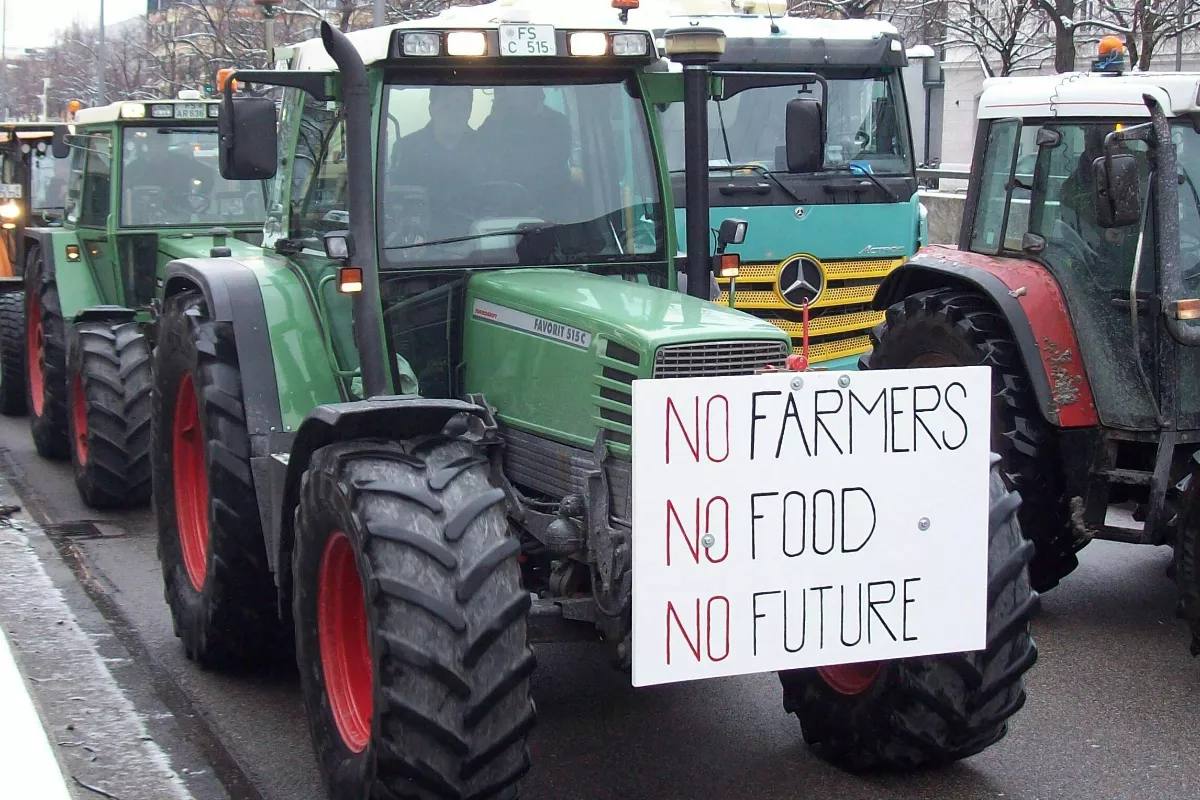
France has announced stricter controls on food imports as farmers continue to demonstrate against the EU-Mercosur deal with South American countries. 

In an open letter published Sunday on X, Prime Minister Sébastien Lecornu declared it was “no longer acceptable” to tolerate banned substances in imported products entering the French market, calling it unfair competition and a health concern for consumers.

Agriculture Minister Annie Genevard confirmed that decrees would be issued this week to suspend imports from South American countries, including avocados and apples, containing residues of five substances already prohibited in Europe.

The restrictions will apply to over a dozen food items, covering fruits such as melons, apples, apricots, cherries, strawberries and grapes, as well as potatoes. Other South American products including guavas and certain citrus fruits will also face checks. The measures will also target imported meat that fails to meet EU standards.

“From wherever they come in the world, imported products must respect our standards,” Genevard wrote on X on January 4th, describing the measures as “unprecedented” in scope.

The government has also instructed authorities to significantly increase import controls at borders and within the country. Lecornu highlighted a simple principle: “the same standards for everyone, the same controls for everyone.”

Broader support package for farmers

The import restrictions form part of wider measures to support French agriculture. Lecornu announced the government would triple funding for water infrastructure to help farmers adapt to climate change. Local officials have been asked to identify all blocked water projects, and the government may support new legislation on water access.

The prince minister also addressed the ongoing livestock disease outbreak, promising adapted measures for contagious nodular dermatosis and support for exporting vaccinated cattle. He guaranteed that the EU’s Common Agricultural Policy budget would not be cut.

French farmers have been protesting for weeks over the proposed trade agreement between the EU and the Mercosur bloc, which includes Brazil, Argentina, Uruguay and Paraguay. They argue the deal would allow cheap imports, particularly beef, that do not meet EU environmental and food safety standards.

In his letter, Lecornu acknowledged farmers’ sense of “profound injustice” and promised the government would end double standards.

While Germany and Spain support the Mercosur deal, France now seems to be its strongest opponent. Lecornu called on the European Commission to extend these import controls across the entire European market, adding: “In the meantime, we take responsibility for acting now.

Stay updated with Monaco Life: sign up for our free newsletter, catch our podcast on Spotify, and follow us across Facebook,  InstagramLinkedIn, and Tik Tok.

Main photo credit: Stefan, Pexels

Workers in Monaco and France set for bumper year of long weekends in 2026

Workers across Monaco and France can look forward to a particularly generous year of long weekends in 2026, thanks to a favourable calendar that places public holidays alongside weekends. 

The year offers five guaranteed three day weekends without using any annual leave, plus several opportunities to create extended breaks by taking just one or two days off. The French call this practice “faire le pont” or “making the bridge”.

Monaco’s public holidays

The Principality celebrates 12 public holidays. The year already begun with New Year’s Day on January 1st and soon Saint Dévote’s Day follows on Tuesday January 27th, honouring Monaco’s patron saint.

Easter Monday falls on April 6th, followed by Labour Day on Friday May 1st. Ascension Day comes on Thursday May 14th, with Whit Monday on May 25th. Monaco also uniquely celebrates Corpus Christi on Thursday June 4th. The Assumption of Mary falls on Saturday August 15th.

All Saints’ Day arrives on Sunday 1st November, but thanks to Monaco’s rules workers gain Monday November 2nd as a holiday instead. The Prince’s Day – Fête Nationale – then falls on Thursday November 19th. Lastly, December brings the Immaculate Conception on Tuesday December 8th and Christmas Day on Friday December 25th.

Monaco bridge opportunities

Taking Friday May 2nd creates a four-day weekend from May 1st to 4th. Workers could also take Wednesday January 28th for a five-day break around Saint Dévote’s Day, or Friday June 5th for a four-day weekend following Corpus Christi. In November, taking Friday November 20th extends Fête Nationale into a four-day weekend, while taking Monday December 7th creates a four-day break around the Immaculate Conception.

France sees five automatic long weekends

French workers will benefit from public holidays falling on three Fridays and two Mondays throughout the year, automatically creating five three-day weekends.

These dates includes Easter Monday on April 6th, Labour Day on Friday May 1st, Victory in Europe Day on Friday May 8th, Ascension Day on Thursday May 14th, and Whit Monday on May 25th (though not all employers grant this). Bastille Day falls on Tuesday July 14th, and Christmas Day on Friday December 25th providing a final guaranteed long weekend.

Workers in Alsace and Moselle get two additional holidays: Good Friday on April 3rd and Saint Stephen’s Day on December 26th.

May offers 17-day break using eight days of leave

May 2026 presents an exceptional chance for workers to maximise their time off. With holidays on May 1st (Friday), May 8th (Friday), May 14th (Thursday), and May 25th (Monday), employees can take a 17-day break from May 1st to 17th, by using just eight days of annual leave covering 4th-7th May, 11th to 13th May and May 15th.

However, employers are not required to approve these requests. French companies face particular pressure in May as employees must use up any time off in lieu before the month ends, or lose it.

Another bridge opportunity for France is taking off Monday July 13rd creating a four-day weekends around Bastille Day, while Friday May 15th extends the Ascension holiday into a four-day break.

What the law says

In both jurisdictions, public holidays are paid rest days separate from annual leave. If a holiday falls during booked annual leave, it does not count towards the leave allowance.

French law does not require employers to move holidays that fall on weekends. Monaco’s legislation however offers more protection, automatically shifting certain Sunday holidays to Monday.

When employees must work on public holidays, they are entitled to either equivalent payment or a compensatory day off.

Lastly, workers are advised to submit holiday requests well in advance, particularly for popular periods like May.

Stay updated with Monaco Life: sign up for our free newsletter, catch our podcast on Spotify, and follow us across Facebook,  InstagramLinkedIn, and Tik Tok.

Main photo credit: Nubia Navarro, Pexels 

French mountain restaurant fined €8,000 for refusing to serve free tap water

A high-altitude restaurant in Val Thorens has been fined €8,000 for refusing to serve free tap water to customers, France’s fraud prevention agency (DGCCRF) announced on Tuesday.

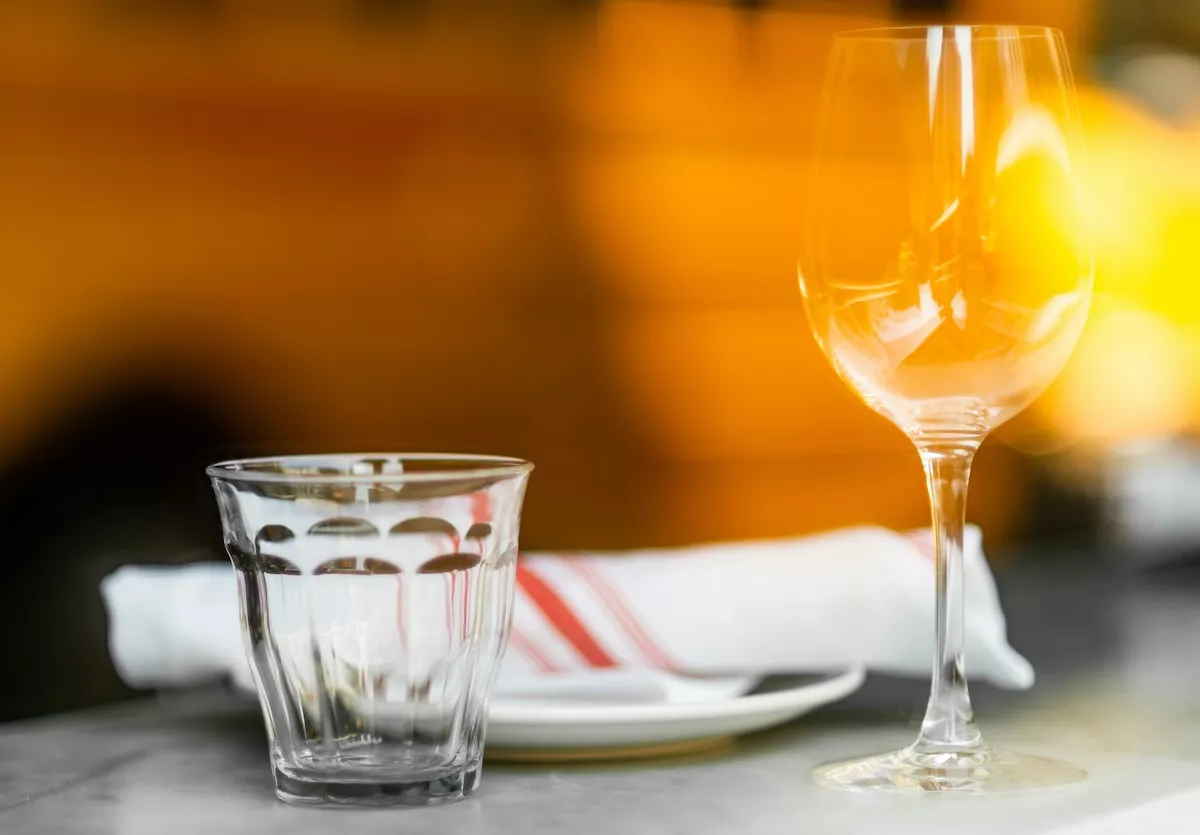
Inspectors discovered Les Aiguilles de Péclet, located at 3,000 metres altitude, only offered bottled water for sale despite French law requiring all restaurants to provide free drinking water, whether fresh or room temperature. The establishment must also display information informing customers of this right.

Online reviews of the restaurant reveal multiple customers surprised at being denied free water, particularly given the establishment charges over €30 for burgers. One customer wrote: “I asked the waiter for water and he told me it was too expensive.”

Altitude complicates compliance

The restaurant’s management explained the situation is complicated by its location. At 3,000 metres, the establishment draws drinking water from tanks of filtered and treated water rather than standard municipal supply.

Since the inspection, the manager confirmed free water is now being served to customers as required by law.

Restaurant obligations

Free drinking water represents one of several obligations imposed on French restaurants by beverage service regulations. Establishments must also serve drinks by the glass in front of customers so they can see the source bottle. When customers order a full bottle or can, it must arrive sealed and be opened at their table.

Stay updated with Monaco Life: sign up for our free newsletter, catch our podcast on Spotify, and follow us across Facebook,  InstagramLinkedIn, and Tik Tok.

Photo credit: the blowup, Unsplash