

President Donald Trump’s administration announced Wednesday it is withdrawing the United States from the UN Framework Convention on Climate Change, pulling America out of the main framework through which nations negotiate, monitor and enforce agreements to curb climate change.
The move goes further than Trump’s previous withdrawals from the Paris Agreement in 2017 and 2025, and comes as new analysis confirms the US remains more historically responsible for climate change than any other country or group of nations.
Secretary of State Marco Rubio defended the decision, stating the administration “has found these institutions to be redundant in their scope, mismanaged, unnecessary, wasteful, poorly run, captured by the interests of actors advancing their own agendas contrary to our own, or a threat to our nation’s sovereignty, freedoms, and general prosperity.”
The framework was negotiated in Brazil in 1992, championed by Republican President George H.W. Bush, and ratified unanimously by the US Senate. The Trump administration also withdrew Wednesday from a UN climate science panel, biodiversity initiatives and the Green Climate Fund.
America’s outsized contribution to warming
Carbon Brief analysis reveals the US has emitted a total of 542 billion tonnes of carbon dioxide since 1850 through burning fossil fuels, deforestation and other activities — the largest contribution to Earth’s warming climate by a significant margin.
China’s cumulative emissions of 336 billion tonnes place it a distant second, with Russia third at 185 billion tonnes, according to the analysis of figures from Jones et al (2023), Lamboll et al (2023), the Global Carbon Project, CDIAC, Our World in Data, the International Energy Agency and Carbon Monitor.
The US accounts for more than one-fifth of the 2,651 billion tonnes of CO2 that humans have pumped into the atmosphere between 1850 and 2025 through fossil fuels, cement production and land-use change. China is responsible for another 13%, with the 27 nations of the EU making up 12%.
These cumulative emissions have consumed more than 95% of the carbon budget for limiting global warming to 1.5C above pre-industrial levels — the internationally agreed threshold established in the 2015 Paris Agreement.
The disparity becomes even more stark when adjusted for population. With around 350 million people representing just 4% of the global population, the US’s per-capita cumulative historical emissions are approximately seven times higher than China’s, more than double the EU’s, and 25 times those of India.
America’s historical emissions of 542 billion tonnes exceed the combined total of the 133 countries with the lowest cumulative contributions — a list including Saudi Arabia, Spain and Nigeria. Collectively, these 133 nations have a population exceeding 3 billion people.
Scientists warn of consequences
Climate experts say the withdrawal comes at a critical juncture as Earth approaches the 1.5C warming threshold.
“We need to start reducing emissions globally by 5% per year,” said Johan Rockstrom, director of the Potsdam Institute for Climate Impact Research in Germany. “It’s our last chance. And exactly at that moment, the biggest player in the world steps out of the game.”
Adelle Thomas, climate adaptation director of the Natural Resources Defense Council, warned the move “will mean more warming because the US is not going to be fulfilling its obligations of reducing their emissions.” The Biden administration had pledged to cut US emissions by 61% to 66% by 2035.
Former Ireland president Mary Robinson, a climate advocate with The Elders group, called the timing “unbelievably stupid” and “reckless”, noting the world is perilously close to several tipping points of irreversible change, including coral reef loss.
Global response
UNFCCC Executive Secretary Simon Stiell said Trump’s move will ultimately hurt Americans. “It will mean less affordable energy, food, transport and insurance for American households and businesses, as renewables keep getting cheaper than fossil fuels, as climate-driven disasters hit American crops, businesses and infrastructure harder each year,” he stated.
Former Secretary of State John Kerry, who served as America’s top climate envoy, called Trump’s action “a gift to China and a get-out-of-jail free card to countries and polluters who want to avoid responsibility.”
Leaders from more than 190 nations say the United States risks being left behind as the world transitions to what they describe as a blossoming green economy moving from coal, oil and gas to cleaner and cheaper renewable energies.
However, legal experts note the withdrawal is reversible. Sue Biniaz, a former State Department lawyer who now teaches at Yale, said the next president would have the power to undo Trump’s action, as occurred when President Joe Biden rejoined the Paris Agreement in 2021 after Trump’s first withdrawal.
Stay updated with Monaco Life: sign up for our free newsletter, catch our podcast on Spotify, and follow us across Facebook, Instagram, LinkedIn, and Tik Tok.
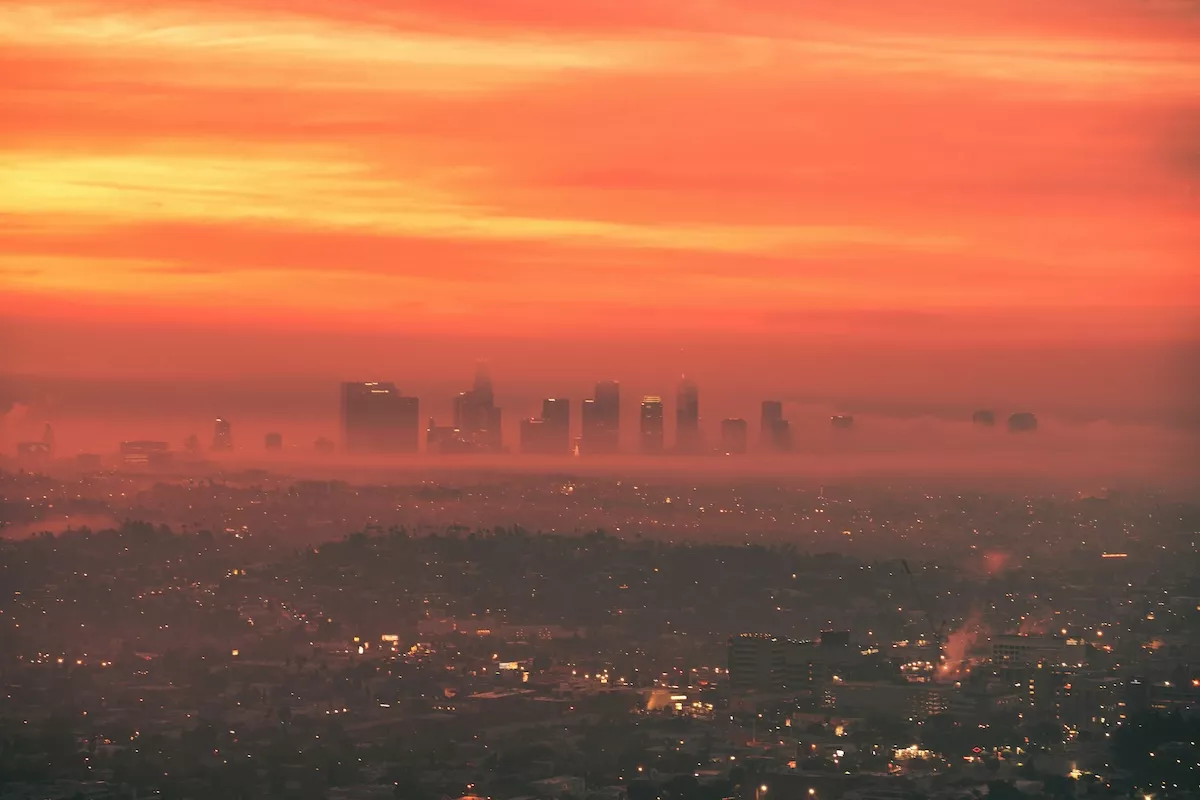
Photo: Fires in Los Angeles, 2021, credit: Jesus Curiel, Unsplash