The Monaco Ballooning Team has announced an ambitious programme for 2026, including participation in a record-breaking attempt to cross the English Channel with 200 balloons.
The team, which operates under the honorary presidency of Prince Albert II, will kick off its international calendar at the Château-d’Oex festival in Switzerland from January 24th to February 1st. The event is known for attracting the world’s largest gathering of mountain balloons.
The proposed Channel crossing, if the weather permits it, will take place before the end of April. The attempt would mark a significant milestone in hot-air ballooning history.
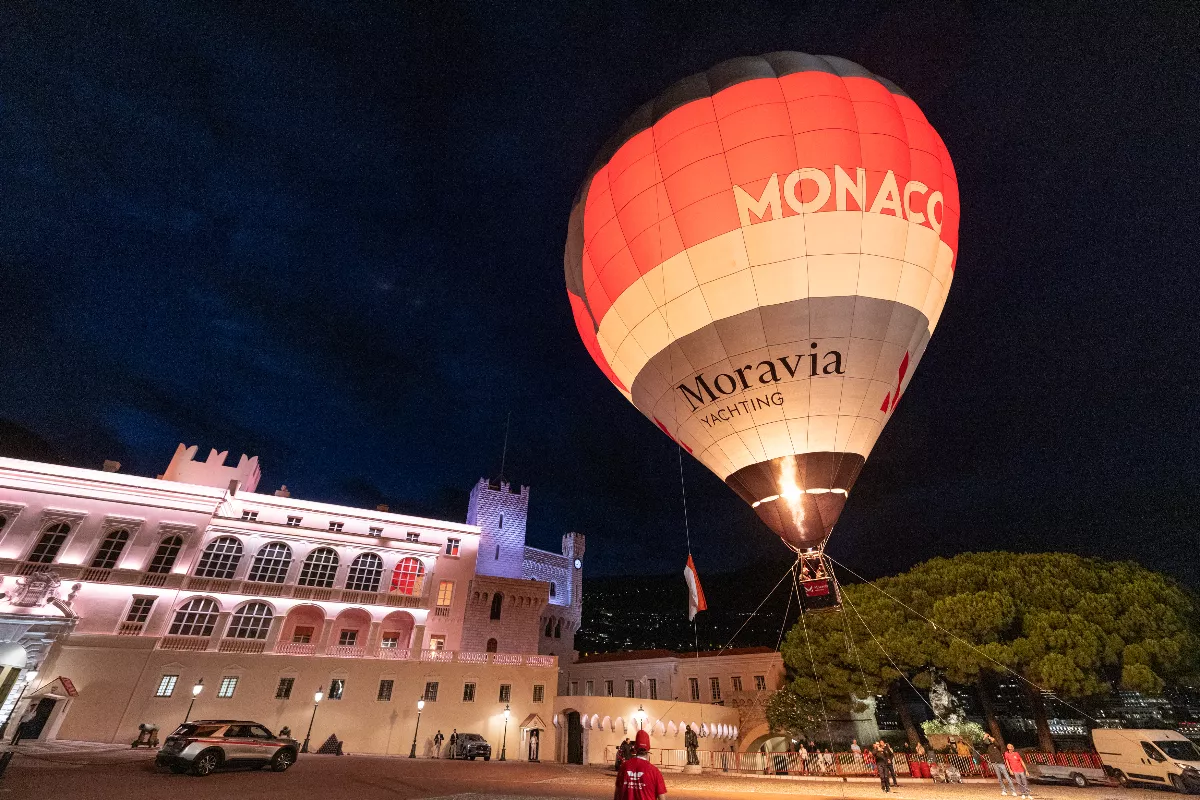
President and Pilot Alain Cruteanschii said the team is also planning a tour of prestigious Alpine destinations including Gstaad, Verbier, Méribel and Courchevel for a television documentary. The club is additionally hoping to stage launches from Monaco’s Palace Square this winter, featuring multiple eco-friendly balloons.
The partnership that fuelled the international expansion
The expanded activity follows a major partnership with Moravia Yachting, which has enabled the team to pursue international opportunities. “Our new partner gives us the means to match our international ambitions and to showcase the image of the Principality around the world,” Cruteanschii said, adding that the team is currently responding to invitations from all continents.
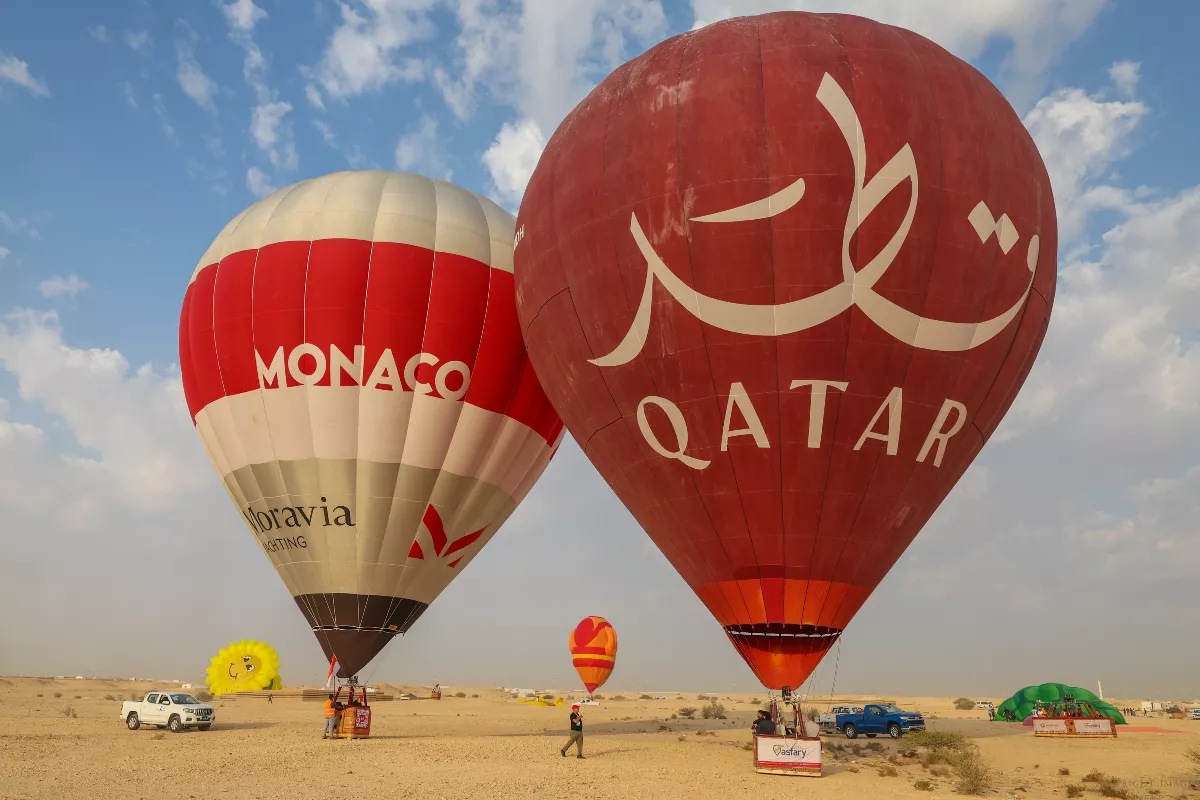
Les Aéronautes de Monaco at the 6th Qatar Balloon Festival, photo credit: Ed Wright Images
The announcement follows a busy 2025 for Les Aéronautes de Monaco, which included the unveiling of their new Monaco-Moravia balloon at the Monaco Yacht Show, followed by a spectacular evening at the Palace Square. They also participated in the 6th Qatar Balloon Festival in December, where they flew the principality’s red and white colours alongside crews from around the world.
The team kicked off 2026 at the annual Mondovì Festival in Italy, where they maintain their operational base as full members of the local aero club. Looking ahead, Cruteanschii hinted at plans for a Prince Albert II Cup competition in 2027
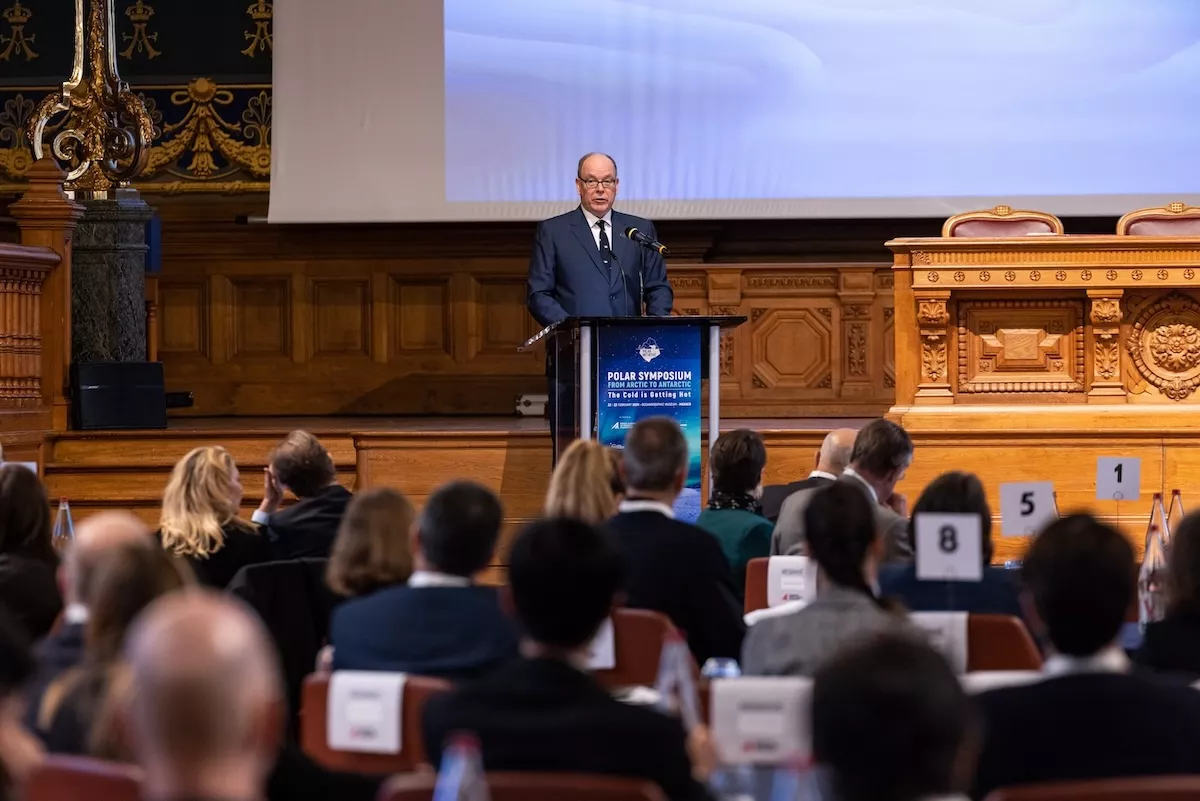
Hundreds of polar researchers will descend on Monaco next month as the principality hosts the third Monaco Polar Symposium, an event increasingly focused on moving beyond data collection to practical solutions.
The three-day gathering at the Oceanographic Museum, scheduled for 25th to 27th February, comes as both Arctic and Antarctic regions experience accelerating environmental changes that scientists say demand urgent action.
This year’s event carries a pointed theme: rFrom Arctic to Antarctic – Enabling the Legacy: Translating Polar Research into Action.’
Shifting focus
The symposium represents a departure from traditional scientific conferences, organisers say, with emphasis placed on implementation rather than just presenting findings.
Scientists, policymakers, Indigenous leaders, funding bodies and civil society groups will participate in panels and workshops designed to produce actionable outcomes.
The event is being organised by the Prince Albert II of Monaco Foundation, The Scientific Committee on Antarctic Research, the International Arctic Science Committee, and the Oceanographic Museum.
Three main areas will dominate discussions: maintaining international scientific collaboration despite geopolitical tensions, developing new funding models for polar research, and moving flagship initiatives from planning to implementation.
Building toward IPY-5
Much of the groundwork will feed into preparations for the Fifth International Polar Year, a coordinated global research effort still being planned.
The last International Polar Year took place in 2007-2008 and resulted in significant advances in polar science, though critics have noted that implementation of recommendations has been uneven.
A pre-event session on the morning of 25th February, organised by the University of the Arctic, SCAR and the Oceanographic Institute, will specifically address IPY-5 planning.
Diverse participation
Organisers have made a point of including Indigenous representatives from polar regions alongside traditional scientific voices, acknowledging that local and traditional knowledge plays a crucial role in understanding environmental changes.
The inclusion reflects growing recognition within the scientific community that effective polar policy requires input beyond academia.
Programme details and confirmed speakers have not yet been released.
Prince Albert II has made polar research a priority throughout his reign, participating in expeditions to both poles and using Monaco’s platform to advocate for polar protection.
The biennial symposium has become part of the principality’s broader environmental agenda, which includes ocean conservation and climate action initiatives.
Monaco will host its inaugural Energy Storage Forum on Friday 23rd January, marking the principality’s bid to establish itself as a strategic European hub for clean energy technology and grid innovation.
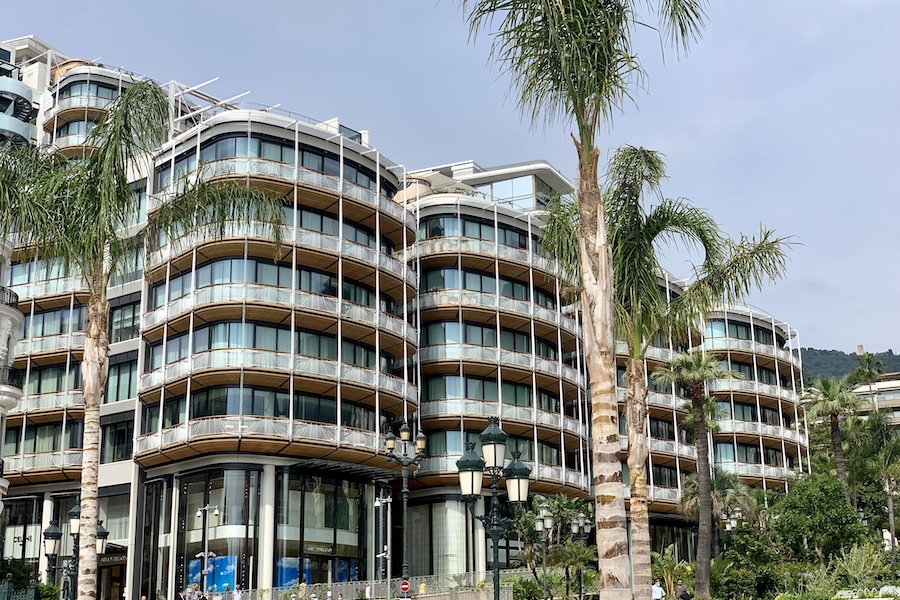
The invite-only event at One Monte-Carlo brings together government institutions, utilities, technology providers and investors for what organizers say will become an annual gathering focused on battery energy storage systems and grid flexibility.
It represents Monaco’s latest effort to carve out a niche in Europe’s energy transition, leveraging its international connectivity and regulatory environment to attract clean energy projects.
Ambitious positioning
The forum’s stated aim is direct: position Monaco as a base for European energy innovation and accelerate the deployment of advanced storage systems across the continent.
Running from 8:30am to 6pm, the programme will cover financial outlooks for grid stability, European battery storage distribution strategies, and digital platforms supporting energy infrastructure.
Confirmed speakers include representatives from Monaco’s institutions discussing the principality’s role as a European strategic hub, DEYE Chairman and AGE CEO addressing battery storage rollout plans, and various technology leaders.
The Blue Alliance Foundation, an international environmental organisation, serves as the official foundation partner.
Target participants
Organisers have identified specific audiences for the forum: utilities seeking grid flexibility solutions, companies looking to optimize energy consumption and reduce carbon emissions, industrial players supporting national grid stability, and organisations focused on energy resilience.
Topics will include how battery energy storage systems and digital platforms support grid stability, use cases for improving energy efficiency and return on investment, and how Monaco could function as a trusted European base for clean energy projects.
First of its kind
This marks Monaco’s first dedicated forum on energy storage technology, though the principality has hosted numerous events on broader environmental and ocean conservation topics.
The decision to focus specifically on energy storage and grid technology represents a narrower, more technical positioning than Monaco’s traditional environmental advocacy.
A new monthly lecture series aims to bring scientific knowledge out of the laboratory and into public conversation in Monaco.
The Monaco National Commission for UNESCO and Médiathèque Caroline, in partnership with Sciences pour Tous 06, have launched Parlons Sciences (Let’s Talk Science), a series of free public lectures covering topics from artificial intelligence to brain ageing.
The programme seeks to break down barriers between scientists and the general public, making complex scientific concepts accessible without requiring any specialist knowledge.
Breaking down barriers
Organisers say science shapes daily life and inspires solutions for tomorrow’s challenges, yet it often remains perceived as complex or disconnected from everyday concerns.
The lecture series offers a space for exchange, discovery and dialogue between scientists, researchers and the public.
Each talk will be delivered by recognised experts, researchers and academics, covering diverse themes including artificial intelligence, ecological transition, health, astronomy and human sciences.
Questions and debate will be encouraged at each session.
First semester programme
The series launches on Tuesday 4th February at 6:30pm with astrophysicist Dr Olivier Minazzoli from the Observatoire de la Côte d’Azur exploring ‘The Mysteries of Black Holes’.
On 7th April, Dr Frédéric Havet, CNRS Research Director at the I3S laboratory in Sophia Antipolis, will examine where algorithms appear in daily life, in collaboration with Terra Numerica and Sciences pour Tous 06.
Professor Jean-Pierre Lozato-Giotart, honorary professor at Paris III Sorbonne, asks on 5th May whether the Côte d’Azur can be an emblematic sustainable tourism destination.
The first semester concludes on 9th June with Dr Mounia Chami from INSERM discussing how to understand normal and pathological ageing of the brain.
Practical information
All lectures are in French and take place on the first Tuesday of each month at 6:30pm in the auditorium of Médiathèque Caroline, 5 promenade Honoré II.
Entry is free with no booking required, subject to available seating.
The series is open to students, professionals, families and anyone wishing to better understand the world around them.
“Science is a collective adventure,” organisers said. “This series is an invitation to become part of it, to ask questions and to marvel at the discoveries shaping our future.”
For more information, contact the library on +377 93 15 29 40 or mediatheque@mairie.mc.
In partnership with the Princess Grace Foundation-USA, Monaco Life proudly presents a monthly series spotlighting the lives and artistic contributions of the Foundation’s remarkable Award winners.
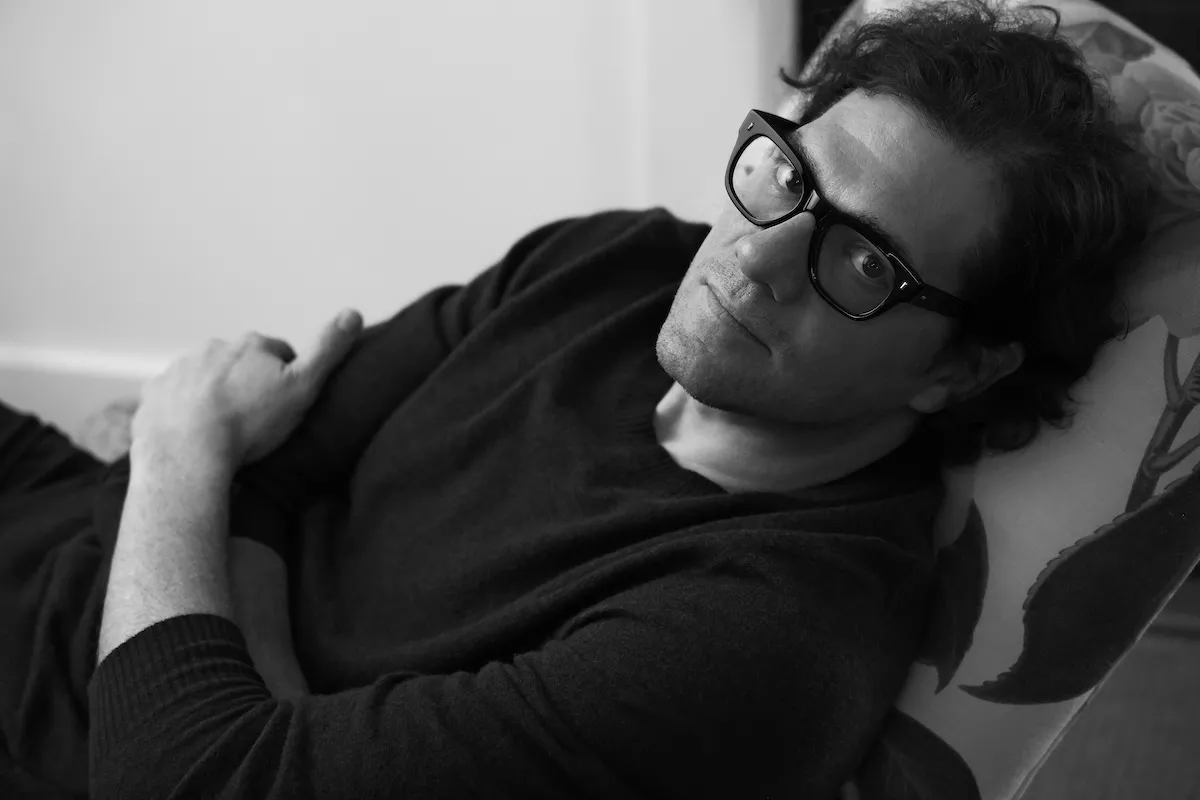
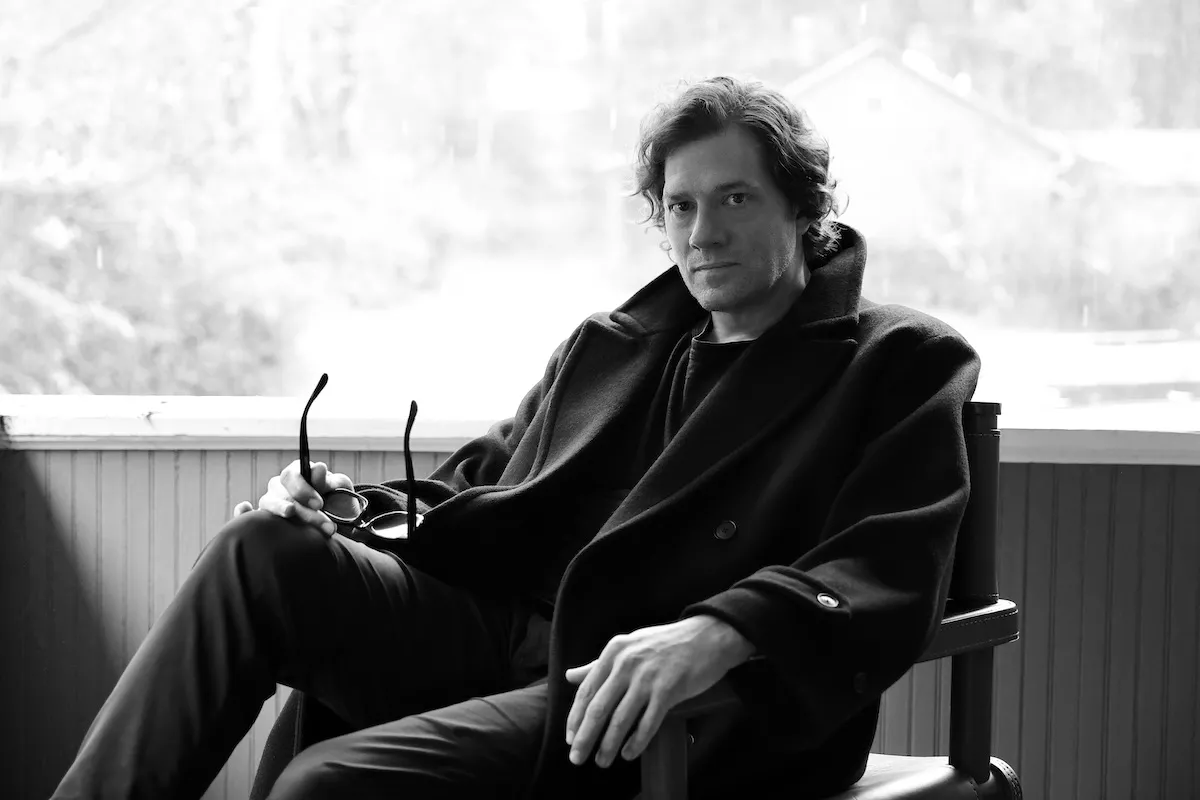
What does it mean to commit your life to storytelling—knowing the path will be uncertain, the rewards often delayed, and the work itself demanding a fearless honesty? For playwright, novelist, filmmaker, and director Adam Rapp, it has meant following curiosity wherever it leads, even when the outcome is unclear.
Raised in the Midwest, Adam Rapp‘s work is known for its emotional intensity, moral complexity, and unflinching exploration of loneliness, class, grief, and survival. In 1999, at a moment when his future as an artist felt deeply uncertain, he received the Princess Grace Playwriting Fellowship—a turning point that helped affirm his voice and sustain his commitment to the craft.
In this candid conversation, Rapp reflects on his unlikely beginnings, the necessity that shaped his multidisciplinary career, the role of theatre as a provocative and meditative art form, and the questions that continue to drive him more than two decades into a prolific career. From Broadway to Steppenwolf, and from Illinois cornfields to imagined days in Monaco, Rapp reminds us why stories that unsettle us are often the ones we need most.
On beginnings and storytelling
Take us back to the beginning—when did storytelling first take hold of you?
It began with short fiction and poetry. I was a sophomore in college, a pre-med major, and things were not going well academically. I had to replace some dropped science credits to stay on the basketball team, and by chance, I wandered into a displaced poetry class near the registrar’s office. There was sitar music playing—Ravi Shankar—and about a dozen students doing an automatic writing exercise.
The professor invited me in and explained that the only rule was that your pencil couldn’t stop moving. I sat down, started writing, and something happened. It felt like discovering a portal inside myself—my imagination dilated for the first time. Twenty minutes later, I had pages of nonsense, but I was completely in love with writing. Soon after, I changed my major and abandoned the pre-med track entirely.
You grew up in Illinois, far from traditional cultural capitals. How did that shape your work?
The Midwest haunts a lot of my writing. I grew up surrounded by endless cornfields, prairie barns, metal silos, and punishing winters. I didn’t see an ocean until I was 27. Being landlocked during those long winters shaped my imagination—I think that’s why snow appears in many of my early plays.
On Career and Creative Process
You’ve worked across theatre, fiction, film, and television. How do those disciplines speak to one another?
The versatility came out of necessity. Early advances for novels and Off-Broadway work were modest, and I had to find ways to stay in New York and pay rent. Film and television became a natural progression—and I was shocked when my first TV paycheck equaled what I’d earned for my first novel. That reality changed how I thought about sustainability as an artist.
Your characters often feel deeply flawed yet profoundly human. Where do those stories come from?
Nothing I’ve written is directly autobiographical, but it all feels familiar. I’ve experienced loss, grief, trauma—like everyone. Bad things happen, and we endure as best we can. I think my work explores that endurance, charting emotional extremes and how people survive them.
What’s the hardest part of writing for you?
The second draft. The first draft often arrives in a kind of freefall—it’s messy but alive. Shaping that chaos into something coherent and precise is the hardest part.
On the Princess Grace Foundation–USA
You received the Princess Grace Playwriting Fellowship in 1999. What did that recognition mean at the time?
It meant everything. I was struggling, working day jobs, questioning whether writing had a future for me. I’d published my first novel, and no one read it. The fellowship was a huge shot in the arm—a reason to keep going. Early validation like that can be enormous, and it was for me.
How did you first learn you’d been selected?
One of the judges, a theatre critic from The Village Voice, emailed me to say he loved my play. I was shocked—I’d almost forgotten I applied.
How did that early support shape your path?
More than anything, it gave me confidence. It made me believe playwriting wasn’t a waste of time—that people were genuinely interested in what I had to say.
On Theatre Today
How do you see theatre’s role in today’s cultural landscape?
The world is deeply divided, and theatre has increasingly become a place of refuge. While that has value, I worry we’ve sometimes lost the impulse to provoke. Theatre is at its best when it’s a bear pit—when truthful conflict is on display. If I ever wrote a “palatable” play, I’d consider it a failure. The greatest sin in theatre is boredom.
In an age dominated by phones and short-term stimulation, theatre asks something different of us. It’s meditative. It requires effort. When people leave a great play, they should have questions—not answers. My responsibility is to provoke, to scare myself out of comfort, and to invite audiences into that trance-like space.
On Broadway & Beyond
Your Broadway debut The Sound Inside received critical acclaim. How did that experience compare to earlier work?
The scale was the biggest difference. I was used to audiences of 50 or 100 people. At Studio 54, it was nearly a thousand. The collective silence, laughter, and response at that level is incredibly powerful. I’ve always seen myself as an underdog—I never imagined Broadway would be part of my journey.
What themes are calling to you now?
I can’t stop thinking about classism in America—about communities left behind, especially after Covid. My upcoming play JACKALS, premiering at The New Group, grapples with that reality.
On Monaco & What’s Next
Have you had the chance to visit Monaco or the Princess Grace community abroad?
I’ve never been to Monaco, but it looks otherworldly—the light, the harbors. I’d love to spend weeks there without a plan, discovering cafés, architecture, and people. And I hear the seafood is incredible.
If one of your plays were performed in Monaco, which would you choose?
The Sound Inside. At its core, it’s about loneliness, connection, and the possibility of finding a soulmate—even across generations. It’s traveled well internationally, which tells me its themes resonate across cultures.
What are you working on now?
In addition to JACKALS, I’m premiering The Night Fawn at Steppenwolf. It’s about returning to the Midwest, confronting buried trauma, and examining how shame and morality shift in the face of revenge. I’ve also just begun a new novel.
Finally, what continues to drive you to tell stories?
I keep getting bothered by things. I’m still curious about what makes life meaningful—about human complexity, greatness, and tragedy. Life remains endlessly mysterious, and I keep wanting to write about it.
France’s highest court has ruled that Airbnb can be held financially responsible when users illegally sublet properties through its platform without landlord permission.
The Court of Cassation’s 7th January decision marks a significant shift in how digital platforms are treated under French law, rejecting Airbnb’s claim that it functions merely as a neutral hosting service.
The ruling means Airbnb can be ordered to pay damages to property owners whose tenants illegally sublet through the site, including returning both rental income and commissions earned from such transactions.
Two test cases
The court examined two cases involving illegal subletting.
In the first, a social housing tenant in a tourist region was subletting her apartment through Airbnb without authorisation. The housing association that owned the property sued both the tenant and Airbnb for the rental income.
While lower courts convicted the tenant, they initially refused to hold Airbnb liable, granting it status as an internet host.
In the second case, a Paris tenant sublet her apartment in a tourist district without the owner’s permission, again using Airbnb. The trial court ordered both the tenant and Airbnb to pay damages to the landlord, including the commission Airbnb earned from the transactions.
The appeal court upheld this decision, ruling that Airbnb could not claim internet host status.
Not a neutral intermediary
The Court of Cassation determined that Airbnb plays an active role beyond simply storing content and making it available online.
Under EU law, an internet host must act as a simple intermediary providing only neutral, automatic data storage. The court found Airbnb fails this test by imposing rules on listings, verifying compliance, and promoting certain properties through its “Superhost” designation.
This active involvement gives Airbnb knowledge of and control over listings—incompatible with internet host status under French law.
Without such protections, Airbnb can be held liable when users employ its platform for illegal subletting. Property owners can now pursue the company directly for damages, including rental payments and commissions earned from unauthorised transactions.