253 crews to tackle Alpine stages in Monte Carlo Historic Rally

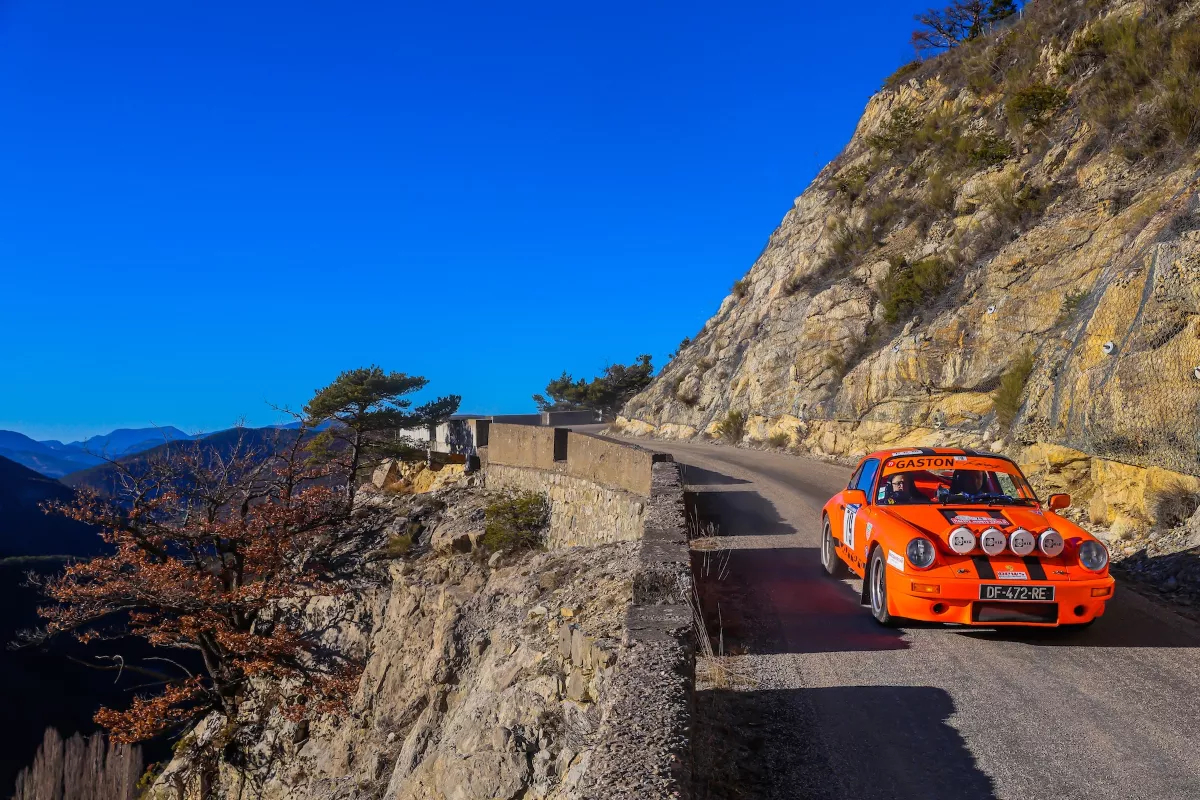
Over 250 vintage car enthusiasts from 28 nations will navigate some of Europe’s most challenging mountain passes when the Monte Carlo Historic Rally begins on Thursday 29th January.

The rally running until 7th February, marks a significant shift from tradition with 18 timed stages on traffic-free roads, a move designed to enhance safety all while preserving the event’s authentic character.

The earliest competitors leave John O’Groats in the Scottish Highlands on 29th January, facing the longest journey south. The remaining entries depart on 1st February from Bad Homburg in Germany, Barcelona, Monte Carlo, Reims in France, and Turin in Italy. All routes converge on Valence in southeastern France, where the first arrivals are expected at the Esplanade du Champ de Mars from 12:30pm on Monday 2nd February.

Then, the competition properly begins on Tuesday 3rd February with three tests run twice: Col Gaudissart to Bouvante (7.5km), Léoncel to Oriol-en-Royans (11.3km), and Col de Tourniol to Barbières (10.4km).

Ardèche mountains to put drivers to the test

On 4th February, the route ventures into the Ardèche département, featuring two new stages: Saint-Pierreville to Issamoulenc (10.8km) and Lachamp-Raphaël to Burzet (15.4km).

Competitors will then stop at Antraigues-sur-Volane, where the Jouanny family garage has become a Monte Carlo Rally institution over recent decades. The day concludes with two further stages before crews return to Valence at 17:36pm.

On 5th February, the itinerary takes to the Vercors and Diois massifs with three stages, including the climb to Col de Menée at 1,457 metres and the Col de Carabès (1,261m), which marks the border between the Hautes-Alpes and Drôme départements.

Following on 6th February, three more Alpine tests await via the Col de Pennes (1,040m) and Col des Garcinets (1,185m) before crews descend towards Monaco, entering parc fermé at 16:30pm.

Night finale

The rally concludes with a dramatic overnight stage departing Monaco at 21:00pm on Friday 6th February. Competitors face two of the event’s most iconic tests: La Bollène-Vésubie to Col de Turini (15km) and La Cabanette to Col de Braus (13.7km). Cars are expected back at Monaco’s Port Hercule from 00:25am on February 7th.

A gala prize-giving is scheduled for the evening on Saturday at the Sporting Monte-Carlo’s Salle des Étoiles.

Now with an expanded eligibility window covering any car that competed in the Monte Carlo Rally between 1911 and 1986, the Monte Carlo Historic Rally has attracted cars spanning seven decades. Organisers have also introduced three different target average speeds for the event, with competitors classified according to which speed category they choose.

Additionally, C.E approved helmets are now mandatory on all closed road sections promoting tighter safety standards

Stay updated with Monaco Life: sign up for our free newsletter, catch our podcast on Spotify, and follow us across Facebook,  InstagramLinkedIn, and Tik Tok.

Main photo credit: Automobile Club de Monaco 

Podcast: UBS’s Paul Donovan on 2026 outlook and the $80 trillion wealth transfer

Paul Donovan has a rare talent for making economics clear, engaging, and surprisingly relatable. As Chief Economist at UBS Global Wealth Management, he offers a direct, no-nonsense view of the key trends shaping the global economy today.

In this podcast, we discuss why women are set to hold more of the world’s wealth, what’s causing Europe to fall behind in innovation, and his frank take on whether crypto deserves a place in serious portfolios. We also look at the rise of AI, demographic changes, and what these shifts could mean for 2026.

Stay updated with Monaco Life: sign up for our free newsletter, catch our podcast on Spotify, and follow us across Facebook,  InstagramLinkedIn, and Tik Tok.

Photo by Cassandra Tanti


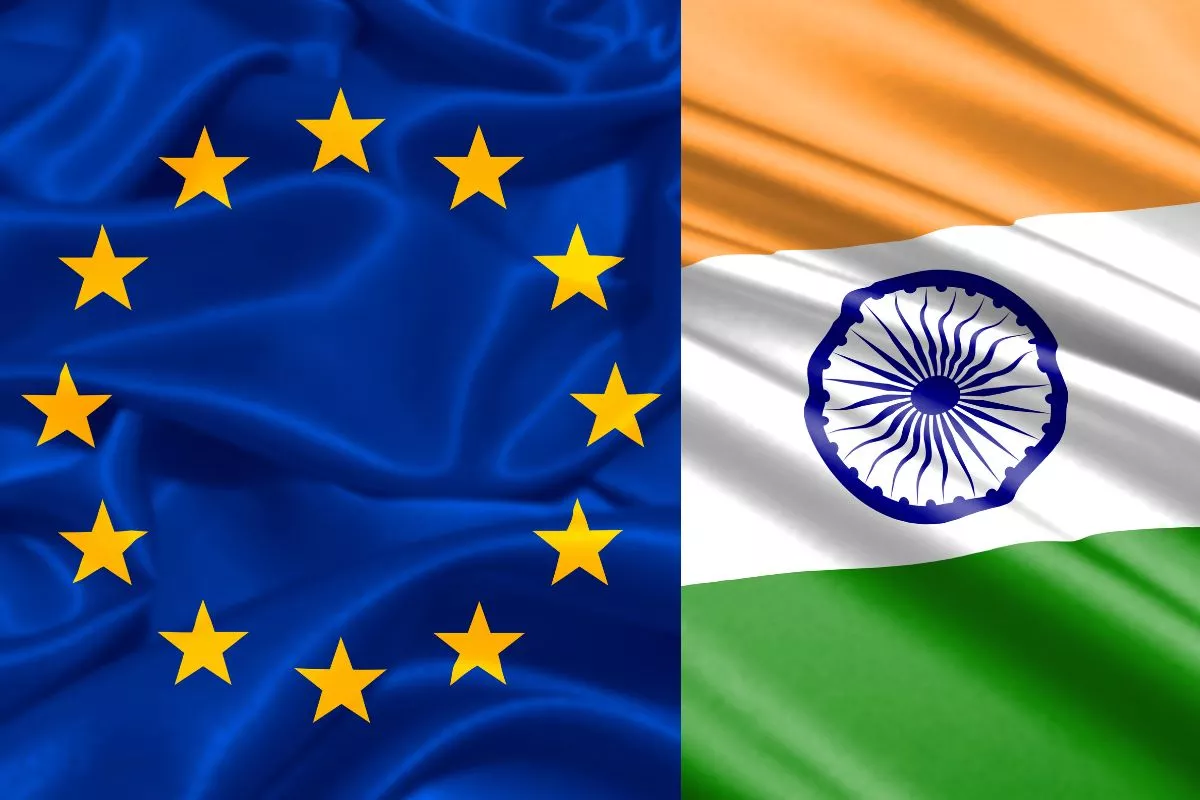
India and EU conclude historic free trade agreement after two decades of negotiations

India and the European Union signed a comprehensive free trade agreement on Tuesday, creating a trading bloc of two billion people after negotiations spanning more than 20 years.

Prime Minister Narendra Modi called it the “mother of all deals” at a signing ceremony in New Delhi with European Commission President Ursula von der Leyen and European Council President Antonio Costa. The agreement eliminates or reduces tariffs on almost 97% of European exports, saving up to €4 billion annually in duties, according to the EU.

Strategic partnership amid global tensions

Both sides framed the agreement as a buffer against economic pressure from the United States and China. “By combining these strengths, we reduce strategic dependencies, at a time when trade is increasingly weaponised,” von der Leyen said.

Modi emphasised the deal’s scale, noting it “represents about 25% of global GDP, and one-third of global trade.” Von der Leyen described it as “the most ambitious India had ever signed,” giving European companies a “first mover advantage” in the world’s most populous nation.

Major tariff reductions

Under the agreement, tariffs on cars will gradually fall from 110% to as low as 10%, while duties on wines drop from 150% to 20%. Tariffs on processed foods including pasta and chocolate, currently at 50%, will be eliminated.

European firms will gain access to Indian financial services and maritime transport markets. Von der Leyen said she expects exports to India to double, with the EU gaining “the highest level of access ever granted to a trade partner in the traditionally protected Indian market.”

For India, the deal will boost textiles, gems, jewellery, leather goods and services sectors, Modi said.

Sensitive sectors excluded

Sensitive agricultural products including beef, rice and sugar were excluded from the agreement. These sectors sparked farmer protests in Europe when included in the EU’s trade deal with South American bloc Mercosur.

Negotiations continued until Monday evening, with final discussions focusing on the impact of the EU’s carbon border tax on steel, according to sources familiar with the talks.

Growing bilateral trade

Bilateral trade in goods reached €120 billion in 2024, an increase of nearly 90% over the past decade, according to EU figures. Trade in services totalled a further €60 billion.

Germany’s finance minister Lars Klingbeil welcomed the agreement, saying it “creates new opportunities for growth and good jobs in Europe and India alike while deepening the strategic partnership with the world’s largest democracy.”

Additional agreements expected

India and the EU are also expected to conclude agreements facilitating movement for seasonal workers, students, researchers and highly skilled professionals, as well as a security and defence pact.

“We are not only making our economies stronger—we are also delivering security for our people in an increasingly insecure world,” von der Leyen said.

India is projected to become the fourth-largest economy this year, according to International Monetary Fund forecasts. New Delhi has been working to reduce its dependence on Russia for military hardware by diversifying imports and expanding domestic manufacturing, while Europe seeks to reduce reliance on the United States.

Von der Leyen and Costa attended India’s Republic Day parade on Monday as guests of honour before the trade agreement signing.

Stay updated with Monaco Life: sign up for our free newsletter, catch our podcast on Spotify, and follow us across Facebook,  InstagramLinkedIn, and Tik Tok.

Monaco celebrates Saint Dévote with Pontifical Mass and traditional procession

Prince Albert II and Princess Charlène attended a pontifical mass at Monaco Cathedral on January 27th for the celebrations of Saint Dévote.

The service was presided over by Cardinal Pierbattista Pizzaballa, the Latin Patriarch of Jerusalem, with Mayor Georges Marsan, members of the municipal council, and representatives from Monaco’s twin towns of Lucciana in Corsica and Dolceacqua in Italy in attendance.

The procession leaving Monaco’s Cathedral, photo credit: Stéphane Danna, Government Communications Department
Following the mass, a traditional procession carried the saint’s relics through the streets of Monaco Ville.

A large crowd of residents followed the procession as it made its way towards the Prince’s Palace.

The procession arriving at the Prince’s Palace, photo credit: Stéphane Danna, Government Communications Department
The Prince and Princess watched from the palace balcony as the procession passed below, before the relics were carried towards the side of the Rock overseeing the port for the blessing of the sea, a centuries-old tradition.

During the blessing of the sea, photo credit:photo credit: Stéphane Danna, Government Communications Department
After the procession, Mayor Georges Marsan hosted a reception at the town hall, bringing together officials and delegates from the twin towns to mark the occasion.

The two-day celebration had begun on Monday evening with the symbolic burning of a boat on Port Hercule, re-enacting the saint’s arrival by sea.

The festivities concluded with a candlelit spiritual concert at the Cathedral, featuring the Choir of Sartène, the Choir of the Papal Chapel of Assisi, and the Children’s Choir of the Rainier III Academy.

Stay updated with Monaco Life: sign up for our free newsletter, catch our podcast on Spotify, and follow us across Facebook,  InstagramLinkedIn, and Tik Tok.

Main photo credit: Stéphane Danna, Government Communications Department