The Junior Economic Chamber of Monaco (JCI) has outlined its plans for 2026, including new initiatives for students and changes to existing programmes.
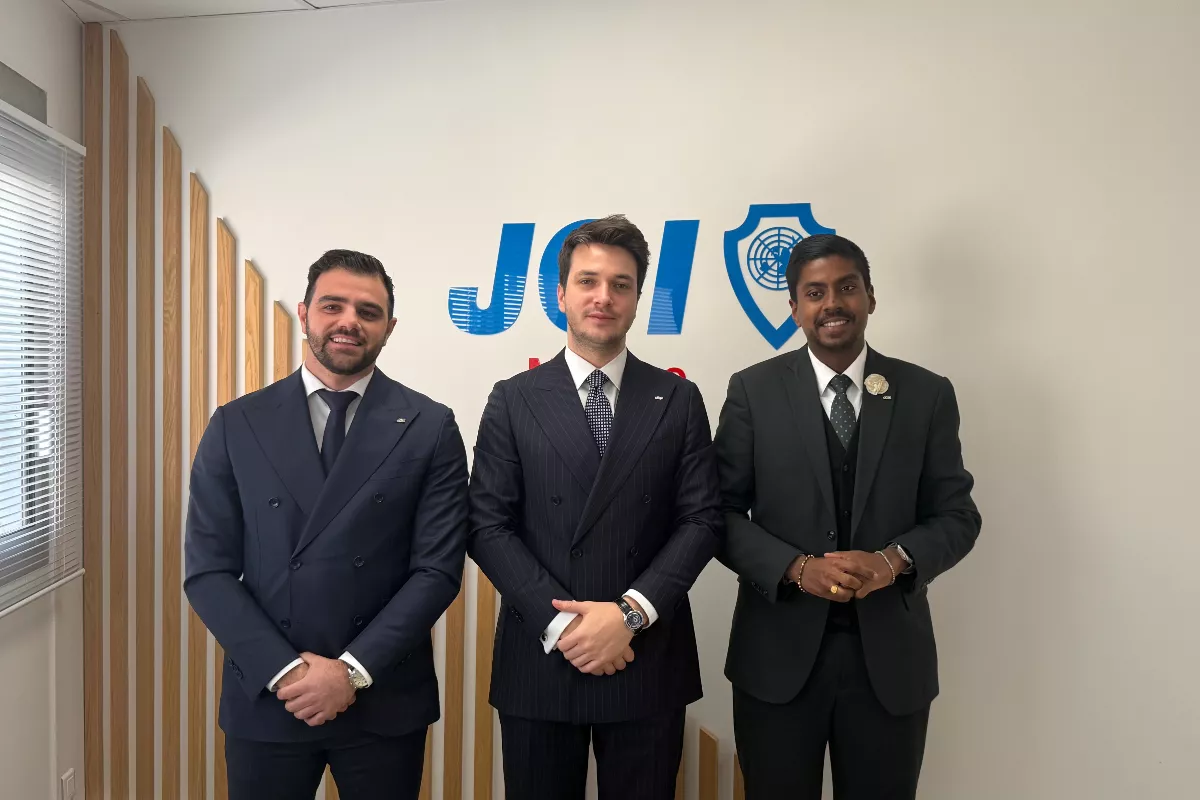
Lucas Dubois, appointed President of JCI for 2026, explained the changes at a press conference on Thursday January 29th alongside Vice-President for Entrepreneurship Julien Vivarelli and Vice-President for Attractivity Luxmaan Sellappah.
The main addition is Monaco Junior Impact, a new student entrepreneurship programme launching this year. It will connect students from the International University of Monaco with business mentors to develop community-focused event proposals over four months. Student teams working within set budgets will pitch their ideas to a jury in late April, with the winning project receiving full JCI Monaco funding for delivery in June.
“The students will experience the entire entrepreneurial journey, from finding the idea to respecting a budget, finding the right partners to deliver the event, securing suitable venues, and then executing it on the day,” Dubois said.
The organisation is also planning to improve Monaco Inspire, which celebrates its third edition in late November. After feedback from previous years, organisers are going to introduce cheaper morning-only tickets to complement their full-day pass, making the event more accessible to those primarily interested in the keynote speakers.
“We want to review the ticket prices to allow us to invite a broader range of people,” Dubois explained. Three keynote speakers will address attendees in the morning, with a new feature allowing participants to book one-to-one sessions with speakers throughout the day. The afternoon retains the pitch contest and adds optional workshops.
Broader strategic shift
These changes reflect JCI Monaco’s repositioning around three core pillars: attractiveness, entrepreneurship and innovation. Meanwhile, the organisation has dropped its previous focus on personal development in order to promote innovation as “the voice of 18 to 40-year-olds” in Monaco’s business community.
In addition, training programmes are expanding beyond entrepreneurs to include corporate employees. “Until now, we had many training sessions for entrepreneurs, but Luxmaan wanted to promote this aspect and offer more training in the corporate world, with soft skills dedicated to employees,” Dubois said.
The attractiveness pillar will deliver around 15 public events this year, including four breakfast conferences with guest speakers. Vivarelli stressed that despite the organisation’s 18-40 age limit for membership, all events remain open to the public. “There’s no age requirement for attending events,” he said.
Three Pitch Night sessions will also run throughout the year, with the first on March 18th dedicated to IUM students. The free evening events at JCI Monaco headquarters give participants a platform to present their projects to mentors and audiences.
The organisation also maintains its core initiatives, including the Business Creation Competition in its 31st year and the Startup Meeting series.
The European Commission has launched a formal investigation into X under the Digital Services Act, examining whether the platform adequately assessed and mitigated risks before deploying its AI tool Grok in the European Union.
The investigation will focus on risks related to dissemination of illegal content, including manipulated sexually explicit images and potential child sexual abuse material. The Commission stated these risks appear to have materialised, exposing EU citizens to serious harm.
Failure to conduct risk assessment
The Commission will investigate whether X complied with obligations to assess and mitigate systemic risks, including dissemination of illegal content, negative effects related to gender-based violence, and serious consequences to physical and mental wellbeing from Grok’s functionalities.
Under the Digital Services Act, X was required to conduct and transmit an ad hoc risk assessment report for Grok prior to deployment, given the tool’s critical impact on the platform’s risk profile.
The Commission has also extended its ongoing investigation, launched in December 2023, to examine whether X properly assessed all systemic risks associated with its recommender systems, including the impact of its recently announced switch to a Grok-based recommendation system.
Previous enforcement action
If proven, these failures would constitute infringements of multiple DSA articles. The Commission stated it will conduct an in-depth investigation as a priority, though opening formal proceedings does not prejudge the outcome.
The investigation extends proceedings launched on 18th December 2023, which focused on X’s content moderation mechanisms, mitigation measures against illegal content including terrorist material, and risks associated with recommender systems.
Those proceedings also covered deceptive design, lack of advertising transparency and insufficient data access for researchers. The Commission adopted a non-compliance decision on 5th December 2025, fining X €120 million.
On 19th September, the Commission sent X a request for information related to Grok, including questions about antisemitic content generated by the AI tool in mid-2025.
What is Grok
Grok is an artificial intelligence tool developed by X that has been deployed on the platform in various ways since 2024. The tool enables users to generate text and images and provides contextual information to users’ posts.
Citizens who have been negatively affected by AI-generated images, including child sexual abuse material or non-consensual intimate images, can access help and support at national level.
Under the DSA, individuals have the right to file complaints about DSA breaches with their Member State’s Digital Services Coordinator.
Monaco will mark the Chinese New Year with a gala evening at the Hôtel Méridien Beach Plaza Monte-Carlo on Wednesday, 11th February at 7pm, celebrating the Year of the Fire Horse, which begins on 17th February.
The Association Monaco-Chine and Monaco Dragon Prestige are organising the event with support from Monaco’s Embassy in China. The Fire Horse symbolises momentum, passion and renewal in the Chinese zodiac.
Four-course menu and haute couture
Guests will experience a four-course gastronomic dinner created by chef Laurent Colin, featuring refined interpretations of Asian cuisine and traditions.
The evening’s highlight will be an exclusive fashion show by AMC Haute Couture, described by organisers as blending modernity with cultural heritage. The creations aim to showcase luxury, boldness and poetry in a visual performance.
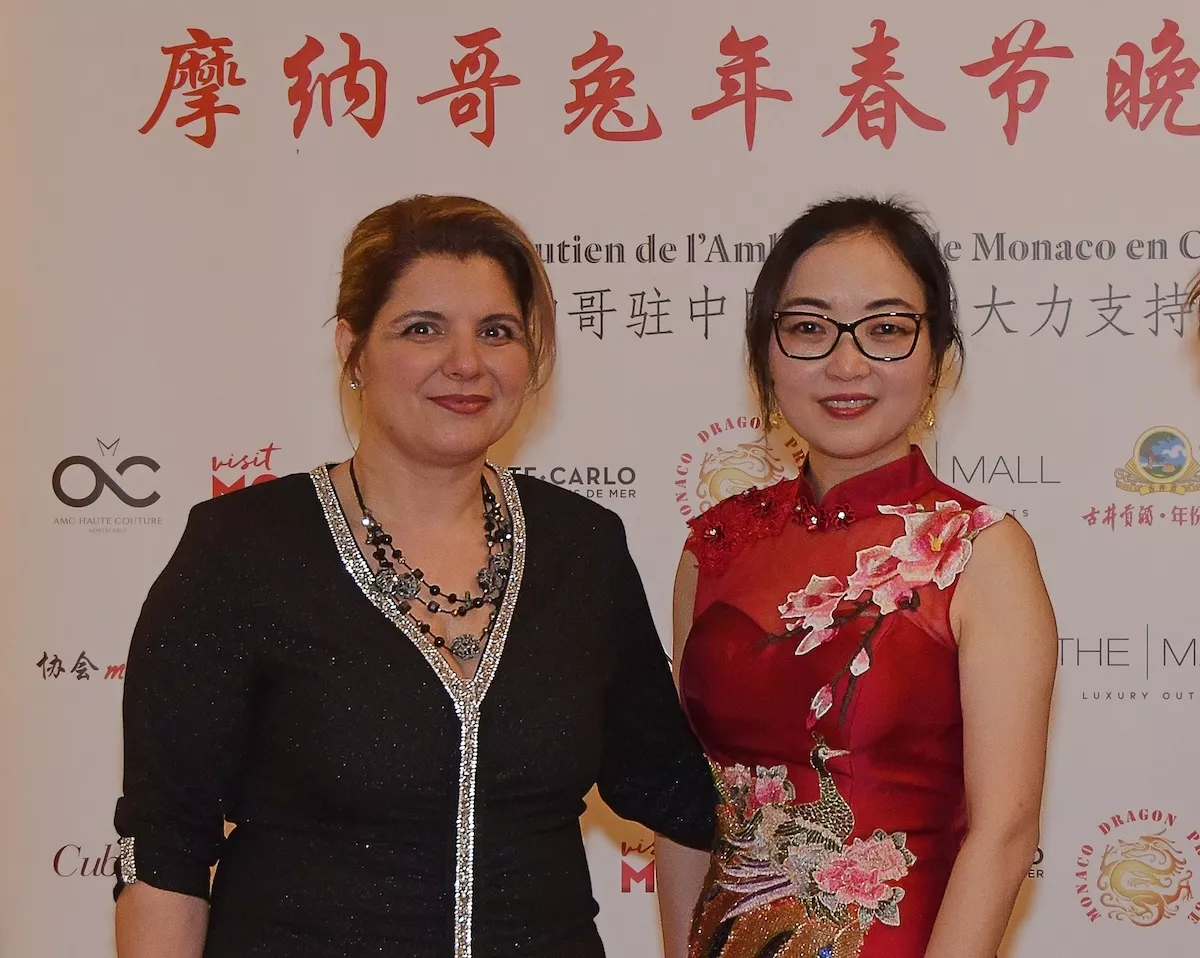
Angela Petrulli of AMC Haute Couture (left) and Xiaoqin Wang of Association Monaco-Chine (right).
Cultural performances
The gala will feature musical entertainment, dance performances and a traditional lion dance. Students learning Mandarin in the Principality will also participate in the evening’s activities, representing cultural exchange between Monaco and China.
Chinese New Year, also known as Spring Festival, is celebrated globally by Chinese communities and marks the beginning of the lunar calendar year. The Fire Horse is the seventh animal in the 12-year Chinese zodiac cycle.
The Monaco gala is organised by Angela Petrulli of AMC Haute Couture and Xiaoqin Wang of Association Monaco-Chine.
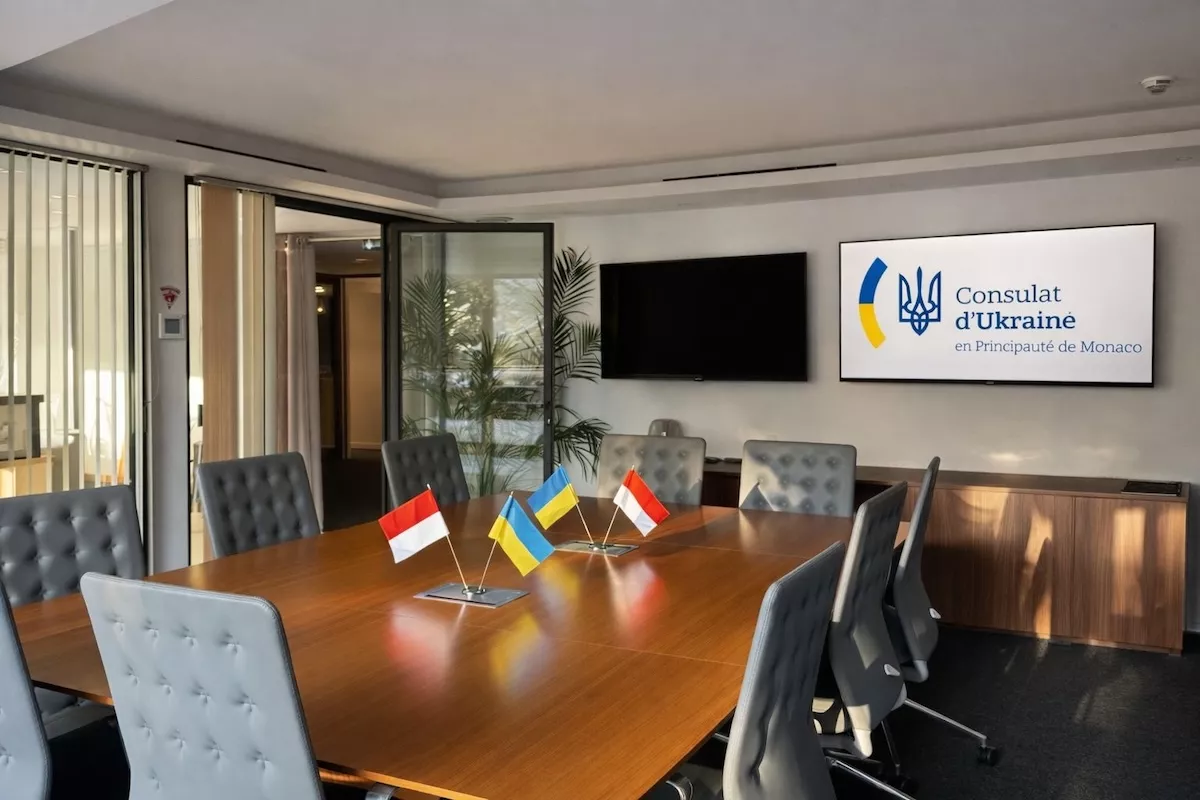
Alexandre Caracchini has barely been in the role a week, but already the requests are flooding in. Monaco’s newly appointed Honorary Consul to Ukraine is learning that his position means being everything from immigration advisor to cultural ambassador to unofficial matchmaker for a scattered community trying to find each other in the Principality.
“I’ve officially been consul for only one week now, and I don’t know how people knew about it but I’ve already been contacted by so many,” he tells Monaco Life’s Cassandra Tanti. “Enquiries across the board—from how to handle crossing the border, to having a baby in this country. Even husbands calling to say, ‘I’ve married a Ukrainian woman and I would love to meet you.'”
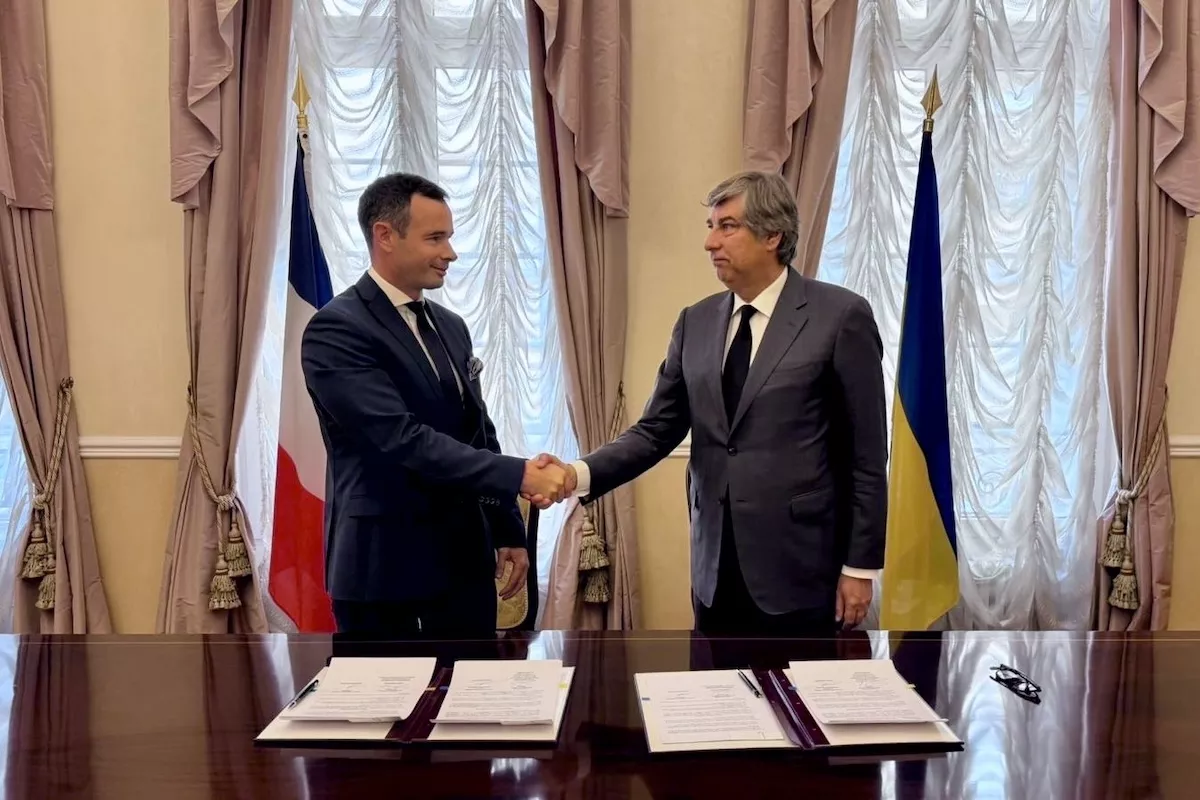
Alexandre Caracchini (left) with Vadym Omelchenko, Ambassador of Ukraine in France (right)
It’s a far cry from his day job as co-founder and project manager of Red White Design, but for Caracchini, who arrived in Monaco in 2017 and became a resident two years ago, the role represents something deeper than administrative duty. It’s personal. He has been travelling back to Ukraine throughout the war, witnessing firsthand what his compatriots are enduring.
“Right now is the most difficult time we’ve faced because we have to remember that some people are living in their homes with a maximum temperature of seven or eight degrees Celsius – it’s like living outside – because they don’t have electricity,” he says, his voice weighted with the responsibility he now carries. “We have to always remember what’s happening in Ukraine, that our people still very much need our help.”
Building community from scratch
Caracchini’s first challenge is one that would daunt most diplomats: he doesn’t actually know how many Ukrainians live in Monaco. The community is fragmented, often invisible, connected by loose threads of friendship and circumstance rather than any formal registry.
“I’m trying to meet every single Ukrainian person here, which is a big challenge, but I like to spend time with each individual—to see who they are, what they’re doing here, and then I match them together,” he explains. “I’ve already organised a few events in my office and connected several Ukrainians here in Monaco.”
The Ukrainian presence in Monaco is diverse and, in many cases, precarious. “Much of the Ukrainian community has lived in Monaco for some time now—big businessmen who brought their families here while maintaining their businesses in Ukraine,” Caracchini says. “Then there are people who left Ukraine looking for somewhere else to live and decided to settle in Monaco because it’s safe with good schools for their children. And others, of course, left Ukraine because of the war.”
But many Ukrainians in Monaco exist in a kind of administrative limbo. They rent apartments but don’t establish residency. They work but struggle to open bank accounts, partly because Ukraine remains on financial grey lists, partly because they lack the capital required by Monaco’s banking system.
“That’s why I’m trying to reach every Ukrainian through friends, to understand how many are actually here and what type of people we have,” he says.
Les Amis d’Ukraine
To formalise this scattered network, Caracchini is establishing an association called Les Amis de l’Ukraine — The Friends of Ukraine. It’s an ambitious vision that goes well beyond paperwork and passport queries.
“It’s all about coming together, being stronger together and organising events,” he says. “I have a lot of ideas but I also want to hear their ideas, to implement what they’re looking for—more events for kids, for example. I want to bring chefs to cook Ukrainian food in restaurants sometimes, and I’d love to organise one dinner every year that brings together all the Ukrainians in Monaco along with some guests.”
The cultural mission is as important as the practical one. Ukraine has been thrust into global consciousness by war, but Caracchini wants Monaco to know Ukraine for something more — its food, its culture, its resilience, its people.
“Let’s say the positive side of this war is that previously, I didn’t know many people who came to Ukraine even for vacation, but now everybody knows Ukraine,” he reflects. “They have borders, they have a sea, and I think it will be a great country after the war because the people are incredibly resilient. I’m impressed all the time — when I go there I see new restaurants opening constantly, designers doing beautiful things, excellent IT work. I really believe in the future of this country.”
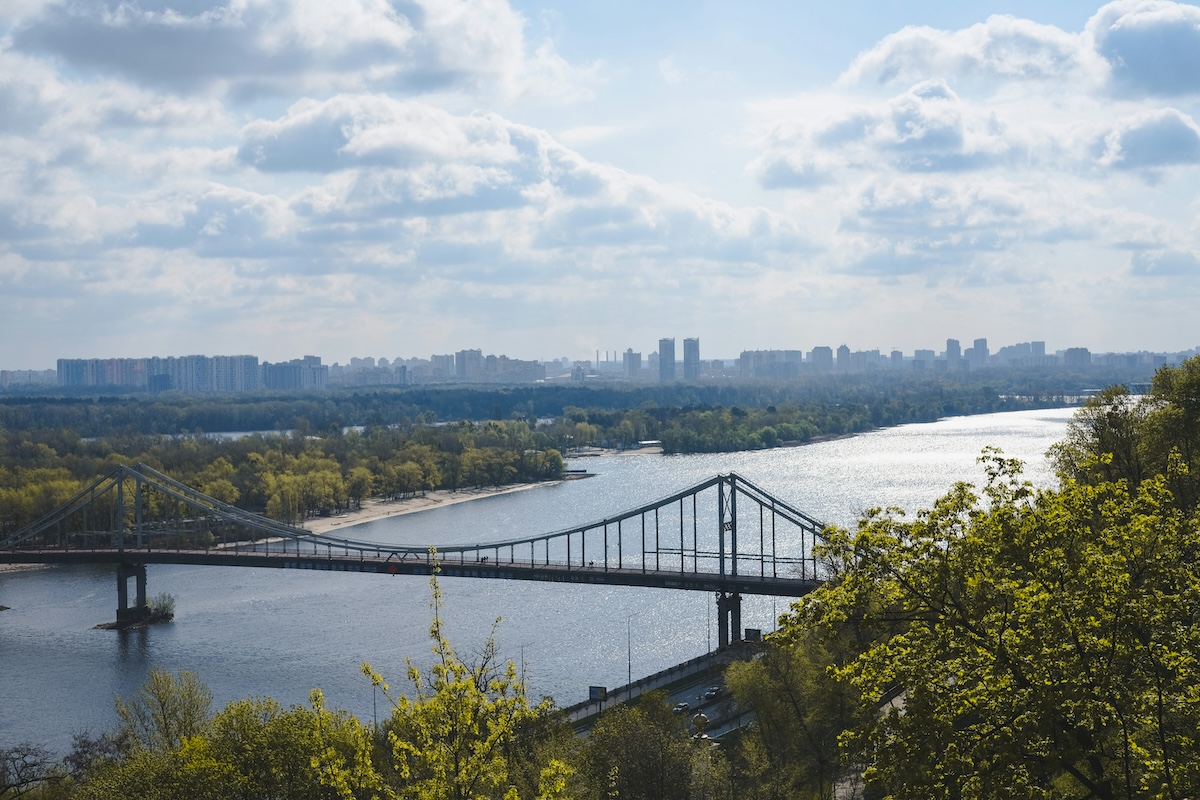
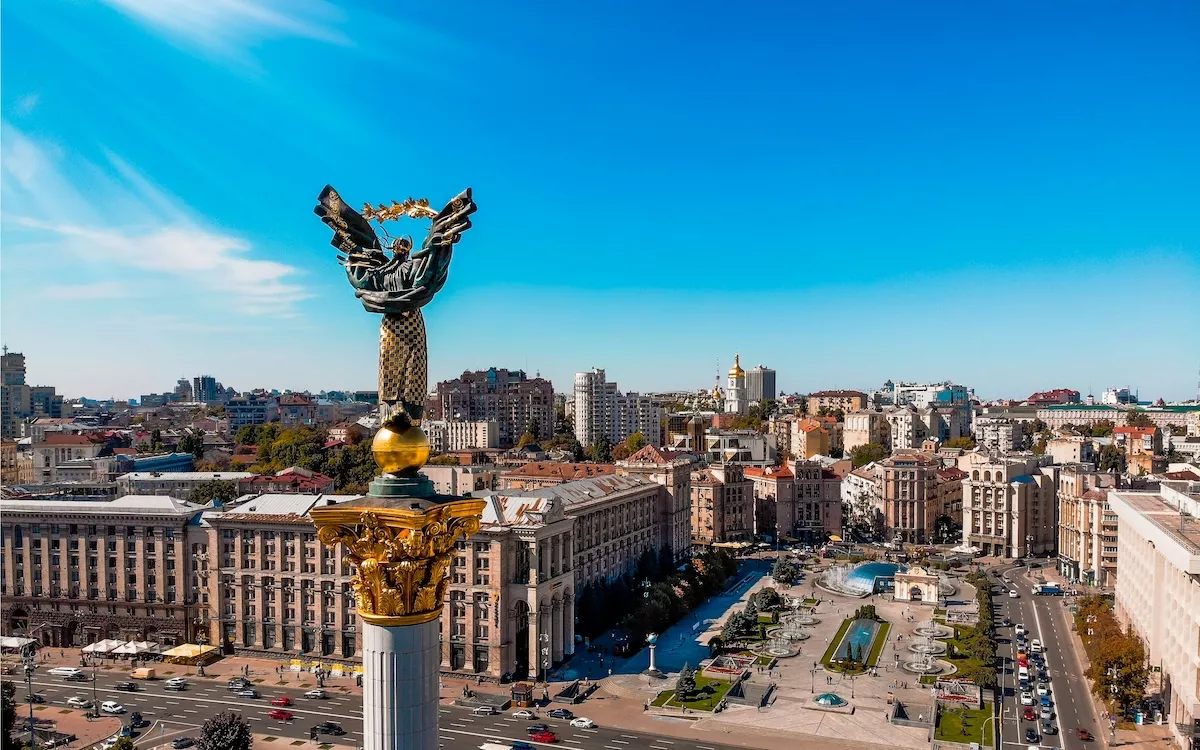
Kyiv, taken in 2021. Photo credit: Olga Subach, Unsplash
The humanitarian corridor
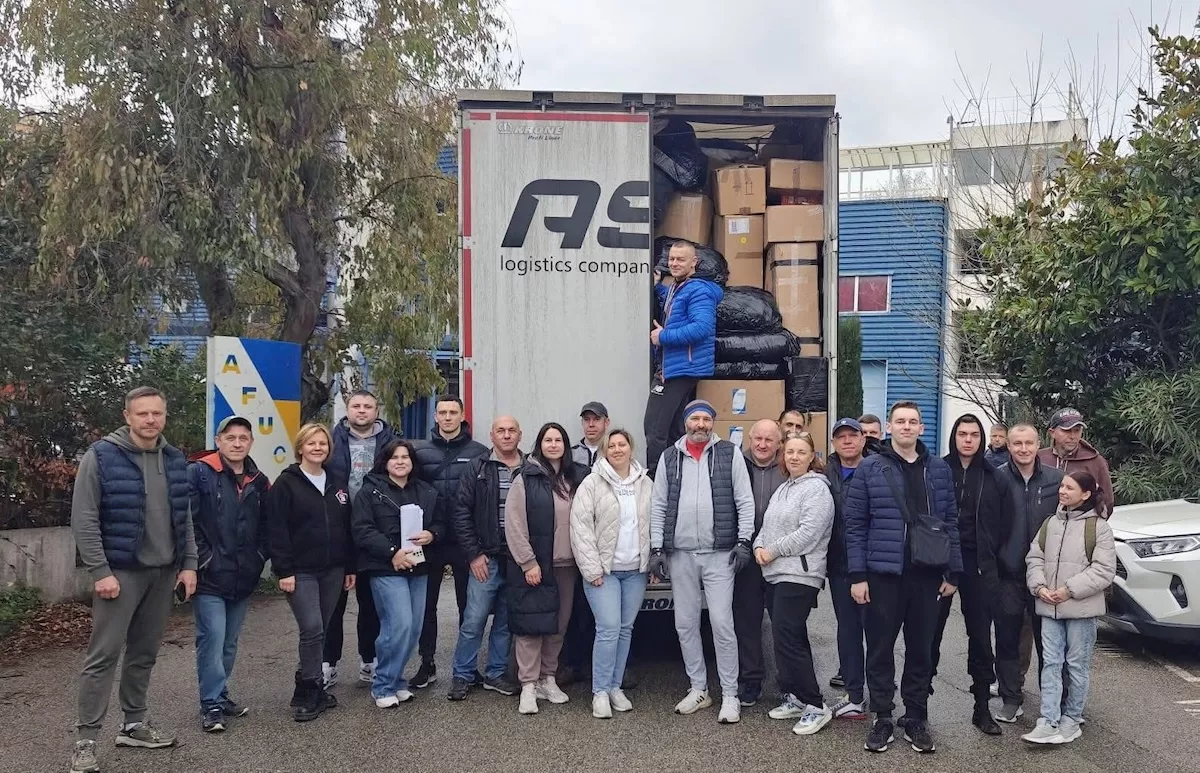
While building community in Monaco, Caracchini is simultaneously managing a humanitarian pipeline between the Principality and Ukraine. Working in collaboration with AFUCA (the Ukrainian Association Monaco), he helps collect donations, purchase supplies, and coordinate deliveries to emergency centres in Ukraine.
“We receive donations, we buy things, and we take pictures to show people what we’re doing,” he explains. The logistics run through Nice, where AFUCA maintains a large storage facility. “All the donations go there, then everything gets delivered to the emergency centres in Ukraine.”
The needs are constant and urgent: generators, warm clothing, medical supplies. “We have a list of things we need urgently that we can bring to Nice and have delivered,” he says.
He’s particularly grateful to the Ukrainian women who have been doing this work long before he took office: Olena Chernovolova of the Dopomogator Foundation, which provides prosthetic limbs; Taisiya Savchuk of the Savchuk Foundation; and Svetlana Berezovska of Association Monaco Ukraine. “I’m so thankful to them and impressed by how strong and active they are,” he says.
AFUCA in Nice
Preparing for tomorrow
But Caracchini’s most ambitious work may be the least visible: positioning Ukraine for post-war reconstruction. Through his business networks, he’s connecting with investment funds from the United States and Middle East, groups eager to participate in rebuilding a country that will need everything—housing, infrastructure, energy systems, agriculture.
“We’re buying land in the Kiev region to build smart cities, to start working on the projects that will be needed tomorrow,” he says. “Affordable housing for people who’ve lost their homes, for example. Many people have left but they’ll want to come back, and the infrastructure isn’t there anymore.”
The urgency in his voice is palpable. “We need to prepare everything. We can’t wait until the end of the war—we need to start now to be competitive in the market.”
It’s here that his Monaco experience becomes relevant. The Principality’s approach to development—balancing profit with social purpose, protecting locals while attracting international business—has given him a template.
“Working in real estate in Monaco, I’m trying to bring the idea to Ukraine that when we rebuild, it’s not all about the money,” he explains. “It’s also about giving apartments, at a small price or for free, to a woman who lost her husband in the war, for example, or a hero who came back without legs or arms—we must give something to them. This must be part of every project we do.”
He points to Monaco’s protections for Monégasques, the caps on business creation, the subsidised housing. “Every project should partly make money, partly focus on the beauty of the project, and be partly philanthropic, that would be amazing.”
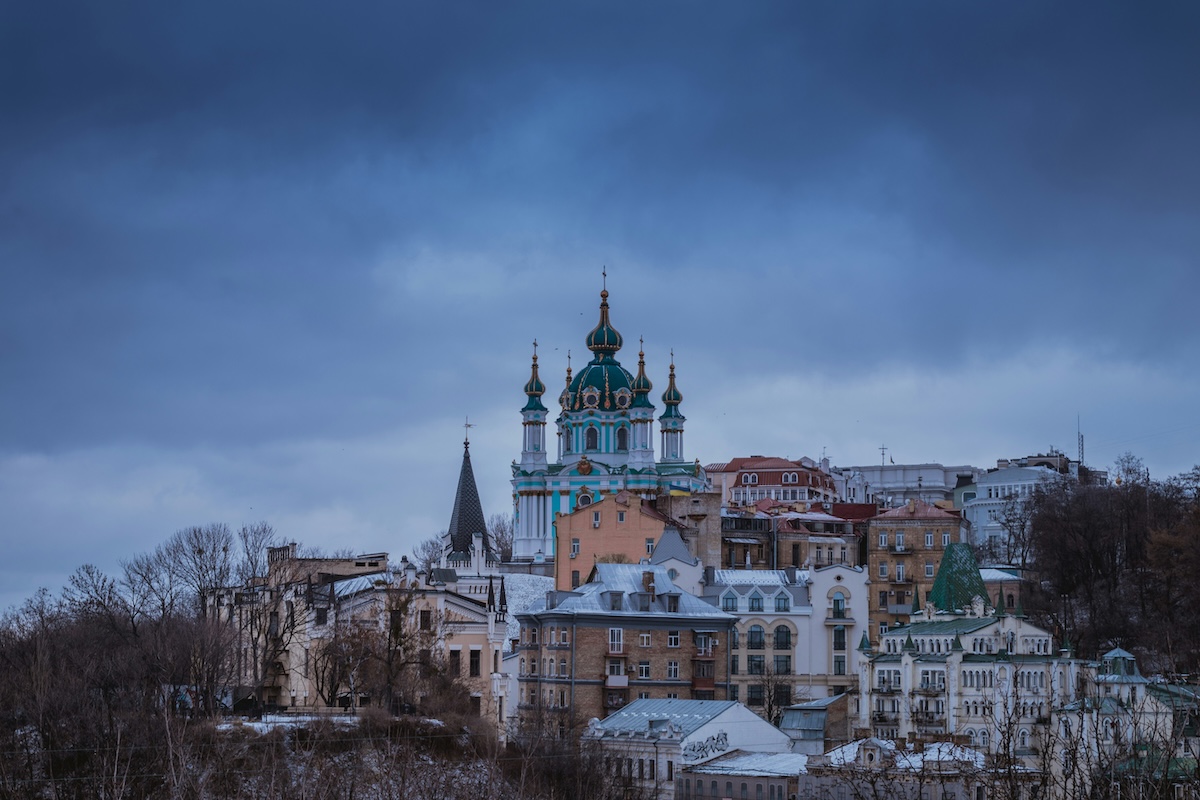
Kyiv, taken in 2021. Photo credit: Glib Albovsky, Unsplash
The weight of representation
Being Honorary Consul during wartime carries risks that civilian life doesn’t. Caracchini is acutely aware of this.
“I’m really proud to have taken on this position—I love challenges in life,” he says. “But it’s difficult because we’re at war, so I can have enemies—journalists, Russians, anyone actually. For me it’s important that I have the right message all the time, that I’m neutral, just passing the message that Ukraine still needs help and we must think about other people. We must be grateful for where we live because we never know what will happen tomorrow.”
The velocity of global change hasn’t escaped him. “Especially now when you see how fast things are moving across the globe, you understand you should be happy where you are, especially here.”
Does he think the war is close to resolution? He pauses before answering.
“Deep down, I do,” he says finally. “The main issue is the Donbass region, which is not negotiable for Ukraine. But I think we’re close now because people have really had enough.”
Kyiv taken in 2026. Photo credit: Illia Cher, Unsplash
A message to Monaco
For now, Caracchini’s focus remains immediate: connecting Ukrainians in Monaco, maintaining the humanitarian pipeline, and ensuring people don’t forget what his compatriots are enduring through another brutal winter.
“My message is that we’ve opened the consulate, we’ll promote the culture, we welcome every Ukrainian, and together we’ll be stronger—let’s create something nice together,” he says. “Right now is very difficult, so please don’t forget that Ukrainians are suffering through minus 25 degrees at night and a maximum of eight degrees during the day in their homes. Imagine what that’s like. We must continue to help.”
For those wanting to contribute, he encourages them to reach out to the consulate for information on monetary donations or physical supplies. Every generator, every contribution, reaches people living in conditions most Monaco residents cannot fathom.
He also wants to acknowledge Monaco’s support. “Thank you to Monaco—they’ve done great things for Ukrainians. There are Ukrainian teachers here, Ukrainians learning English and French here, and I’m very grateful.”
When the war finally ends—and Caracchini believes it will—there will be enormous work ahead. “There’s a lot of recovery time after the war is over,” he acknowledges.
Until then, Alexandre Caracchini will be in his office, taking calls from Ukrainians who need help navigating Monaco’s systems, organising dinners to bring his scattered community together, and reminding anyone who will listen that winter in Ukraine is cold, dark, and desperately in need of the world’s continued attention.
It’s been one week in the job. He’s just getting started.
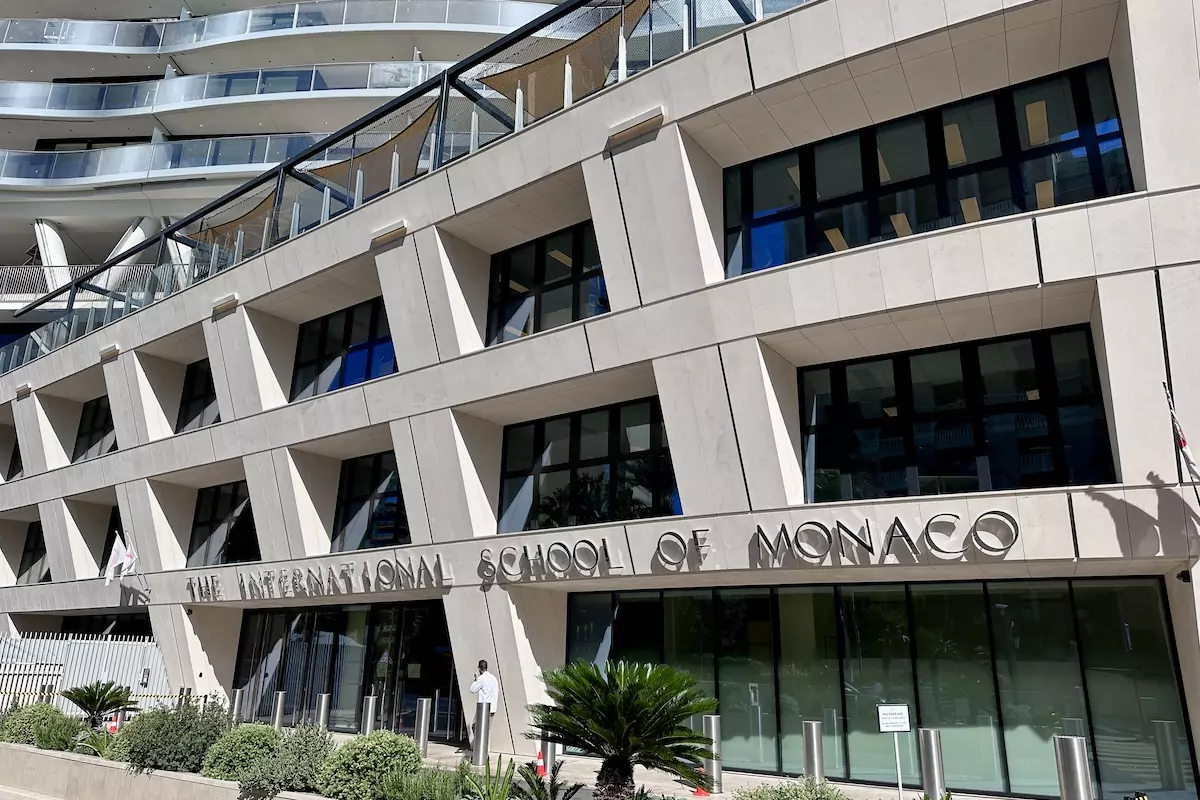
The International School of Monaco has announced its 2026 examination dates for the DELF (Diplôme d’Études en Langue Française), the French Ministry of Education’s official certification of French language proficiency, offering two testing sessions for external candidates.
External candidates can sit the DELF examinations on Saturday, 21st March and Monday, 1st June. ISM is the first and only accredited DELF examination centre in Monaco.
Internationally recognised certification
The DELF, awarded by the French Ministry of Education, certifies French language proficiency from A1 (beginner) to B2 (upper-intermediate) levels. The diploma assesses listening, speaking, reading, and writing skills in line with the Common European Framework of Reference for Languages.
The examinations are open to anyone seeking official French language qualification for personal, academic, administrative, or professional purposes. The certification is recognised worldwide.
Further information and registration details are available on the ISM website.
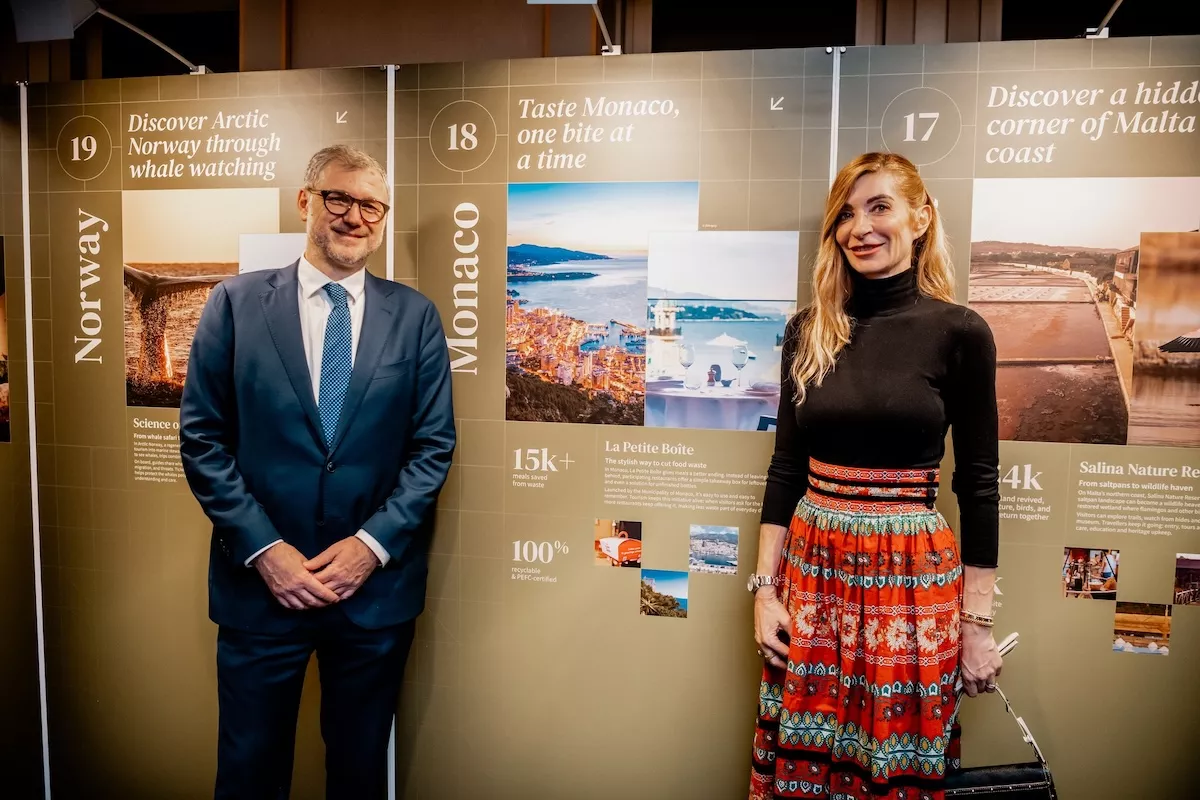
Monaco’s food waste reduction programme is being highlighted at the European Parliament in Brussels this week as part of the ‘Tourism for Europe, Europe for Tourism’ exhibition organised by the European Travel Commission.
The Principality was selected in the Nature category for its La Petite Boîte initiative, run by the Mairie de Monaco since 2016 to combat food waste in restaurants.
15,000 meals saved from waste
The programme provides practical and elegant containers that allow restaurant customers to take home uneaten food. Over the past decade, more than 15,000 boxes have been distributed, preventing the waste of an equivalent number of meals.
The initiative operates in close collaboration with restaurants in the Principality. Organisers describe it as a concrete and accessible example of local environmental policy.
Monaco representation in Brussels
Marjorie Crovetto, Second Deputy Mayor responsible for Quality of Life, Environment and Sustainable Development, travelled to Brussels to represent the municipal institution at the exhibition.
The European Travel Commission exhibition showcases 35 European best practices illustrating tourism’s positive role in supporting the environment and local territories.