Discount tickets and teaser video released for landmark Monaco and the Automobile exhibition

The Grimaldi Forum Monaco has opened pre-sale ticketing and released a teaser video for Monaco and the Automobile, from 1893 to the Present Day, the most ambitious automotive exhibition ever staged in the Principality.

Discounted tickets are available now ahead of the exhibition’s opening on 1st July, with the teaser offering a first look at a show six years in the making — originally planned for summer 2020 before the pandemic forced its postponement. The exhibition runs until 6th September in the Espace Ravel.

What visitors can expect

Spread across 4,000 square metres, the exhibition brings together around 50 landmark vehicles, including more than 20 cars that have claimed victory at the Monaco Grand Prix or the Rallye Monte-Carlo. Alongside the racing machinery, visitors will find vehicles from the Princely Family’s personal collection, concours d’Ă©lĂ©gance entries, and previously unseen archive material from the Automobile Club de Monaco, which has opened its records to the Grimaldi Forum for the occasion.

Curator Rodolphe Rapetti — the specialist behind The Art of the Automobile — Masterpieces from the Ralph Lauren Collection, which drew more than 150,000 visitors to Paris in 2011 — has designed the exhibition to present the automobile as both sporting machine and work of art, with interactive and immersive elements throughout.

Tickets and practicalities

Pre-sale tickets are available at grimaldiforum.com until 30th June. Tickets are valid for any day during the run with no timed entry restriction — visitors may arrive from 10am at any time. Entry is free for under-18s, with complimentary tickets issued at the door. The venue will close exceptionally on Saturday 22nd August.

Stay updated with Monaco Life: sign up for our free newsletter, catch our podcast on Spotify, and follow us across Facebook,  Instagram, LinkedIn, and Tik Tok.

Photo source: B.R.M. P-578 – 1962 – Courtesy of Revs Institute, Naples, Florida © Peter Harholdt / Revs Institute – Entry in the 1962 Monaco Grand Prix – Driver: Graham Hill

Nuclear revival and renewables surge in France’s €60bn energy reset

France has unveiled its third multiyear energy plan, setting out a bold vision to move the country away from fossil fuels and expand electricity production over the next decade.

Prince Minister SĂ©bastien Lecornu presented the Programmation Pluriannuelle de l’Énergie (PPE 3) on 12th February in the Jura region, framing it as a matter of national survival. “For the first time, our climate interests align with our geopolitical interests,” he said, “and with those of consumers and their electricity bills.”

Breaking free from fossil fuels

France currently spends around €60 billion a year importing oil and gas. The plan aims to flip the energy mix: where fossil fuels account for 60 per cent of final consumption today, the goal is for 60 per cent to come from low-carbon sources by 2030, through a broad shift to electricity across homes, factories and data centres.

However, one obstacle, Christian Buchel of the Union Française de l’ÉlectricitĂ© warned about, is that electricity is currently taxed two to three times more heavily than imported fossil fuels, making the switch harder for households and businesses.

Nuclear power also sits at the heart of the plan. France’s existing fleet produces more electricity than any other country in Europe, but many reactors are ageing, and output dropped under to 300 TWh in 2002 following a series of technical problems. It has since recovered to around 360 TWh, and the plan sets a target of 380-420 TWh by 2035.

To secure the long-term future of nuclear power, the government is committing to six brand new reactors, with an option for eight more. The programme is also expected to be a major engine of job creation, with the nuclear supply chain alone forecast to hire 100,000 people over the next decade.

Renewables: ending the family feud

Offshore wind is to grow from barely 1GW today to 15GW by 2035, with solar reaching 55-80 GW over the same period. Lecornu highlighted the need to stop treating nuclear and renewables as rivals. “The real divide is not between nuclear and renewables. It’s between what is low-carbon and what is fossil fuel.”

Meanwhile, the event was held at a hydroelectric dam, a deliberate nod to a separate but related piece of legislation: the Bolo-Battistel law, which aims to unlock over €5 billion in long-stalled hydropower investment.

The law, which had passed the National Assembly but still needed Senate approval, would add 2.5 GW of additional capacity from existing sites. Much of that investment would go into STEP facilities – pumped-storage stations that work like giant batteries, pumping water uphill when electricity is abundant and releasing it to generate power when demand peaks. During those peak periods, the new capacity would be enough to supply 750,000 homes

Stay updated with Monaco Life: sign up for our free newsletter, catch our podcast on Spotify, and follow us across Facebook,  Instagram, LinkedIn, and Tik Tok.

Main photo credit: Chris LeBoutillier

Jardin du Chemin des Sculptures set for major transformation

In the heart of Fontvieille, Jardin du Chemin des Sculptures, is set to undergo significant transformation, with redevelopment work starting this month.

Since 2021, waterproofing works have already been carried out to address ageing infrastructure beneath the garden. Now, with the structural issues solved, a greener future is on the books for the Fontvieille garden, and visitors will start to see and experience the changes on ground level.

The Department of Urban Planning has commissioned landscape architects Grand & Associates to redesign the space. The plan is to shift the garden’s usage from just a transitional walkway into a more inviting place to spend time, with more planting, increased shade and areas better suited to everyday use.

Projected image of the garden after the works

Work will be delivered in three phases to allow continuous usage of the garden and to reduce disruption. The first half of the garden is due to be completed by the end of 2026, with the remaining areas developed in stages throughout 2027 and 2028.

This new plan focuses strongly on greenery. Planting will be chosen to suit local climate and to help address rising temperatures, providing shade, cooling and biodiversity. The project also aims to use responsibly-sourced materials and environmentally conscious design principles.

On-site panels will be also placed to provide updates and explain the stages throughout the redevelopment.

Stay updated with Monaco Life: sign up for our free newsletter, catch our podcast on Spotify, and follow us across Facebook,  Instagram, LinkedIn, and Tik Tok.

Main photo credit: Grant & Associates

Two lucky Monaco students could have the opportunity of a lifetime in the Arctic

Two students from Monaco are set to join an Arctic expedition this summer, following the launch of the 16th edition of the Students on Ice  programme. 

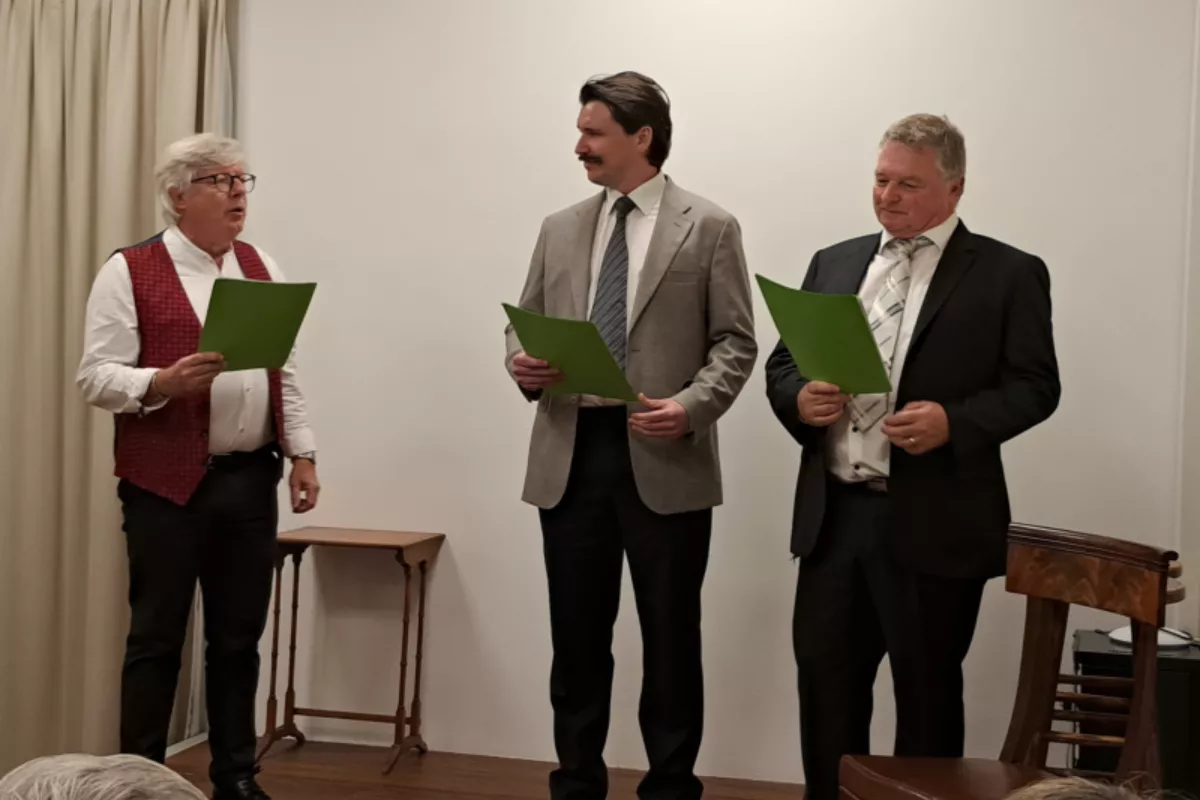
The Prince Albert II of Monaco Foundation officially opened the 2026 competition on 11th February at the Rainier III High School auditorium, with students from all three of the Principality’s secondary schools in attendance.

Run by the foundation since 2008, the programme sends two students each year to the Canadian Arctic, where they join an international expedition alongside scientists, educators and Indigenous communities. To date, thirty students have already taken part.

Now, this year’s expedition is scheduled to run from 19th July to 3rd of August. Geoff Green, founder of the Students on Ice Foundation, addressing the students by video, highlighted the importance of “supporting an inspiring young people” to protect the polar regions.

During the official presentation at the Rainier III High School auditorium. Photo credit: Fondation Prince Albert II de Monaco

The Foundation’s Scientific Director, Dr Philippe Mondielli, also highlighted the organisation’s broader Polar Initiative, which connects scientific research with diplomatic efforts on climate. He mentioned two projects, the Tara Polar Station, a drifting research base studying the Arctic Ocean, and Ice Memory, a global archive of ice cores stored in Antarctica.

Students who attended also had the chance to hear from last year’s winners, Alexandrine Noghès and Carolina Massey, who recounted their encounters with Inuit communities and elaborated on the scientific work carried out aboard the expedition ship.

Applications for the 2026 competition are open until March 2nd. Candidates who are interested to apply must submit a personal essay setting out their own ideas for tackling environmental challenges. In return, the students will be named ambassadors for environmental protection

Stay updated with Monaco Life: sign up for our free newsletter, catch our podcast on Spotify, and follow us across Facebook,  Instagram, LinkedIn, and Tik Tok.

Main photo credit: Fondation Prince Albert II de Monaco

Prince’s Palace extends 2026 opening dates for the public

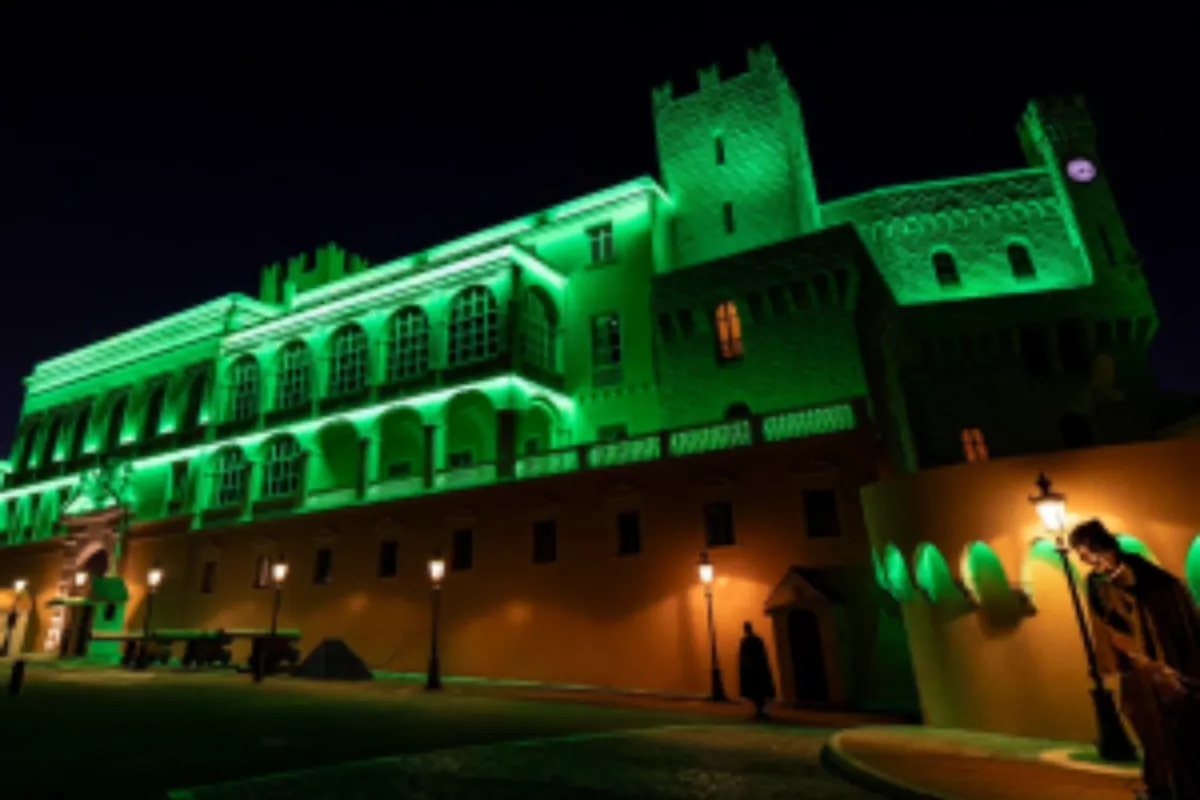
Monaco’s Prince’s Palace will reopen to the public on 30th March, offering visitors nearly seven months to explore the State Apartments and their recently restored Renaissance frescoes.

The official residence of the Grimaldi family will welcome tourists through to 15th October, the Palace recently announced.

The extended opening period allows visitors to plan their trips to the principality during the prime tourist season and view the results of a decade-long restoration project that uncovered hidden artworks dating back five centuries.

600 square metres of Renaissance art

The State Apartments feature exceptional Italian Renaissance frescoes covering a total surface area of 600 square metres, some of which had been concealed from view for nearly 500 years.

The restoration campaigns, conducted under the patronage of Prince Albert II, began in earnest in 2015 following chance discoveries that led to major finds in the Gallery of Hercules and throughout the State Apartments.

The Palace has described the process as “a series written day by day, whose outcome surpasses simple fiction to achieve a marvellous reality.”

The project has not only revealed the artworks but also advanced restoration methodology, with techniques developed to ensure sustainable conservation that respects both the original works and available resources.

A restorer works to return the hidden 16th century frescoes to their former glory. Photo credit: Cassandra Tanti

Mythological heroes restored

The newly visible frescoes depict three heroes from classical antiquity: Hercules, Ulysses, and Europa, whose exploits and adventures now shine across the Palace walls.

Palace officials say the discoveries resonate with Monaco’s own history and its centuries-old ties to the Mediterranean world and the classical myths that have shaped Western culture.

The frescoes’ revelation marks a significant moment in art history given the scale of the discoveries and the innovative restoration approaches employed.

See also: Prince’s Palace reopens to reveal new hidden frescos under restoration

Eight centuries of history

Perched atop the Rock since the 13th century, the Prince’s Palace remains one of Monaco’s most emblematic sites.

Visitors enter through the Honour Courtyard, paved with pebbles from Liguria, before proceeding to galleries adorned with 16th-century frescoes.

The State Apartments, with their refined décor and period furnishings, demonstrate eight centuries of architectural evolution and the dynastic continuity of the Grimaldi family.

The Palace serves as both the Prince’s official residence and a working seat of government, with public access limited to the warmer months when the princely family’s schedule permits tourism.

Tickets and visiting information will be available through the Palace’s official channels closer to the opening date.

Hidden Grimaldi dynasty frescoes to be revealed to international scholars

Stay updated with Monaco Life: sign up for our free newsletter, catch our podcast on Spotify, and follow us across Facebook,  Instagram, LinkedIn, and Tik Tok.

Main photo credit: Cassandra Tanti


Cyrielle Dailly – the baby sleep whisperer brings American know-how to Monaco

When Cyrielle Dailly’s second son refused to sleep, she did what any exhausted mother would do: desperately searched for answers. What she found, however, was something that would change not only her own life, but the lives of thousands of parents struggling with their baby’s sleep.

Dailly is now a sleep specialist for babies and children aged zero to five, and she was in Monaco Tuesday for a lunch event at Little Wonders, the principality’s new space dedicated to early childhood.

Speaking to Monaco Life, she explained the method that has become her life’s work, and why so many parents are still struggling in the dark.

“Usually, they are desperate because they tried everything,” she said of the parents who come to her. “The baby is not sleeping well at night, or has difficulties falling asleep, or wakes up at five, or is doing micro-naps all day long. They tried to find solutions, they’ve tried everything.”

Her own research led her across the Antantic, where she discovered the Family Sleep Institute in the United States and trained in its science-based approach. The biggest insight is quite surprising: the less a baby sleeps, the less they will sleep.

“The number one mistake is to think that they are not tired,” she said. “You think a baby is not tired because they don’t sleep, but usually it’s the opposite.” This state of overtiredness, driven by a build-up of the stress hormone cortisol, can pull families into a cycle that only gets harder to escape.”It’s not the parents’ fault. It’s because you don’t know the science of sleep.”

In fact, Dailly, after four years of working in this field, is quite shocked at how little formal guidance parents are given. “In France and Europe, I think we are so much in the idea that a child sleeps or doesn’t sleep, and then it passes,” she said. Paediatricians, she notes, are generally trained in sleep pathologies like sleepwalking, rather than the everyday challenge of a baby who simply will not settle.

How her method works

Her method, which she has built into a service called Dodo les Petits, focuses on working with a child’s natural circadian rhythm rather than against it by paying close attention to sleep windows, bedtime timing and the environment.

The best part? Results come quickly. “After three days you have big changes, big improvements, and then you keep going and it keeps getting better.” Parents who have worked with her, she says, often have one consistent reaction: “Why didn’t I ask you before?”

How much it costs

The approach is available at several price points designed to be accessible to as many families as possible. An entry point is a downloadable sleep guide at just €25. From there, video programme packages offer more detailed, structured guidance, with the most popular pack priced at around €109.

For parents who want direct support, remote accompaniment over several days runs to approximately €600, while in-person sessions are available for families in the region at a higher rate. Additionally, an English-language version of her programmes, called Baby Dream Secrets, launched around a month ago.

Stay updated with Monaco Life: sign up for our free newsletter, catch our podcast on Spotify, and follow us across Facebook,  Instagram, LinkedIn, and Tik Tok.

Main photo credit: Monaco Life