Monaco’s Winter Olympic hopes rest on a single athlete – alpine skier Arnaud Alessandria, who will represent the Principality at his third consecutive Winter Games.
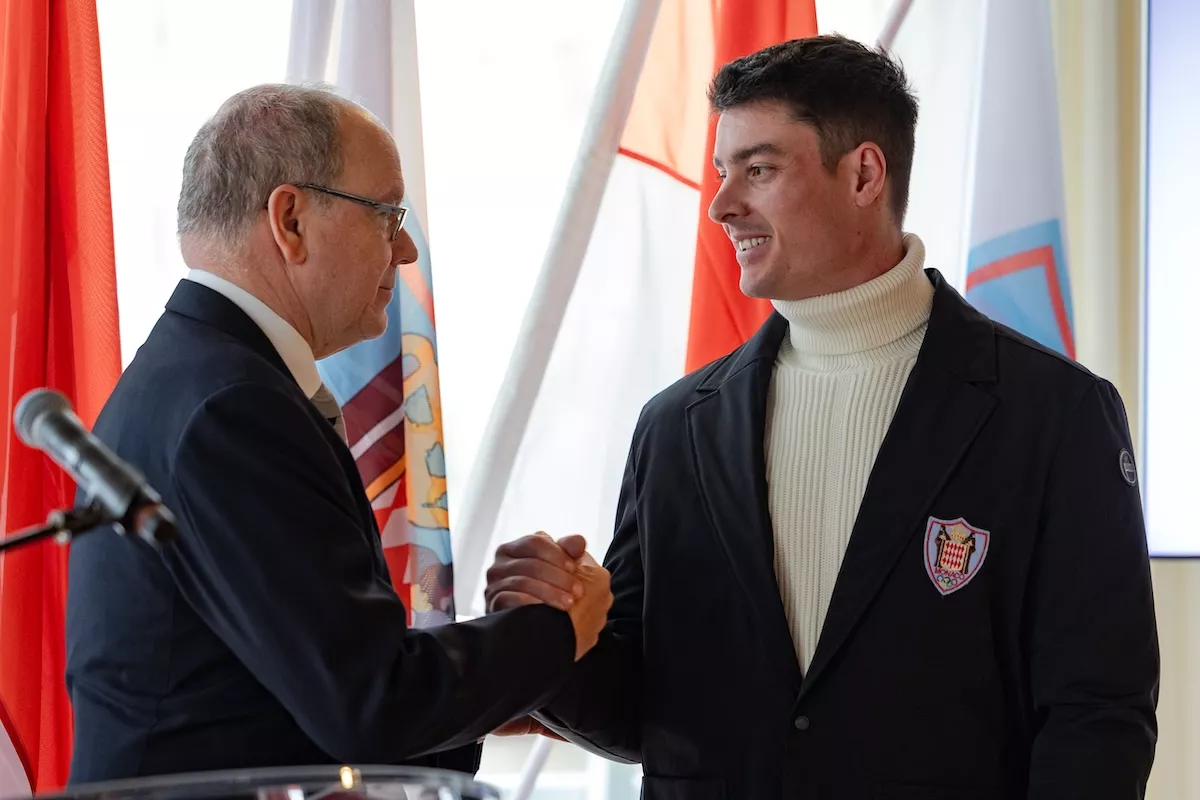
Prince Albert II unveiled Monaco’s delegation at the Yacht Club de Monaco in late January, with Alessandria named as the sole competitor for Milan Cortina 2026. The 33-year-old previously competed at Sochi 2014 and Beijing 2022, where he achieved his best Olympic result with 13th place in the alpine combined.
Alessandria will compete in two events: the downhill on Saturday 7th February and the super-G on Wednesday 11th February. Prince Albert praised the skier’s determination and consistency at the highest international level, noting he would carry Monaco’s colours “with determination and pride.”
Alessandria embraces one-day pressure
“The Olympic Games are not a race like any other – it’s a global showcase, a one-day race where anything can happen,” said Arnaud Alessandria.
For the alpine skier, a successful performance means “having given the best of myself and taken pleasure” in the competition, reflecting an athlete comfortable with the expectations of representing Monaco on the world stage.
Near-misses acknowledged
Prince Albert, who competed in five consecutive Winter Olympics in bobsleigh between Calgary 1988 and Salt Lake City 2002, acknowledged athletes who came close to Olympic qualification. He specifically mentioned figure skater Davide Lewton-Brain and bobsledder Boris Vain, whose trajectories “demonstrate the deep commitment of our athletes, their coaches and the Monaco Olympic Committee.”
Unbroken Olympic tradition continues
Monaco has maintained an unbroken presence at the Winter Olympics since Sarajevo 1984, making Milan Cortina 2026 the Principality’s 12th consecutive Winter Games.
The Principality remains without an Olympic medal in sporting events across 33 total Olympic appearances (22 summer and 11 winter), though Alessandria’s 13th place at Beijing 2022 represents one of Monaco’s strongest Winter Olympics performances.
An Irish writer will take to the stage at the Princess Grace Irish Library in Monaco on 5th March to talk about a subject that runs deep in Irish culture; the story of women who left home.
Jeanne Sutton, who has been funded by a bursary from The Ireland Funds Monaco, is spending the period from mid-February to St Patrick’s Day at the Princess Grace Irish Library as its Writer-in-Residence.
Her talk will look at how emigration has been portrayed through fiction, focusing on the female characters at the heart of these stories. She will pick out specific novels and draw on academic work to talk about why these books have resonated with readers, and will invite the audiences to share their own thoughts on what these stories say about where Ireland has been and where is it now.
Alongside lectures, local amateur dramatists will read aloud from some of the books Sutton discusses, and she will also share a passage from her own novel in progress, ‘Monster Island’. Set in the 1850s, the book follows an Irish woman who makes the long journey to New Zealand, a migration route that was very real at the time but is less well known than the more familiar stories of Irish emigration to America.
A writer on the rise
Sutton has had a busy couple of years. She picked up the John McGahern Award in 2025, a prize for writers early in their careers given at the Iron Mountain Literature Festival, and her short fiction has been published in journals on both sides of the Atlantic.
A story of hers called ‘The Dimmed Tide’ made it onto the shortlist of the Bournemouth Writing Prize, and the early chapters of ‘Monster Land’ caught attention at the Stockholm Writer’s Festival in 2024.
Tickets for the talk on 5th March can be bought through the library’s website at pgil.mc
A new exhibition at Monaco’s Musée d’Anthropologie Préhistorique, running until 15th December, is inviting visitors into a world of ancient rituals, sacred objects, and beliefs that shaped the world for generations.
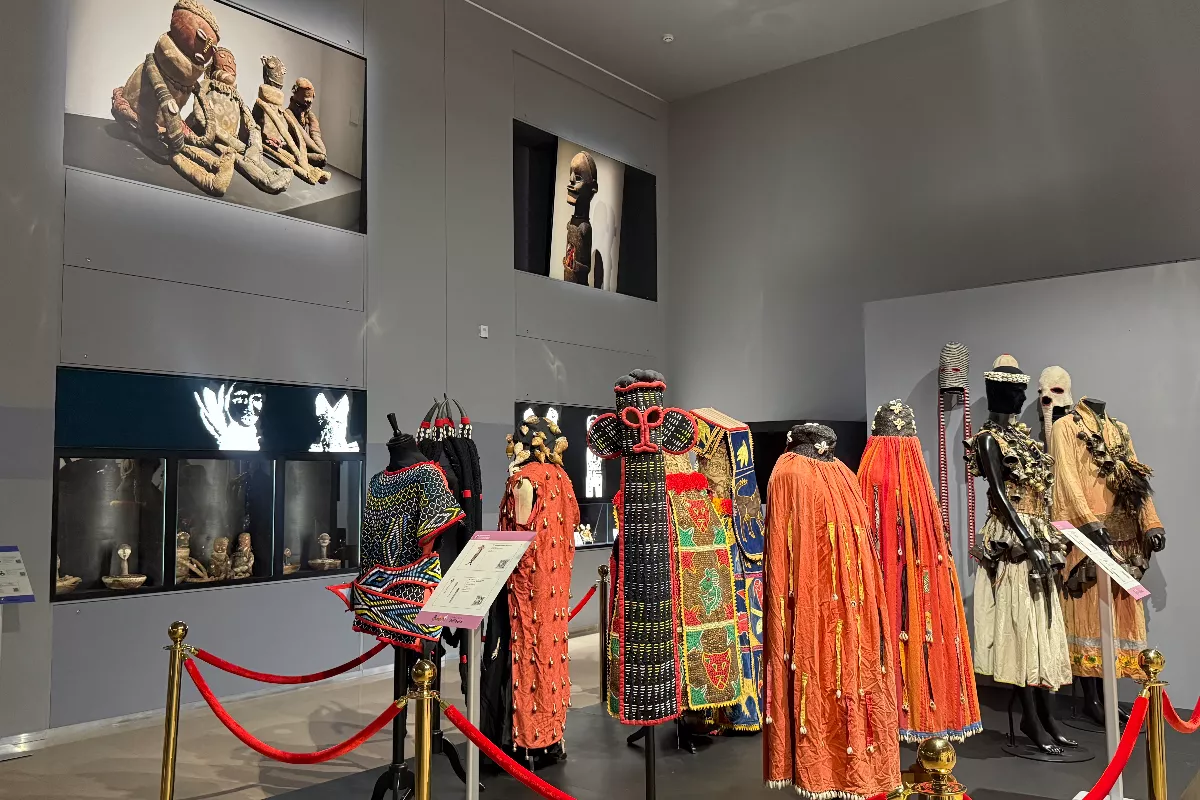
Titled ‘Magies d’Ailleurs – Magics from Elsewhere’, the exhibition brings together around a hundred objects, many rarely seen before, drawn mainly from sub-Saharan Africa and Oceania.
Curated by Dr Philippe Charlier and Dr Elena Rossoni-Notter, Director of the museum, it features collections from the museum and the LAAB, a research unit attached to the Université de Versailles-Saint-Quentin-en-Yvelines / Paris-Saclay.
The exhibition was previously shown in Tours, but has now been significantly expanded for Monaco, with full-scale voodoo altar reconstructions and new acquisitions, including four costumes from the GonGon societies.
“These rituals exist to create a link between generations, but also between people, nature, and the supernatural,” Dr Charlier said during a press tour. “Something that escapes us, that is very subtle.”
Blood and masks
At the heart of the exhibition is the idea that ordinary objects can become alive. Across many cultures, a carved figure or a mask was believed to cross from the lifeless world to the living the moment it was consecrated with blood.
Features were pressed into the wet surface, leaving a visible trace, or rather a sign that the object now carried its own energy. Blood was not a one-off ritual either. It was seen as ongoing nourishment, something the object needed to survive, just as the ancient Greeks believed their gods wither and die without sacrifice.
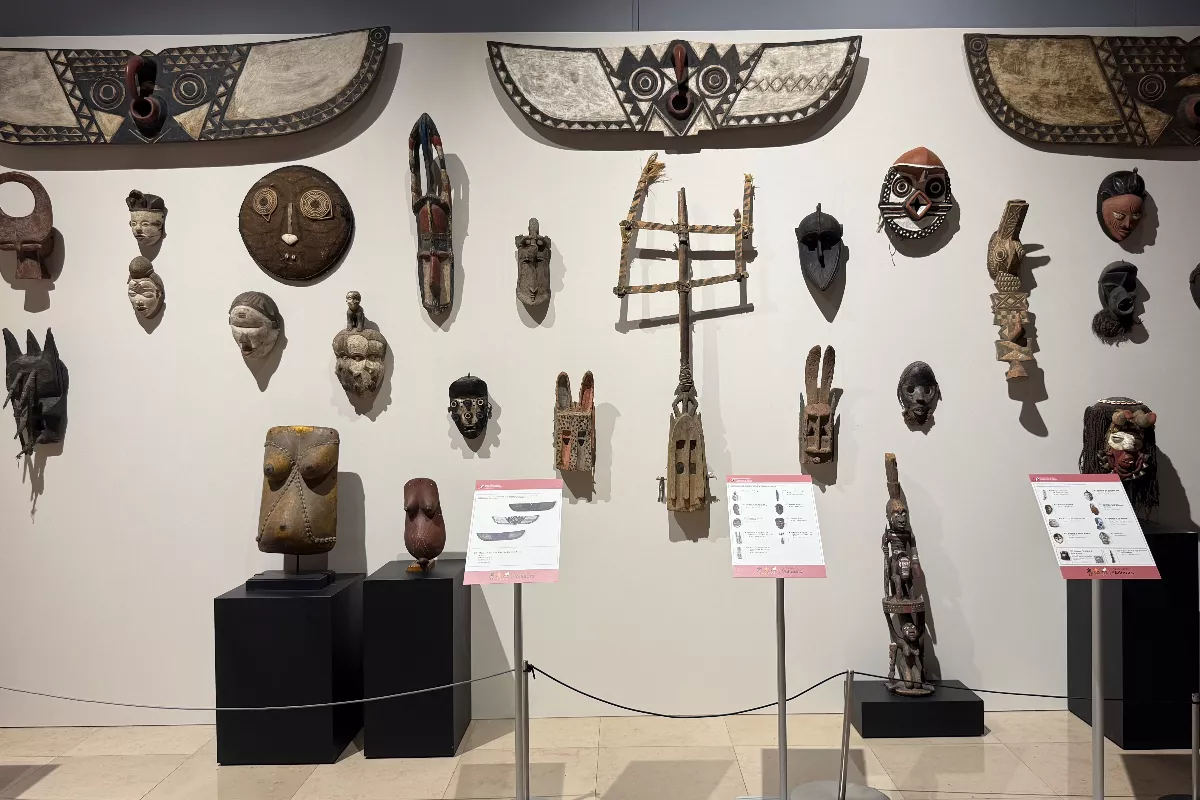
Masks tell a similar story. They were not costumes but doorways, allowing the one wearing it to be inhabited by a spirit or an ancestor. Over the years, layers of mud, blood, palm oil, and ochre – food for the spiritual being inside – would gather on their surface.
The masks at the exhibition, photo by Monaco Life.
Some masks were forbidden to women, children, and the uninitiated, who could only hear the ceremony from a distance. Others abandoned any recognisable face entirely, becoming pure expressions of dread.
Thrones, bones and tree ferns
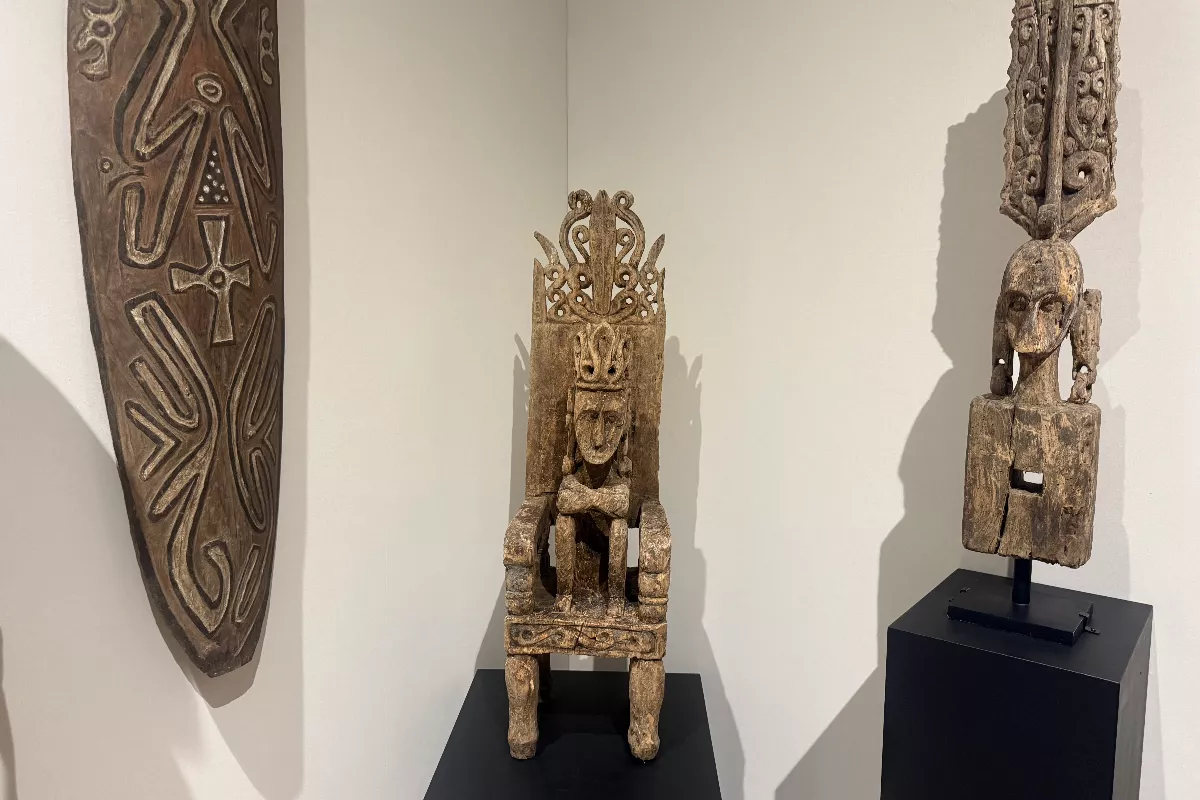
Dr Charlier singled out a carved throne from the Indonesian island of Timor. Local belief holds that wandering ghosts cause small but repeated disruptions like a car accident here or a stumble there. When the pattern is noticed, a ritual traps the spirit inside the throne.
“Tradition says the throne vibrates a little from time to time,” Dr Charlier explained, “because it is trying to get out.”
The carved throne, photo by Monaco Life.
Other striking objects in the exhibition are a shield from Papua New Guinea and a votive plank from Irian Jaya that looks, at first glance, simply red and white. However, the red is ochre mixed with human blood, and the white is kaolin mixed with ground human bones. “When you are in front of this object, you see the colours,” Dr Charlier said. “But an initiate knows he is also protected by the blood and bones of an ancestor. It creates a sort of supernatural barrier.”
A carved tree from Vanuatu marks a different kind of transition. When a young man comes of age, a fern is sculpted and planted in from of the man’s house, a marker of his new status and, in a sense, a supernatural double of himself.
Secret societies
The exhibition also explores secret societies, drawing unexpected connections between the Carbonari of 19th-century Italy, Haitian voodoo’s Bizango, European Freemasons, and the Bambara guardians of the Boli in Mali. What binds them is not simply secrecy, but shared initiation rituals that create a lasting bond. Dr Charlier compared entering a secret society to medical specialisation: “When you are initiated, it is as if you were a general practitioner, and if you want to become a surgeon or a specialist, you enter a secret society. That is what it is, in fact.”
However, what needs to be noted is that these practices are not relics. The rituals on display are in many communities still very much alive. They are tools for making sense of the unknown and holding people together across generations.
Magies d’Ailleurs is open everyday from 9am to 6pm. Admission is €5 for adults, €2.50 for students and free for children under 10. Guided tours are also available by reservation only at mediationMAP@gouv.mc and cost €10 per person, with €5 for ages five to ten and free for kinds under five.
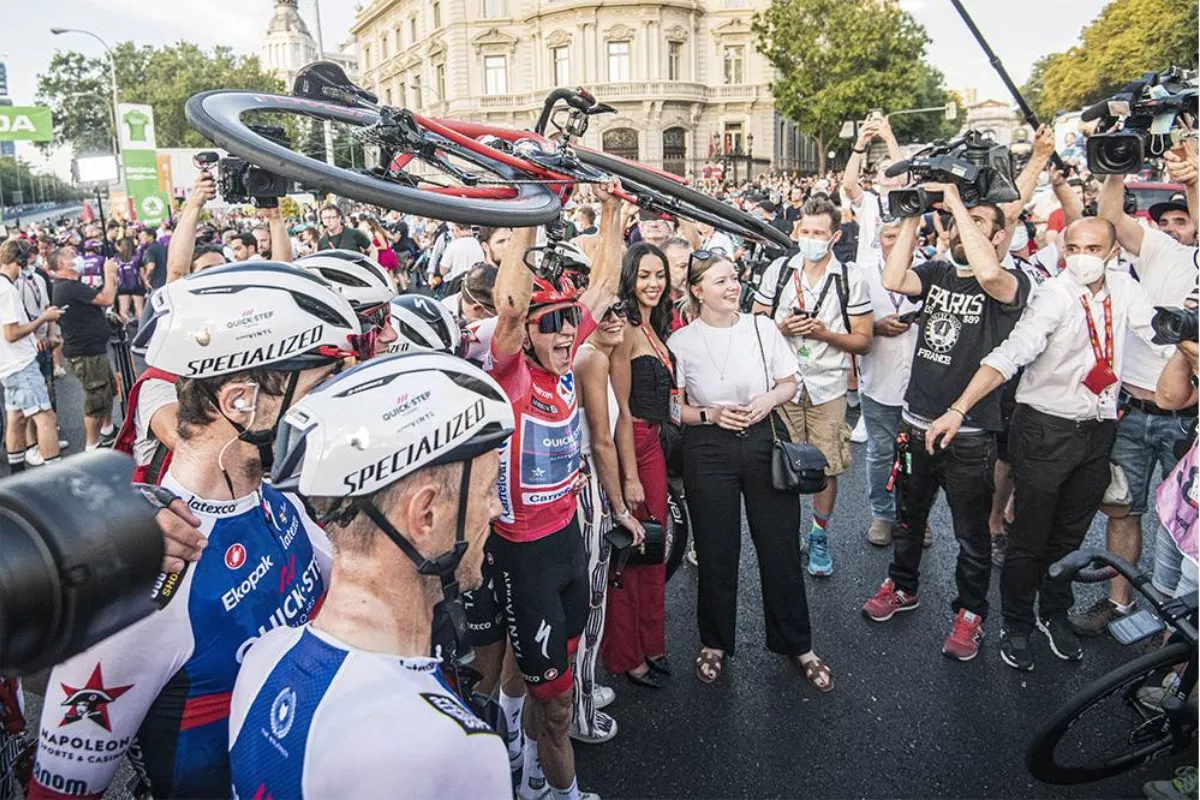
Monaco has launched a call for volunteers to help deliver the Grand Départ of La Vuelta a España when the Principality hosts the prestigious cycling event in 2026.
The Vuelta a España is one of cycling’s three Grand Tours, alongside the Tour de France and Giro d’Italia, and attracts the world’s leading professional readers each year.
The event is followed by millions of fans worldwide, making Monaco’s Grand Départ a historic moment, enhancing the country’s position as the world capital of sport.
Now, volunteers will have the opportunity to become part of the behind-the-scenes team, with roles ranging from public reception, logistics support, and spectator guidance to team assistance. No prior experience is required, and volunteers of all ages are welcome to apply.
Furthermore, the event coordinators explain that this is more than just helping with organisation. “It’s a chance to experience an exceptional event from the inside, share memorable moments, and contribute to Monaco’s international sporting reputation while gaining unique human and organisational experience.”
How to apply
For anyone interested in volunteering, all you need to do is send an email to info@mci.mc including surname, first name, date and place of birth, telephone number and address.
An initial information meeting will take place on 4th March at 6pm at the auditorium of Lycée Rainier III, located at 7 allée Lazare Sauvaigo, 98000 Monaco
Football fans have until 15th February to bid on match-worn AS Monaco jerseys from Saturday’s 4-0 victory over Rennes, with all proceeds supporting the Fondation Flavien’s fight against childhood cancer.
Fifteen special jerseys worn during the match are being auctioned on the BiddingSport platform. Available shirts include those worn by goalscorers Mamadou Coulibaly and Stanis Idumbo, captain Denis Zakaria, and players Aleksandr Golovin, Thilo Kehrer and Vanderson. Each jersey features the Fondation Flavien logo and has been signed by the player.
The auction runs until Sunday 15th February, with all funds going directly to the Monaco-based organisation that has spent over a decade supporting families affected by childhood cancer, raising awareness and funding research.
Match dedicated ahead of World Cancer Day
AS Monaco dedicated Saturday’s match to the Fondation Flavien just days before World Cancer Day on Thursday 4th February, reinforcing the club’s long-standing commitment to fighting childhood cancer through its ASMonacoeur programme.
Players wore the special jerseys throughout the match at the Stade Louis-II, with messages supporting the foundation displayed on LED boards around the stadium and on giant screens before kick-off and at half-time.
Young supporter experiences dream evening
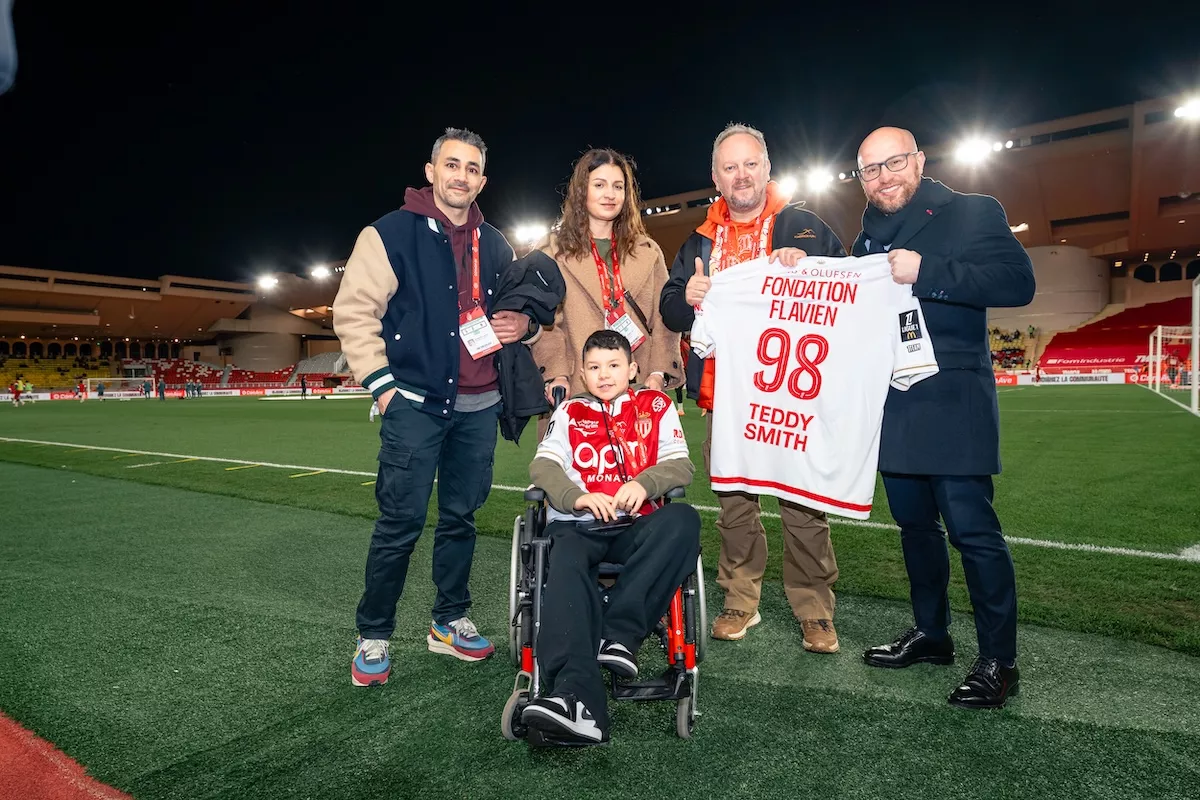
The club invited nine-year-old Naël, a supporter being helped by the Fondation Flavien in his battle against illness, to experience an unforgettable evening. His night included a behind-the-scenes stadium tour, meeting players including captain Denis Zakaria, watching the warm-up pitchside with defender Christian Mawissa, and enjoying the match with his family from the Honour Lounge.
During the pre-match warm-up, AS Monaco General Director Thiago Scuro symbolically presented a club jersey to Denis Maccario, President of the Fondation Flavien, alongside Naël and volunteers from the organisation who were invited to attend the match.
Foundation’s vital work
The Fondation Flavien was created in August 2014 by Denis Maccario in memory of his son Flavien, who died from a brain tumour. It is the Principality’s first association dedicated to fighting childhood cancer and rare diseases.
The foundation supports research, helps affected families, establishes psychological support frameworks, and implements medical projects in Monaco and worldwide. It holds numerous fundraising and awareness events throughout the year.
To bid on the match jerseys, visit BiddingSport before the 15th February deadline. More information about the Fondation Flavien is available at fondationflavien.com.
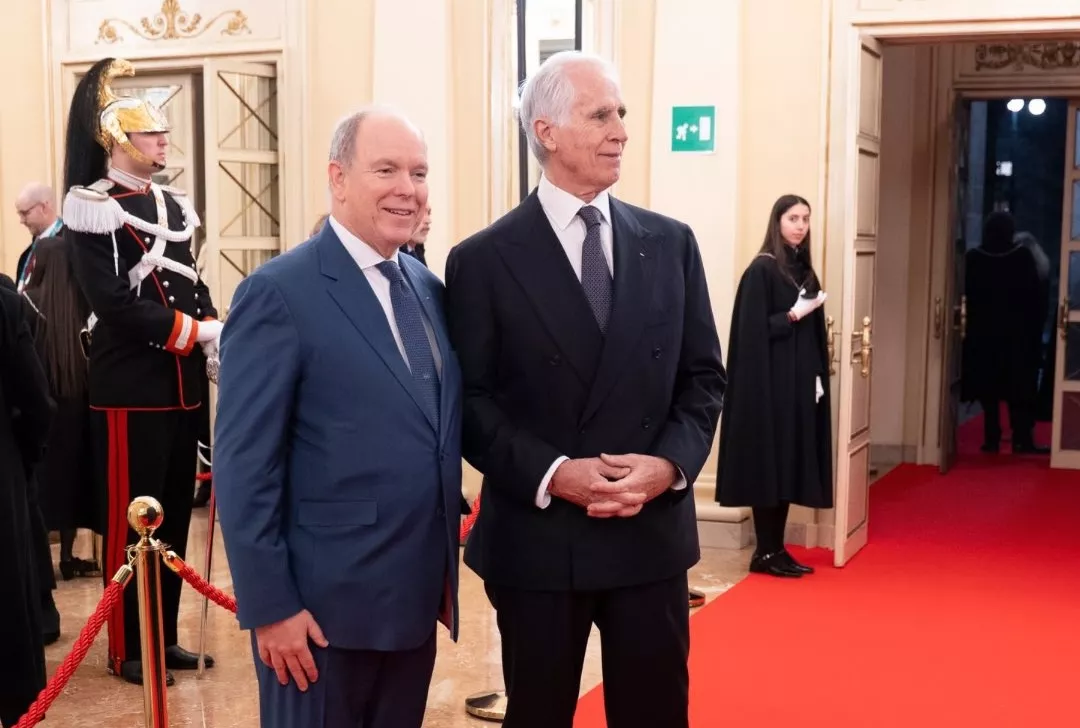
Prince Albert II attended the opening of the 145th International Olympic Committee session at Milan’s Teatro alla Scala on Monday, three days before the city launches the 2026 Winter Olympics.
The IOC gathering brought together Olympic leadership ahead of Thursday’s opening ceremony at San Siro stadium. Milano Cortina 2026 represents the first Winter Olympics under IOC President Kirsty Coventry, the Zimbabwean former swimming champion who took office in 2024 and close friend of Princess Charlene and Prince Albert.
Italian President Sergio Mattarella and Coventry both addressed the session, emphasising sport’s unifying role and Olympic values of peace, respect and excellence as the Winter Games return to Italy for the first time since Turin 2006.
First Games under Olympic Agenda 2020
Milano Cortina 2026 marks a milestone as the first Winter Olympics designed and organised entirely under the Olympic Agenda 2020 reforms, from bidding through delivery. The reforms emphasise sustainability, legacy planning and maximising use of existing venues.
The Games run from 6th to 22nd February, with more than 3,500 athletes from 93 countries competing for 195 medals across 16 disciplines. Milan and Cortina d’Ampezzo will co-host in a historic first for the Winter Olympics, sharing duties across 15 venues.
Prince Albert’s Olympic legacy
Prince Albert has been an IOC member since 1986, continuing a family tradition begun by his grandfather Pierre de Polignac and father Prince Rainier III. He competed in five Winter Olympics between 1988 and 2002 in bobsleigh, establishing Monaco’s presence in winter sports.
Monaco has participated in every Winter Olympics since 1984, with its best result coming at Beijing 2022 when bobsledders Rudy Rinaldi and Boris Vain finished sixth in the two-man event.
New events debut
The 2026 Games feature 116 medal events including ski mountaineering’s Olympic debut – the first new winter discipline since skeleton in 2002. Women’s participation reaches a Winter Olympics record of 47%, and NHL players return to ice hockey for the first time since 2014.
Competition actually begins on Tuesday with curling’s mixed doubles, two days before Thursday’s opening ceremony. The Games conclude on 22nd February at Verona Arena, with the handover to the French Alps for 2030.