A rare Zaha Hadid pavilion set to go under the hammer in Monaco

A sculptural dining pavilion designed by Zaha Hadid in collaboration with Patrick Schumacher — one of a strictly limited number ever produced — will be offered at auction in Monaco on Wednesday 8th April, with an estimate of between €900,000 and €1.1 million.

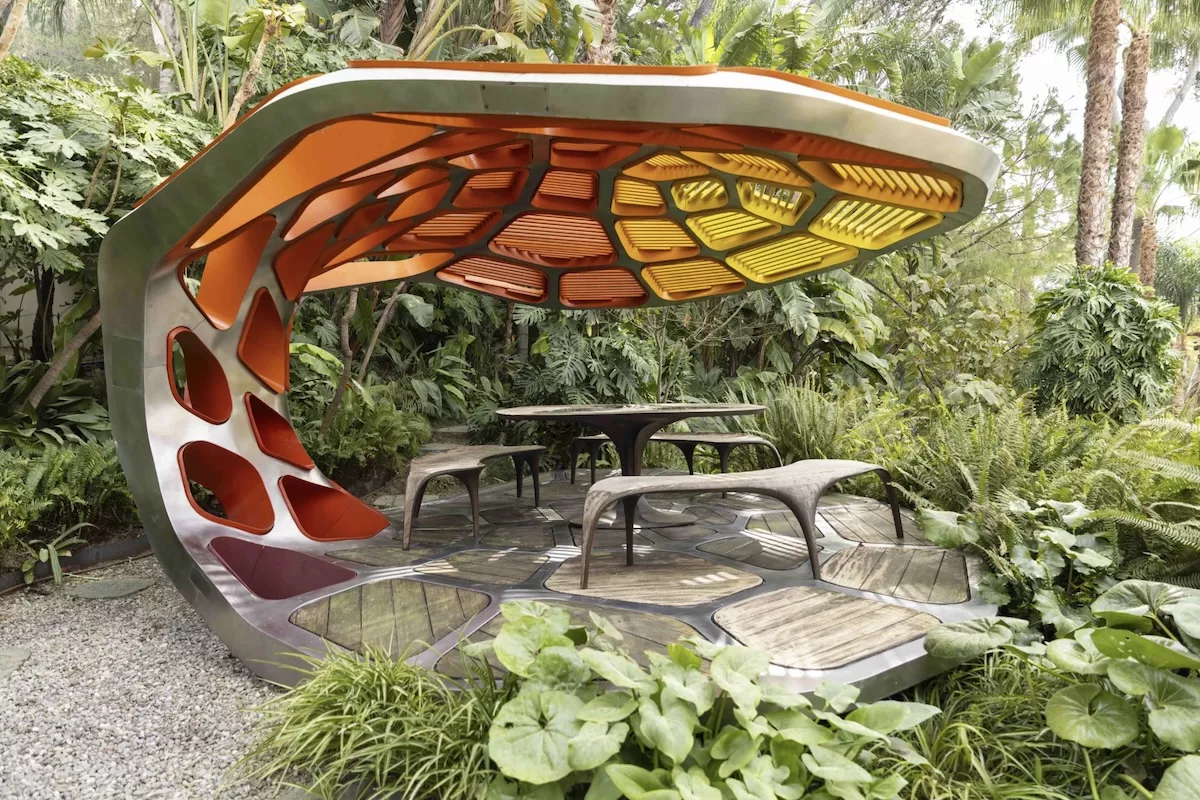
The work, titled the Signature Volu Dining Pavilion and listed as lot 571, is being presented by Hermitage Fine Art at its design auction. It represents one of the rarer opportunities to acquire a three-dimensional object from Hadid’s practice, which is better known for buildings than collectible design pieces.

The object and its origins

The Volu Pavilion was originally commissioned for Design Miami in 2015 as part of the Revolution Project, an initiative exploring advanced design and fabrication technologies for the creation of efficient living environments. A separate example was later commissioned for the amfAR charity in 2016 — shortly before Hadid’s death that April — and it is this version, distinguished by its unique colourway, that comes to auction in Monaco.

Despite its apparently monolithic appearance, the structure is built from a complex assembly of irregularly shaped polygonal panels cut by laser and integrated into a steel armature. Continuous bands converge on a central spine before extending upward, producing what the practice describes as a dynamic and immersive spatial experience. Every element was numerically optimised through parametric design to minimise material use while meeting fabrication constraints — a working demonstration of the computational design methodology that Zaha Hadid Architects has developed since founding its research group co|de in 2007.

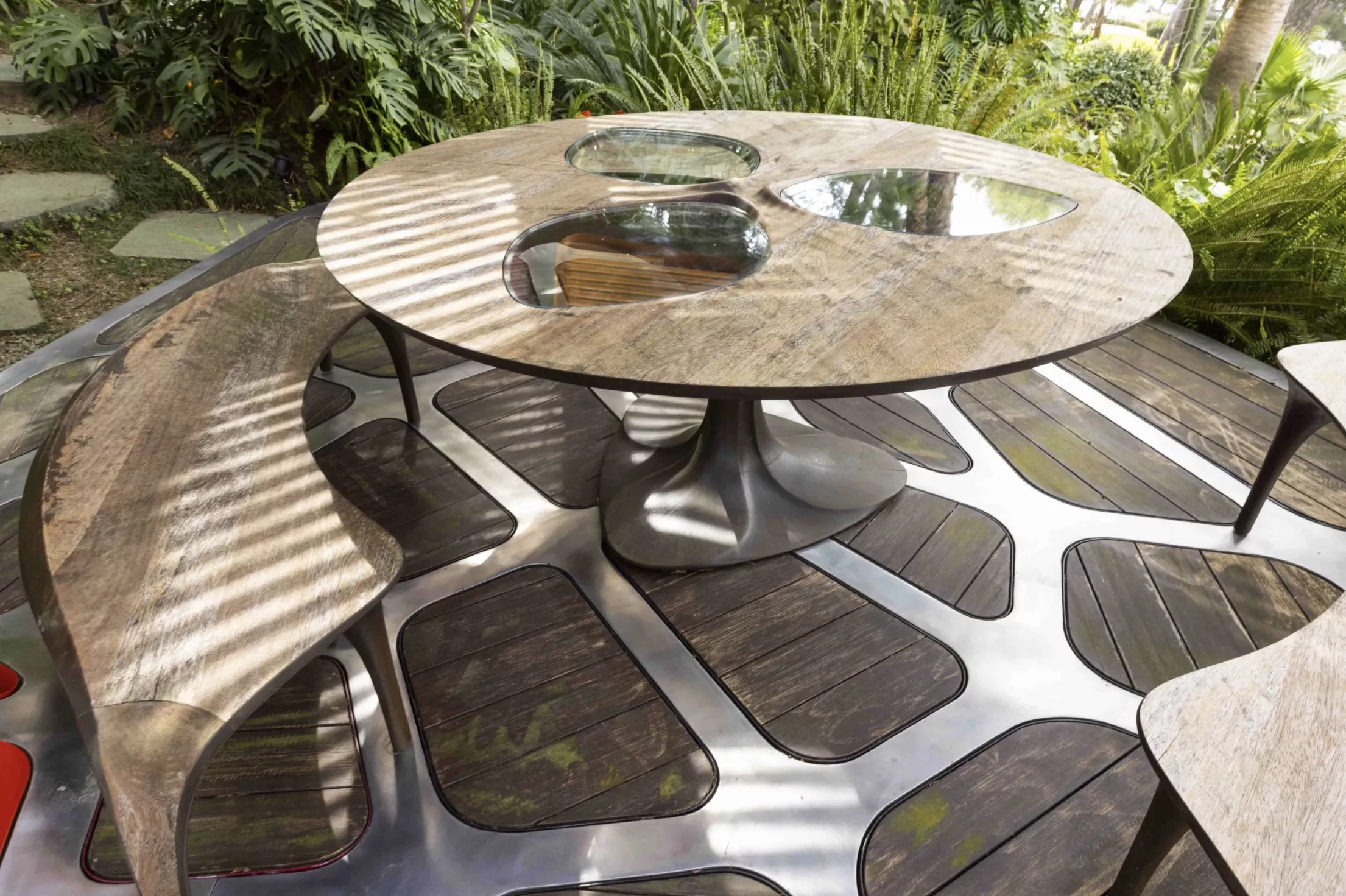
The lot includes a matching table and benches, extending the formal language of the pavilion into functional furniture.
Who was Zaha Hadid

Hadid remains one of the most decorated architects of the modern era. She was awarded the Pritzker Architecture Prize in 2004 — the first woman to receive it — followed by the Stirling Prize in both 2010 and 2011. In 2012 she was appointed Dame Commander of the Order of the British Empire, and in 2015 became the first woman to receive the RIBA Gold Medal in her own right. Her practice, founded in 1979, produced some of the most recognisable buildings of the late 20th and early 21st centuries, among them the Heydar Aliyev Center in Baku, the London Aquatics Centre built for the 2012 Olympic Games, and the MAXXI Museum in Rome.

The Volu Pavilion auction takes place at Hermitage Fine Art in Monaco on 8th April. Shipping, installation and applicable taxes are at the buyer’s expense. The work is subject to artist’s resale right.

Exclusive: Inside Le Schuylkill tower’s €185 million reinvention

Stay updated with Monaco Life: sign up for our free newsletter, catch our podcast on Spotify, and follow us across Facebook,  Instagram, LinkedIn, and Tik Tok.
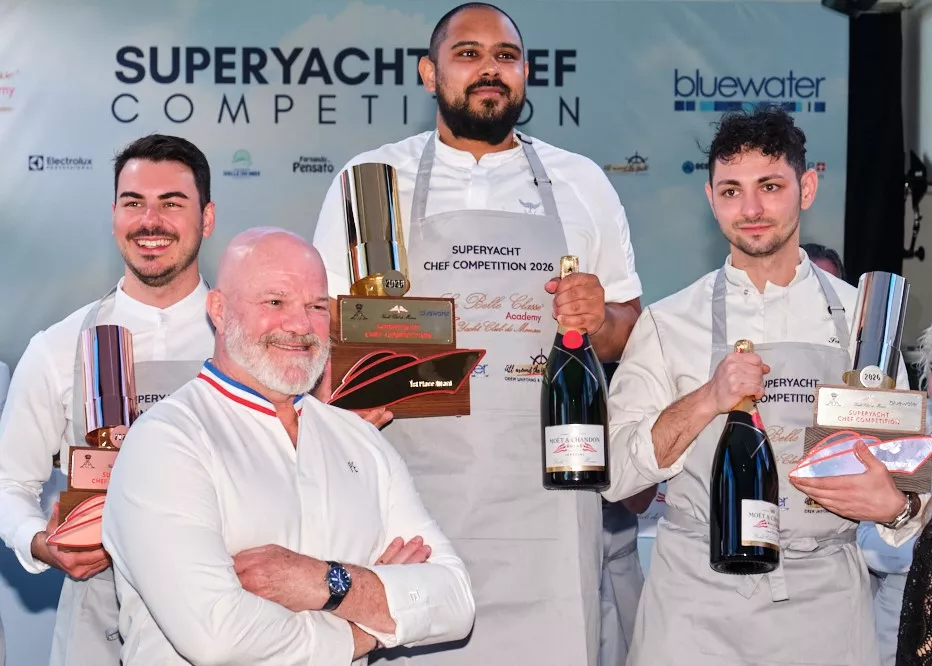
 

Chef Aaron Thomas wins seventh Superyacht Chef Competition at Yacht Club de Monaco

A British chef working aboard the 33-metre M/Y Canvas has taken the top prize at the seventh edition of the Superyacht Chef Competition, held at the Yacht Club de Monaco on Thursday 2nd April.

Aaron Thomas, a former UK MasterChef contestant, beat eight other competitors with a two-part lobster dish — a plate served with asparagus and a morel fricassee, followed by a bisque. “The most difficult aspect was the pace: producing several dishes in a very short time while adapting to the basket of mystery ingredients,” he said after his win.

A format designed to replicate life at sea

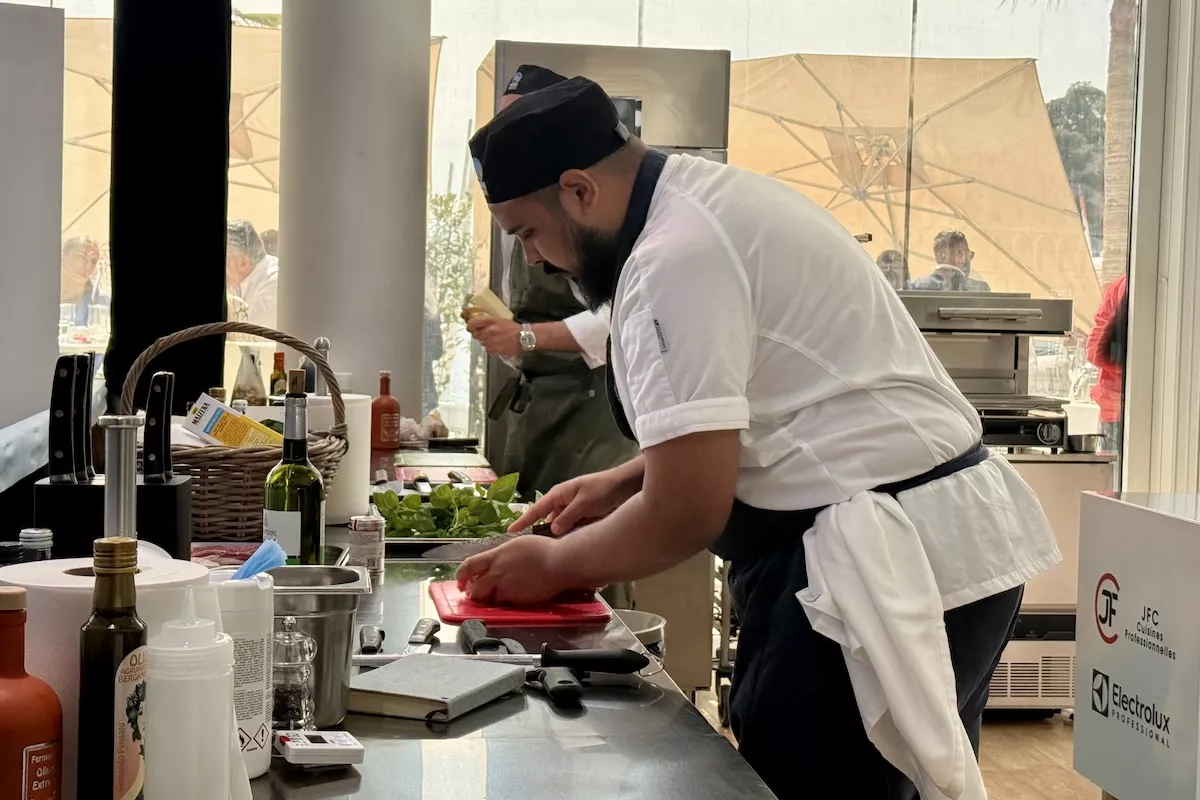
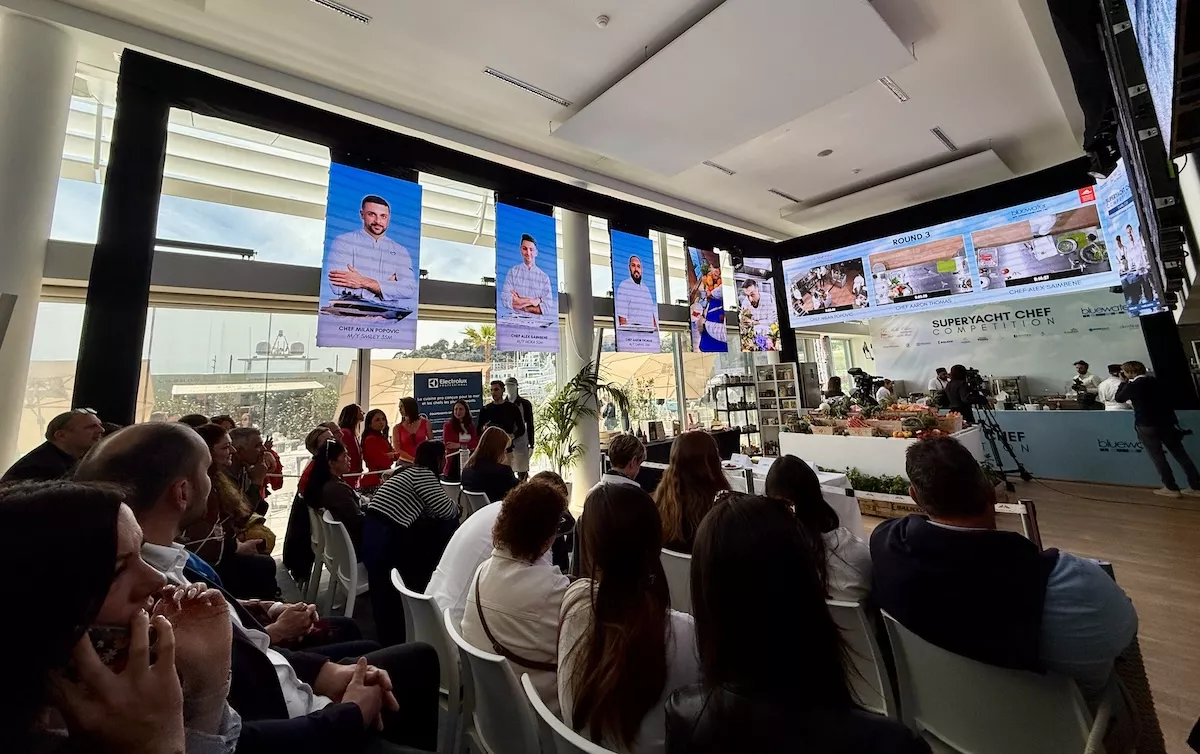
The competition, organised by the Yacht Club de Monaco’s La Belle Classe Academy training centre in partnership with Bluewater, is structured to reflect the real constraints of cooking aboard a yacht. After the mystery basket of ingredients was revealed, contestants had five minutes to devise a recipe and 40 minutes to prepare and plate it. Finalists were given 80 minutes to produce both a main course and a dessert. A surprise ingredient selected by the public was added at the last minute, and a strict no-wastage rule applied throughout.

The nine finalists who competed for the prize were Beatrice Cordy from M/Y Nectar (65m), Gaia Botturi from M/Y Madame Kate (60m), Tony Triest from M/Y Barbara (88.5m), David Kempsey from S/Y Sagitta (46m), Baptiste Liquito from M/Y Infinity Nine (35m), Milan Popovic from M/Y Smiley (35m), Thomas from M/Y Canvas (33m), Alex Saimbene from M/Y Moka (50m) and Ilija Gojkovic from M/Y Emocean (38m).

The jury deliberated aboard M/Y Shockwave (28.7m), moored in the YCM marina and currently undergoing SEA Index certification for its composite construction, which reduces fuel consumption by 50% compared to a vessel of comparable size.

Photo credit: Cassandra Tanti

A star-studded jury

The jury was chaired by Philippe Etchebest, two-Michelin-star chef and Meilleur Ouvrier de France, who reflected on what the competition reveals about the profession. “It requires considerable organisation and foresight. When you’re at sea for several weeks without being able to get supplies in, you have to think of everything, including unforeseen events. I have huge admiration for these professionals,” he said.

He was joined on the panel by Marcel Ravin, holder of three Michelin stars across Blue Bay and Elsa restaurant at the Monte-Carlo Beach hotel; Carlo Cracco, a Michelin-starred figure in Italian cuisine; Duncan Biggs, co-founder of Oceanwave Monaco and a superyacht chef; Jeeny Maltese, a presenter specialising in Latin American cuisines; and Tim Mälzer, German restaurateur and television presenter.

Photo credit: Cassandra Tanti

Behind the scenes, the contest was coordinated by chef Philippe Joannès, Meilleur Ouvrier de France and culinary consultant to the YCM, alongside events chef Simon Ganache and FrĂ©dĂ©ric Ramos, president of the Monaco GoĂ»t & Saveurs association. Students from Monaco’s hotel and catering school also participated, gaining direct exposure to the realities of the profession.

The evening before the competition, around 20 chefs attended the Grand Chefs Dinner at the YCM, with Prince Albert II of Monaco — president of the club — among those present.

YCM Director and General Secretary Bernard d’Alessandri said the competition had grown steadily since its launch. “In the last seven years we’ve noted a growing enthusiasm for this contest, both from professionals keen to test their skills ashore, and the public who turn up every year to watch. Our ambition is to showcase the diverse range of careers in yachting, a sector with a promising future, especially for young generations.”


Stay updated with Monaco Life: sign up for our free newsletter, catch our podcast on Spotify, and follow us across Facebook,  Instagram, LinkedIn, and Tik Tok.
Main photo source: YCM

Monaco approves next phase of Larvotto Supérieur amid delays and design limits

Monaco’s Larvotto SupĂ©rieur development — a state housing project delivering 35 domanial apartments on boulevard du Larvotto — has cleared another legislative hurdle, with the National Council voting on 2 April to authorise the decommissioning of embankment, pavement and road parcels needed for construction to proceed. The project will also house 94 parking spaces and a data centre for Monaco Telecom.

The vote comes as part of Monaco’s second phase of domanial housing investment, first outlined to the National Council in mid-2025. Since Prince Albert II launched the programme in 2019, the Principality has committed €1.5 billion to public housing, delivering 633 new apartments and targeting a situation where nearly three-quarters of Monegasques live in state-owned properties by the end of the decade. Larvotto SupĂ©rieur is one of five major developments in the current pipeline, alongside Bel Air, Hector Otto, RĂ©sidence HĂ©mĂ©ra and La Luciole.

A constrained site, carefully designed

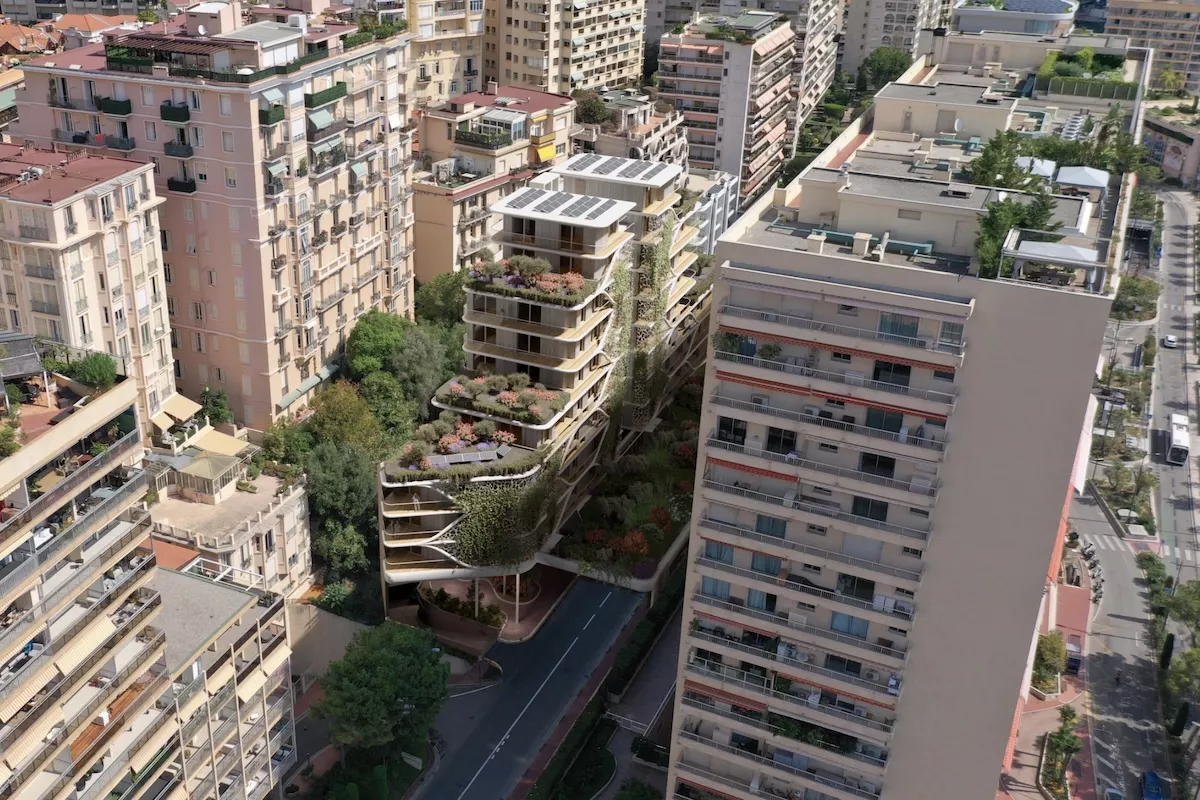
The project occupies a plot of 1,080 m² on a steeply sloping site with a drop of around 17 metres, hemmed in by boulevard du Larvotto on one side. The constraints of the terrain have directly shaped both the scale and the architecture — and have set a ceiling on the number of units the site can realistically accommodate.

When the Finance Commission asked the government to examine whether additional floors could increase the yield beyond 35 apartments, Equipment, Environment and Urban Planning Minister CĂ©line Caron-Dagioni was unambiguous. “The configuration of the site — marked by the topography of the terrain, the narrowness and landlocked nature of the plot, and the immediate proximity of boulevard du Larvotto — constitutes a set of significant constraints that have been fully taken into account in defining the programme adopted,” she told councillors.

Image source: Abba Architects

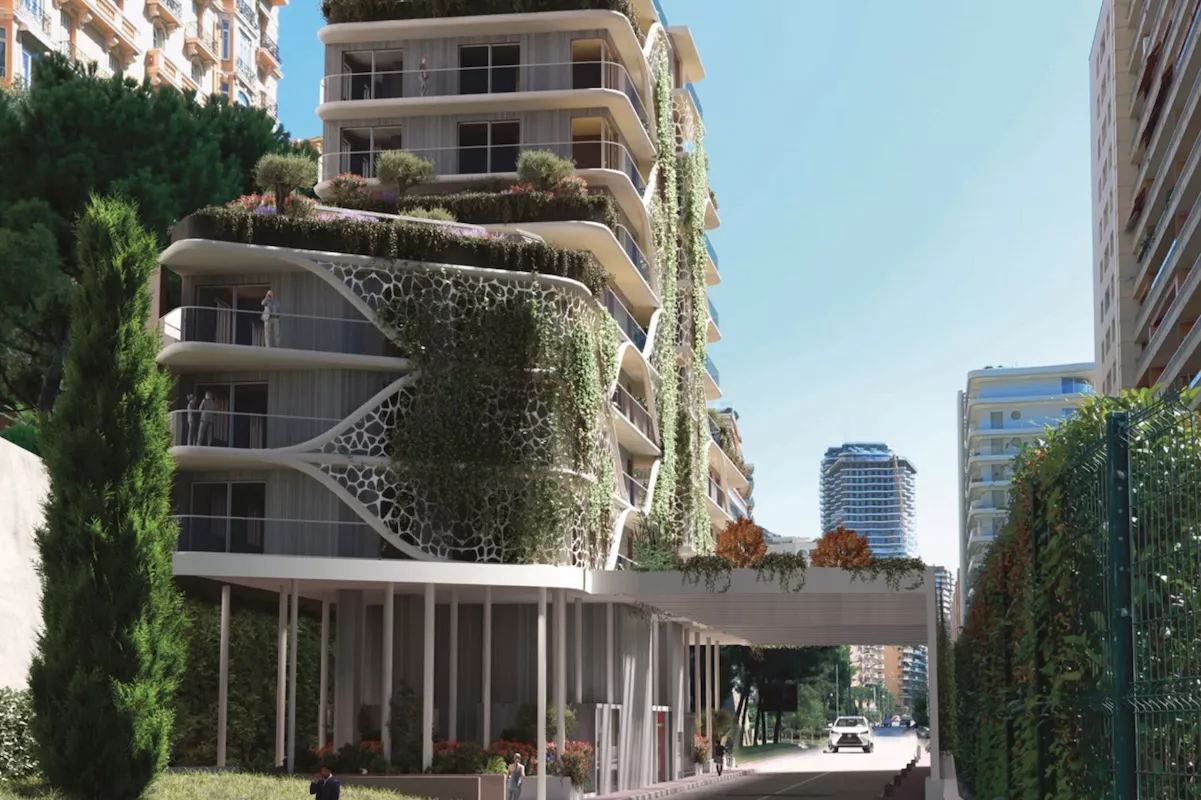
The building is designed in several curved slabs with softened edges and set-back balconies running its full length, a composition intended to reduce the impression of mass from the street. A central opening splits the building into two distinct sections, creating visual transparency through the structure and avoiding a solid-block effect. External vertical circulation — open rather than enclosed — adds lightness and improves ventilation while also providing clear access for emergency services.

A double-skin green façade of climbing plants wraps the exterior, varying in density to regulate light and privacy through the seasons. Apartments are designed to be adaptable, with load-bearing structures integrated into party walls to allow flexible internal layouts over time. All units are dual-aspect, with continuous balconies and recessed sections providing usable outdoor space. The project is targeting HQE and BD2M environmental certification and uses a hybrid timber-and-concrete structure.

Delay confirmed, completion now late 2028

Despite the legislative progress, the government confirmed at the 2 April session that the timeline has slipped. Recent geotechnical reassessments have led to the building being reclassified as a sensitive structure, a designation that carries additional technical requirements and could extend the construction period by around four months. Completion is now estimated for the final quarter of 2028.

The government also ruled out adding height to the building to increase the unit count, concluding that even a modest upward extension would deepen the canyon effect along boulevard du Larvotto and create overlooking issues for neighbouring properties, with lasting consequences for the quality of life in the area.

Stay updated with Monaco Life: sign up for our free newsletter, catch our podcast on Spotify, and follow us across Facebook,  Instagram, LinkedIn, and Tik Tok.
Main image source: Abba Architects