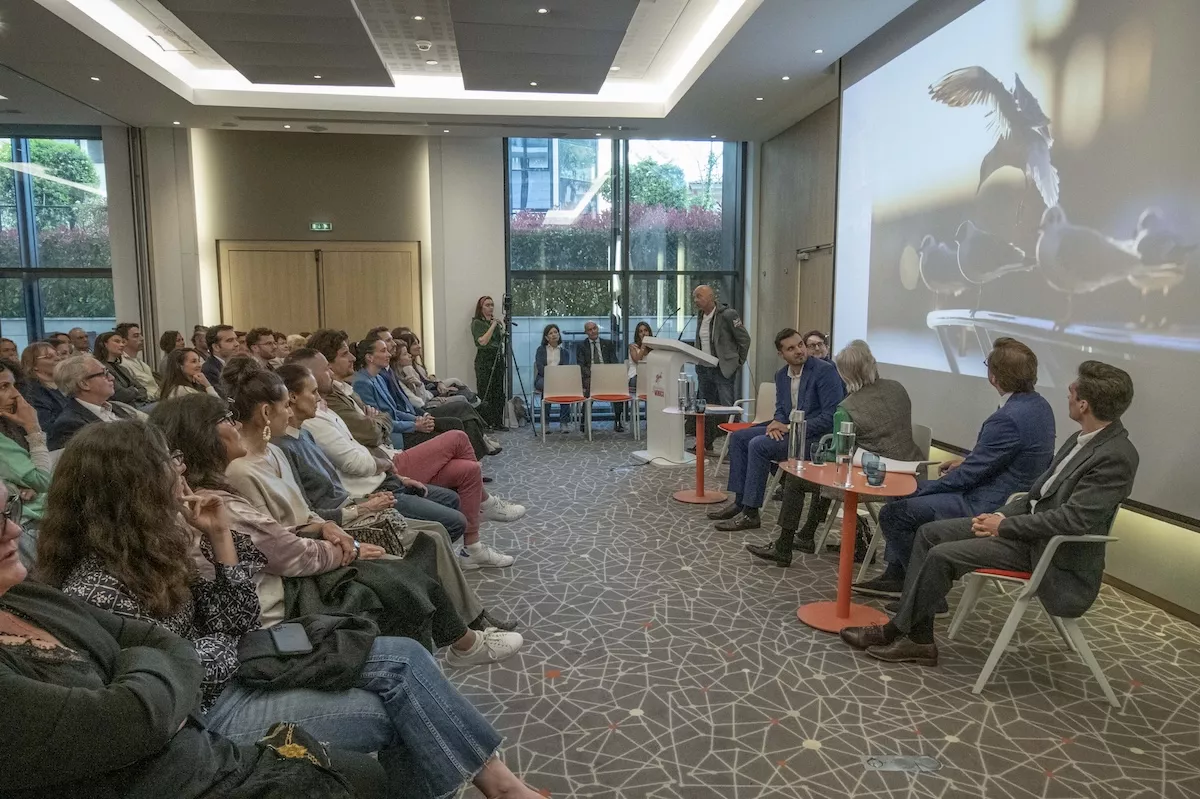
Génération Monaco, the political party led by Marc Mourou, held its sixth conference evening on Wednesday at the Novotel on boulevard Princesse Charlotte, drawing a full house of 180 attendees for a wide-ranging panel discussion on the environment — a mobilisation that Mourou described as “an enormous success.”
The environment follows health, attractiveness, education, sport and culture as the themes addressed in Génération Monaco’s ongoing conference series. Mourou described it as a subject “so dear to Monaco and important for the future of our country.”
Six Monegasque voices on one stage
The panel brought together six specialists, all Monegasque, covering a broad range of expertise: wildlife protection, sustainable construction, sustainable finance, circular economy and sustainable development. Christophe Blanchy, former head of collections at the Jardin Exotique and specialist in the protection of Monaco’s fauna and flora — whose photographs were displayed at the entrance to the room — was joined by Evelyne Shick-Tonelli, president of Ecopolis and founder of Radio Ethic, dedicated to ecology. Monegasque architect Benjamin Boisson, who specialises in eco-responsible construction and is leading the Larvotto upper boulevard project, also took part, alongside Jeremy Genin, director of research and investment in sustainable finance at Monaco Asset Management, Eddy Djhekar-Rinaldi, an engineer specialising in sustainable and smart buildings, and Nicolas Ménier, vice-president of Green Monaco, which supports public and private actors in circular economy and reuse initiatives.
Mourou noted the “osmosis on stage between speakers who serve the same cause — profiles dedicated to making Monaco as eco-responsible a country as possible.” The presentations were followed by more than an hour of questions and audience discussion.
Monaco’s environmental commitments
Isabelle Curau-Bloch, a member of Génération Monaco’s steering committee, provided a comprehensive overview of what is already in place across the Principality, highlighting Prince Albert II’s personal commitment through his Foundation, which marks its 20th anniversary this year. She noted that Monaco is a signatory to several international conventions and has committed to reducing greenhouse gas emissions by 55% against a 1990 baseline by 2030. By 2023, the Principality had already achieved a 41.1% reduction.
The next Génération Monaco conference takes place on 9 June, on the theme of security and Monaco’s defence in a geopolitical context.
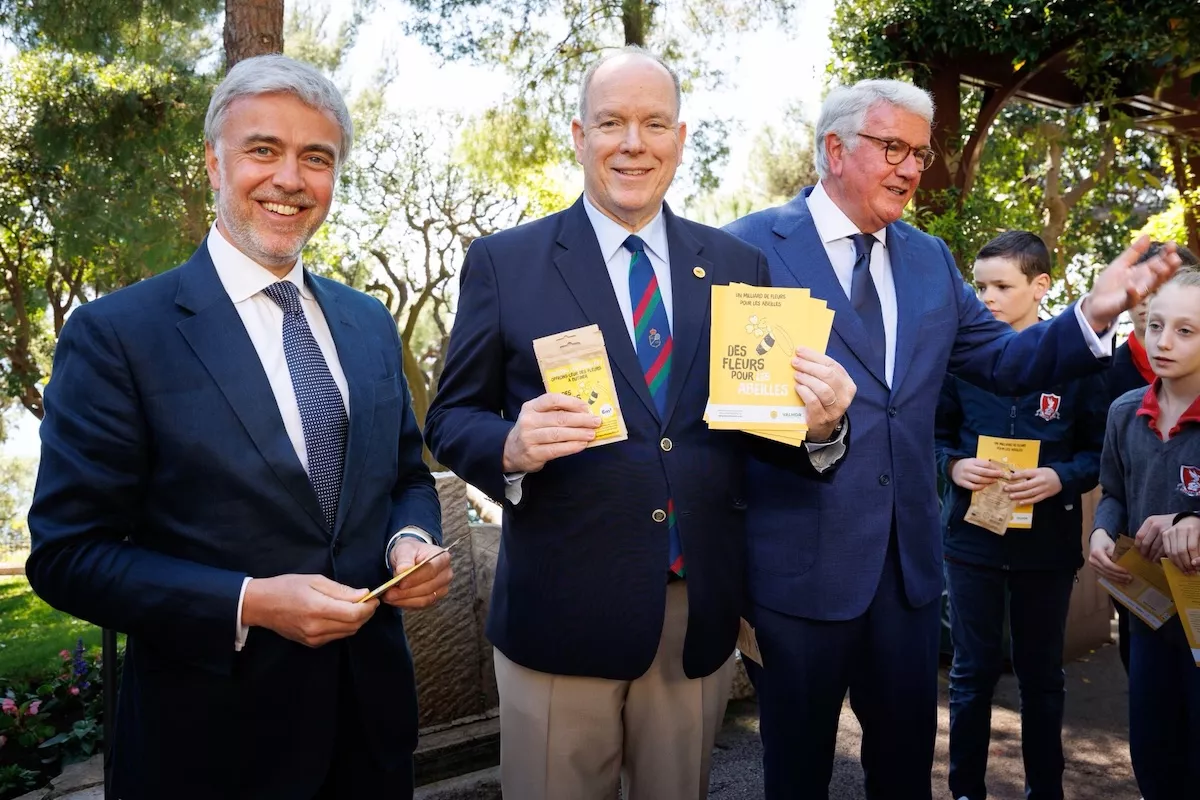
Ten children from the Institution François d’Assise–Nicolas Barré joined Prince Albert II Thursday in the Jardins Saint-Martin for a symbolic photograph marking the 10th edition of the Flowers for Bees campaign, alongside Thierry and Arnaud Dufresne, respectively the founding President and Vice-President of the Observatoire Français de l’Apidologie.
The 10-year-olds had been introduced to the role of bees in pollination by the OFA the previous year, making the gathering a reunion of sorts — a moment connecting their classroom learning to the broader campaign they had been part of.
Launched in 2017 by the Observatoire Français de l’Apidologie with the support of Prince Albert II and the Prince Albert II of Monaco Foundation, Flowers for Bees encourages the public to sow nectar-rich flowers to feed bees and preserve biodiversity. Since its creation, more than 1.5 million seed packets have been distributed and numerous wildflower meadows established across France and beyond.
The 10th edition runs from 9th to 24th May 2026, with the campaign continuing to make the case that individual gestures — however small — matter in the fight against the decline of pollinators.
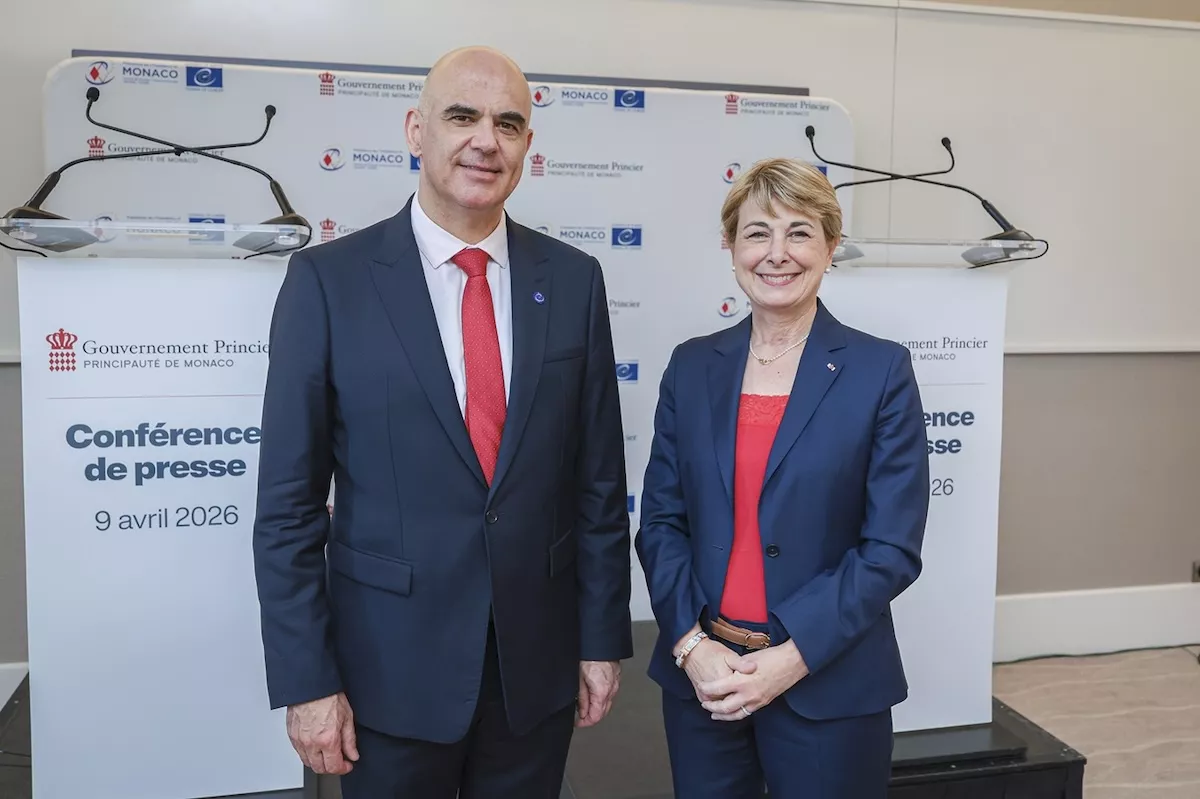
Council of Europe Secretary General Alain Berset held a series of high-level meetings with Monaco government officials during his two-day visit to the Principality on 8th and 9th April, as preparations intensify for Monaco’s forthcoming presidency of the Committee of Ministers from 15th May to 10th November 2026.
After being welcomed to the Palace by Prince Albert II, Alain Berset met separately with National Council President Thomas Brezzo and Samuel Vuelta Simon, Secretary of State for Justice, with discussions centring on Monaco’s commitment to the promotion of human rights, the rule of law and democracy — the three pillars at the core of the Council of Europe’s work.
He also addressed Monaco’s annual diplomatic conference, bringing together the Principality’s ambassadors, where he outlined the major challenges currently facing the Council of Europe in a shifting geopolitical landscape and highlighted the close relationship of trust between Monaco and the organisation.
A joint press conference with Minister of External Relations and Cooperation Isabelle Berro-Amadeï set out the priorities that will guide Monaco’s presidency, under the thematic thread: ‘The protection of all, through an effective organisation, to meet contemporary challenges’.
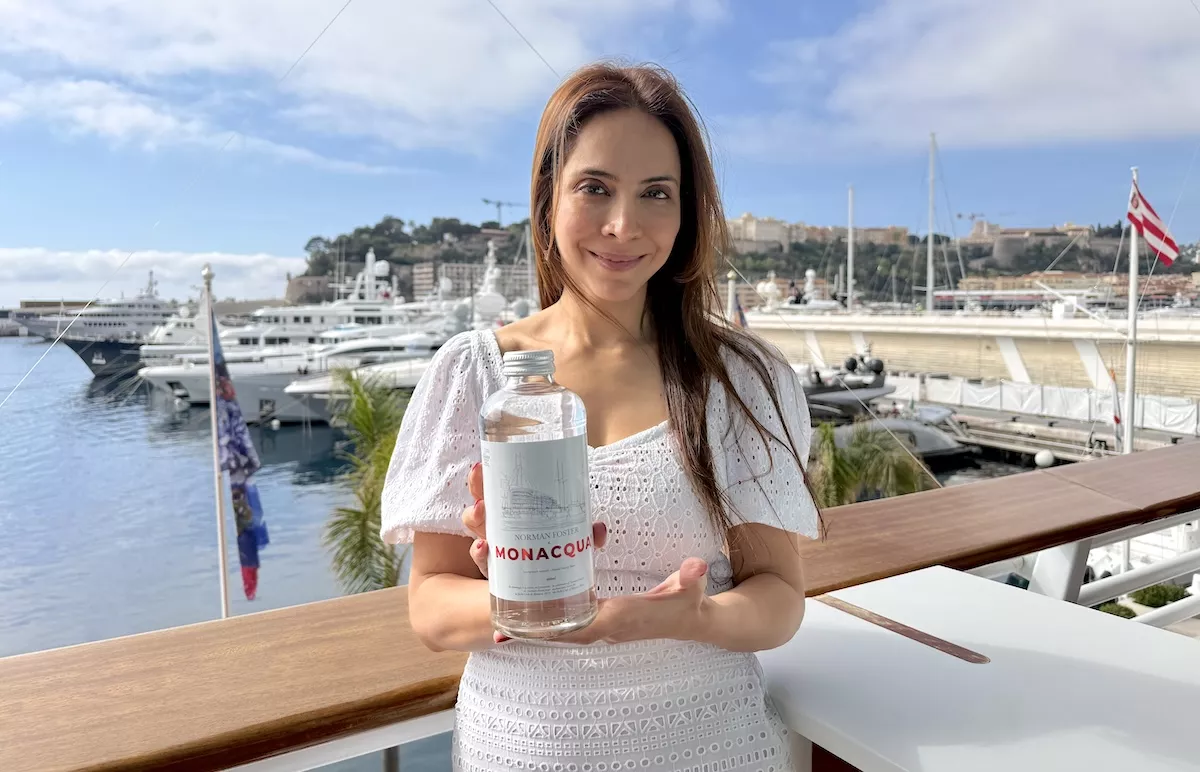
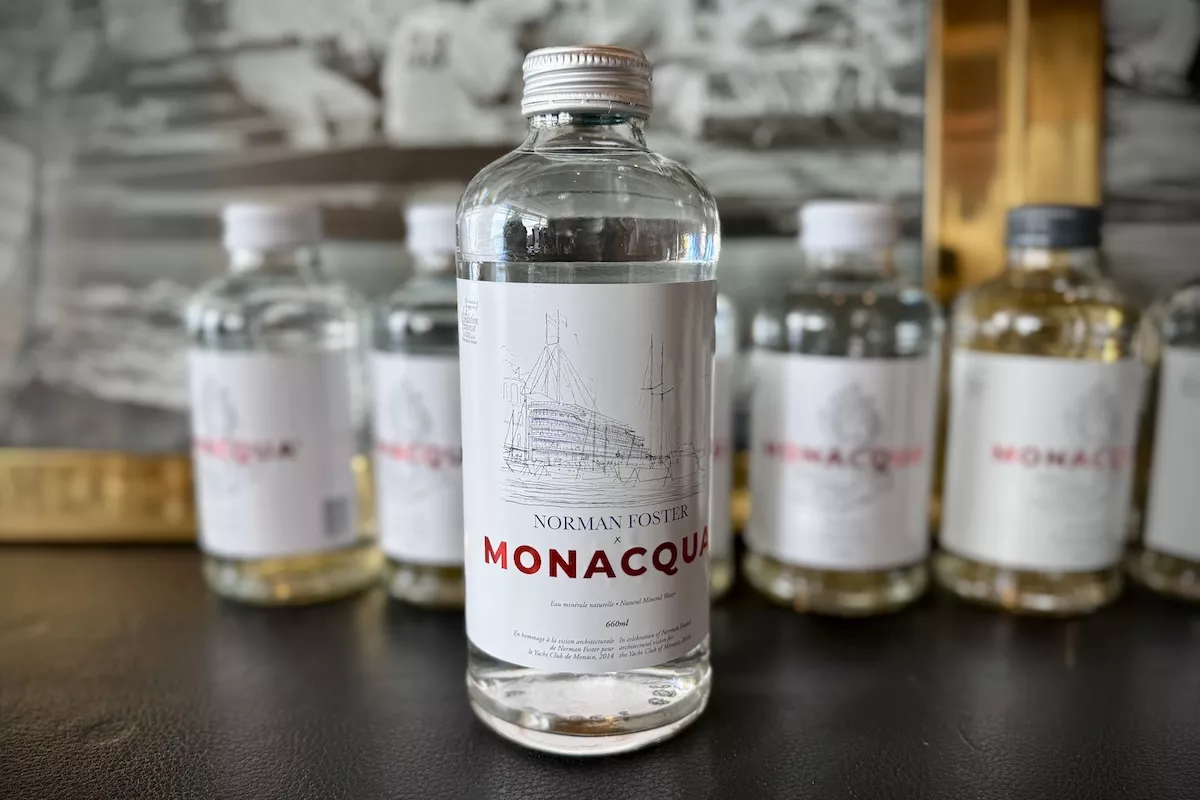
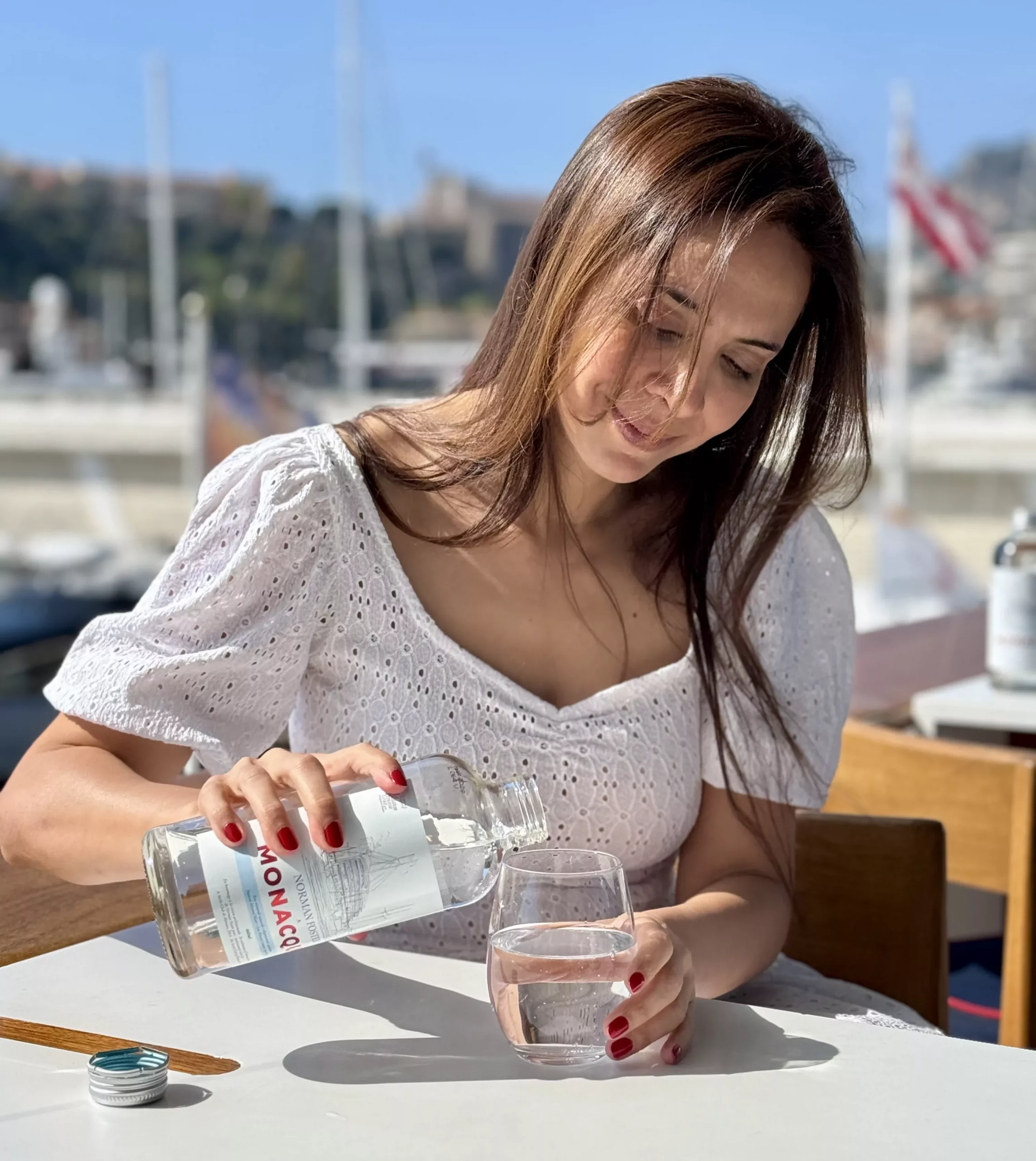
A hand-drawn sketch by Norman Foster — the architect’s own original drawing of the Yacht Club de Monaco, one of the most architecturally significant buildings the Principality has ever commissioned — is now on the shelves across Monaco, printed on the latest limited-edition bottles from local water brand Monacqua.
The collaboration was unveiled on Thursday 9th April at the Yacht Club de Monaco itself, in the presence of Princess Alexandra of Hanover. For Monacqua founder Geeta Kalwani, the moment was almost overwhelming. “To be launching this bottle in the actual Yacht Club, where this image was conceived, supported by the mind that actually conceived of the Yacht Club — I am incredibly proud,” she says.
The bottles are available across both glass and carton formats at standard retail pricing — a deliberate decision by Monacqua founder Geeta Kalwani to make the collaboration accessible to everyone, not just collectors.
Photo credit: Cassandra Tanti
An architect who shaped Monaco’s identity
Norman Foster’s relationship with Monaco is one of the most consequential architectural partnerships the Principality has known. Completed in 2014, the Yacht Club de Monaco transformed the harbour front and redefined Monaco’s relationship with the sea — a building so rooted in its setting that it has come to feel less like an addition to Monaco and more like an expression of what the Principality aspires to be. Praised internationally as a landmark of sustainable high-tech design, it cemented Foster’s place as one of the defining architectural voices in Monaco’s modern history, alongside a body of work across the Principality that spans more than two decades.
Foster himself is among the most decorated architects alive. A Pritzker Prize laureate, a holder of the Order of Merit — one of the most exclusive honours in the world, restricted to just 24 living recipients and awarded solely at the personal discretion of the Sovereign, his buildings define skylines across continents: the Gherkin and Millennium Bridge in London, the Hearst Tower in New York, Apple Park in Cupertino.
That a three-year-old Monaco water brand now carries his hand-drawn work is, by any measure, a remarkable thing.
“There is something very personal about a hand-drawn image, a closeness to the mind at work,” says Kalwani. “I particularly love the subject, as it speaks to the meeting of two things I hold dear: the sea and sustainability.”
Photo credit: Cassandra Tanti
A sketch, a Prince and an unexpected discovery
When the Yacht Club was completed, Foster presented Prince Albert II with a personal gift: the original sketch — the hand-drawn image that first imagined the building into existence. It is that same drawing that now appears on Monacqua’s bottles.
Kalwani did not know this when the collaboration began. She discovered it only when the bottles were presented to the Prince — a detail that gave the project a resonance it had not been designed to carry, and that speaks to how deeply Foster’s vision is woven into the fabric of Monaco.
Prince Albert II wrote to Kalwani ahead of the launch, expressing his conviction that the collaboration would further Monacqua’s commitment to Monaco’s cultural influence.
Culture in a bottle
At the heart of Monacqua is a belief that everyday life can be touched by joy when it is infused with art, design and culture — and that this should not be the preserve of collectors or gallery-goers. It is a philosophy that has shaped the brand’s decision to collaborate with some of the world’s most significant cultural figures, beginning with artist George Condo in 2025 and now with one of the defining architects of our time. By bringing Foster’s work onto a bottle that sits on a café table or a supermarket shelf, Monacqua is making the luxury of culture genuinely accessible.
Photo credit: Cassandra Tanti
The brand behind the bottle
Monacqua is three years old, founded in Monaco by Geeta Kalwani — a mother of three with a double master’s degree from Sciences-Po Paris and the Lee Kuan Yew School of Public Policy in Singapore, who has lived across a dozen countries and speaks eight languages. The brand began, she says, because she wanted pure water for her children, free from toxins. What she built is considerably more than that.
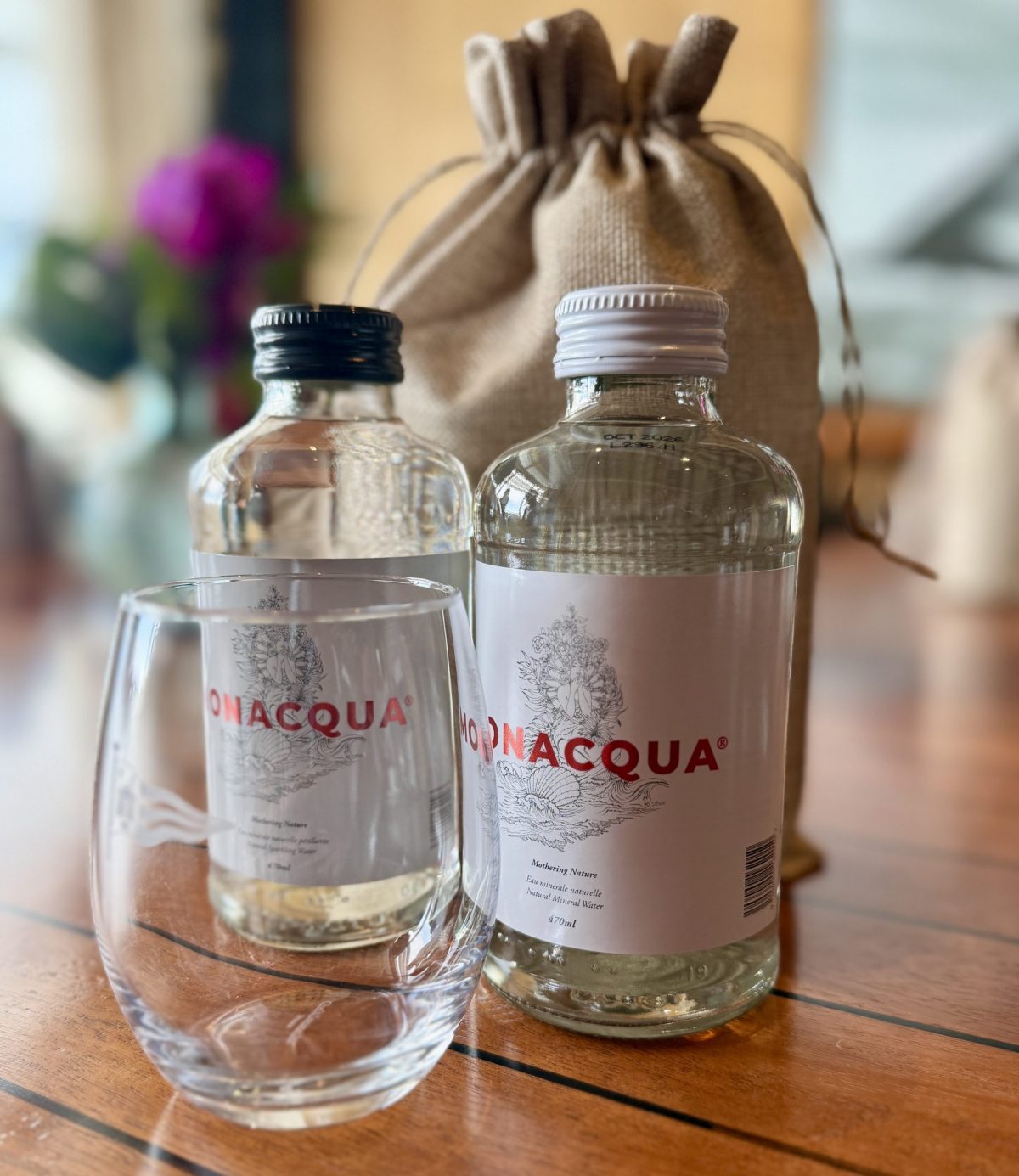
The water is sourced from two ancient European springs — one in Germany, one in Italy — both traceable to Roman times and certified free from nitrates, arsenic and contamination. It is sold in glass and carton formats, with the cartons 75% biodegradable and fully recyclable through Monaco’s yellow bin system. The brand is on track to sell approximately one million bottles annually, each one, as Kalwani puts it, a plastic bottle that was never made.
Monacqua also carries a formal partnership with the Princess Grace Foundation, contributing annually to support families of seriously ill children in paediatric hospitals in France. Last year those donations amounted to €10,000. A portion of every bottle sold goes directly to the Foundation.
Monacqua is proudly and deliberately local — born in Monaco, for Monaco, now accepting payment through Carlo, the Principality’s own digital currency.
Competing as a small independent against the giants of the bottled water industry is not without its challenges, but Kalwani is clear-eyed about what has driven the brand’s growth. “When I launched the business I was not thinking of necessarily making it profitable — I just wanted a good solution for the market, my children and the local community, because I just wasn’t happy with the plastic bottles around.
“But slowly the volume grew, and that’s thanks to the people themselves. The market has loved us, and the people are more powerful than anything else. We are here with a purpose — to have pure water, well packaged, and spread the word of culture. But I could not have been here without the support of the people.”
The papal seal of approval
The most striking testament to the brand’s standing in Monaco came not through a commercial decision but through one it knew nothing about. On 28th March 2026, during the historic visit of Pope Leo XIV — the first papal visit to Monaco in five centuries — the Monegasque government quietly chose Monacqua to provide water for the 15,000 people who attended the mass at the Stade Louis II. Kalwani found out only afterwards, when friends and clients began sending her photographs of the bottles in the crowd.
“We were numb with joy,” she says.
Auction specialist Simon de Pury perhaps said it best: “In less than two years, and in no small part thanks to its stellar artist collaborations, Monacqua has already attained cult status. It took Château Mouton Rothschild a little longer.”
The Norman Foster x Monacqua limited-edition bottles are available now across cafés, restaurants and supermarkets in Monaco.