

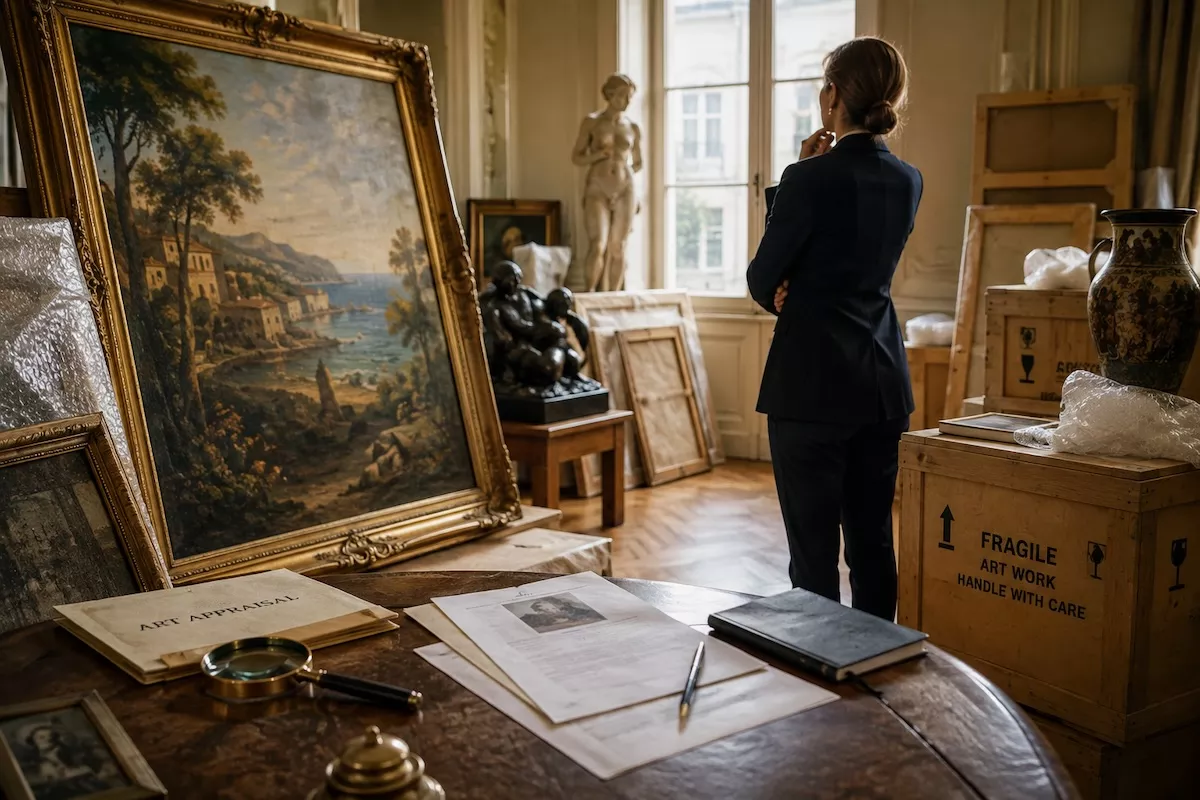
Around 860 billion euros’ worth of art is expected to change hands over the next decade as older collectors pass their wealth to the next generation, according to Deloitte, in a shift that is likely to leave many heirs grappling with paintings, sculptures and antiques they never asked for.
The figure, drawn from Deloitte’s Art & Finance Report, forms part of a far larger movement of money between generations, estimated at some 26.7 trillion euros over the same period. Yet art poses a problem unlike other inherited assets. A bank account can be divided among several heirs, and shares can be sold with a click. A large painting or a sculpture cannot, and while a work may have been a treasured possession for its original owner, the next generation may feel little emotional attachment to it.
An asset that is hard to place
Much of the discussion around the so-called great wealth transfer has focused on houses, businesses, cash and stocks. Art sits awkwardly alongside them. An heir living in a modest apartment may simply have nowhere to put a substantial work inherited from a family estate, and the costs of insuring, storing and maintaining a collection can be considerable.
Selling might seem the obvious answer, but the art market has its limits. There are unlikely to be enough buyers or museums to absorb everything that comes free, and analysts caution that the headline figure describes ownership passing between people, not works flooding onto the market. Much inherited art will stay where it is, move into a trust, secure a loan or be donated to an institution. Even so, every inherited object enters a fresh cycle of decisions, and even a modest proportion reaching the market at once would weigh heavily on a trade whose annual turnover is far smaller.
Tastes that do not always transfer
Research also complicates the popular image of digitally fluent millennial heirs redecorating around their parents’ collections. Analysts expect Generation X to inherit more than millennials over the coming ten years, and a large share of wealth is expected to pass first between spouses, most often to surviving wives who may hold a collection for years before it moves again.
Where younger collectors are buying, they are not necessarily buying what their parents owned. Deloitte’s research notes that the proportion of collectors citing both passion and investment as their motivation has fallen over the past decade, with cultural impact and personal identity gaining ground. The result is a market in which mid-tier works without strong contemporary appeal may face the greatest risk as heirs reallocate.
A live question in Monaco
For a Principality that has positioned itself as a hub for wealth management, family offices and cultural life, the coming transfer is more than an abstract statistic. Monaco’s private banks and advisers increasingly treat art as a strategic part of succession planning rather than a discretionary purchase, linking acquisition, finance, inheritance and philanthropy.
As the great wealth transfer gathers pace, the question facing many families will not only be what their art is worth, but who among the next generation actually wants to keep it.
Monaco Life is produced by qualified, multi-media journalists writing original content. See more in our free newsletter, listen to our Podcasts on Spotify, and check us out on Facebook, Instagram, LinkedIn and Tik Tok.
Image is AI generated by Monaco Life