

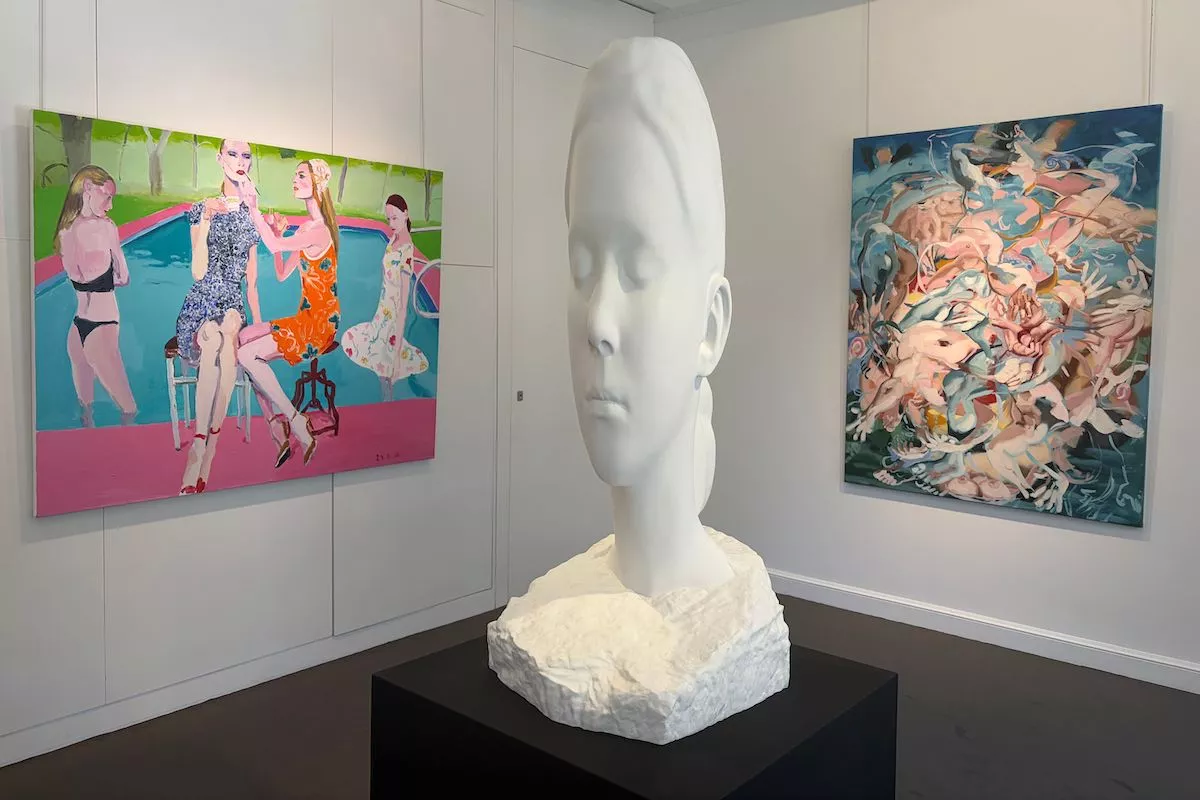
What happens when high art collides with neon nightlife, mass media, and raw downtown grit? Opera Gallery is answering that question with its latest exhibition, ‘American 80s: from Warhol to Basquiat’. Running until 31st August, the show plunges visitors straight into the electric, high-speed zeitgeist of 1980s New York.
Where the 1960s established the foundations of Pop Art, the 1980s accelerated its trajectory into a hybrid, self-aware visual language. This evolution drew equally from mass media, urban street culture, and legendary cultural venues like Studio 54.
Rather than treating the decade as a distant historical chapter, the exhibition frames it as the fundation of our modern visual language. At the centre stands Andy Warhol, whose manipulation of celebrity and commerce set the structural framework for the era. Works like Marilyn Reversal (1979) showcase his ability to transform ordinary images into immortal commodities and icons.
Sculptural innovations: Stella and Chamberlain
The exhibition also highlights how artists like Frank Stella broke free from strict codes during the late 1970s and 1980s, becoming creators of eccentric sculptures and high-reliefs—interweaving cut-out forms with fluorescent colours, as seen in works like Le Pourfendu (1984). Similarly, the dialogue extends to John Chamberlain, whose 1978 portrait was painted by Warhol. Chamberlain utilised compressed, welded, and painted scrap metal from crushed automobiles to craft Pop-inspired sculptures over the decades, exemplified by Running Cathead (1988).
Jean-Michel Basquiat and the urban underground
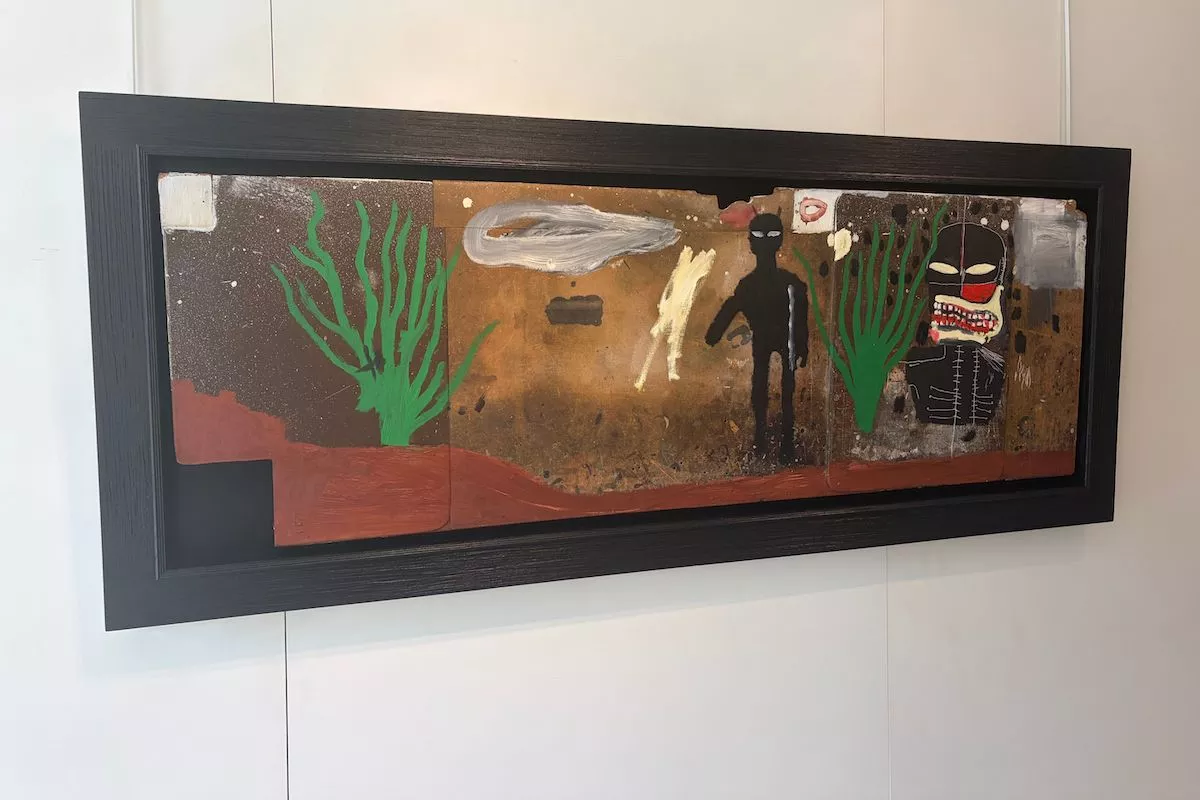
Surrounding this core is the urgent, unstable energy of the period. Jean-Michel Basquiat’s Untitled (Pestus) (1982), executed during a pivotal year for the artist, demonstrates how painting reasserted itself as a vehicle for socio-political critique. The work’s dense, layered syntax reflects Basquiat’s navigation of power, history, and personal identity. Between 1976 and 1979, Basquiat and graffiti artist Al Diaz famously covered the walls of the SoHo district and the subway system with marker pens using the tag ‘SAMO’ (‘SAMe Old shit’), before Basquiat transitioned fully into the gallery space and his studio—captured famously in photographs by Tseng Kwong Chi in New York in 1987.
Keith Haring and the factory generation
Similarly rooted in the urban environment, Keith Haring’s Untitled (28 September 1984) brings the kinetic immediacy of New York’s subway graffiti into a gallery context.
Alongside figures like Condo and Scharf, this new generation of American artists frequently populated the Factory. Haring’s simple, bold style made his art easy for everyone to enjoy while delivering powerful messages about society.
A wider art-historical dialogue
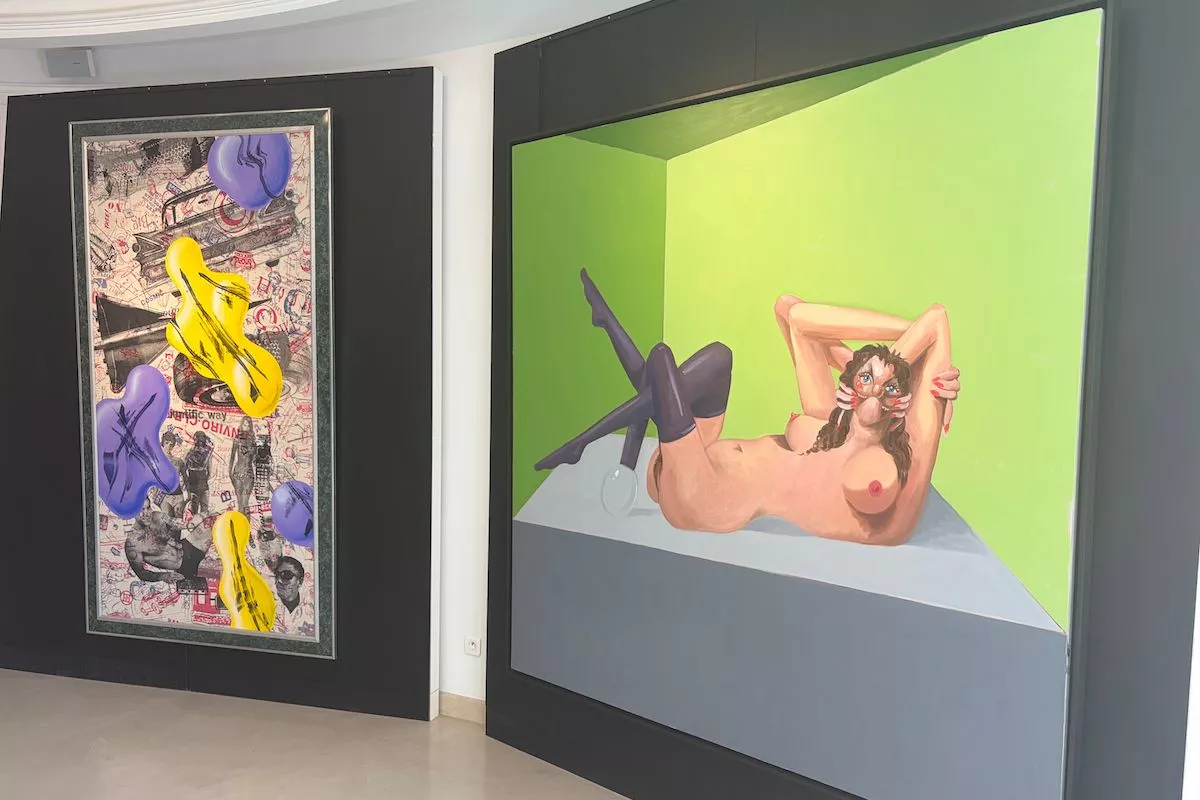
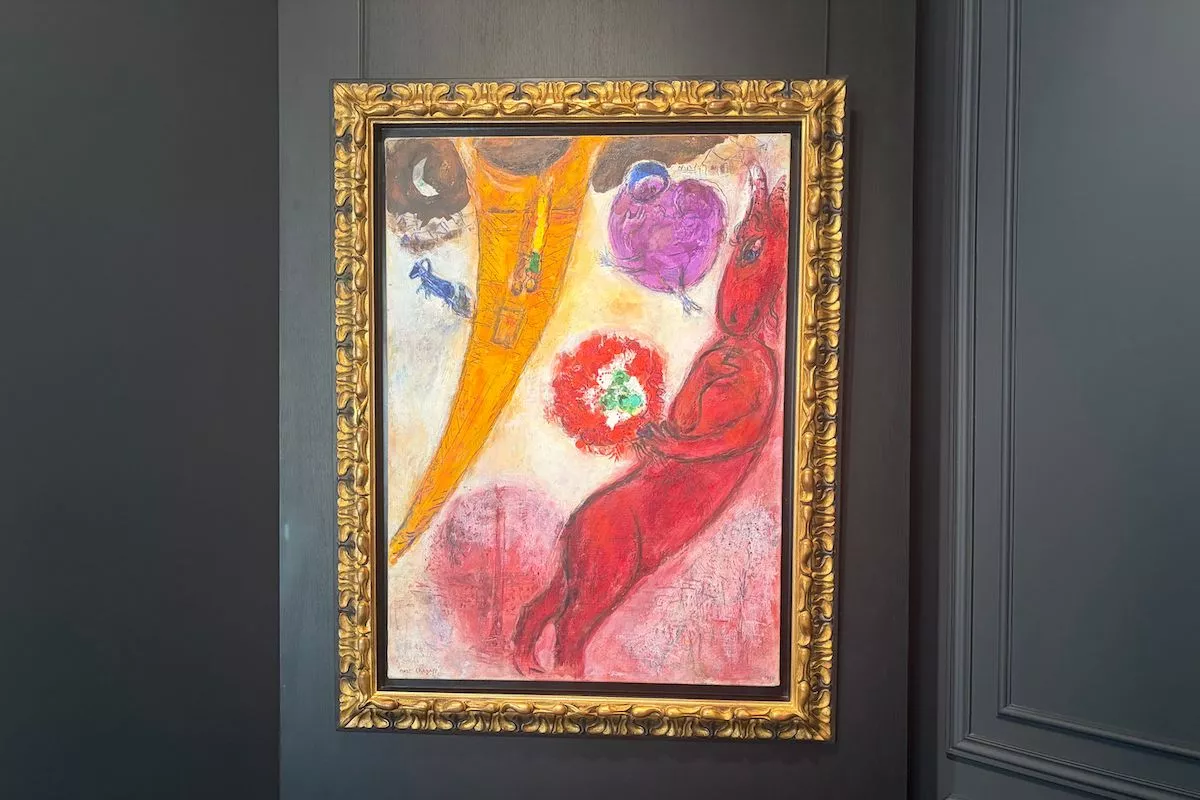
The exhibition also places these American figures within a wider art-historical dialogue. Alongside the 1980s focus, the exhibition features works by major 20th- and 21st-century figures, including Pablo Picasso, Marc Chagall, Alexander Calder, and Pierre Soulages.
Picasso’s late-period canvas Femme tenant un chat dans ses bras (1964) highlights the ongoing reinvention of figuration, while Soulages’ Peinture 65 x 92 cm (21 May 1987) uses monochrome black to explore light and reflection. A contemporary counterpoint is offered by Jaume Plensa’s Minna (2025), in which the human form is rendered as a vessel for interiority and silence.
Art with a purpose
Held to benefit the charity Mission Enfance, ‘American 80s: from Warhol to Basquiat’ highlights Opera Gallery Monaco’s dedication to major exhibitions.
Founded in Singapore in 1994 by Gilles Dyan, Opera Gallery has grown into a major international art destination with spaces in London, Paris, New York, Geneva, Madrid, and Dubai. For over 30 years, the gallery has featured modern and contemporary art through ambitious shows and partnerships with museums and private collectors. Led by Federica Beretta and Damien Simonelli, the Monaco branch continues this tradition by bringing world-class art to the public.
Stay updated with Monaco Life: sign up for our free newsletter, listen to our podcasts on Spotify, and follow us across Facebook, Instagram, LinkedIn, and Tik Tok.
‘Minna’—bronze statue painted white by Spanish artist Jaume Plensa. Photo credit: Virginia D’Umas