

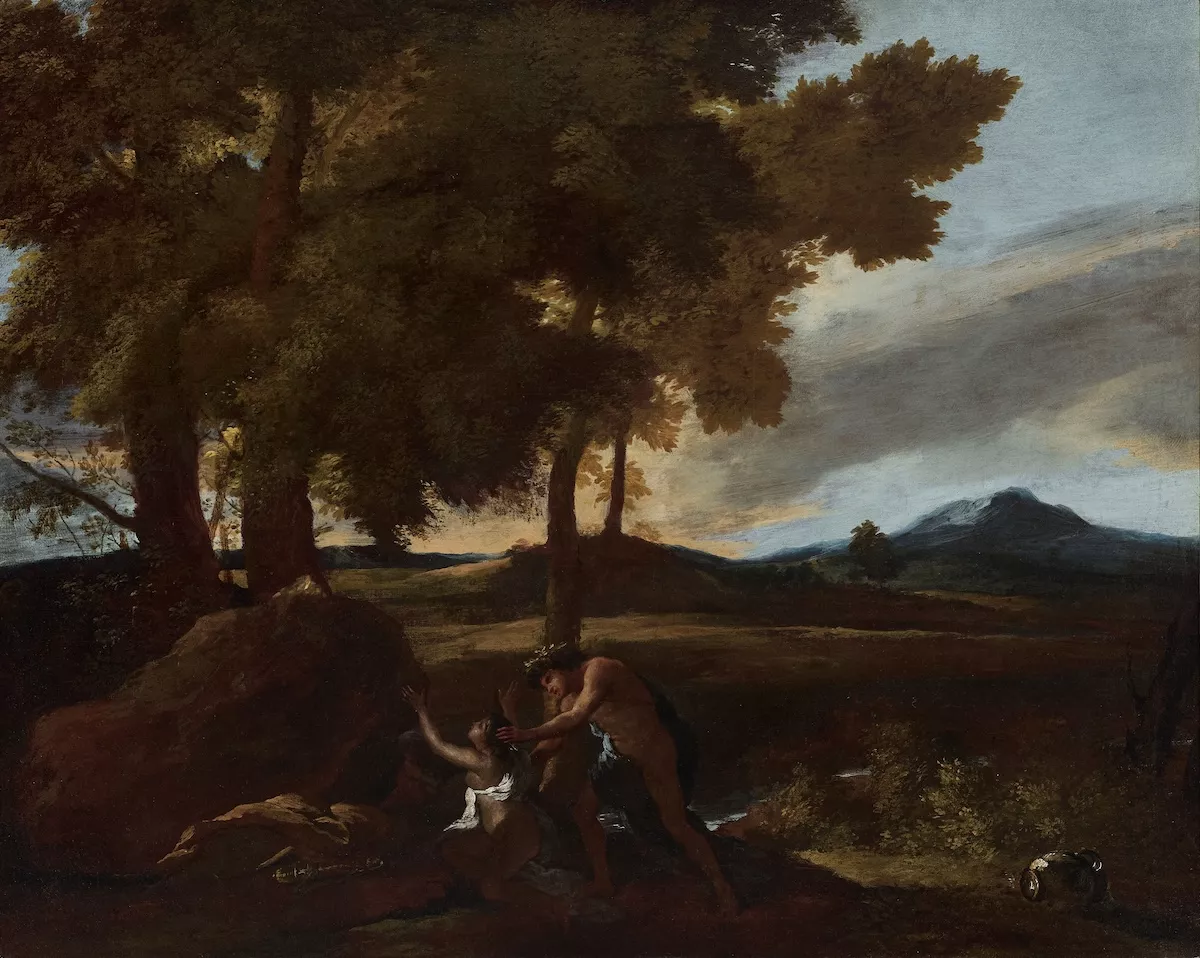
London and Milan-based gallery Voena returns to Art Monte-Carlo 2026 with a presentation anchored by a rarely seen early work by Nicolas Poussin, placing old master painting in conversation with modern and contemporary art across a booth that takes nature as its connective thread.
The centrepiece is Apollo and Daphne (1625–26), painted shortly after Poussin arrived in Rome as a young artist working to establish his reputation in the city. The work is a pendant to The Death of Eurydice (1626), which is currently on view at the Nouveau Musée National de Monaco’s Villa Paloma as part of Le Sentiment de la Nature: Contemporary Art in the Mirror of Poussin — the NMNM’s spring exhibition running through 25th May. Voena’s decision to bring Apollo and Daphne to the fair creates a rare opportunity to encounter the two companion paintings within the same visit, one in a museum context and one at market.
The period in which both works were painted represents a pivotal moment in Poussin’s career — the years in which he was developing the classical approach to landscape that would become enormously influential across subsequent centuries of European painting.
Nature as a common thread
The gallery has built the rest of its presentation around the theme of nature, creating a dialogue that spans four centuries. Damien Hirst’s monumental triptych Who’s Afraid of Red, Yellow and Blue (2000) uses butterflies and household paint across three large panels to reflect on the ephemeral qualities of beauty and life, while also referencing Barnett Newman’s series of the same name.
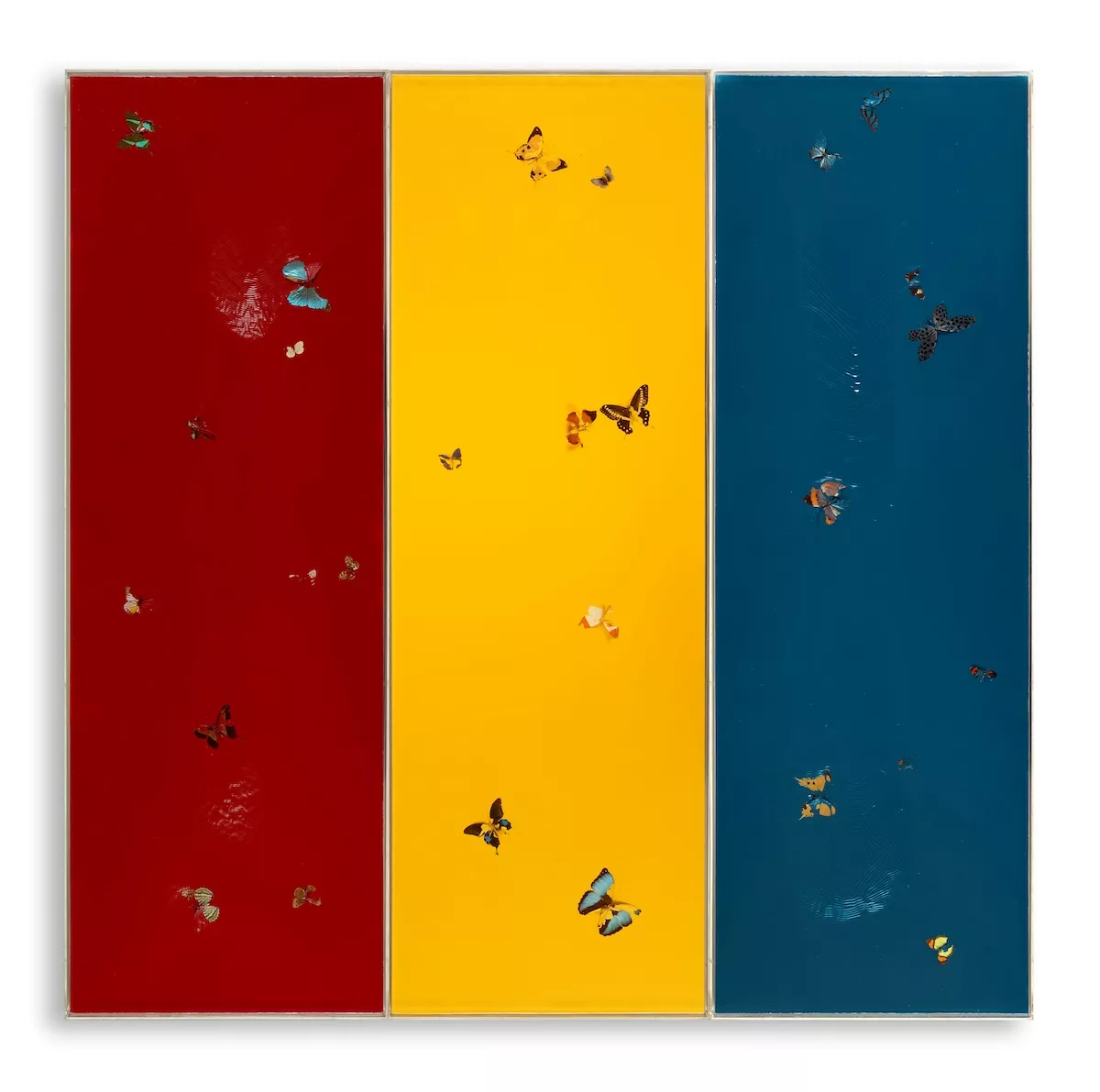
in.)
Kristy Chan’s Small talk about the weather (2022) brings a more agitated energy — dense, frenzied brushwork sweeping across broad fields of colour — exploring how nature still underpins the most ordinary of human exchanges. Monegasque artist Philippe Pastor’s Bleu Monochrome series (2012–25) takes the engagement with the natural world furthest of all: painted with natural pigments on canvases exposed to the elements, the works invite nature itself into the creative process.
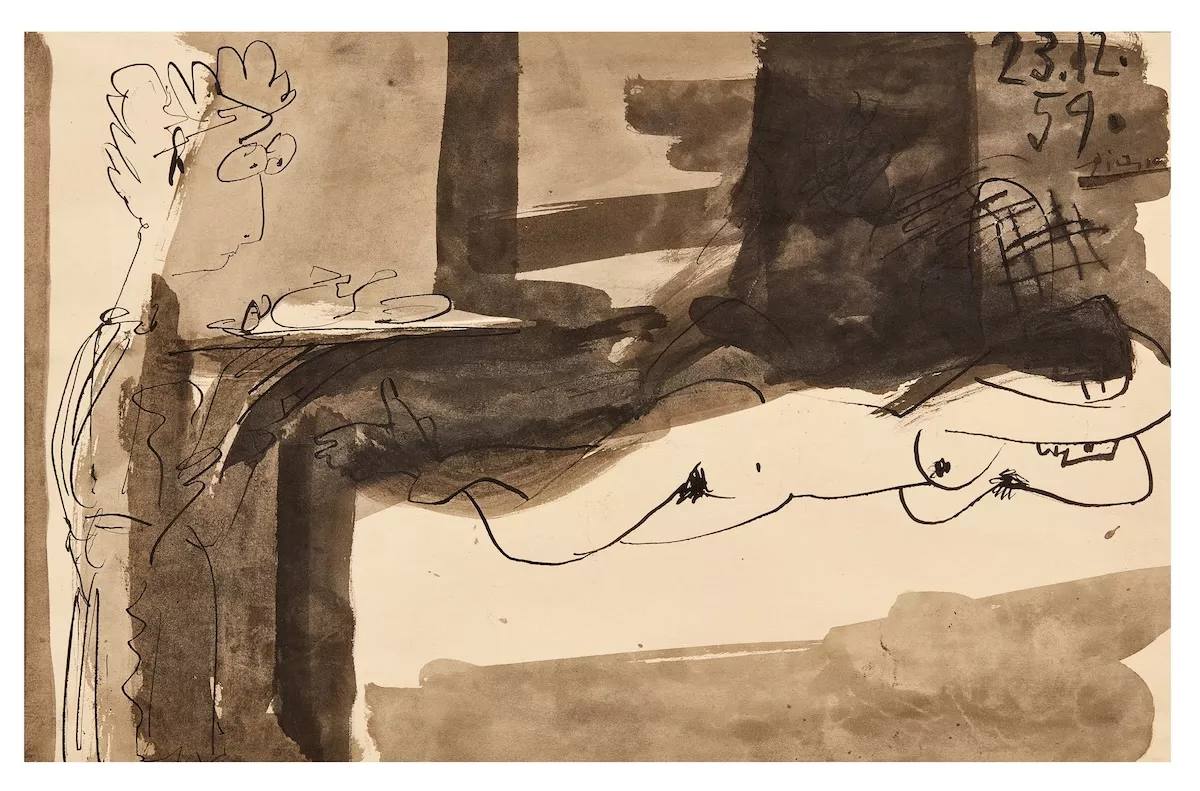
Rounding out the presentation are three works on paper by Pablo Picasso, spanning 1923 to 1959 and reflecting the breadth of his stylistic shifts across that period, with subjects ranging from photographer Dora Maar to Manet’s Déjeuner sur l’herbe.
Art Monte-Carlo runs from 29th April to 1st May at the Grimaldi Forum.
Stay updated with Monaco Life: sign up for our free newsletter, catch our podcast on Spotify, and follow us across Facebook, Instagram, LinkedIn, and Tik Tok.
Main image: Pablo Picasso, Málaga 1881–1973 Mougins, Le Petit Déjeuner, 1959, Signed and dated ‘23.12.59 / Picasso’ (upper right), Ink and watercolour on paper