

Under the curation of Célia Bernasconi, Director of the Heritage Institute, the exhibition ‘Mémoire des lieux’ has opened at the Salle d’exposition du quai Antoine Ier, running from 1st October to 24th January 2027.
Taking its conceptual cue from a quotation by J.D. Salinger’s ‘The Catcher in the Rye’, the exhibition explores adolescent angst, parental relationships, and shifting outlooks through the lens of urban transformation.
The thematic connection to New York stems from architectural historian Jean-Philippe Hugron’s analyses comparing Monaco to New York in terms of density and their capacity to function as laboratories for new forms, transposing themes from the book New York Delirium to the Principality.
Shifting horizons: Capturing the ephemeral city
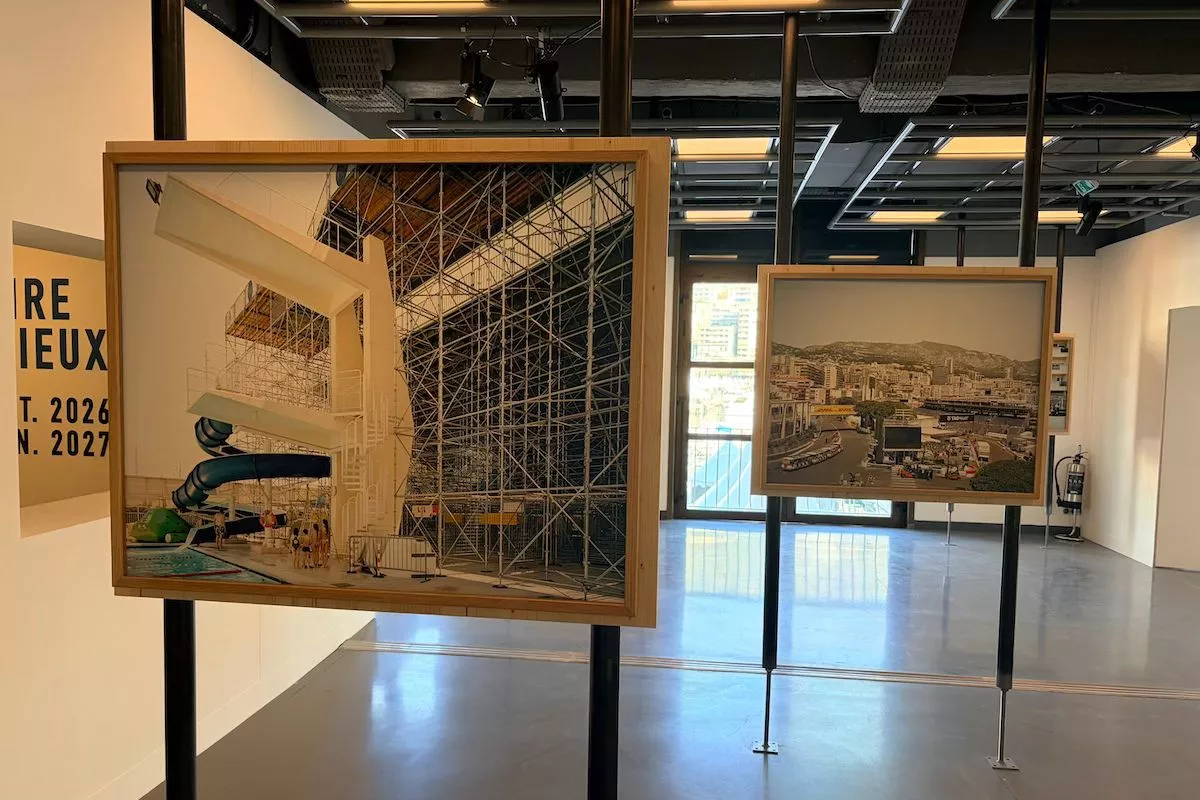
The exhibition’s first chapter features photographic surveys of the territory, opening with works by German-born, Nice-based artist Jürgen Nefzger. In his 2011 series ‘Grand Bruit’, Nefzger photographed the Grand Prix, focusing entirely on ephemeral architecture, bleachers, and fences rather than the race itself, highlighting the noise and backstage efforts that alter residents’ lives. The section also revisits Gabriele Basilico’s 2005–2006 photo-reportage of Monaco, which presented stark, uninhabited black-and-white views of the city. With twenty years of hindsight, these silver-gelatin prints measure the profound landscape transformations since the project initially debuted.
Concluding this introductory chapter is Mathilde Janson’s series ‘What I Thought I Had Photographed’. Investigating Second World War testimonies of shelters in Monaco’s tunnels, Janson faced an unexplained technical failure across multiple attempts where her reliable camera produced completely blank images. Embracing this accident, Janson integrated the malfunction to signify places that are no longer photographable and dead to visual representation, confronting oral history with the unrepresentable nature of the past.
Reflecting on the core ethos driving these selections, exhibition curator Célia Bernasconi said during the press visit: “The exhibition invites visitors to look at Monaco not only through its architecture and heritage, but also as a city in constant transformation, where urban change, personal experiences, and stories contribute to a living collective memory.”
Concrete survivors: The art that outlived architecture
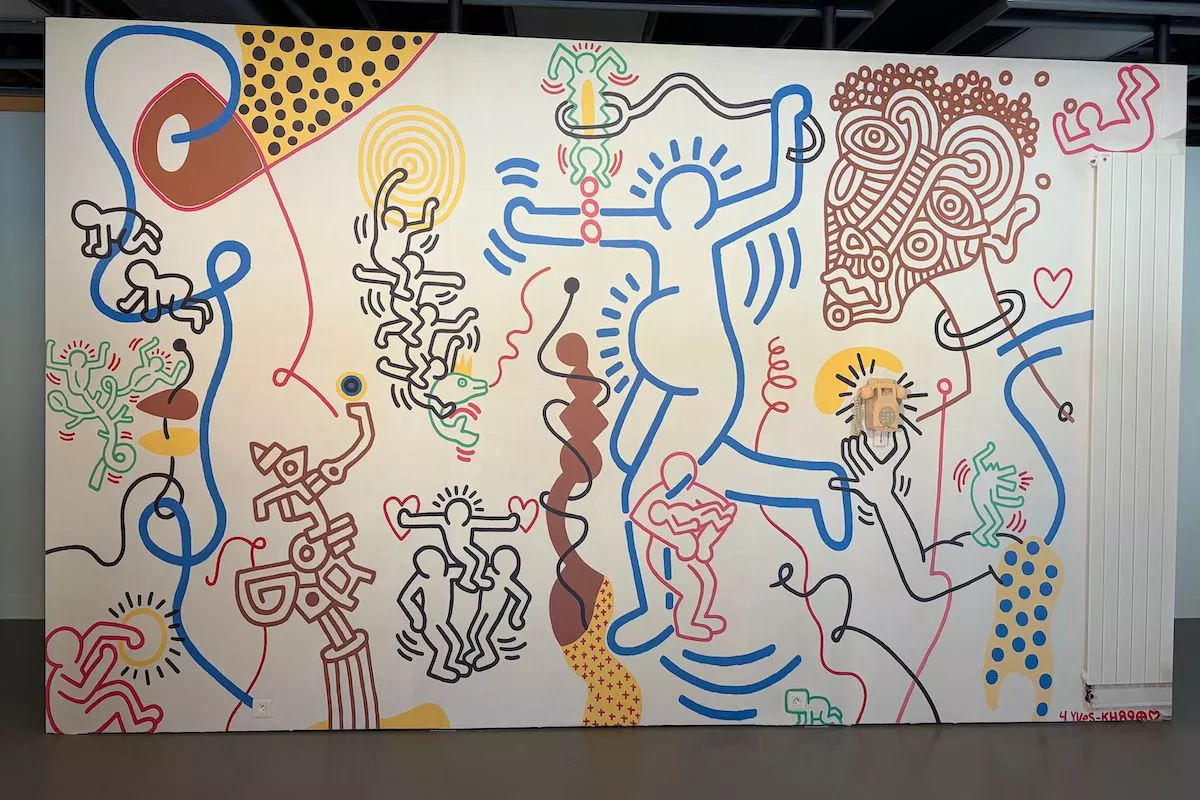
A major focus of the exhibition examines how monumental decorations survive when buildings are demolished or transformed. Highlighted works include a mural by Keith Haring, a prominent 20th-century street artist and legend of the 1980s close to Andy Warhol, who created the piece in 1989 for the Princess Grace Hospital maternity ward at the invitation of Princess Caroline. While the original mural remains fixed to its original wall—now enclosed within the active obstetrics professors’ consultation cabinet due to hospital restructuring—the exhibition brings its presence to the public through documentation and reproduction.
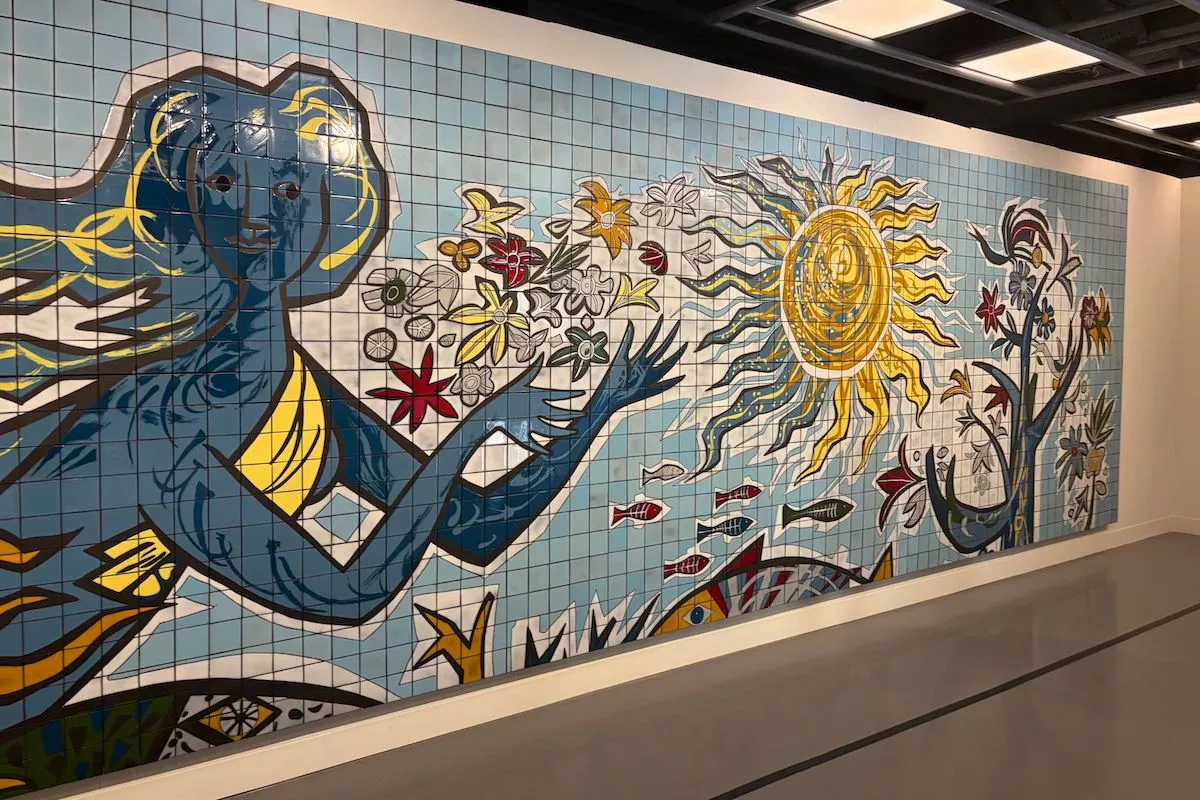
Other highlighted works include Luis Molné’s ceramic creation Décor pour la gare de Monaco (1964), which was originally displayed at the old railway station and is now seeking a new institutional home following urban redevelopment, alongside his two ceramic pieces realised in 1965 and 1966 for the Exotic Garden, capturing his recurring theme of cosmogony and the transition from day to night. Furthermore, surviving elements from Albert Diato’s mixed-media decorations—featuring ceramic birds and fishes originally created for a library at the Place d’Armes police station—were saved during 1980s transformations and successfully transferred to the Collège Rainier III through a multidisciplinary salvage effort.
Scenography and contemporary cartography
Designed by Louise Chatelain and Théophile Sargenti through the ‘Pavillon Bosio Décors’ programme, the exhibition removes partition walls to open views on the city. Using raw wood, metal, and small steps, the staging mirrors an ongoing construction site and scaffolding aesthetic, inviting visitors to observe Monaco from a heightened perspective.
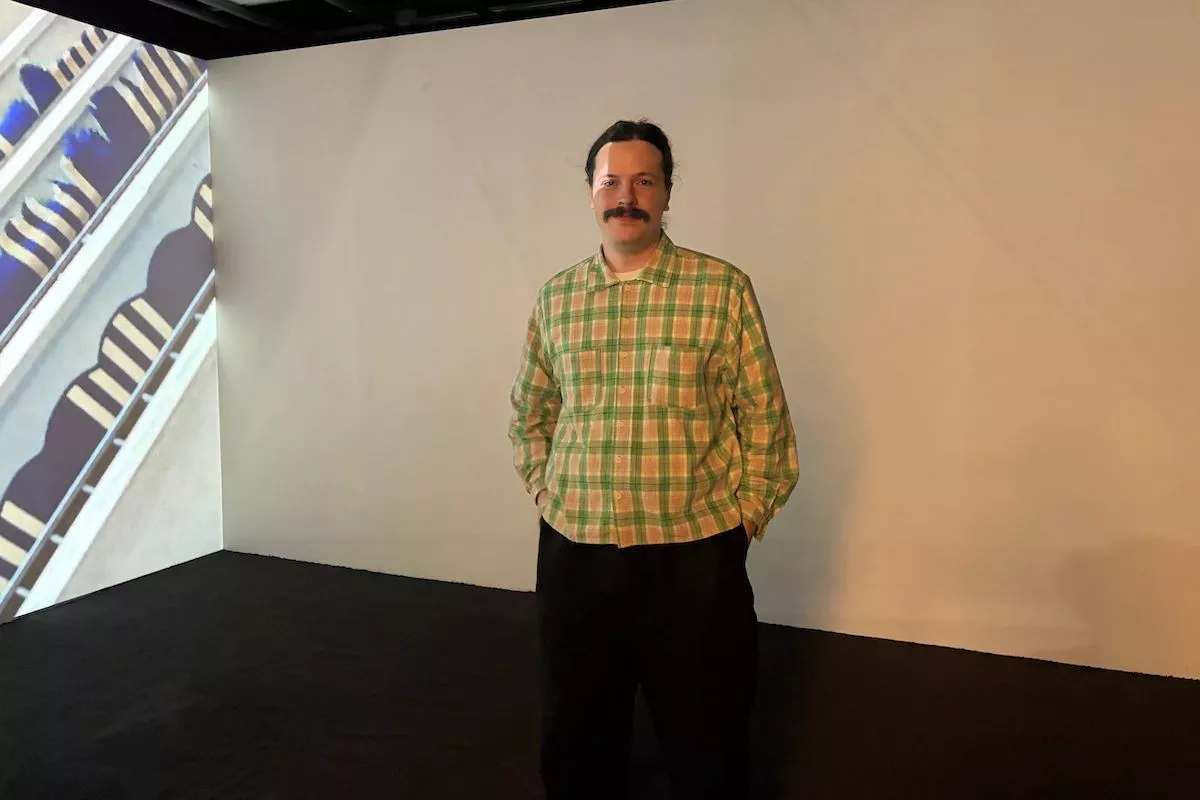
Expanding this spatial exploration, the exhibition features a newly commissioned immersive video project by Pavillon Bosio graduate Gabriel-Noé Rosticher. Titled Relevé, the work stems from an ongoing artistic obsession with lines, horizons, and architecture—heavily inspired by Tim Ingold’s ‘The Short History of Lines’. Developed in collaboration with the Direction de l’Agence Culturelle, the project documents unusual subterranean sites including the Citerne du Palais, local factory environments, underground caves, and water sources. To achieve a deeply tactile experience, Rosticher employed a rigorous scientific protocol alongside a cameraman and a sound designer who spent three days capturing audio on-site using microphones and geophones.
“The goal was really to create something immersive,” Rosticher explained, adding: “What interested me was to show Monaco, not to film the places that we were used to seeing, but really go into the material, into the line, into the texture, so that we don’t necessarily recognise the buildings.”
Coupled with kinetic editing, the installation spins a multi-layered cartography of Monaco’s hidden structures.
Narrative tours and alternative fictions
Further extending the exploration of the Principality’s urban fabric, the exhibition incorporates an immersive installation by artist Lidwine Prolonge, originating from a 2024 performance commissioned by the National Museum of Monaco in a local garden.
Building on an investigation that crossed both spatial routes and historical time strata, Prolonge conceived an alternative narrative voice to the traditional tourist little train. Struggling to navigate Monaco’s complex network of elevators, staircases, and tunnels, the artist transformed these disorienting experiences into a cohesive mesh of text, local history, and fiction.
For the exhibition space, this journey is adapted into a fixed-mobile installation utilising seating on loan from the Théâtre Princesse Grace and American film filters to alter visual perception. The installation is accompanied by preliminary serigraph drawings mapping out the tour—influenced by traffic halts that required branching into unscripted urban stories.
Practical information
The exhibition is open to the public from 1st October 2026 to 24th January 2027, at the Salle d’Exposition du quai Antoine-Ier in Monaco, welcoming visitors with free admission from Tuesday to Sunday between 12pm and 6pm.
Stay updated with Monaco Life: sign up for our free newsletter, listen to our podcasts on Spotify, and follow us across Facebook, Instagram, LinkedIn, and Tik Tok.
Luis Molné’s ‘Décor pour la gare de Monaco’ (1964) on display at Salle d’Exposition du quai Antoine-Ier. Photo credit: Virginia D’Umas