

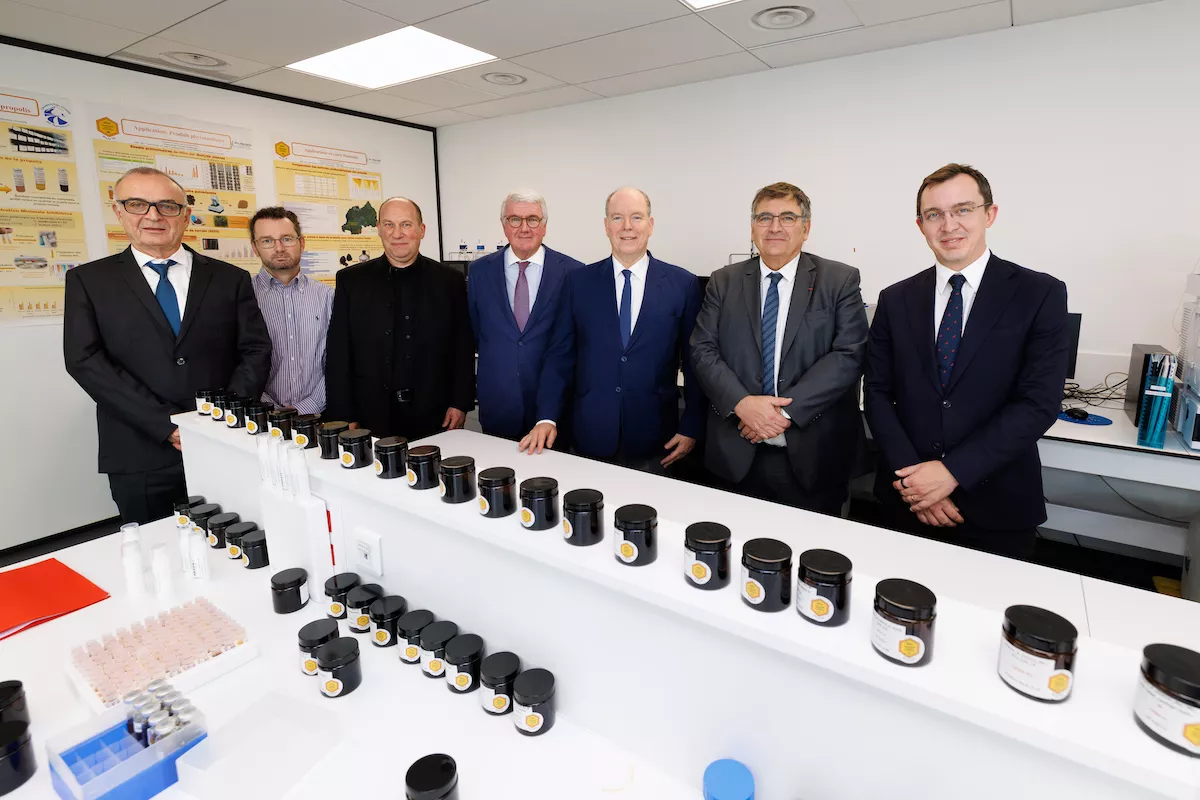
Could bees hold the secret to solving both skin disorders and eco-friendly farming? Prince Albert II travelled to Marignane on Monday 26th October to inspect scientific research turning natural hive defenses into remedies for acne and alternatives to crop pesticides.
What began as a bold theory in 2014 has now matured into patented science, proving that bees do far more than pollinate: they act as live chemical archives of our ecosystems. Visiting the facilities of Flavine, the Sovereign joined academic and institutional leaders for an exclusive briefing on the latest breakthroughs from the French Observatory of Apidology (Observatoire Français d’Apidologie-OFA).
Unlocking the therapeutic power of propolis
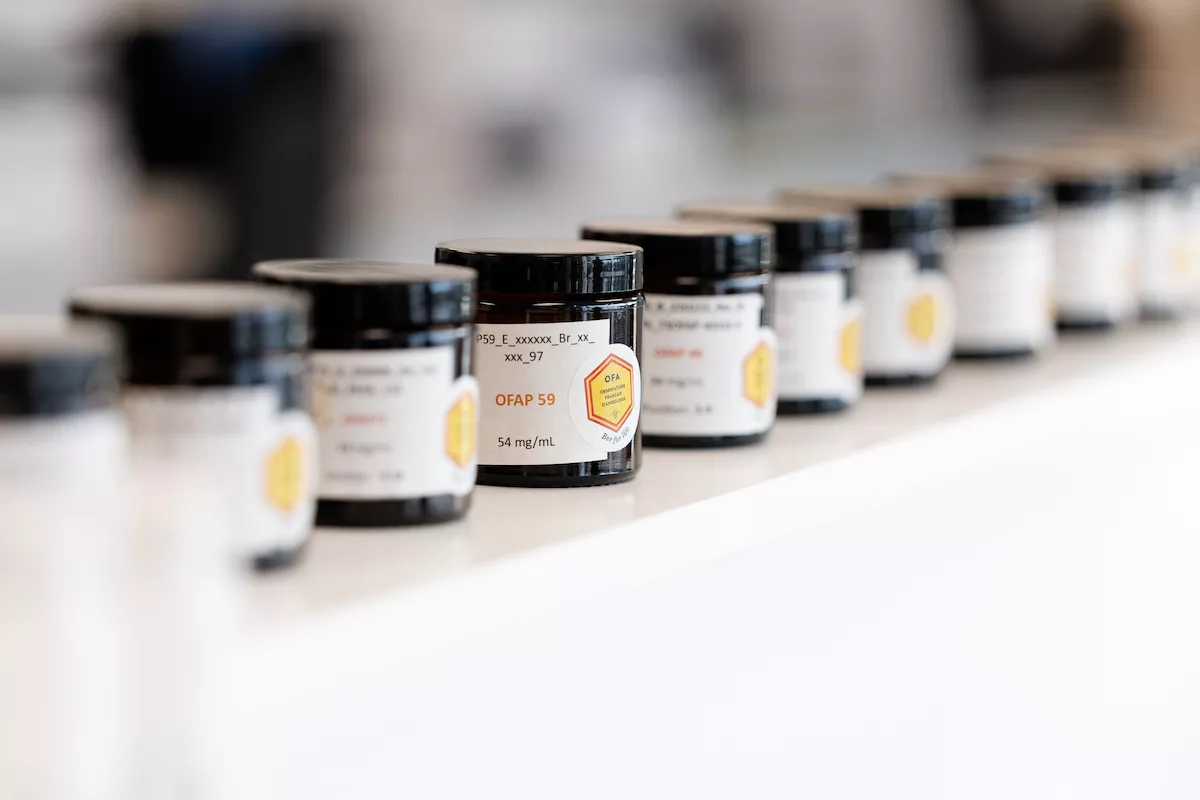
Founded by Thierry Dufresne, the OFA focuses its research on propolis, the resinous substance bees use to seal their hives. Following international scientific expeditions, including a key research mission to Rwanda in 2025, researchers mapped how the composition of propolis varies across different global habitats.
From medical skincare to sustainable farming
That rigorous field and laboratory work has generated academic papers, a new patent, and its first commercial application: a specialised dermatological treatment for acne-prone skin. Beyond human health, the observatory is now developing antifungal propolis treatments for agriculture, offering a natural alternative to synthetic pesticides.
Strengthening Monaco’s biodiversity legacy
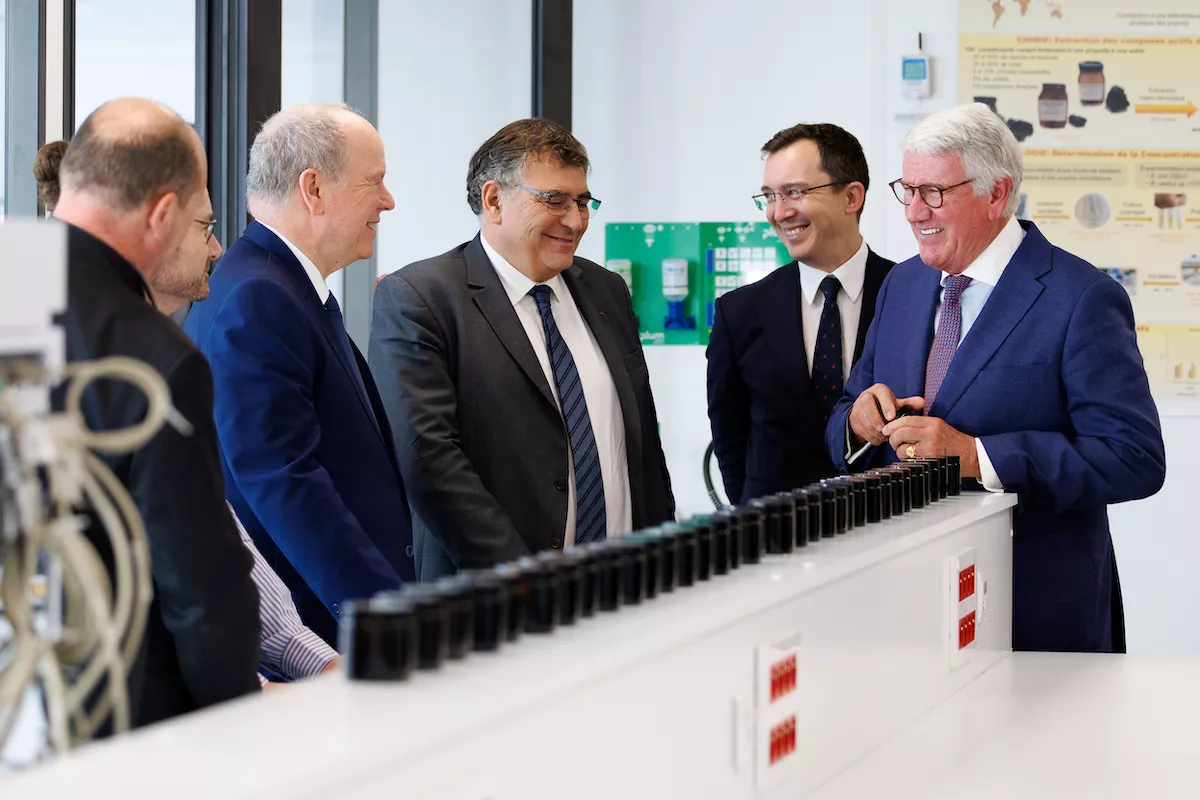
The Prince’s visit highlights his ongoing commitment to science-led environmental protection. By supporting projects that combine conservation with advanced research, Monaco continues to promote practical solutions that connect human health, sustainable farming, and ecosystem protection.
As the OFA expands its core mission to ‘Protect, Understand, and Transmit’, the observatory aims to demonstrate how preserving the natural world can unlock vital scientific innovation for the future.
Stay updated with Monaco Life: sign up for our free newsletter, listen to our podcasts on Spotify, and follow us across Facebook, Instagram, LinkedIn, and Tik Tok.
Prince Albert II visiting the propolis research facilities of Flavine in Marignane. Photo credit: Michaël Alesi / Palais princier