

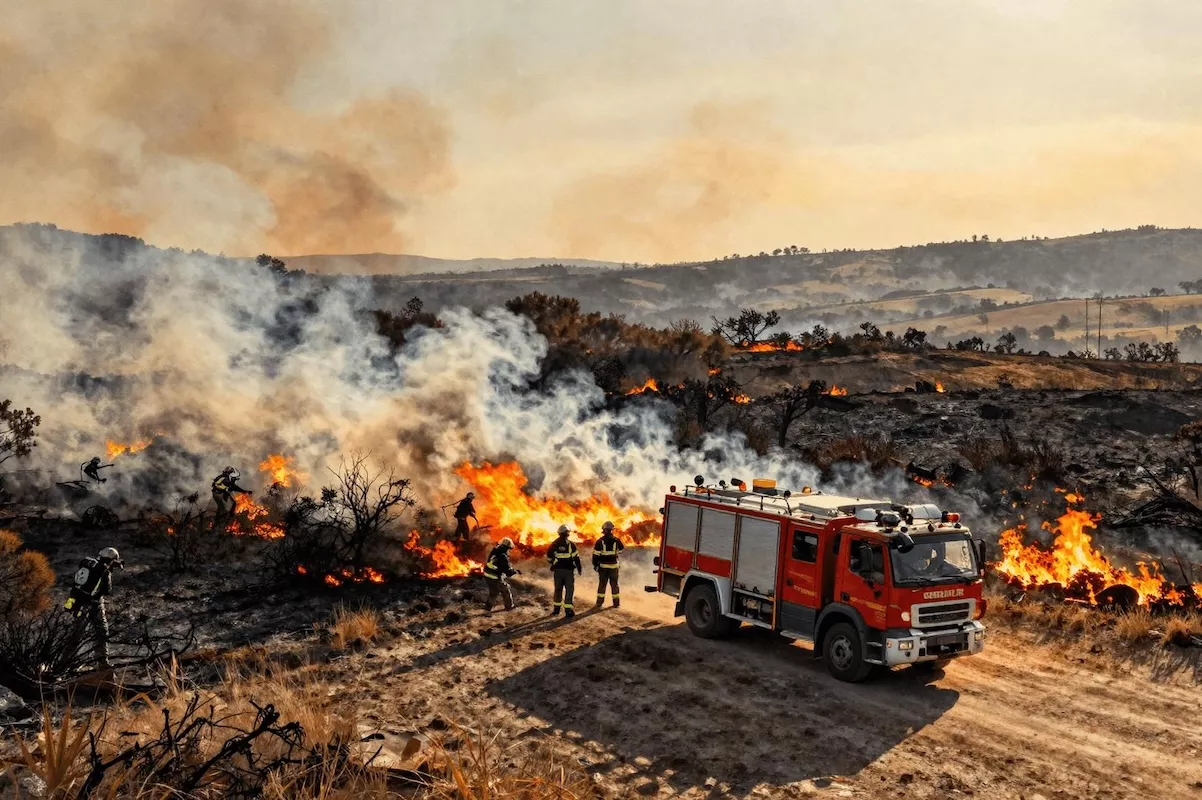
Wildfires could burn 39% more land across Europe by the end of the century even if global warming is limited to around 1.8°C, according to a new study led by the Potsdam Institute for Climate Impact Research (PIK).
Published this week in Global Change Biology, the study found that under a high-emissions scenario, with temperatures rising by around 3.6°C by 2100, the amount of land burned annually could increase by 192% — almost three times today’s level.
The warning comes after another punishing European summer, with extreme heat and dry conditions fuelling major fires across the continent. Southern Europe remains particularly exposed, but researchers expect wildfire risk to increase across western and central Europe as the climate warms.
Better fire management could limit the damage
The research found that improved prevention and fire management could significantly reduce the projected increase, although it would not eliminate the additional risk created by climate change.
That means Europe will need to focus increasingly on preventing fires before they start — including managing vegetation, maintaining landscapes, improving early detection and protecting communities built close to forests — rather than relying primarily on firefighting once a blaze is underway.
The findings are particularly relevant for southern France after another difficult fire season in the Mediterranean. This week’s heavy rainfall across the Var and Alpes-Maritimes has brought welcome short-term relief, but the longer-term trend points firmly towards hotter, more fire-prone summers.
The latest research shows that even if the world succeeds in keeping warming relatively close to the Paris Agreement targets, Europe will still have to adapt to considerably greater wildfire risk.
Monaco Life is produced by qualified, multi-media journalists writing original content. See more in our free newsletter, listen to our Podcasts on Spotify, and check us out on Facebook, Instagram, LinkedIn and Tik Tok.
Photo credit: Préfecture du Var