

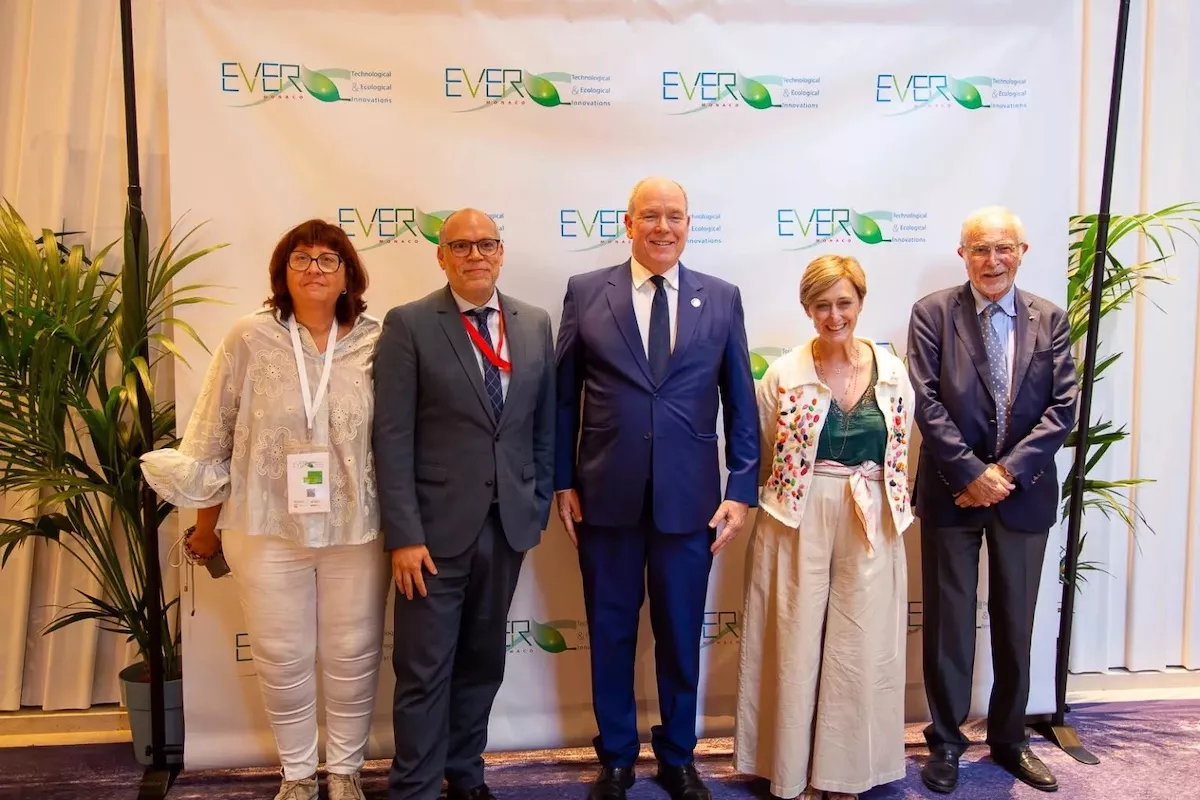
The 21st edition of EVER Monaco took place at One Monte-Carlo on 14th and 15th October to demonstrate why technological advancements must merge with rigorous urban and legal frameworks to secure a sustainable future.
“The future of mobility is built on the ground, closest to the men and women involved, driving innovators to redefine sustainability across aviation, biotechnology, and urban infrastructure,” said Prince Albert II in his speech at the conference.
Among the most ambitious transport concepts presented was third-prize winner Eenuee, a pioneer developing a high-performance electric seaplane for luxury regional travel. Departing from traditional tubular airframes, Eenuee uses a blended wing body architecture paired with foil technology. “Compared to traditional aircraft of the same capacity, it is generally 30 to 40% more energy efficient,” CEO Benjamin Persiani told Monaco Life, highlighting its clear aerodynamic advantages.
This efficiency expands interior space, enabling a bespoke cabin experience. “We use it to create this comfortable cabin compared to traditional ones; that’s why we are looking at luxury applications,” Persiani said.
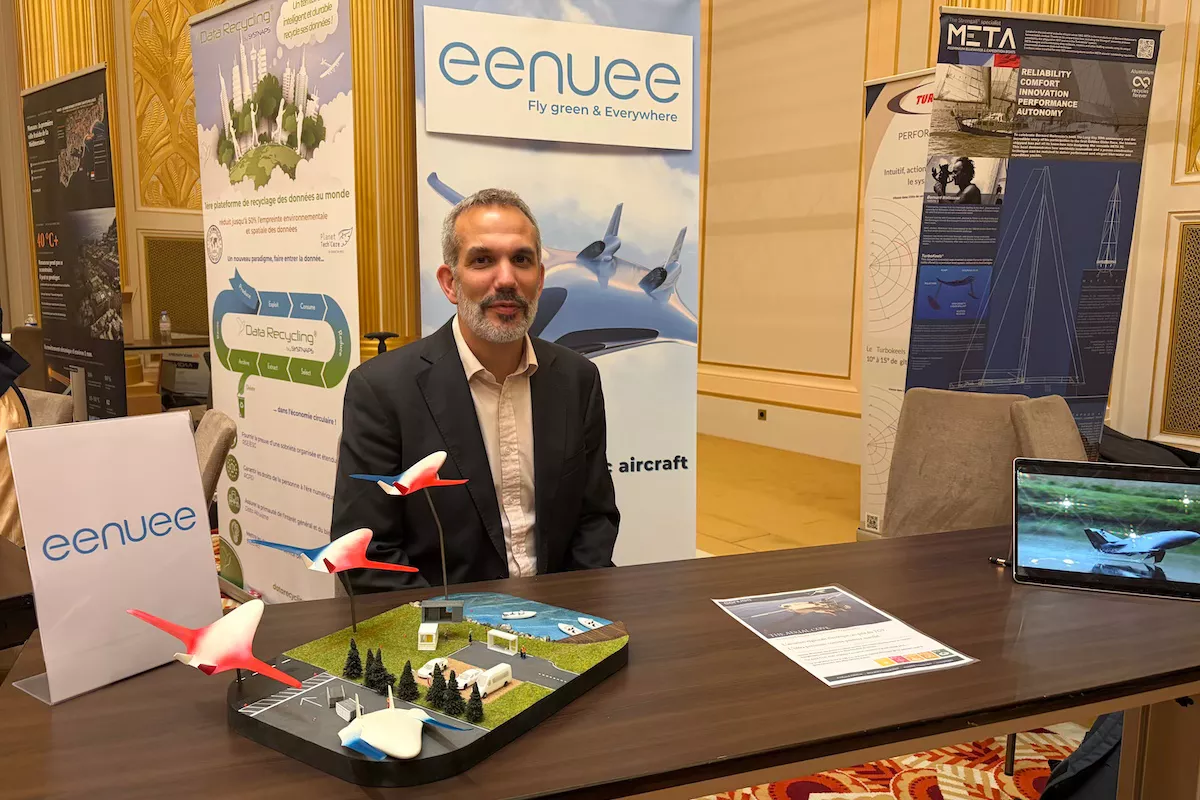
Redefining regional skies: Eenuee’s battery-electric seaplane
The startup favours battery-electric propulsion over hydrogen, opting for solid-state batteries to eliminate flammable liquids. With a prototype targeted for 2031 and a commercial launch planned for 2034 linking destinations like Monaco and Rome, Eenuee aims to redefine regional travel: “Our view is really to create the service of the high-speed train where it will never go.”
Biological breakthroughs: Mycèna’s plastic-degrading fungi
While aviation looks to revolutionise regional transit, biotechnology is tackling one of the planet’s most pervasive pollutants. Mycèna won the jury’s Coup de Cœur prize at EVER Monaco for its innovative plastic-degrading research. Founded by Laureen Mori-Bazzano, Mycèna uses specialised fungi and extracellular enzymes to completely degrade and convert plastic waste into energy. Driven by a lifelong environmental commitment forged during her academic studies in Geneva, Mori-Bazzano developed a microbial process targeting stubborn synthetic polymers. “The fungi can colonise the surface of the plastic and with some extracellular enzyme, it can cut the polymer in smaller units, like monomer, and assimilate this unit in the cell,” she explained to Monaco Life.
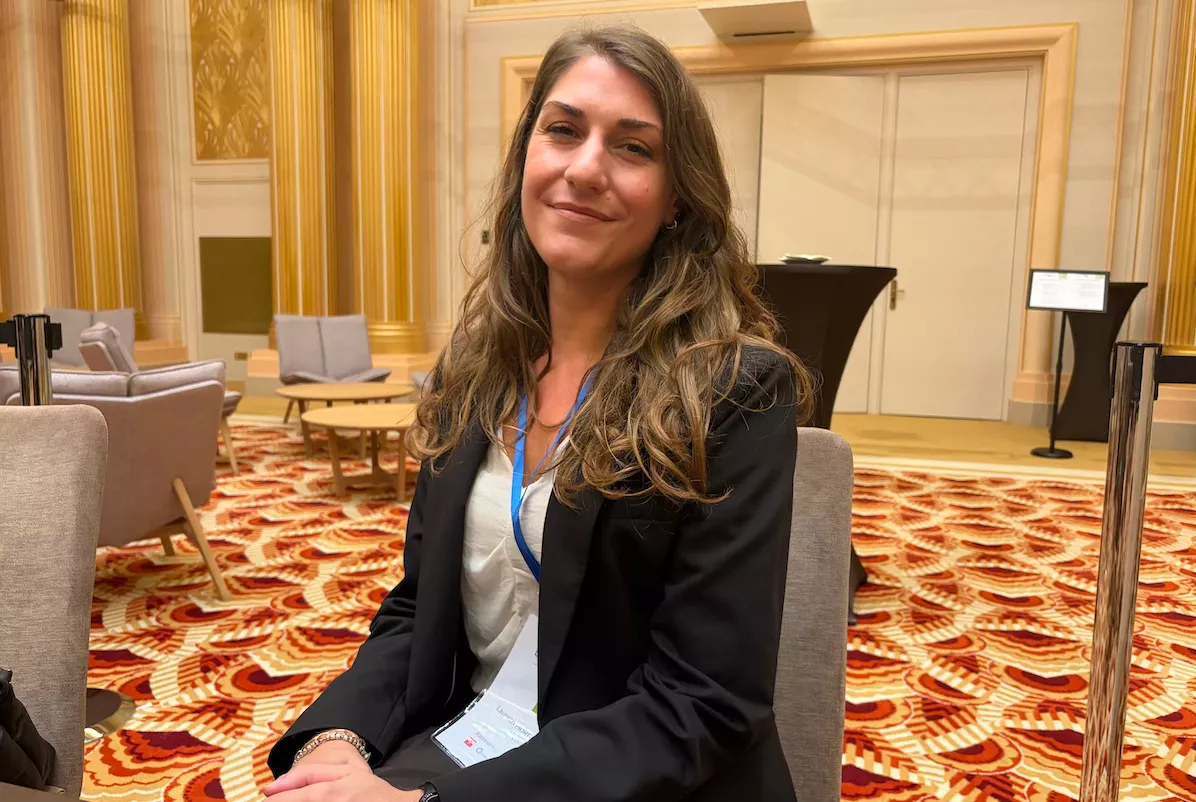
Unlike traditional recycling methods that leave residual microplastics or chemical remnants, Mycèna’s biological digestion achieves total conversion, particularly excelling with polyethylene, the dominant material used in single-use packaging.
While open-water deployment presents control challenges due to the inability to monitor where the microbes travel, the startup’s founder sees immediate, high-impact viability within industrial bioreactors and municipal wastewater treatment facilities, offering a powerful tool for circular waste management.
From sea energy to law: How Monaco’s key sectors are decarbonising
The broader discussions at EVER Monaco highlighted that cutting emissions locally requires cooperation across energy, transport, hospitality, and law.
Astrid Siohan, Director of Urban Heating and Cooling at SMEG, explained how Fontvieille’s thermal network uses the Mediterranean Sea to heat and cool buildings without producing carbon emissions.
“As the name suggests, thalassothermy combines thalasso (the sea) and thermie (thermal energy). We use the ocean as an energy reservoir, drawing purely thermal energy from it to transfer directly into buildings,” she said during the panel ‘Decarbonisation: The Main Priority of Local and Regional Players’.
Meanwhile, high-end hospitality is proving to be a testing ground where luxury leads environmental innovation. As Virginie Cotta, Secretary General of Monte-Carlo SBM, said during the conference: “Indeed, the luxury sector has a real capacity to innovate and a strong power of influence, and I believe that comes into its own when we share our experiences with others across the industry.”
Transport and legal experts also shared how key industries are adapting. Stéphane Lebrun, Managing Director at SNCF, explained that the rail operator relies on its dedicated subsidiary, SNCF Énergie, to tackle the current energy challenge: “The goal of these subsidiaries is to figure out how to procure a rare, costly, and heavily decarbonised energy source at the best price.”
On the legal side, lawyer Adrien Fourmon said that while stricter regulations can feel limiting at first, they push industries to work together toward the same green goals.
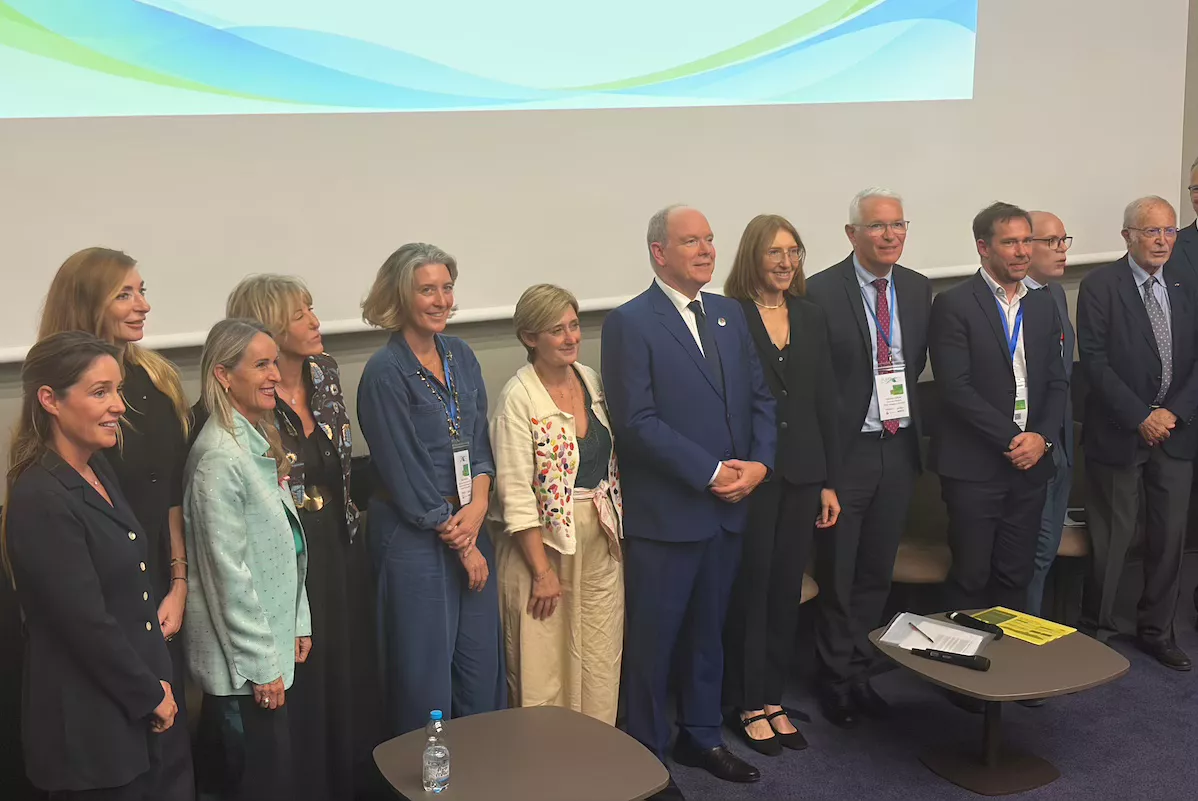
Prince Albert’s call for lasting sustainability
Reflecting on two decades of EVER Monaco, Prince Albert II explained that energy transition requires local alliances between government, business, and citizens, a model driven by Monaco’s National Pact for the Energy Transition.
Warning against viewing technological progress in isolation, he said: “Our guiding conviction is clear: innovation must not be set against the imperative to preserve nature. We must reconcile human progress with the protection of our planet.”
Pointing to young attendees, the Prince urged decision-makers to honour their commitment to a sustainable future, concluding EVER Monaco with a call for lasting action: “I wish us all the most sustainable future possible, for that must remain our ultimate goal: to make everything we do as sustainable as it can be.”
Stay updated with Monaco Life: sign up for our free newsletter, listen to our podcasts on Spotify, and follow us across Facebook, Instagram, LinkedIn, and Tik Tok.
EVER Monaco 2026. Photo credit: Auto Press Club Monaco