

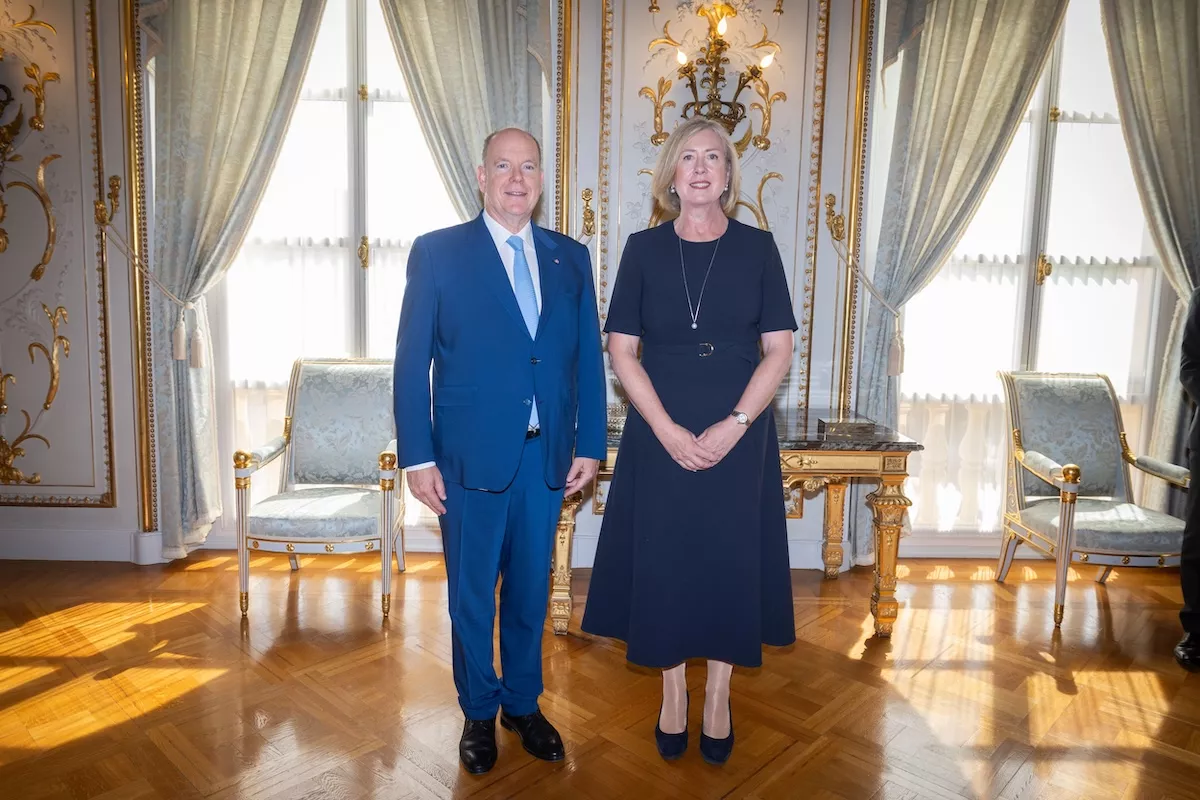
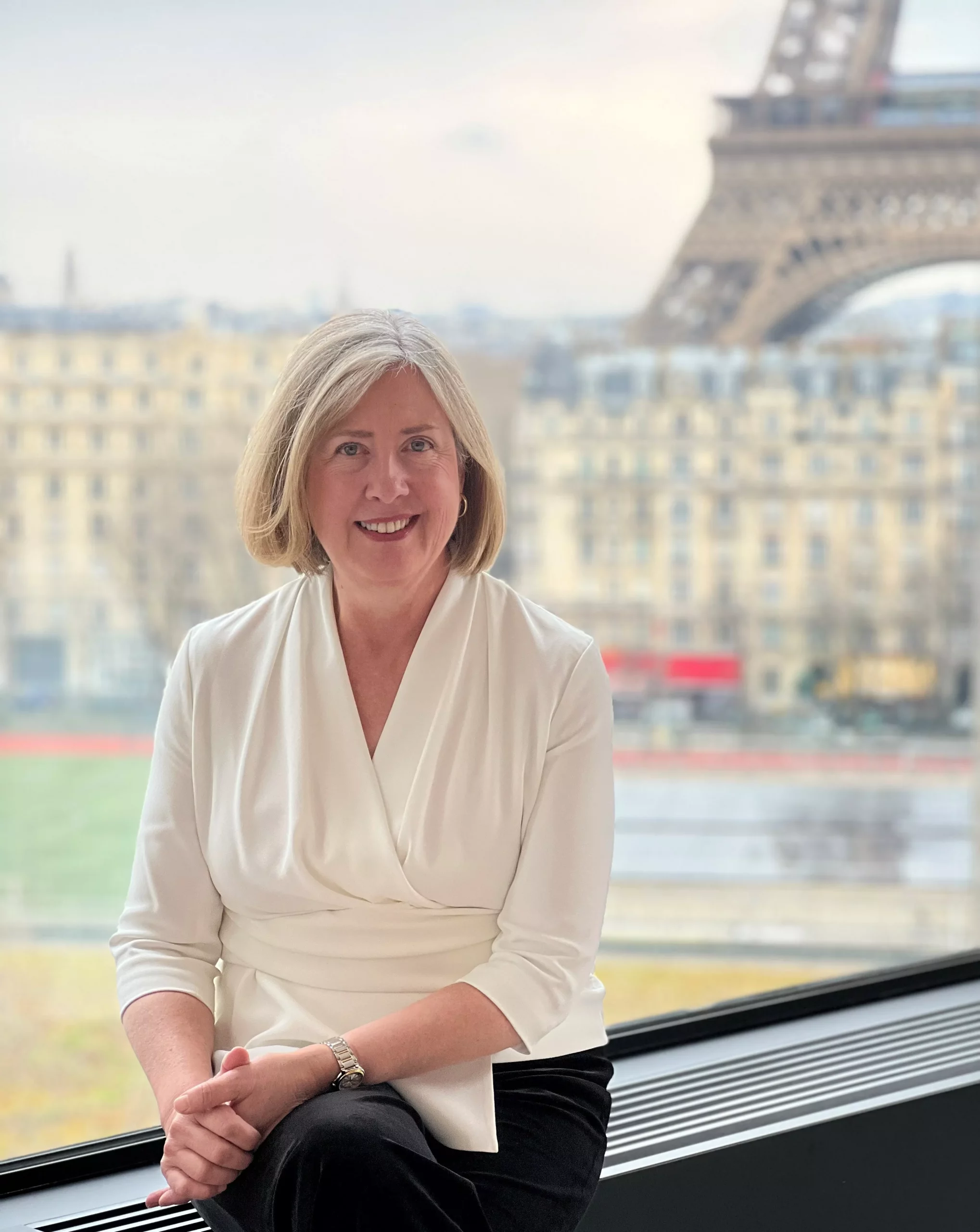
To mark Australia Day on 26th January, Monaco Life Editor-in-Chief Cassandra Tanti spoke with Australia’s Ambassador to Monaco and France, Lynette Wood. Joining the conversation from the Australian Embassy in Paris, with its commanding view of the Eiffel Tower, Ambassador Wood reflects on the evolving role of diplomacy, the deepening relationship between Australia and Monaco, and what it means to celebrate a nation from afar.
“If the world is teaching us anything right now,” she says, “it’s never to take your country’s diplomatic relationships for granted.”
Was becoming an ambassador something you always imagined, or did this path unfold unexpectedly?
Totally unexpectedly. I often call myself the accidental diplomat. It was something I never thought about or considered. I’ve always really enjoyed learning foreign languages and had an interest in language in general. In high school, my teachers would say, “Have you thought about diplomacy?” and I didn’t even know what diplomacy was, frankly.
After university, I went to Japan to teach English, and part of my work was with a regional government’s international relations office. I returned to Canberra, did an MA in international relations, took the public service test, applied for DFAT, and was successful. So I kind of accidentally ended up in DFAT (Department of Foreign Affairs and Trade). 30‑plus years later, it’s been an amazing, diverse career path that I really enjoyed.
You took on the role of ambassador to France and Monaco at the end of 2024. How does a posting like this come about?
Roughly twice a year an expression of interest list is circulated in DFAT. You submit an application, and recommendations are made up the line to the Prime Minister and then the Governor‑General, who formally signs off. It’s not unusual to be resident in one country with non‑resident accreditation to others—so from Paris I also cover Monaco, Algeria, and Mauritania.
What personal qualities do you think matter most in this role?
There’s no one‑size‑fits‑all approach. At the core, you’re appointed to represent Australia’s interests, and that means advocating for Australia and understanding the host country’s priorities so you can translate them back home. You need curiosity, an ability to understand the social, political and economic landscape, and strong communication skills to see and explain opportunities both ways—Monaco to Australia and Australia to Monaco.
In practical terms, what does Australia seek to build or strengthen with Monaco — and with France?
With Monaco, I have so much admiration for how it conducts its international relations. It’s a small population, but in multilateral systems like the United Nations, it’s one country, one vote. And Monaco really leverages that in a very impressive fashion by having clear priorities.
Last year was a great example with Monaco’s focus on the oceans. Being right next to the Mediterranean, Monaco has made ocean health, responding to climate change, and energy transition big priorities. For me as ambassador, that really resonates with Australian priorities too. We’re surrounded by ocean as well — a little bit bigger than Monaco! — but in terms of our commitment to oceans, the ocean treaty, clean oceans, the environment and energy transition, I think there’s so much we can do together. There is a genuine shared agenda around environmental stewardship.
It’s precisely Monaco’s clarity of vision and focus that helps it punch above its weight in international forums. And that’s something Australia appreciates: a partner with defined priorities and the will to pursue them.
There’s also a business and people‑to‑people dimension. When I was in Monaco in September, I saw some really imaginative and innovative Australian businesses based there — from superyacht services to sport industries. Businesses are independent, but sometimes the embassy can help highlight opportunities in each other’s countries. Identifying and supporting those opportunities is an important part of what we do.
With France, the relationship is broader and deeper — covering political cooperation, defence and security ties, trade, culture, science and education partnerships. France is a major power with global reach, and our relationship with France is significant in its own right and within the broader context of Australia‑Europe ties.
Do you think Monaco, as a microstate, has a unique role to play internationally? How do Australians generally view Monaco?
I think people in Australia don’t know Monaco very well, but whatever vision they have, it tends to be positive — beautiful scenery, the Mediterranean lifestyle, sport, yachting. But beyond that, Monaco has a much broader engagement. For example, many people may not know that the Prince Albert II Foundation made a significant contribution during the devastating 2020 bushfires in Australia — including support for Kangaroo Island and koala recovery efforts. That speaks to a foundation with a much more global perspective than many people appreciate. It’s an example of how Monaco engages with global challenges and supports international cooperation beyond its borders.
I also think that part of Monaco’s strength lies in its ability to focus on areas where it can make a distinct impact — like ocean protection, climate action, and sustainable development. That kind of focus, combined with its diplomatic engagement, gives Monaco a unique role in the international community.
What does an average day look like for you as an ambassador?
There’s no typical day. People often think of events, ministerial visits, or going to the Foreign Ministry to raise an issue — and that is a big part of my job. Tomorrow, for example, I will talk to senior officials in charge of the Asia‑Pacific to set out our priorities for the year ahead — what we want to achieve in building France‑Australia relations.
There’s a lot of administration behind it as well. We’ve got a large embassy in Paris with many wonderful staff.
And we assist Australians in difficulty — for example, someone might lose a passport and need an emergency one, or maybe they’re skiing and have an accident and end up in hospital. There’s a broad range of consular support we provide. And then there’s public diplomacy — events that showcase the best of Australia and our culture. For example, we have a screening of My Brilliant Career coming up, in collaboration with people who’ve compiled a great book about Australian cinema.
What is your vision for your three‑year posting as Ambassador to Monaco?
In a nutshell, whenever you arrive as an ambassador, you hope that you leave the embassy and the relationship in a stronger shape than you found it. And of course, you usually arrive to find the embassy and bilateral relationship already in good shape — but there’s always more you can do.
Some things are within your own drive — building networks, increasing understanding and awareness of Australia and what’s important to us. Some of it is about maintaining a pattern of visits in both directions — encouraging ministers and leaders to come to Australia. If you have a leader visit Australia, that’s the absolute best you can achieve, because a leader visit galvanises the whole system. Everyone uses that opportunity to lift the relationship as much as possible.
For example, I’m not aware that Prince Albert is planning a trip to Australia in the near term – but if he were, that would be a wonderful opportunity to deepen business ties, political ties, and specific projects on the environment and the ocean.
It’s also about building a better understanding of each other in the 21st century and finding areas where we can cooperate — whether it’s sustainability, energy transition, or preserving the rules‑based international order.
Of course, you also have to react to events of the day. For example, just this morning we had a ceremony at the embassy in Paris, in parallel with the day of mourning in Australia after the terrible anti‑Semitic terrorist attack that happened in Bondi in December.
There’s always something happening that might shift or reprioritise what you’re doing. But the core remains the same: working together to improve bilateral political ties, people‑to‑people ties, and economic ties.
Australians are known for being friendly — do you find that reputation helps in your role?
Absolutely. Especially at the moment, there’s such a big increase in tourism to Australia, and I haven’t met anyone who’s had a bad experience — which is great. That positive impression of Australians — our openness, curiosity, and friendliness — really helps in building connections and goodwill.
You attended one of the first events for the newly established Australian Association during your visit to Monaco in September? How did it feel to see an official Australian Association created here?
I think it’s fantastic. I was especially impressed by how many non‑Australians were there too. They just wanted to be part of it because Australians are fun to be around, or they have connections to Australia — whether it’s family, business interests, or just a general interest in the country. These associations play such an important role. They help you meet other people from home, stay connected and in touch, and they often take on a dynamic of their own.
Has your post as Australian Ambassador to Monaco and France taught you anything different from, say, being Ambassador to Germany?
What’s really struck me this time is the fact that the world is changing rapidly right now, and it makes you re‑examine your diplomatic friendships and relationships. You can’t take anything for granted. I’ve really felt how important our ties in Europe are — whether it’s with Monaco or with France. Because we share a lot of perspectives on the kind of world we want to live in.
So, I guess the bottom line is: never take these relationships for granted. Always make the most of them, keep them in good shape, get to know each other better, and see opportunities to deepen the relationship wherever you can.
One last question – and it’s a tough one. Personally, I feel like we are allowed to celebrate Australia Day differently here in Europe than perhaps we are in Australia. Would you say that’s a fair feeling?
I can see how excited you are about Australia Day on Monday — and it’s great! I think the fundamental point is: it’s a day when you remember what it is to be Australian — what you appreciate about your country, what you’re proud of as Australians, and what you’re hopeful for in the future. That hasn’t changed.
In terms of the essence of Australia — it’s what it always was. But as we’ve reflected more on our long history, and the contribution that Australia’s Indigenous people make to it, that’s raised questions about how and when we celebrate Australia Day. I think the fundamental idea of it being a day for all Australians hasn’t changed.
Personally, my favourite things about Australia Day are the concert on the 25th, the announcement of the Australian of the Year, and the citizenship ceremonies. You’ll see the Governor‑General, the Prime Minister, ministers and local communities participating in the ceremonies where people are becoming Australian citizens. I think for those people, it must be such an extraordinary moment — whatever it was that brought them to Australia, they’ve now taken that step to become citizens. I think that’s fantastic.
Finally, any last words to the Australians living in Monaco and France?
Happy Australia Day!
Stay updated with Monaco Life: sign up for our free newsletter, catch our podcast on Spotify, and follow us across Facebook, Instagram, LinkedIn, and Tik Tok.
Main photo of Prince Albert II with Ambassador Lynette Wood by Frederic Nebinger, Prince’s Palace Photographer