

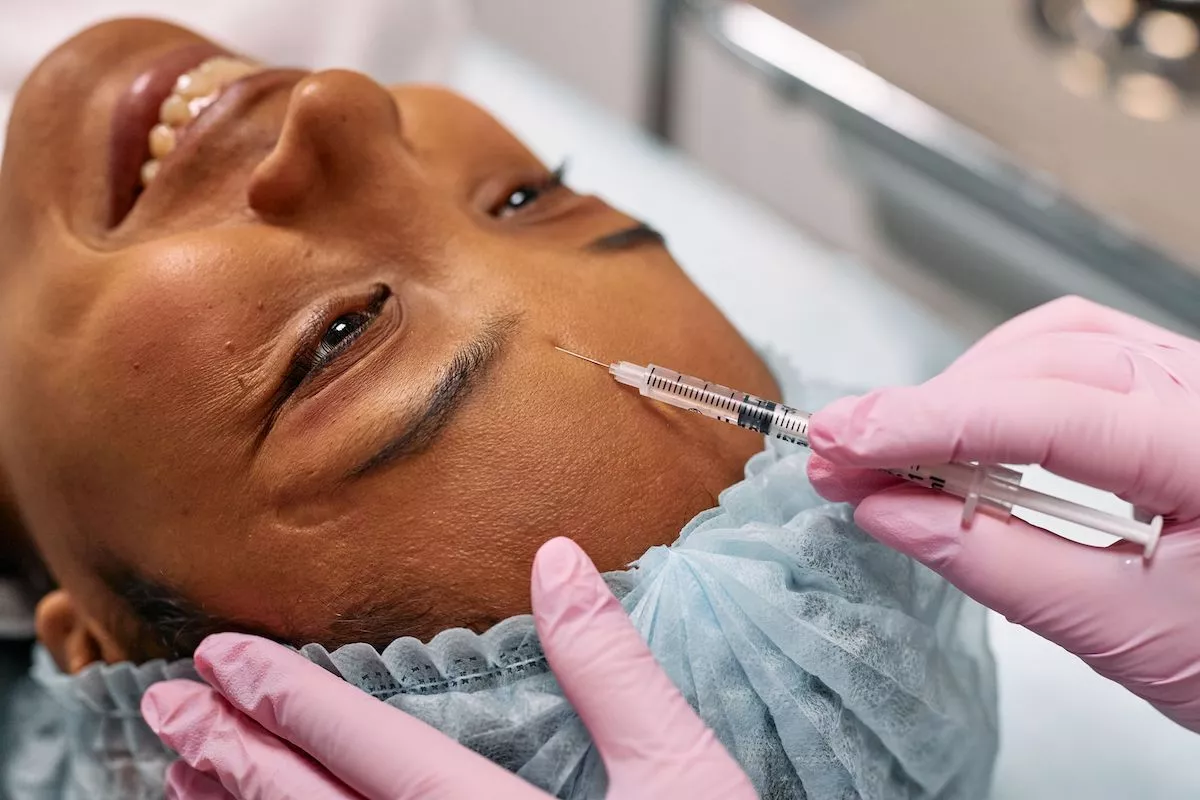
Patients booking injections or laser treatments just across the border in Beausoleil or Cap-d’Ail must now wait at least five days after receiving a quote, under a French decree that also limits how much of a doctor’s working time can be spent on cosmetic procedures.
The decree, published in France’s Journal officiel on Saturday 14th November and in force since the following day, sets out for the first time who may carry out non-surgical cosmetic procedures such as injections and medical lasers, and under what conditions. It covers procedures performed purely to change a person’s appearance, with no therapeutic, functional, reconstructive or diagnostic purpose. Cosmetic surgery is not affected.
A 30 per cent cap on cosmetic work
Aesthetic medicine is not a recognised speciality in France, and the decree treats it as a sideline: cosmetic procedures may only be carried out alongside a doctor’s main speciality and cannot exceed 30 per cent of their working time.
Doctors must declare their cosmetic activity to both their departmental Medical Council and the Regional Health Agency (ARS), and send them evidence of its share of their workload every year. The Medical Council will keep an up-to-date list of doctors practising aesthetic medicine, to be made public, showing which of five areas each doctor is trained in: preventive and anti-ageing treatments, hair removal and hair treatments, the eye area, genital aesthetics and body contouring.
Who can perform treatments
The procedures are now reserved for qualified plastic, reconstructive and aesthetic surgeons, for doctors granted a complementary right of practice, known in France as a DEC, and for doctors with at least five years in their own speciality who have completed approved theoretical and practical training. The content of that training, and any exemptions from it, will be set by ministerial order.
A five-day cooling-off period
Waiting rooms must display the doctor’s diploma or DEC alongside a notice stating that cosmetic treatments are non-therapeutic and rest on the patient’s free and informed choice.
Before any procedure, patients, or parents in the case of minors, must receive an information sheet setting out the skills the treatment requires and its risks, complications and side effects, with a signed copy kept in the medical file. Doctors must also provide a detailed, dated and signed quote explaining how to report serious adverse effects, after which patients must wait at least five days before treatment. The waiting period can be waived for a series of identical treatments the patient has already agreed to with the same doctor.
Consent must be recorded in the patient’s medical file, and doctors must hand over written aftercare instructions. Breaches can lead to suspension and fines.
Phased rollout through 2031
Doctors already practising who meet the conditions for a DEC have until 1st July 2027 to apply for one, and may keep working until the Medical Council rules on their application.
Doctors who have practised aesthetic medicine exclusively for five years or more must show by 31st December 2028 that it accounts for no more than 50 per cent of their working time, and have until 31st December 2031 to reach the 30 per cent limit. Those who have practised it for less than five years must meet the 30 per cent cap by 31st December 2028.
Stay updated with Monaco Life: sign up for our free newsletter, listen to our podcasts on Spotify, and follow us across Facebook, Instagram, LinkedIn, and Tik Tok.
Photo credit: Pexels – Cottonbro Studio