

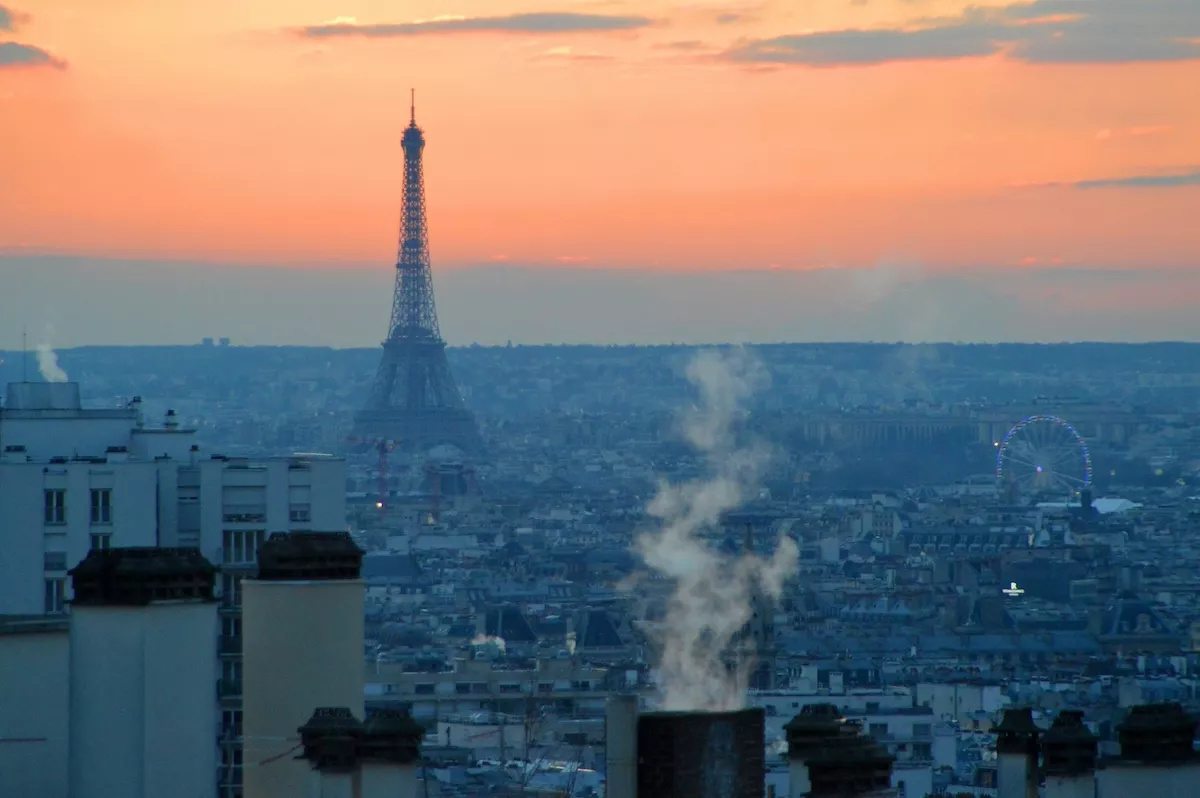
France is decelerating on the road to carbon neutrality, with greenhouse gas emissions declining at a significantly slower rate than required to meet national climate objectives.
Emissions fell by an estimated 1.6% in 2025, nearly three times less than the pace necessary to achieve France’s targets, according to Citepa, the organization mandated to track the country’s carbon footprint.
The sluggish decline marks a continued slowdown from 2024’s 1.8% reduction and stands in stark contrast to the more substantial decreases recorded in 2022 and 2023, when emissions fell 3.9% and 6.8% respectively.
Missing the 2030 target
This “weak reduction in emissions” falls well short of the pace needed to reach 2030 objectives set by the government, Citepa emphasised. France’s updated National Low Carbon Strategy (SNBC-3), the roadmap for achieving carbon neutrality by 2050, requires an average annual reduction of 4.6% through 2030.
At the current rate, France risks missing its climate commitments by a significant margin.
Mixed results across sectors
Results varied considerably across different sectors of the economy. The limited overall reduction was driven primarily by a marked decrease in industrial emissions, down 3.4%, though this occurred against a backdrop of “continuous decline in industrial activity”, particularly in chemicals, cement production and metallurgy.
Agriculture followed with emission reductions linked mainly to a smaller cattle herd, while transport saw decreased fuel consumption in road vehicles.
Building sector emissions declined slightly, related to variations in heating oil and natural gas consumption, but remain far from the level of effort required. Energy sector emissions stayed nearly stable after significant reductions in recent years.
Citepa noted a slight decrease in emissions from electricity generation, already heavily decarbonised through nuclear power and expanding renewables. However, this was offset by an expected increase in hydrocarbon refining linked to a “resumption of activity” in 2025.
Difficult decarbonisation ahead
After encouraging energy conservation following the start of the war in Ukraine, France, like other developed countries, is struggling to tackle sectors that are more difficult or expensive to decarbonise, including cars and buildings.
The French slowdown mirrors figures recently published in Germany, which reduced its own emissions by only 1.5% last year, according to estimates from expert group Agora Energiewende.
The European Union, which aims for a 90% reduction by 2040 compared to 1990 levels, had achieved 37% by 2023.
Climate advocates sound alarm
Responding to the disappointing figures, Anne Bringault, program director at Climate Action Network (Réseau Action Climat), warned: “It is more than time to take seriously the climate risk, but also the geopolitical risk that our dependence on fossil fuels, which are very largely imported, causes us, and for the political class to agree on concrete measures to act.”
Stay updated with Monaco Life: sign up for our free newsletter, catch our podcast on Spotify, and follow us across Facebook, Instagram, LinkedIn, and Tik Tok.
Photo credit: Kizoa Team, Unsplash