

Monaco’s retail sector generated €2.48 billion in 2025 — growing 6.1% at a time when the Principality’s broader economy contracted by 7.6%. But behind that headline figure lies a more revealing story about what the world’s second-smallest country actually sells, and who is buying it.
The single largest slice of Monaco’s retail economy is the category encompassing clothing, watches and jewellery, health and beauty, and leisure — collectively generating €1.15 billion, nearly half of the sector’s entire turnover, according to IMSEE’s latest focus report on retail trade within the Principality. Within that group, it is clothing stores and watch and jewellery retailers that carry the most weight, growing 4.5% in 2025 to maintain their position as the defining commercial identity of the Principality.
That identity is written into the geography of Monaco itself. In Monte-Carlo, which hosts 386 of the sector’s 815 active establishments, nearly 30% of retail businesses are clothing stores and almost 20% are jewellers. The Principality is home to 92 watch and jewellery establishments alone — more than one in 10 of all retail businesses — a density that reflects the spending power of Monaco’s clientele and the concentration of luxury maisons that have long made the Principality a flagship address.
Motor vehicles: a market of its own
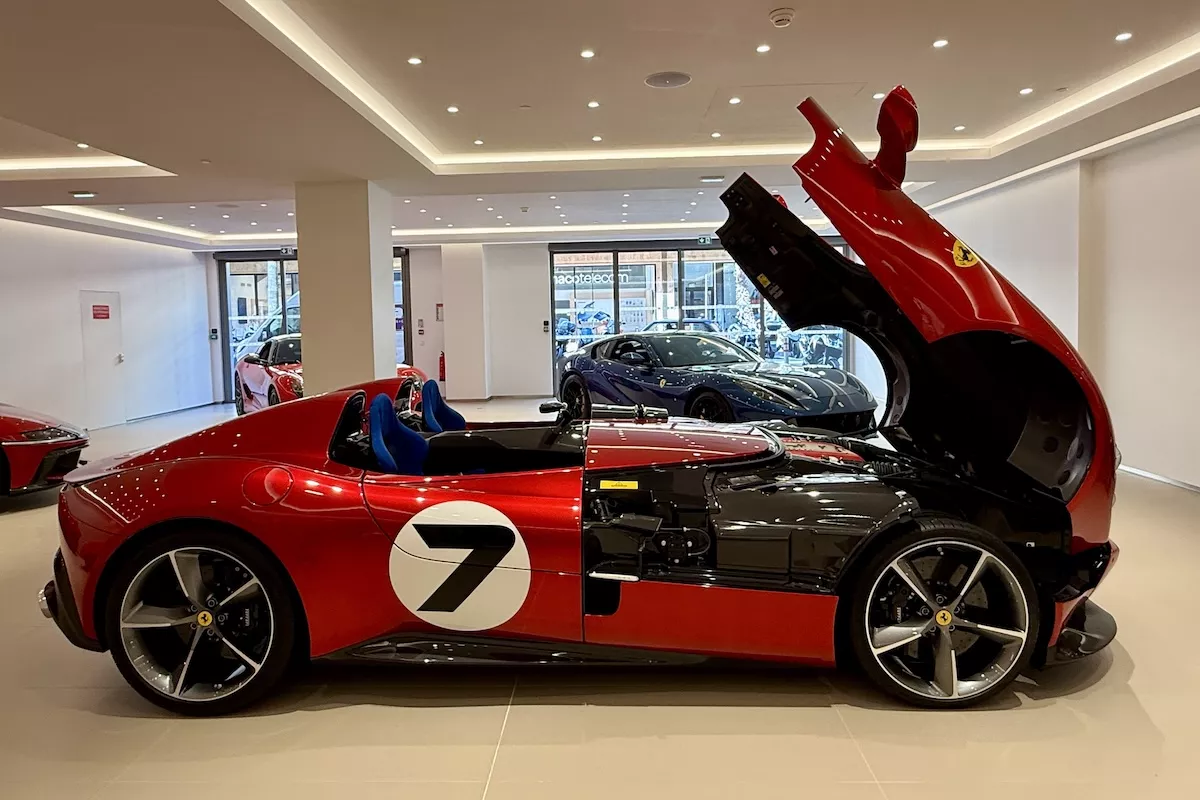
The second-largest retail segment is one that surprises many: motor vehicles, motorcycles and related parts and accessories, which reached €708.7 million in 2025, representing 28.6% of total retail turnover and growing 5.4% year-on-year. For a jurisdiction of roughly two square kilometres, that is a remarkable sum — and a reflection of both the wealth of resident buyers and Monaco’s status as a showcase market for the world’s most prestigious automotive brands.
In Fontvieille, Monaco’s industrial quarter, motor vehicle retail is the second most common business type after clothing, accounting for 15.2% of the district’s establishments.
Cultural and recreational goods: the breakout performer
The standout result of 2025 belongs to a less obvious category. Retail of cultural and recreational goods — covering items such as art, sports equipment and leisure products — posted growth of 36.2%, rising from €121.5 million to €165.5 million. While it remains a smaller share of overall revenue at 6.7%, the scale of that increase points to shifting consumer patterns and perhaps the continued buoyancy of Monaco’s art market and lifestyle retail offer.
Food and fuel: steady but secondary
Non-specialised retail — predominantly food-led supermarkets and general stores — contributed €206.9 million, up 2.2%, while food, beverages and tobacco added €79.6 million, growing 2.4%. Automotive fuel retail, though modest at €26.4 million, grew 16.4%. Together, these categories provide the everyday commercial infrastructure of a resident population rather than the luxury expenditure that defines Monaco’s retail reputation.
The bigger picture
What the IMSEE data makes clear is that Monaco’s retail economy is effectively a tale of two markets: a high-value luxury and automotive sector that generates the overwhelming majority of revenue, and a supporting layer of everyday retail that serves the needs of residents and workers. The former is thriving. In a year when Monaco’s overall economy declined, it was the boutiques, jewellers and car showrooms that kept the sector growing.
Stay updated with Monaco Life: sign up for our free newsletter, catch our podcast on Spotify, and follow us across Facebook, Instagram, LinkedIn, and Tik Tok.
Photo of the Scuderia Monte-Carlo Ferrari dealership by Cassandra Tanti