

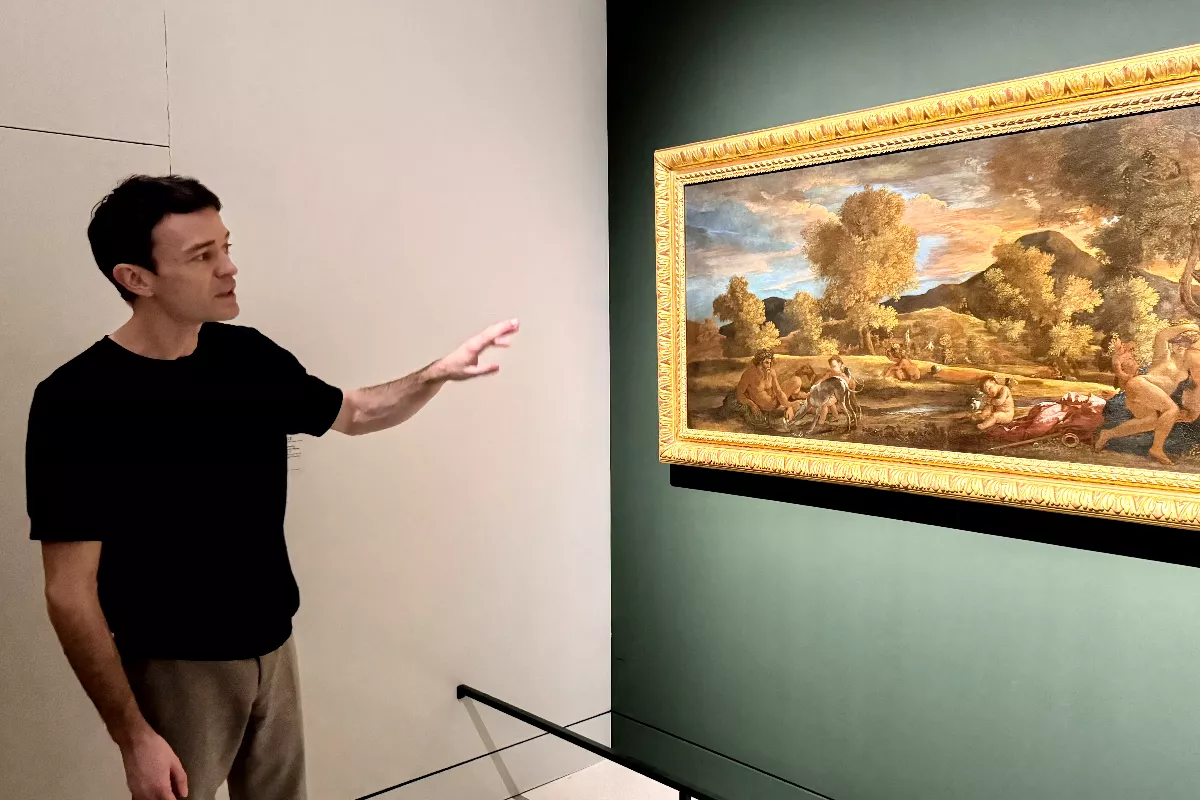
The Nouveau Musée National de Monaco has launched its first exhibition of 2026, bringing together works by nearly 40 contemporary artists alongside classical paintings. Some of the most notable are five canvases by the 17th century French painter Nicolas Poussin.
‘Le Sentiment de la Nature. L’art contemporain au miroir de Poussin – The Feeling of Nature: Contemporary Art in the Mirror of Poussin’ runs at the Villa Paloma from 13th February to 25th May. The show was curated by Guillaume de Sardes, a writer and exhibition-maker who previously presented ‘Pasolini en clair-obscur’ at the same venue in 2024.
Nicolas Poussin, (1594-1665), spent most of his career in Rome despite being French, and is widely regarded as the first painter to treat nature as a subject in its own right instead of a background scenery. The exhibition uses his work to pose the question of whether this approach still resonates today.
From storms to butterflies
The show is divided into six sections: storms and nights, forests and gardens, seascapes and waterfalls, deserts and volcanoes, mountains, and flowers and butterflies. It spans sculpture, photography, video, installation and painting.
Some of most intriguing pieces are built around Poussin’s ‘The Storm’ (1651), an unusual work for a painter better known for ordered landscapes. Where Poussin painted the full drama of lighting striking, Fausto Melotti reduces rain to a single golden line and Pier Paolo Calzolari to a few spare marks. Then, Ange Leccia’s video goes even further, placing the viewer inside the storm rather than in front of it.
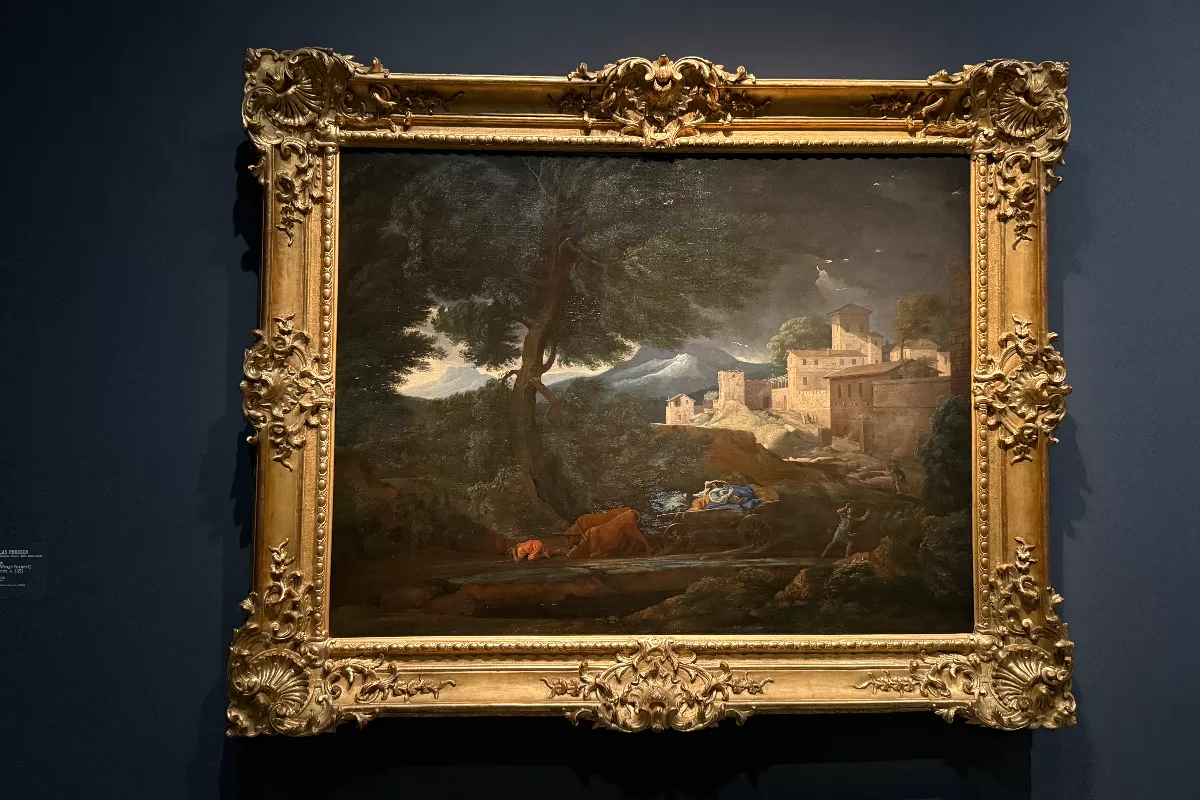
Equally surprising is the forests section, where Thomas Demand built an entire forest out of paper at 1:1 scale and photographed it. Hung alongside Poussin’s ‘Landscape at Grottaferrata’ (around 1626) and Giuseppe Penone’s canvases on which tree forms are traced directly in chlorophyll, it raises a quiet question about what we mean by “natural” in the first place.
Poetry over protest
The exhibition has a clear editorial position. Much contemporary art dealing with nature takes environmental urgency as its starting point. De Sardes has assembled something different — work that finds poetry and wonder in the natural world without ignoring its fragility.
The choice is deliberate: some artists, he argues, restore the sense of poetry in the world rather than simply document its threats. Whether that is a political choice or an aesthetic one is left, deliberately, to the visitor.
View this post on Instagram
Stay updated with Monaco Life: sign up for our free newsletter, catch our podcast on Spotify, and follow us across Facebook, Instagram, LinkedIn, and Tik Tok.
Main photo credit: Monaco Life