

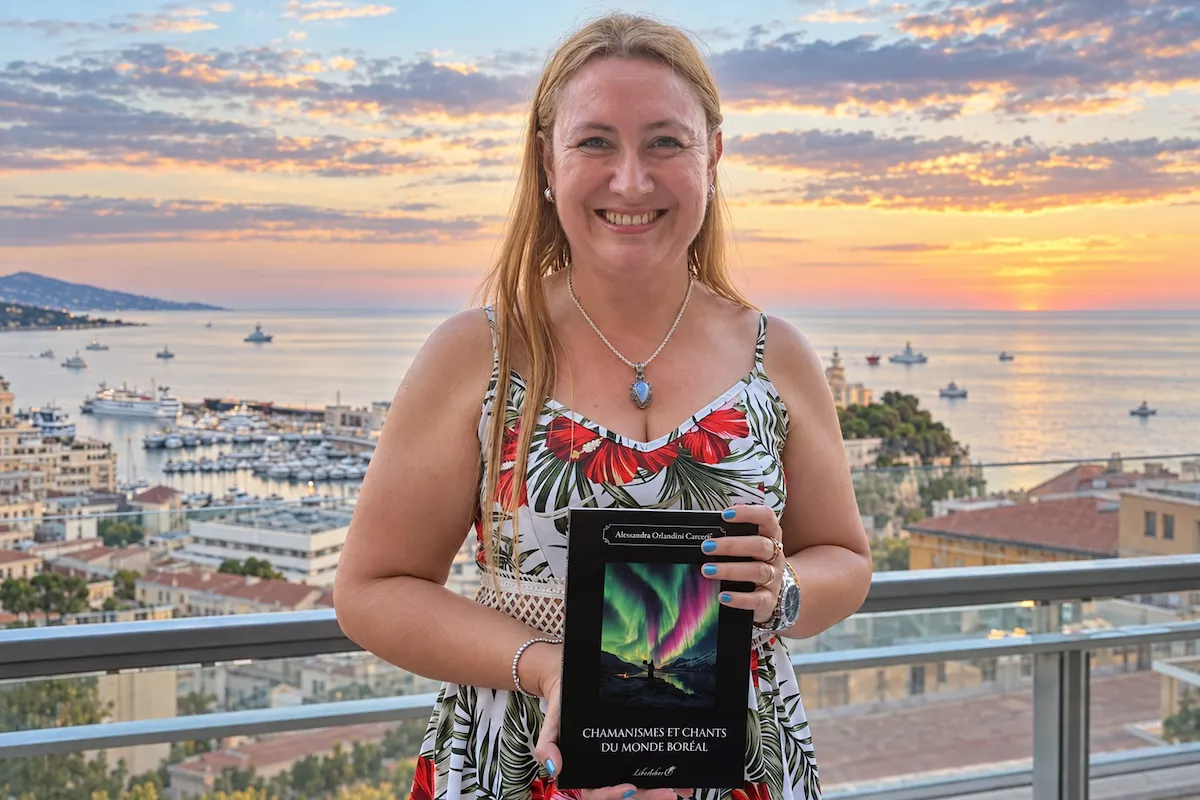
Entitled Chamanisme et magie, Dr. Alessandra Orlandini Carcreff’s lecture on 14th September at Monaco’s Musée d’Anthropologie préhistorique unpacked the deep-rooted reality of Sami shamanism to dismantle New-Age clichés and champion indigenous pre-Christian heritage.
Introduced by museum director Elena Rossoni-Notter, the talk ranged from prehistoric bear-hunting rites to the music of Sibelius and contemporary folk metal, replacing generic mysticism with the grounded, hard-fought reality of Sami spiritual heritage.
Opening the sacred cosmos
Museum director Elena Rossoni-Notter opened the evening with an introduction of Dr. Alessandra Orlandini Carcreff’s recent work, saying: “I completely devoured her recent book, Chamanisme et Magie, which is a well-sourced and richly argued exploration of travel literature, mythologies, and epics spanning Northern Europe, Lapland, Finland, and global traditions.”
Carcreff herself started by clearing away shallow New-Age myths, warning against the trap of mixing unrelated cultures together. Rather than forcing false links between different belief systems, she explained shamanism as a structured, three-level system: an upper world of gods, a middle world for humans, and an underworld of ancestors.
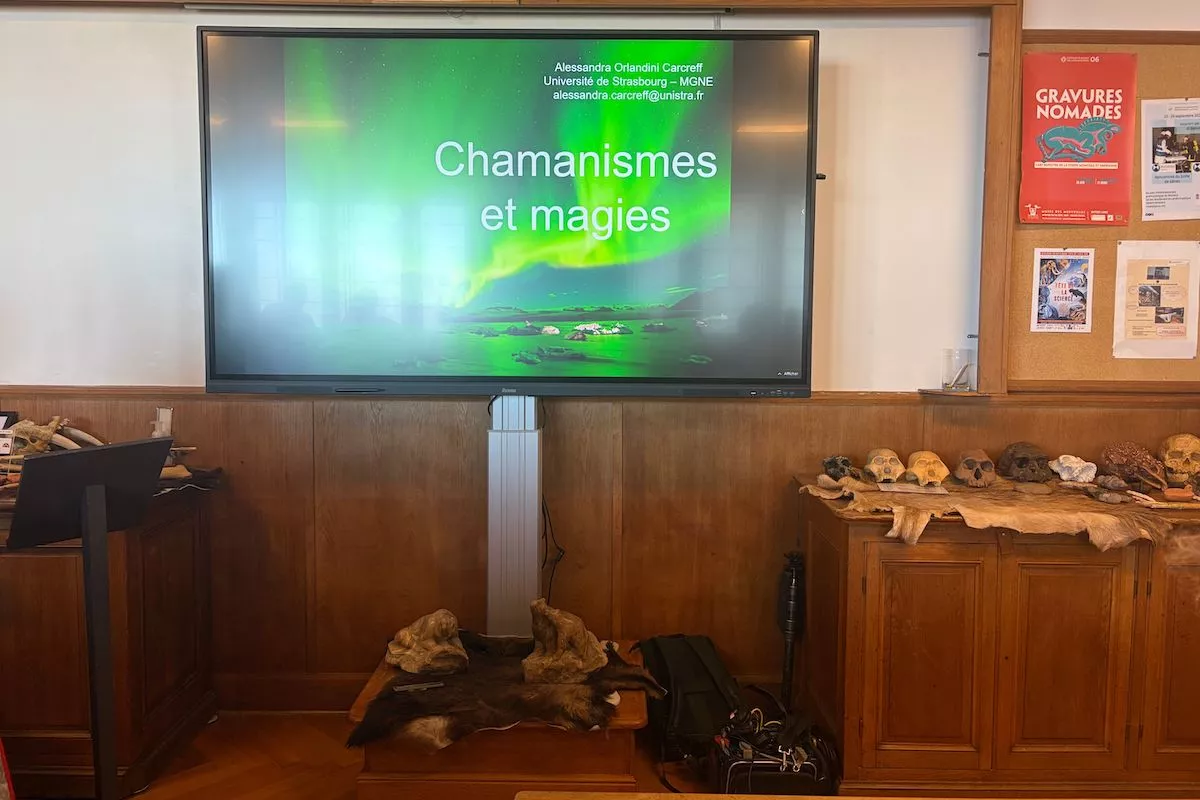
To bridge these worlds, the shaman entered deep trances. While historical figures like the traditional Sami noaidi faced heavy suppression centuries ago—prosecuted by Nordic authorities and churches under the charge of ‘sorcery’ for keeping their sacred drums and rituals alive—the tradition’s core continues today through a modern cultural renaissance.
“Whether chosen by a calling, a personal search, or family tradition, an initiate endured extreme hunger, thirst, and freezing cold before going through a ritual of symbolic death and rebirth. Once reborn, the shaman acted as the community’s healer, judge, historian, ceremony leader, and guide for lost souls,” explained Carcreff.
Drums, bears, and ancient amber routes
To accomplish these spirit journeys, the shaman relied on heavy regalia, masks, and massive ceremonial drums constructed from sacred birch wood and stretched reindeer hide painted with a full cosmogony of stars and forests. Carcreff illustrated how these practices are deeply tied to the living landscape, explaining: “The most sacred hunt for the Sami was the bear hunt—an encounter with an ancestral figure where hunters must appease the animal with deferential prayers, addressing it tenderly as ‘my little bear, my handsome and valiant bear’ while asking it to close its eyes before the strike.”
Tracing these traditions backward along ancient amber and tin trade routes that once linked the Far North directly to the Mediterranean and Etruscan workshops, Carcreff connected universal elements of water, fire, and blood across diverse ancient landscapes. This shared thread appears everywhere from the sacred hearth of Rome’s Vestal Virgins and the multi-use threshold space of the Finnish sauna to mythic hero-smiths like Finland’s Ilmarinen or Greece’s Hephaestus, and psychopomp guides like Odin, Anubis, and Hermes.
From 19th-century revivals to folk metal
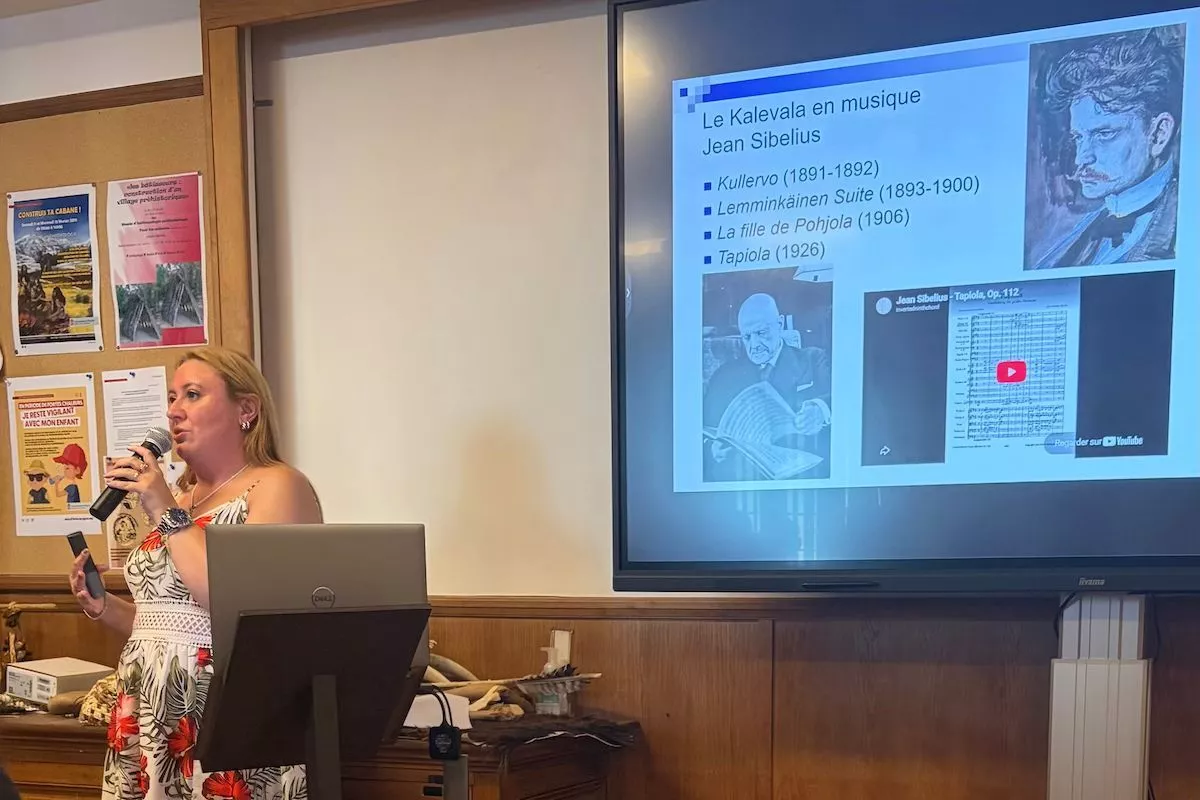
In the 19th century, this ancient heritage experienced a romantic revival through Finland’s national epic, the Kalevala, which inspired artists like painter Akseli Gallen-Kallela and composer Jean Sibelius. Today, that northern echo lives on—from the deep folk rhythms of bands like Wardruna to pop culture touchstones like the Northuldra in Disney’s Frozen (“We are the Northuldra, we are the people of the sun…”).
As Carcreff said: “This isn’t just dusty folklore: for the Sami people, reclaiming these pre-Christian roots is a powerful act of political and cultural survival after centuries of forced Christianisation.”
The hidden Sami heart of Disney’s Frozen
Nowhere does this ancient indigenous resonance break into modern mainstream consciousness quite like in Disney’s Frozen franchise. Carcreff explained that Disney films have always operated on a dual frequency, offering a light-hearted layer for children while embedding deep cultural histories for those trained to look closer. In the production of Frozen 2, Disney animation teams conducted extensive field research across Norway, studying local geography and traditional garments while officially engaging and thanking the Sami community. The result is the creation of the Northuldra, a nomadic, reindeer-dependent fictional tribe whose spiritual framework, regalia, and deep communion with nature mirror Sami culture.
“Even the film’s rolling trolls find their structural inspiration in seiddis—sacred, peculiarly shaped Sami standing stones where offerings were historically left to local spirits,” said Alessandra, adding: “Most remarkably, the hypnotic, pulsing vocal harmonies woven into the soundtrack directly adapt the yoik, the traditional Sami chant used by shamans to cross the threshold into trance.”
For the researcher, even when filtered through Hollywood’s commercial lens, these mainstream narratives serve as an unexpected vessel carrying genuine northern magical memory straight into contemporary global culture.
Stay updated with Monaco Life: sign up for our free newsletter, listen to our podcasts on Spotify, and follow us across Facebook, Instagram, LinkedIn, and Tik Tok.
Dr. Alessandra Orlandini Carcreff presenting her new book ‘Chamanisme et magie’. Photo credit: Virginia D’Umas