

France is heading for one of its smallest wine harvests in three decades after record summer heat, drought and shrinking vineyard areas reduced production across several of the country’s principal wine regions.
The Ministry of Agriculture’s statistical service, Agreste, estimates that France will produce 33.9 million hectolitres of wine in 2026 – the equivalent of approximately 4.5 billion standard bottles.
That would represent a decline of 6% from last year and 17% from the average recorded between 2021 and 2025, marking France’s third consecutive weak harvest.
Heat cuts into promising harvest
Conditions earlier in the growing season had pointed towards a more favourable vintage. However, successive heatwaves and a shortage of rainfall accelerated ripening, dried out grapes and reduced yields.
Harvesting consequently began unusually early across much of France, following a pattern also recorded in other European wine-producing countries.
The damage follows France’s hottest summer on record. Scientists have warned that human-driven climate change is increasing the frequency and severity of extreme heat and drought.
Champagne is among the hardest-hit regions, with production expected to fall 49% from 2025 and 47% below the five-year average.
Not all bad news for the 2026 vintage
Although volumes are sharply lower, early indications suggest that the quality of the surviving grapes may offer producers some consolation.
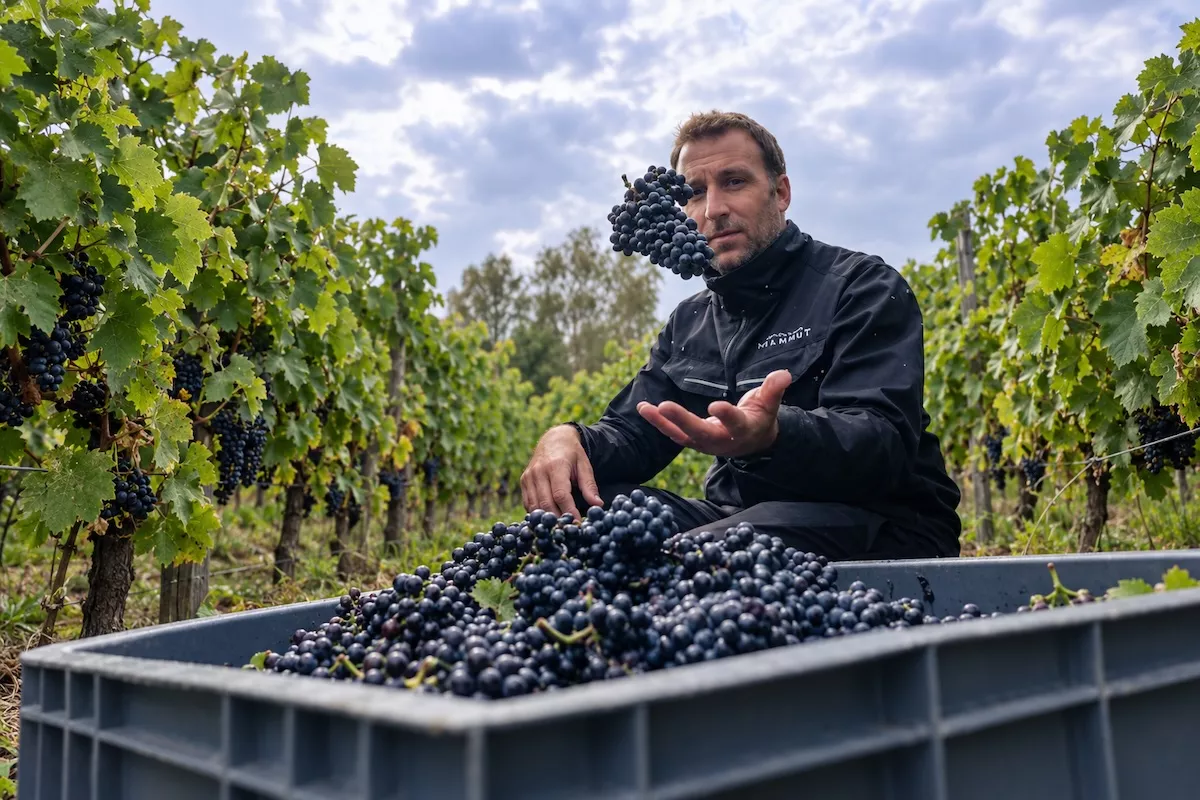
Maison Telmont, based in Damery in the Champagne region, began harvesting on 12th August – the earliest date in the house’s history – after spring frost, intense heat and drought reduced its crop.
The heat accelerated sugar accumulation, with grapes exceeding a potential alcohol level of 12% as they entered the press. Cooler nights helped preserve acidity, while disease pressure remained low and the harvested fruit was reportedly in very good condition.
“The 2026 vintage is showing considerable richness and aromatic complexity, despite the testing climatic conditions experienced by the vines,” said Telmont cellar master Brice Bezin. “The harvested grapes, with their remarkable sugar concentration and preserved acidity, should produce wines that are rich, structured and expressive.”
It is an early assessment, with the full quality of the vintage only becoming clear following vinification and ageing.
A wine industry under pressure
The climatic damage is compounding a structural contraction across the French wine industry. The area under production has fallen by 2.5% in a year as growers remove vines in response to oversupply and declining demand.
Domestic wine consumption is now at its lowest level in more than 60 years, reflecting changing tastes, health concerns and pressure on household spending. Producers have also faced disruption in export markets, including tariffs imposed by the United States.
France remains the world’s second-largest wine producer behind Italy and the largest exporter by value. However, the combination of lower demand, shrinking vineyards and increasingly volatile growing conditions is placing sustained pressure on one of the country’s most important agricultural industries.
The French government has announced an emergency support package worth more than €1 billion for farmers affected by this summer’s heatwaves and drought.
Monaco Life is written by qualified journalists, writing original content. Sign up for our free newsletter, listen to our podcasts on Spotify, and follow us across Facebook, Instagram, LinkedIn, and Tik Tok.
See also:
Photo source: Maison Telmont