

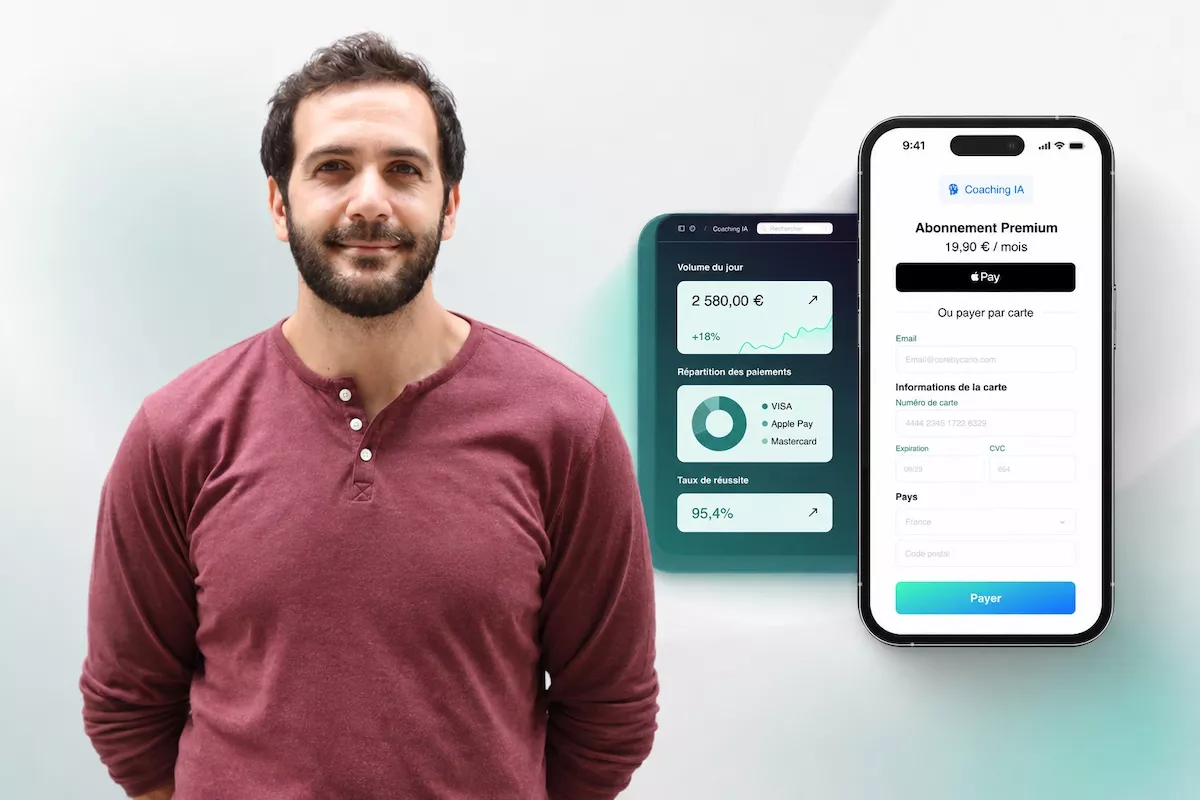
When Carlo launched in Monaco in 2019, its founders were not setting out to build an online payment system. They were creating a cashback application designed to encourage people to shop locally. But running the platform meant confronting a problem that had frustrated Monaco businesses for years: accepting payments online in the Principality was far more difficult than it was in neighbouring France or elsewhere in Europe.
International platforms could not simply be connected to a Monaco business. The number of authorised providers was limited, smaller merchants were often unable to meet their requirements, and navigating the regulatory and technical system required specialist knowledge.
Over several years, the team behind Carlo was forced to solve each of those problems for its own platform. That experience ultimately enabled the company to create Core, which Carlo CEO Antoine Bahri describes as Monaco’s first locally developed online payment solution dedicated to Monégasque businesses.
“We had to face those issues constantly,” Bahri tells Monaco Life, “so we developed a solution specifically for Monaco.”
The challenge hidden behind Monaco’s borders
The first hurdle was regulatory. Payment institutions operating in the European Economic Area can generally obtain a licence in one participating country and use passporting arrangements to offer services across the wider market. Monaco, however, is not part of that system.
“Most payment institutions register in certain countries, including Ireland, the Netherlands and Lithuania, where obtaining a licence can be easier or the approach is considered more modern and less conservative,” explains Bahri. “They can then operate in France, Italy and the rest of the EU. However, because Monaco is not in the EU and its agreement is with the Bank of France, only payment providers registered with the Bank of France can operate in Monaco.”
That drastically reduces the number of companies available to Monaco merchants. Those that do operate in the Principality may focus on large clients, particular industries or businesses processing substantial payment volumes.
For an independent retailer or a start-up wanting to add a payment page to its website, the minimum transaction volumes demanded by some providers can be prohibitive. Others may consider the Monaco market too small to pursue.
This is why a business in France or the UK might be able to connect a payment platform and begin selling relatively quickly, while a Monaco company can discover that the same option is unavailable only after it has built its website or application.

Carlo was forced to master the payments system
Carlo encountered these barriers while developing its cashback application.
The platform needed to process purchases and distribute payment flows across a growing network of merchants. That required its founders to understand not only how payments were authorised, but also how funds could be transferred to Monaco bank accounts, how different payment methods could be integrated and how the service could comply with the applicable French regulatory framework.
“The payments sector is very specific,” says Bahri. “It is an entire world in itself, and we learnt a great deal about it while building Carlo.”
Carlo worked with Lemon Way, a French payment institution specialising in marketplace businesses. The relationship gave the company access to payment infrastructure, but Carlo still had to build the technology and operational systems needed to manage its own network.
Today, Carlo works with more than 800 merchants. Handling payments across that network required the company to create an infrastructure capable of processing transactions and distributing funds reliably.

Security could not come at the expense of simplicity
Solving the regulatory problem was only one part of the challenge. Carlo also had to make payments secure without creating a cumbersome process.
“When you introduce a security system such as 3D Secure, you have to ensure that the customer journey remains frictionless,” says Bahri. “You do not want the payment process to become such a hassle that the customer has to complete too many validation stages. If there is too much friction, the customer will abandon the purchase.”
The company worked with specialists in Monaco on systems security and GDPR compliance. Bahri says the Principality’s established banking industry made it possible to find companies accustomed to handling sensitive personal and financial information.
“Monaco is well prepared in this regard because it has banks that handle highly sensitive personal and financial information,” he says. “From a very early stage, we were able to find people who could guide us through these issues and help us implement appropriate security measures around payments.”
Each transaction processed through Carlo also helped the company understand how customers behaved, how suspicious activity could be identified and where limits or additional verification were needed.
Monaco Taxi became the decisive breakthrough
Once Carlo had established a functioning payment infrastructure, other Monaco businesses began taking notice. By 2021 and 2022, companies were approaching the team for help implementing payment systems similar to Carlo’s. The requests revealed that its internal solution could address a much wider problem.
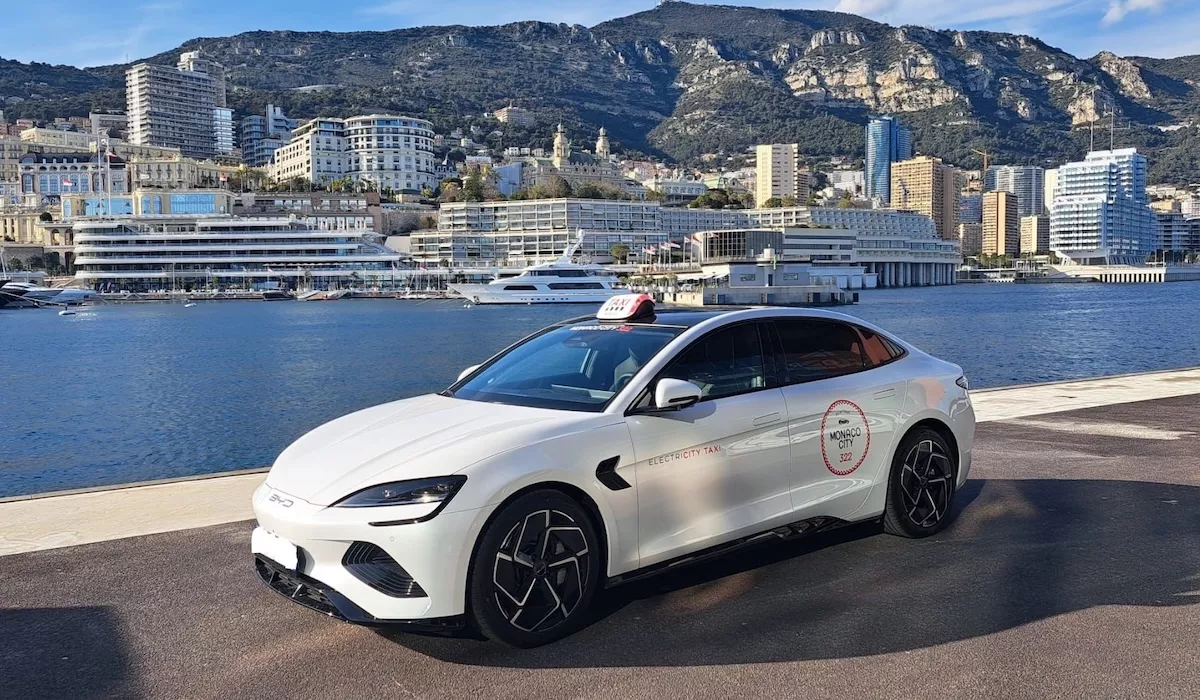
The turning point came in 2024, when Carlo began building a tailored payment system for Monaco Taxi. The project took the infrastructure developed for Carlo and applied it to a separate Monaco service. The resulting payment solution launched in April 2025, allowing customers to pay for taxi journeys digitally. It proved that the technology could work beyond Carlo’s own cashback platform.
“That’s when we decided to turn it into a separate product and launch Core,” says Bahri. “It only took us about six months – because the infrastructure was already there.”
The breakthrough was therefore not a single technological invention. It was the culmination of several years spent solving Monaco’s regulatory, banking, security and customer-experience problems one at a time.
Turning a tailored solution into two products
Core was created with two principal services. Core PayLink allows a business to send a customer a payment link without building a complete e-commerce website. The merchant can track the transaction and receive confirmation when it has been completed, while the customer can pay using Visa, Mastercard or Apple Pay.
The product now has more than 60 clients, including retailers, concierge companies and car and limousine services.
It is particularly useful during events such as the Monaco Grand Prix, when customers may want to order flowers, reserve a service or purchase a product before arriving in the Principality.
Core Checkout provides a payment page that can be integrated directly into a website or application. It is aimed partly at the start-ups establishing projects in Monaco that need to process payments or operate digital marketplaces.
Apple Pay reveals how quickly payment habits are changing
Building a Monaco-specific solution also means responding to the habits of an unusually international customer base. Many Monaco consumers travel frequently and expect to use the same payment methods they rely on elsewhere. Yet not every provider authorised to operate in the Principality offers those options.
Carlo introduced Apple Pay in February 2026. According to Bahri, around 20% of its users adopted it within the following few months. The company is now considering Wero, a European digital payment system supported by a group of banks, along with direct bank payments using open-banking technology.
“We know that we need to adapt continuously,” says Bahri. “We are also working on introducing direct debit through open banking, allowing customers to register their bank accounts and make payments with less friction.”
Why Monaco became the ideal testing ground
Monaco’s unusual regulatory position created the original problem, but its size helped Carlo solve it. With merchants, customers, financial specialists and government departments concentrated in a small area, feedback came quickly and the technology could be adjusted in response, while the Principality’s international population brought experience of payment products used in other markets, showing what customers expected of a modern system.
“It is a particularly interesting place to use as a laboratory. For us, it was the best possible testing ground,” said Bahri.
From in-house fix to commercial product
Carlo has since expanded into Aix-en-Provence and Bordeaux, and the technology developed in Monaco is now offered through Core Ecosystem, a white-label payment and rewards platform for resorts, shopping centres and territories. Core exists because Carlo’s founders had to understand Monaco’s payment problem in order to build their original platform, and the system they built for themselves, refined across hundreds of merchants and proved through Monaco Taxi, is now a service for the wider business community.
Stay updated with Monaco Life: sign up for our free newsletter, listen to our podcasts on Spotify, and follow us across Facebook, Instagram, LinkedIn, and Tik Tok.
Main photo of Carlo CEO Antoine Bahri