

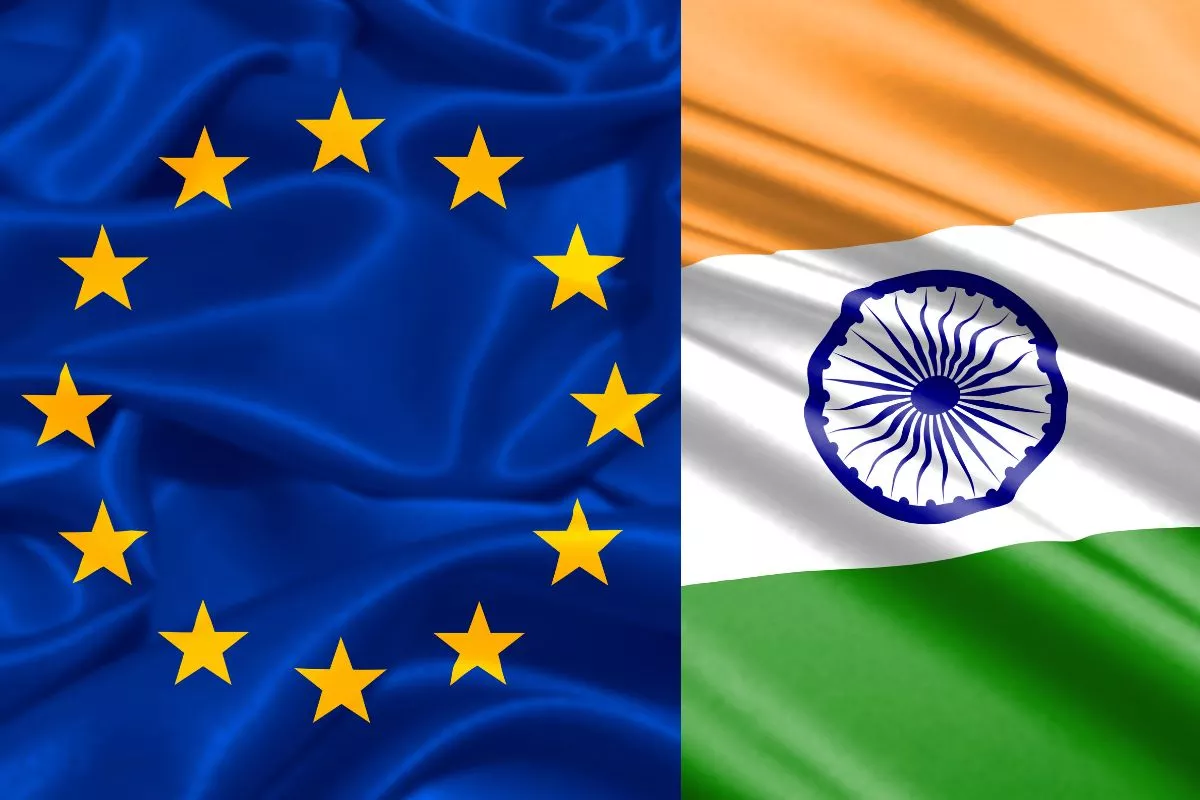
India and the European Union signed a comprehensive free trade agreement on Tuesday, creating a trading bloc of two billion people after negotiations spanning more than 20 years.
Prime Minister Narendra Modi called it the “mother of all deals” at a signing ceremony in New Delhi with European Commission President Ursula von der Leyen and European Council President Antonio Costa. The agreement eliminates or reduces tariffs on almost 97% of European exports, saving up to €4 billion annually in duties, according to the EU.
Strategic partnership amid global tensions
Both sides framed the agreement as a buffer against economic pressure from the United States and China. “By combining these strengths, we reduce strategic dependencies, at a time when trade is increasingly weaponised,” von der Leyen said.
Modi emphasised the deal’s scale, noting it “represents about 25% of global GDP, and one-third of global trade.” Von der Leyen described it as “the most ambitious India had ever signed,” giving European companies a “first mover advantage” in the world’s most populous nation.
Major tariff reductions
Under the agreement, tariffs on cars will gradually fall from 110% to as low as 10%, while duties on wines drop from 150% to 20%. Tariffs on processed foods including pasta and chocolate, currently at 50%, will be eliminated.
European firms will gain access to Indian financial services and maritime transport markets. Von der Leyen said she expects exports to India to double, with the EU gaining “the highest level of access ever granted to a trade partner in the traditionally protected Indian market.”
For India, the deal will boost textiles, gems, jewellery, leather goods and services sectors, Modi said.
Sensitive sectors excluded
Sensitive agricultural products including beef, rice and sugar were excluded from the agreement. These sectors sparked farmer protests in Europe when included in the EU’s trade deal with South American bloc Mercosur.
Negotiations continued until Monday evening, with final discussions focusing on the impact of the EU’s carbon border tax on steel, according to sources familiar with the talks.
Growing bilateral trade
Bilateral trade in goods reached €120 billion in 2024, an increase of nearly 90% over the past decade, according to EU figures. Trade in services totalled a further €60 billion.
Germany’s finance minister Lars Klingbeil welcomed the agreement, saying it “creates new opportunities for growth and good jobs in Europe and India alike while deepening the strategic partnership with the world’s largest democracy.”
Additional agreements expected
India and the EU are also expected to conclude agreements facilitating movement for seasonal workers, students, researchers and highly skilled professionals, as well as a security and defence pact.
“We are not only making our economies stronger—we are also delivering security for our people in an increasingly insecure world,” von der Leyen said.
India is projected to become the fourth-largest economy this year, according to International Monetary Fund forecasts. New Delhi has been working to reduce its dependence on Russia for military hardware by diversifying imports and expanding domestic manufacturing, while Europe seeks to reduce reliance on the United States.
Von der Leyen and Costa attended India’s Republic Day parade on Monday as guests of honour before the trade agreement signing.
Stay updated with Monaco Life: sign up for our free newsletter, catch our podcast on Spotify, and follow us across Facebook, Instagram, LinkedIn, and Tik Tok.