

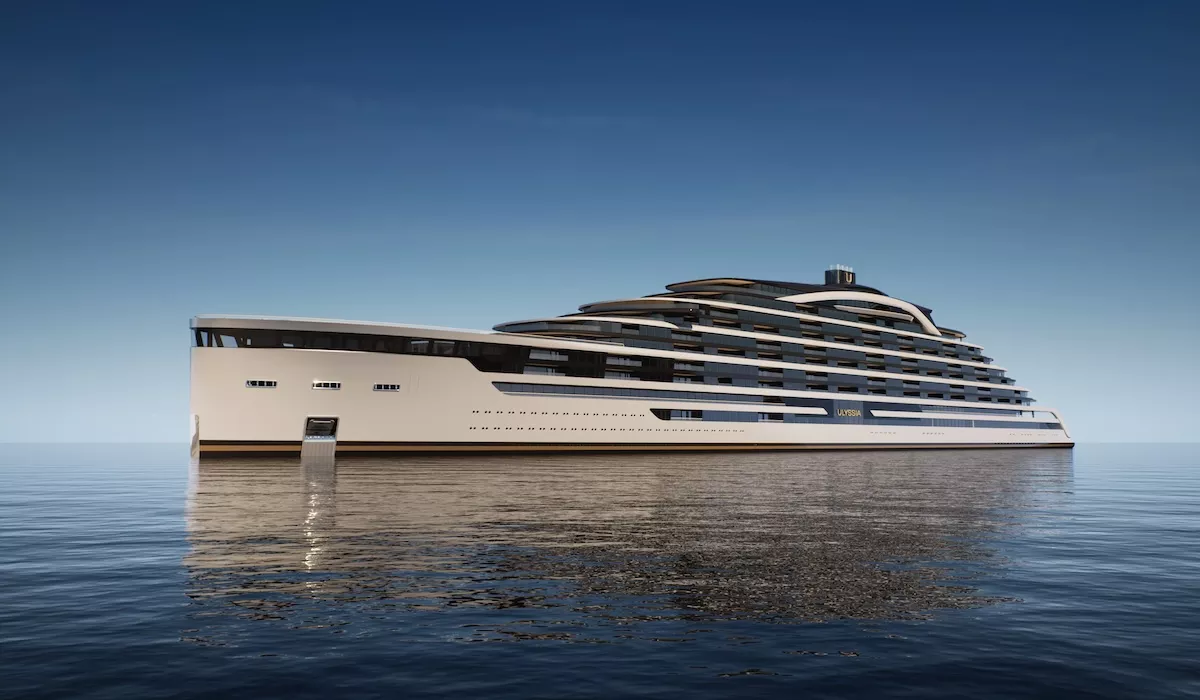
It will stretch 323 metres from bow to stern, become the world’s largest residential yacht and house a few hundred of the world’s wealthiest people in residences costing between €10 million and €100 million. But money alone will not secure a place aboard, and no single nationality will be permitted to dominate the community. In a striking departure for a project of this scale and pedigree, Ulyssia will be built in China.
Ulyssia is the residential superyacht conceived as a permanent floating home for the ultra-wealthy. On the opening morning of the Monaco Yacht Show, I sat in the private Monaco home of its founder, Frank Binder — himself the project’s principal investor and the buyer of the first penthouse on board — as he and lead architect Espen Øino set out where the reportedly €2 billion-plus vessel will be built, and who will be allowed to live aboard.
China Merchants Cruise Shipbuilding (CMCS) in Shanghai has now secured the build, with the definitive contract due to be signed on 12th November 2026, the point Ulyssia regards as the formal start of construction. Delivery is planned for 2031, followed by a maiden voyage from Monaco.

Why China
The most consequential decision has been the move from Meyer Werft, the German builder previously attached to the project, to CMCS in Shanghai. “It comes down to two things: the quality and the capabilities of the shipyard,” Binder said. “It was a big step that we evaluated very carefully, and since then it has been proven to be the right decision.”
One capability set the yard apart: CMCS will provide a purpose-built facility large enough to accommodate the entire vessel. “They offer something very few other shipyards can – we can finish the exterior fairing and the interior outfitting within a climate-controlled facility,” Binder said. “A climate-controlled shed of this size does not exist anywhere else in the world.”
This is billed as a first-of-its-kind marriage: Chinese scale, technology and speed wedded to European design and craftsmanship. CMCS will build the vessel, supported by its Finnish engineering subsidiary Deltamarin, while the interior remains in the hands of Italy’s FM Architettura, with specialist outfitters from Germany, Austria and Italy. “We’ll be building with the best European companies in China,” Binder said.
For Øino, the choice reflects a bigger shift. “We were all very impressed by what we saw: the engineering resources they have in-house, the infrastructure and the people,” he said. “China is already the world’s biggest commercial shipbuilding nation and is moving up the value chain. That is one of the differences between China and the Western world: it takes a long view. When it decides where it wants to be in ten years, it follows through and does what is required to get there.”
Øino illustrated the point by comparing one of Europe’s most prestigious luxury marques with the rapidly advancing quality of Chinese manufacturing. “When I arrived from the United States, I was collected from the airport in a Rolls-Royce. You think: this is the benchmark,” he said. “The next day, the shipyard sent a Chinese car. I cannot remember the brand, but the comfort, suspension, materials and interior were at least at the same level – perhaps even better. For me, it was a real reminder of what is happening in China.”
The subtext is hard to miss. A vessel once destined for a northern European yard is now, in part, a statement about where shipbuilding is heading, and a bet that a Chinese yard can deliver a project of this value to yacht standard.
Who gets to live aboard
If the build is the headline, the make-up of the community is the more revealing part. Ulyssia is designed around 122 residences and 22 guest suites, though Binder said optimisation of the layout could eventually allow as many as 130 homes. Buying one is not a straightforward transaction; the project is as concerned with curating a society as with selling property.
“We carry out a detailed background check on every prospective buyer so we understand who they are and where they come from,” Binder said. “It is also extremely important for us to meet people personally. They must demonstrate that they can pay, although we do not require a bank guarantee covering the entire purchase price.” Nor is paying enough: “This is a very exclusive community, and we need to make sure we have the right owners who will fit together to create what we believe will be the most exclusive club in the world.”
Interest has come from Europe, Asia and South America, but the strongest demand so far is from the United States. Binder said the mix of residents will be carefully managed: “We do not want one nationality or demographic group to dominate, so we will set an upper limit of 30% for any single group.” Prospective buyers so far are around 53 or 54 years old on average, though the project is also designed for families, with an onboard school planned, and younger owners who can work remotely. Small pets are welcome too.
Even the €10 million entry price is deliberate. “If one person bought for €500,000 and another for €500 million, they might have very different expectations and mindsets, and the community may not function,” said Binder.
Each residence is acquired through a share in the company that owns the vessel, under a Swiss-law structure, and can be inherited or sold. Every new buyer is vetted. In succession, Binder acknowledged, there is “naturally less control”, though he does not expect it to become a problem.
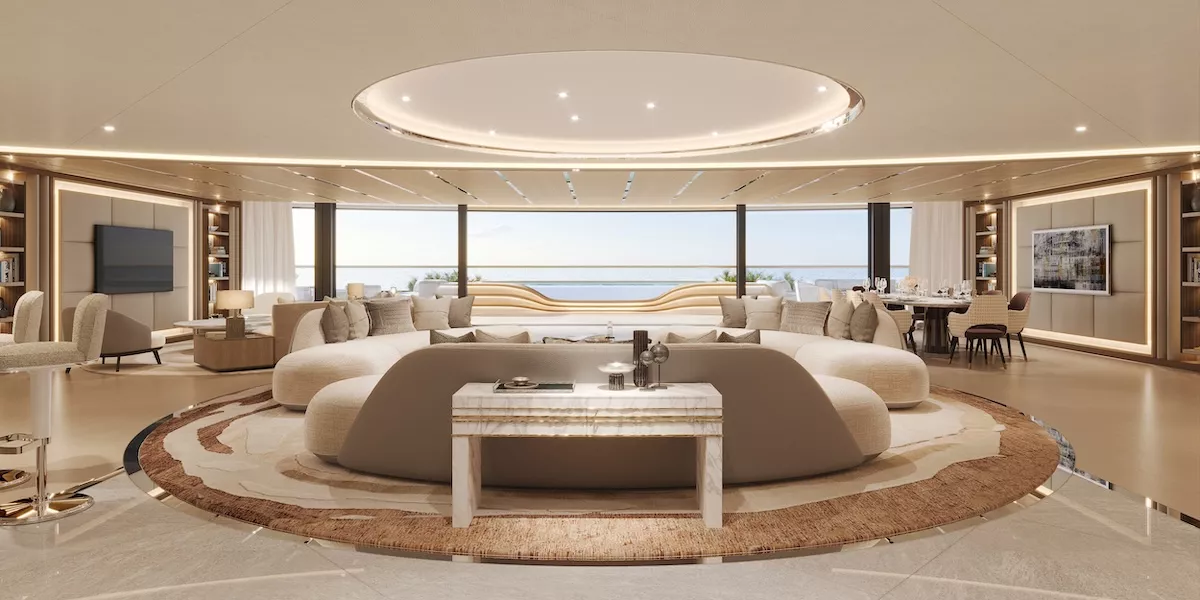
A luxury yacht designed as a floating home
Binder and Øino were careful to distinguish Ulyssia from a cruise ship. Despite its 323-metre length and 122 private residences, it is being designed to combine the standards of a luxury yacht with the space and privacy of a permanent home.
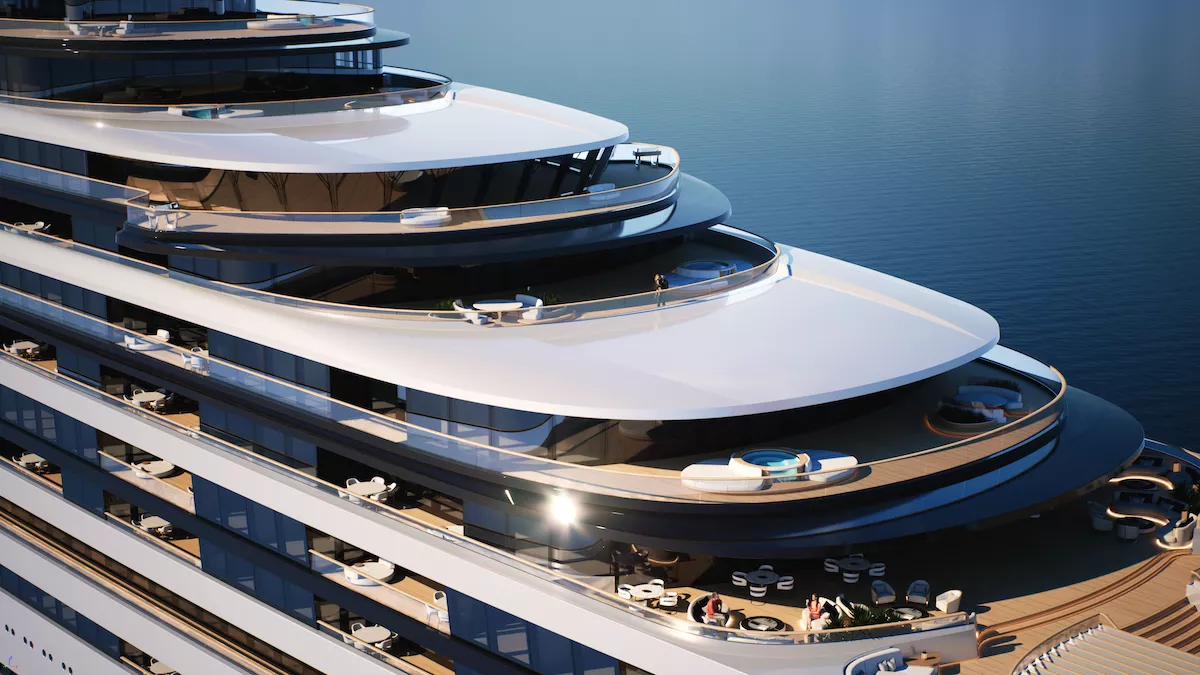
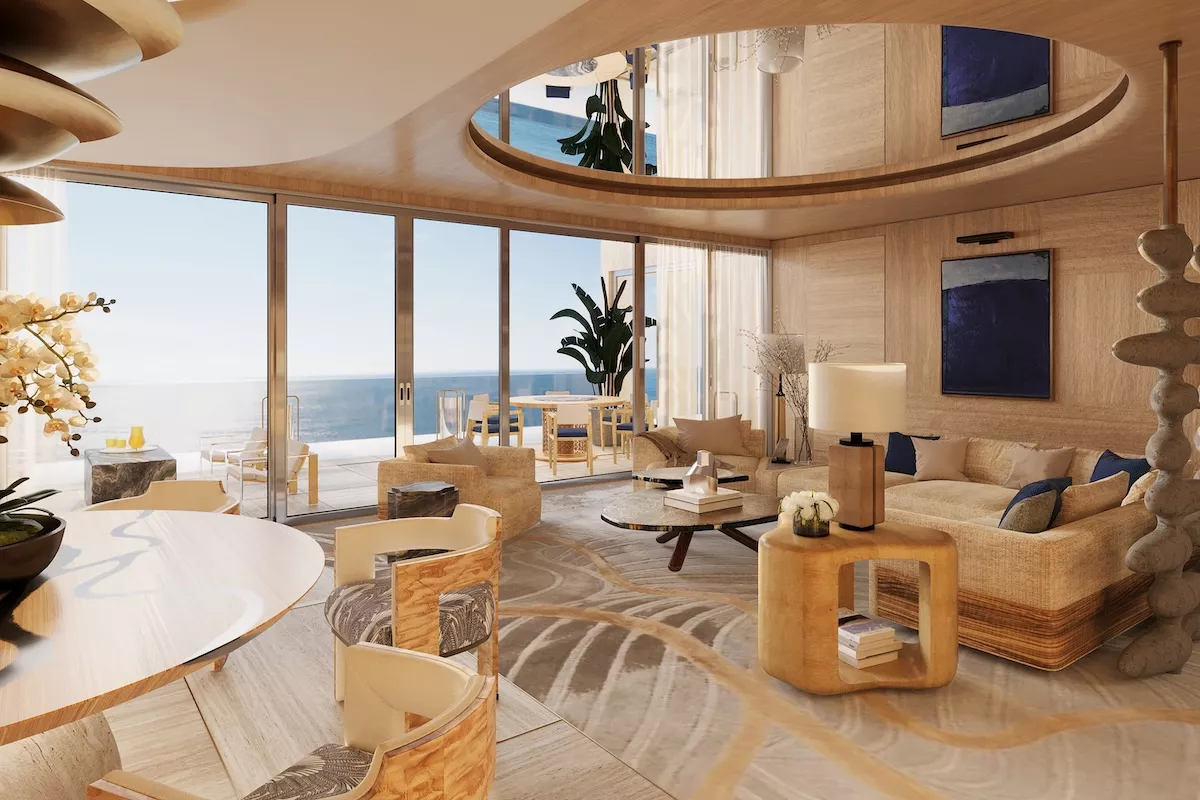
Residences will range from 110 to 953 square metres, with one to six bedrooms, private terraces and fully equipped living spaces. He compared the experience to owning an apartment in Monaco’s Tour Odéon – but one that travels. Residents will have everything they need within their own homes, rather than relying on large communal areas for space.
“The number of people aboard at any one time will be far lower than on a conventional ship of a similar size,” Øino said. “The challenge is therefore also to ensure that the public spaces do not feel oversized or empty.”
The exterior, meanwhile, has been designed to reduce the visual impression of its height. “Every second deck has a dark line, so what looks like one deck from a distance is, in reality, two,” Øino said.
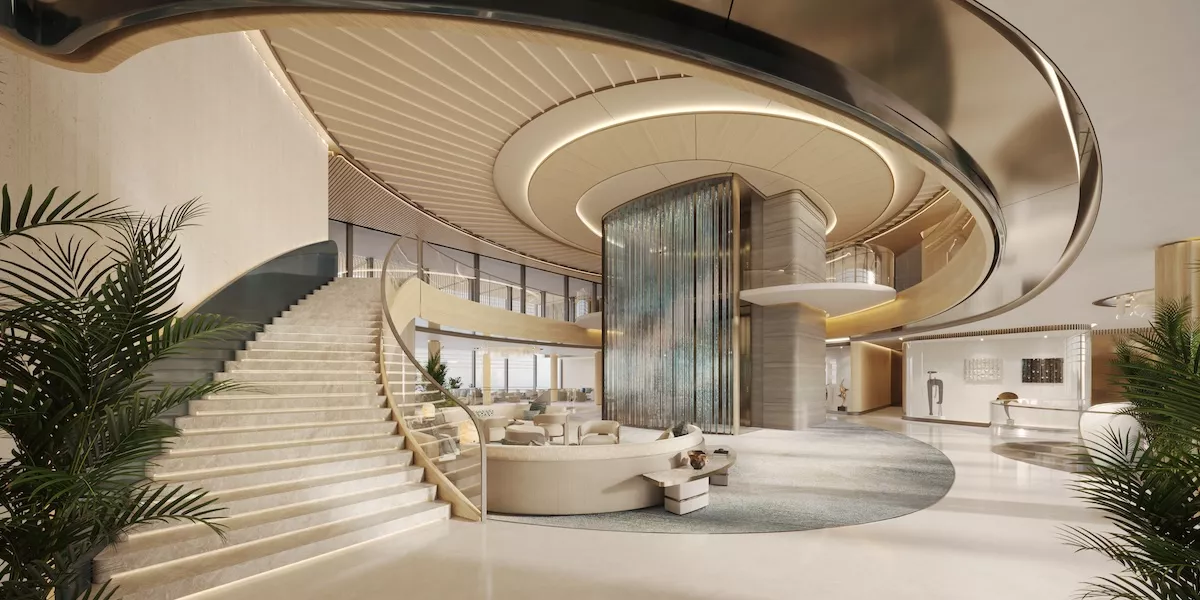
Inside, private or semi-private lobbies will replace long cruise-ship corridors. “When you step out of a lift, you arrive directly within your own small neighbourhood and then enter your home,” revealed Øino.
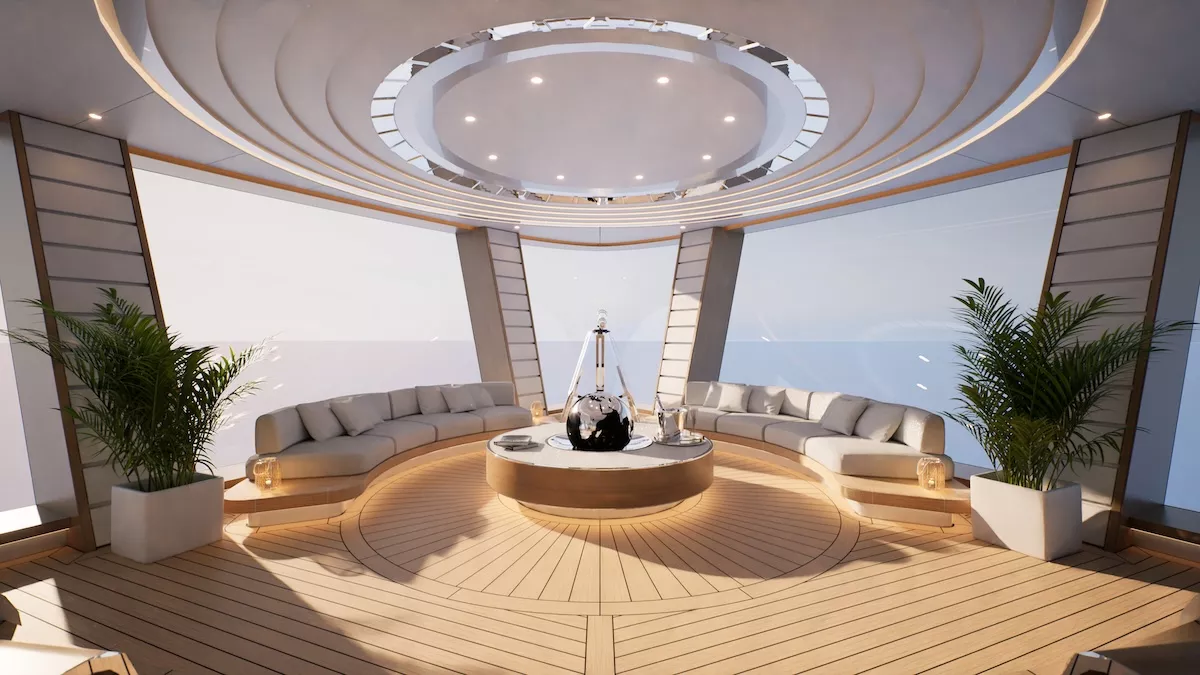
The concept is partly aimed at people who could buy a yacht but would prefer not to manage one. Binder estimated that a private yacht can cost around 10% of its value each year to operate, while Ulyssia’s annual charge is currently projected at about 3.5% of the residence’s purchase price, covering food, fuel, marina fees, maintenance and scheduled refits.
The ship will carry seven restaurants, a two-level Chenot spa, a marina and dive centre, two helicopters and two Triton submersibles. It will also be the first vessel, the company says, to give every crew member — from dishwasher to captain — a single cabin, part of a two-to-one crew-to-resident ratio meant to keep service familiar and turnover low.
Borrowing from The World, the residential ship launched in 2002, owners will suggest destinations and vote on a professionally planned itinerary; what they will not do, Binder insisted, is rush: “We take our time. We’ll stay in one place for a while, rather than rushing from one sight to the next.”
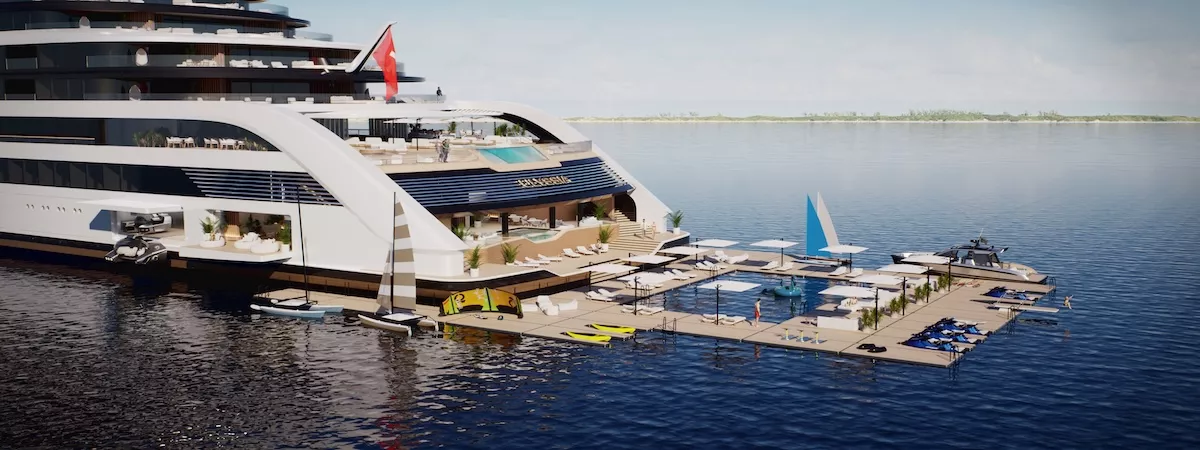
Monaco at the centre of the project
Ulyssia’s hybrid-electric propulsion system will use generators to produce electricity for its motors and is being designed to accommodate sustainable fuels. The configuration should also allow components to be replaced as cleaner technologies become commercially viable.
The move to CMCS has reset the project’s timetable, but it now has a defined route forward: the build contract scheduled for November, approximately four-and-a-half to five years of construction and delivery in 2031.
The remaining test is whether Ulyssia can convert its reservation agreements into binding sales and build the carefully selected international community Binder envisages. The company says interest is strong and expects the residences to sell out before delivery.
The World proved that a privately owned residential ship can sustain a permanent community at sea. Ulyssia intends to take that model much further, combining it with the design, service and finish of a superyacht on an unprecedented scale. At 323 metres, it would dwarf even the largest yachts gathered in Port Hercule this week before setting out on its maiden voyage from Monaco.
Monaco Life is written by qualified journalists, writing original content. Sign up for our free newsletter, listen to our podcasts on Spotify, and follow us across Facebook, Instagram, LinkedIn, and Tik Tok.
Main image credit: Espen Øino International