

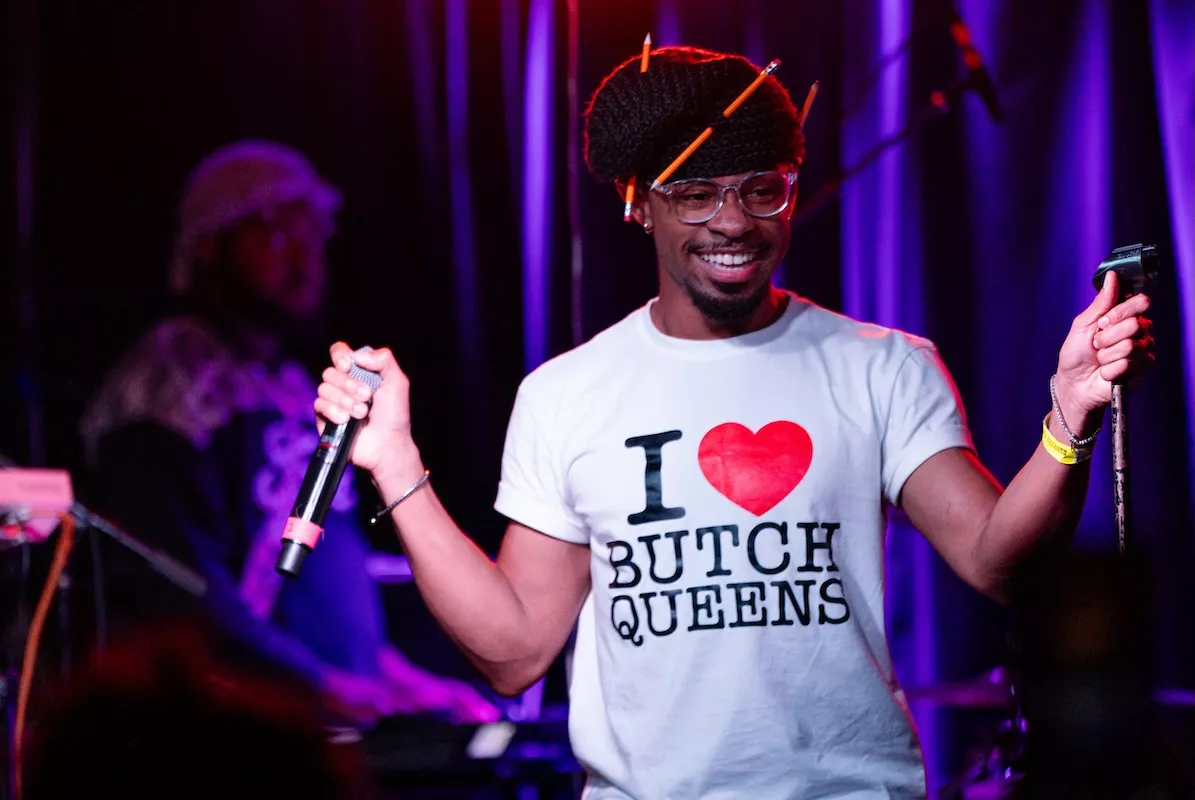
In partnership with the Princess Grace Foundation-USA, Monaco Life proudly presents a monthly series spotlighting the lives and artistic contributions of the Foundation’s remarkable Award winners.
Justen Ross has never been particularly interested in fitting neatly into a box. From appearances in Fight Night: The Million Dollar Heist and Somebody Somewhere to acclaimed theatre work and the development of his own original projects, the Atlanta-born 2021 Princess Grace Award winner has built a creative life around curiosity, self-expression, and an instinct for challenging what is considered conventional.
That independent streak runs through both his work and his outlook. Ross speaks to Monaco Life about the experiences that shaped his artistic voice, the communities that keep him grounded, and why, instead of waiting for a door to open, you sometimes have to become the door yourself.
You received the Princess Grace Award in 2021 while completing your studies at The Theatre School at DePaul University. What did that recognition mean to you at the time?
The world was ending. I was leaving school at a time when a pandemic had basically exploded my entire industry. All of the potential jobs that would have been an affirmation of my investment were removed. Princess Grace came at a time when I was in deep need of affirmation and hope. It meant everything to me.
Looking back now, how did receiving the Award influence your confidence as an artist and your vision for the future?
The creative journey feels like a spiritual one as well. It’s a faith walk, and on it there are milestones, confirmations, and winks from the universe to show you that you are in alignment and on the right path. The Princess Grace Award felt like that wink from the universe that I had been needing. It gave me confidence that while I wasn’t maybe where I “wanted” to be as an artist, I was where I was supposed to be. And by transitive property, I was assured yet again that my next steps, while unseen, were ordered.
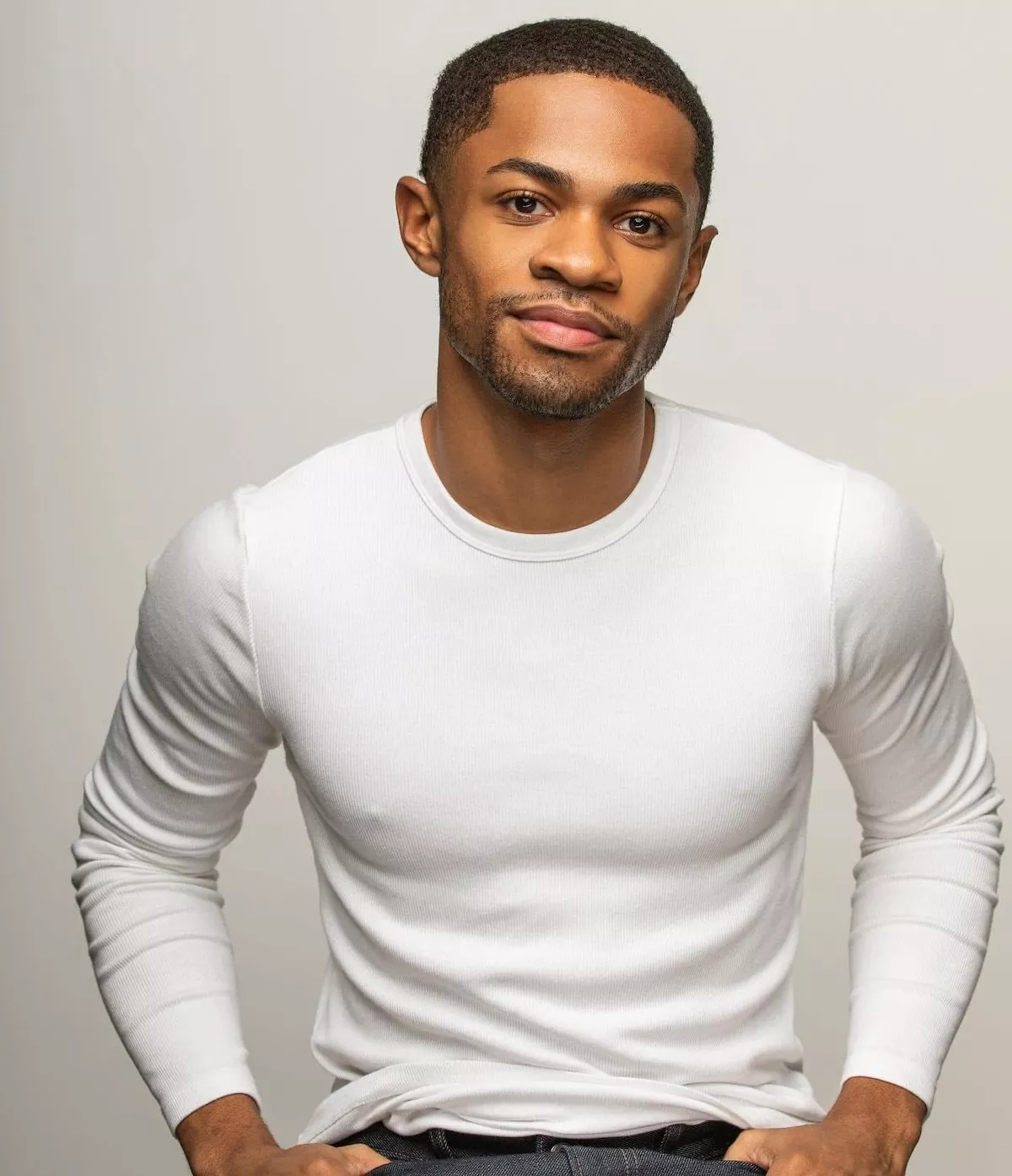
The Princess Grace Awards connect artists across disciplines and generations. What has being part of that community meant to you personally and professionally?
I have gotten the opportunity to work with many Princess Grace Award winners—one that stands out is Donja R. Love. Donja kept me employed with acting work all of 2022/2023 when I wasn’t booking much. I learned so much and continue to. While we didn’t become connected through Princess Grace, it was nice to know that I find my way to my fellow award winners one way or another. Community and collaboration are my favorite parts of being an artist, so I feel grateful and privileged to have such a talented cohort and network through the Foundation.
Let’s go back to the beginning. Growing up in Atlanta, when did performance first become a meaningful form of expression for you?
When Trayvon Martin died. I was a young Black queer teen riddled with angst, anger, and confusion, and didn’t yet know how to express it. It made me angry that I was in fear. It made me angry that my parents were in fear — that they didn’t know if their teenage son could travel at night with a hoodie on and make it back home safely. I found a creative refuge through Southwest Arts Center in Southwest Atlanta through their Teen Artist’s Academy. It was there that I was able to collaborate with other Black and brown teenagers to write pieces from scratch that resonated with us. My ensemble wrote a piece composed of poems, songs, and choreography to honor Trayvon and his family. That was the first time I experienced the alchemic power that performance had.
Who were some of your earliest artistic influences, whether from theater, music, film, or your own community?
I have always had such a deep appreciation for art, and my influences stretch across a wide range of genres:
My dad loves comedy, so I grew up watching a lot of comedians like Martin, Dave Chappelle, Kevin Hart, Bernie Mac, and other Def Jam icons. I won my first talent show for a stand-up that my dad wrote. I have always enjoyed clowning, and I really have a deep appreciation for comics. The mischief and trickster energy of comedy was one of my first handshakes with art as I imagined I’d express it myself.
My mom is where I feel like I inherited my love for film and music. My mother showed me The Wiz when I was in kindergarten, and it woke something up inside of me diasporically. Something that has been there, and I just had to remember and tap into that creative ancestral DNA and excellence. Both my parents are from Chicago and love House music along with conscious rap—so that’s how I came to find interest in where they intersect—because I feel that’s where I live in terms of my musical sonic expression.
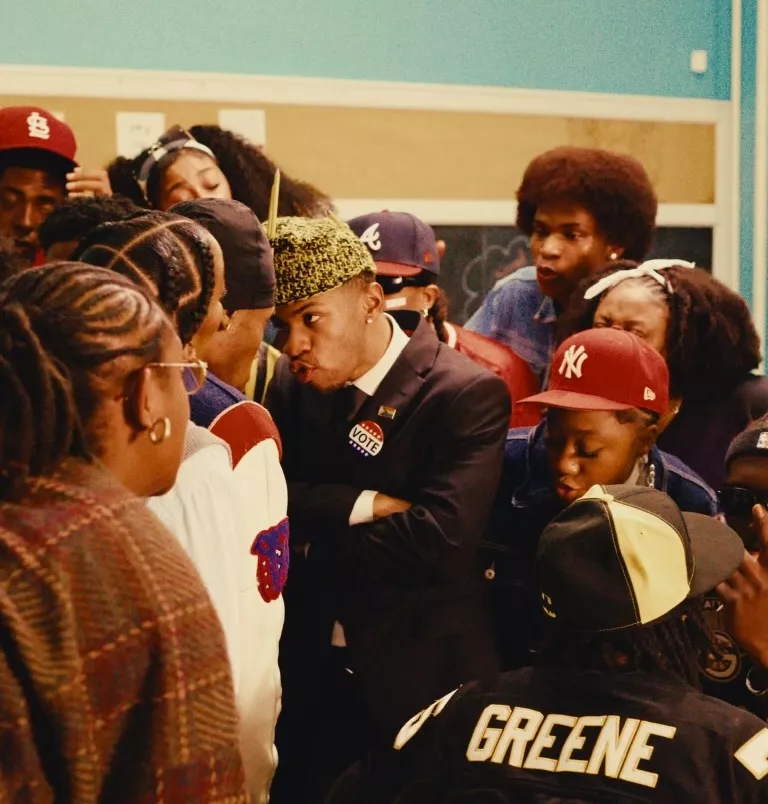
You’ve described yourself as a Black queer artist whose work is rooted in themes of resilience and ingenuity. How have your lived experiences shaped the stories you’re drawn to tell?
Being Black and queer, there is a certain level of perseverance, gall, and undeniability you have to carry to even be able to access your authenticity. And I say that in the sense that—I allowed my surroundings and society to deny me. My work is all about alchemy. How do I alchemize these things that I was taught to fear and hate about myself into something empowering, and that’s where the ingenuity lives. You have to be crafty when working against big systems like racism and homophobia and transphobia.
And while I am Black and queer—I have a deep love for family and friends who are not and may not understand the world that I live in. I know that many like me may not have the capacity to try and find the bridge or the humanity between me and hetero culture—but I believe it is through storytelling and authentic expression that people can learn to become more empathetic to my community.
While at DePaul, you co-founded Black Artists of Today, the first affinity group in your school’s history dedicated to elevating Black voices within the conservatory. What inspired you to create that space?
I’m from Atlanta, which is Black as HELL. I grew up with Black teachers, dentists, librarians, doctors, restaurant owners, models, musicians, and it goes on and on and on. If I ever felt like I was less than growing up, it wasn’t because I was Black. I always grew up seeing and believing that Black is beautiful. All of my Black classmates didn’t have that, and I could tell that they may not have known what the remedy to some of their insecurities was, and in my mind it was lack of community. So alongside the other Black members, I spearheaded the movement. There was no space.
What kinds of stories or characters resonate with you most as a performer today?
Stories that show the unseen or untold parts of the Black and brown diaspora. What are those stories that have been in the cracks but, when shown, can be the balm to something we’ve been missing?
As an artist, what themes do you find yourself returning to again and again?
I find myself returning to this theme of what is forbidden. Forbidden music. Forbidden love. I am currently writing a ballroom hip hop adaptation of Romeo and Juliet, and it really tries to navigate this “forbidden love” through an art form that has long been considered “forbidden music” (Disco, House, Hip Hop).
I return to this theme because I think I am a revolutionary at my core, and I find that things that are often forbidden are the things that disrupt corrupt systems. We see this through how traditional African religions and rituals are talked about and depicted, all the way to queer and trans people’s rights. So creating and orbiting around what is forbidden is a theme I come back to.
In addition to performing, you’ve also developed original work through programmes like the Alliance Theatre’s Reiser Atlanta Artists Lab. What has the experience of creating your own work taught you?
That I don’t have to wait for creative doors to open. I am the door. It has taught me more than anything else that I truly am the master of my own fate—and God willing, I can give other artists working opportunities through the worlds I see.
It has also taught me to be more selfless with my gift. It’s so easy for me to criticize myself and my voice to the most minute detail, but I think that there is something about perfectionism that is so paralyzing, and I didn’t realize how drastic my self-criticism was until I embarked on building my own play.
What does authentic representation mean to you—not just on stage or screen, but behind the scenes as well?
It means many things for me. Sometimes I think for me it’s about being just as fearless about me in process/processing as I am when sharing the product. I think authentic representation is important because there is some person and/or child out there waiting for your true voice to strike the right nerve in them and wake them up to themselves. I think authentic representation is about embracing what feels good to us at our core and expressing that without harm. I think that begins a domino effect for others, and makes them remove the figurative chains they have placed on themselves. Authentic representation means freedom. It means color. It means ease.
How important has mentorship been throughout your journey?
Super important. I’m a student first, and I greatly value the horizontal mentorship that I have alongside the vertical leadership I follow. My biological parents, my chosen gay parents, my house mothers and fathers, my friends who are following a similar path to mine, my acting coaches and professors through the years. I stay in touch because I think mentorship is a true exchange.
What’s the best piece of advice you’ve received from a teacher, mentor, or fellow artist?
I’ve received so much advice, but I think the ones that stick out are these two: “Greatness is inevitable when focus marries passion and the desire is as great as your need,” by Freddie Hendricks; and “Try to approach work/text with more mischief and curiosity rather than just pure audacity and/or audaciousness.”
What advice would you offer to young artists who may not see a traditional path into the industry?
That traditional path that you don’t see is a blessing whether you believe it or not. It may not make sense now. It may feel lonely and hopeless. But you are meant to carve out a lane that is custom-made for you. Why fit in when you were born to stand out? Get to carving. If money wasn’t a factor—and you got to move and create in a way that excited you—what would you make? What direction would you go? Who would you call to be a part of it? Start there. Go in that direction and see it through!
Atlanta remains an important part of your story. What does the city mean to you today?
Atlanta is my stomp! I have so much pride in where I’m from. I love to represent Atlanta. I recently moved from there, but Atlanta has been an epicenter of culture for such a long time, especially when it comes to music and performance. I am excited that through my innovation, I can be a part of that story of trailblazers or prolific artists from the city.
Are there any upcoming projects, ideas, or collaborations you’re particularly excited to explore?
I have an album coming out called Periodic Table. It’s my sophomore project in my music career, and I think it will shift the music industry in a big way.
When you think about success today, has your definition changed since receiving the Princess Grace Award in 2021?
I definitely think the definition of success has changed. I think success is being healthy first and foremost. My family and I have undergone some health complications since 2021 — cancer, heart surgeries, and other things. Luckily, God pulled us through those things, but through those experiences I have learned that being able-bodied and in good health is such a blessing. But also, success to me is having the freedom to execute my wildest creative thoughts without any trepidation or financial struggle, and for it to be able to reach the people it is intended to reach.
Follow Justen Ross on Instagram @jussten.
Stay updated with Monaco Life: sign up for our free newsletter, listen to our podcasts on Spotify, and follow us across Facebook, Instagram, LinkedIn, and Tik Tok.
Photo credit: Joval Spence