

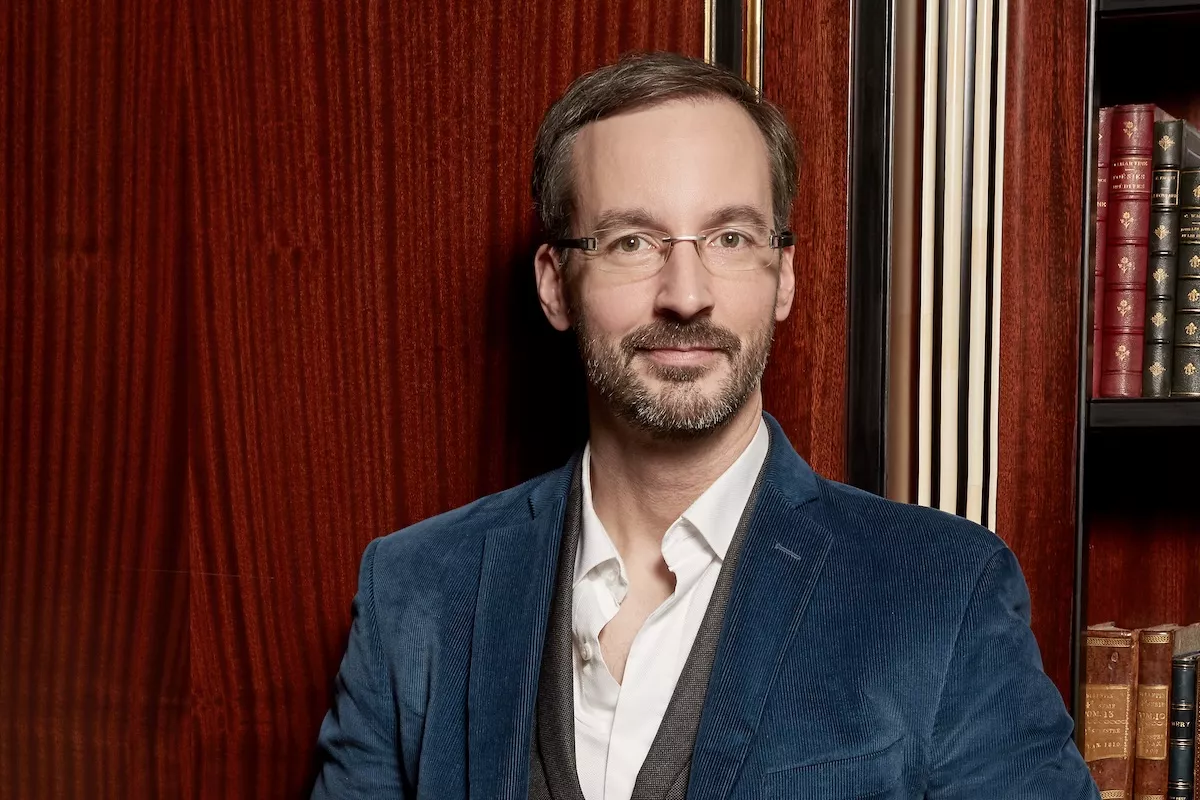
There is no website. No boutique. No collection. Benoît Miniou — former director at Hermès, founder of Les Ateliers Victor and Benoît Miniou Studio, is a man whose clients include governments, embassies and some of the wealthiest individuals on the planet — and he operates almost entirely in the shadows.
“What’s important is the story,” he says, when asked about the deliberate discretion. “I’m the creator of someone’s story. I want the focus, I want the light, to be put on the story.”
The story Miniou is currently telling — the one that has brought him to Monaco, that inspired this year’s Bal de la Rose and that will, early next year, see a rocket carry Princess Grace’s roses into orbit — is perhaps the most personal project of his career. For once, the dream he is catching is his own.
From Hermès to dream catcher
Miniou spent years as a director at Hermès, one of the most demanding schools of excellence in the luxury world. It was there that his “heart awakened to the beauty of the handmade”.
At the inception of his practice, two convictions shaped his vision. The first was that he had fallen deeply in love with craftsmanship — not as an aesthetic preference but as a near-physical compulsion. The second was that the wealthiest people in the world were quietly, persistently unfulfilled.
“I realised that there was this demand from wealthy people to have pieces, experiences, that could be crafted only for them — very unique pieces,” he says.
He did not set out to fill that gap so much as step into it. Les Ateliers Victor was founded more than 15 years ago on a philosophy that is disarmingly simple: find out what someone truly wants — even when they cannot articulate it themselves — and bring it into existence.
“I just say I’m a dream catcher,” he says. “I go into your heart, into your soul, and seek out what you really want. Sometimes you don’t even know what you want, or it’s hard to express, so I go dig in and search for it.”
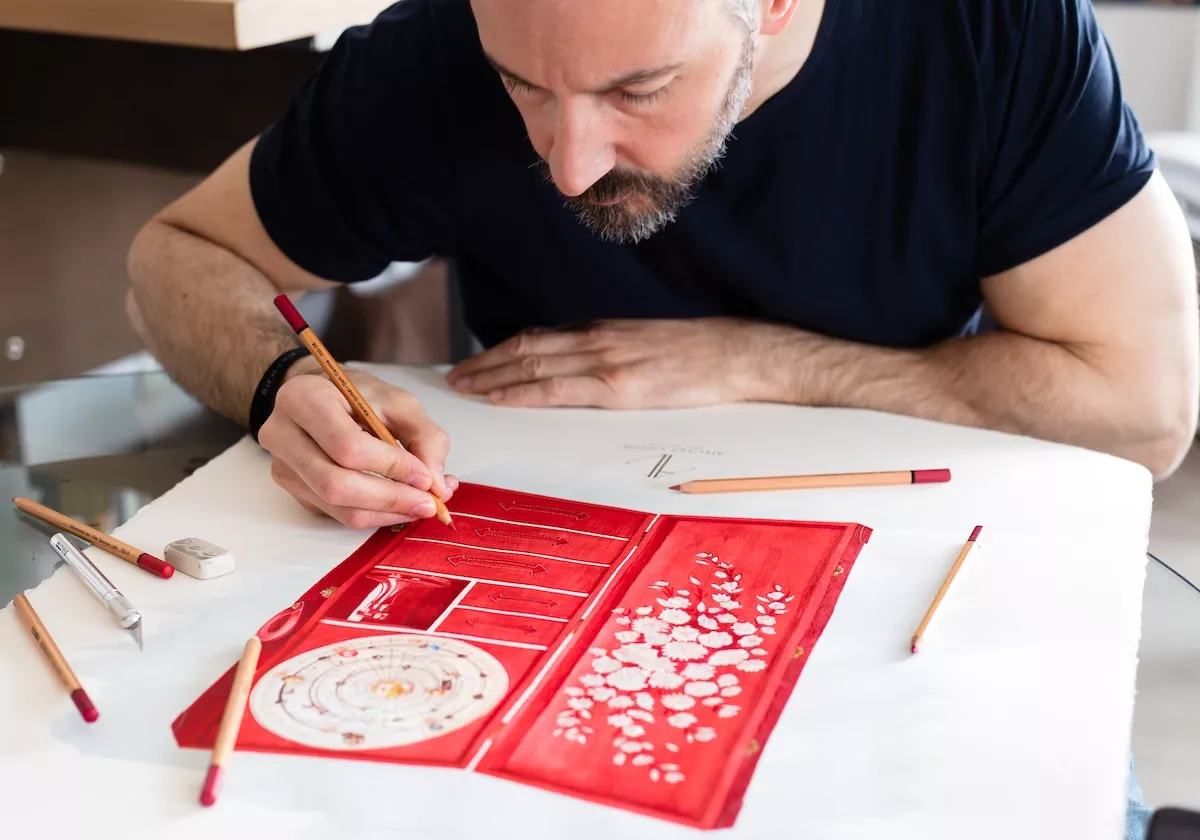
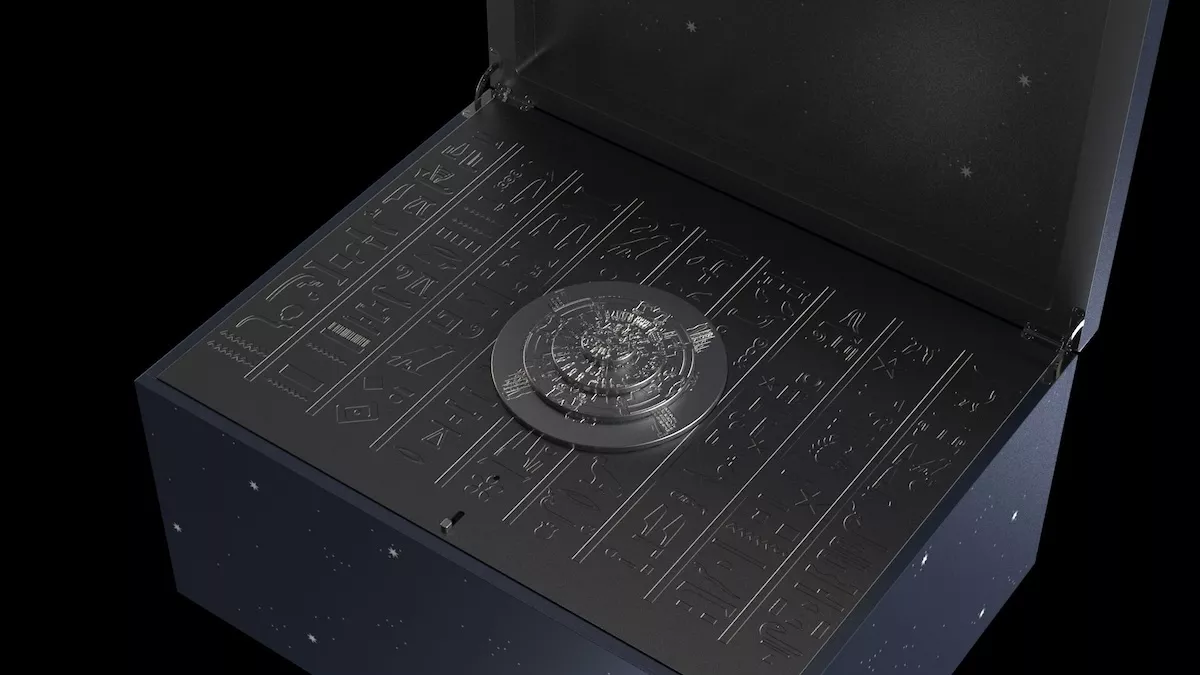
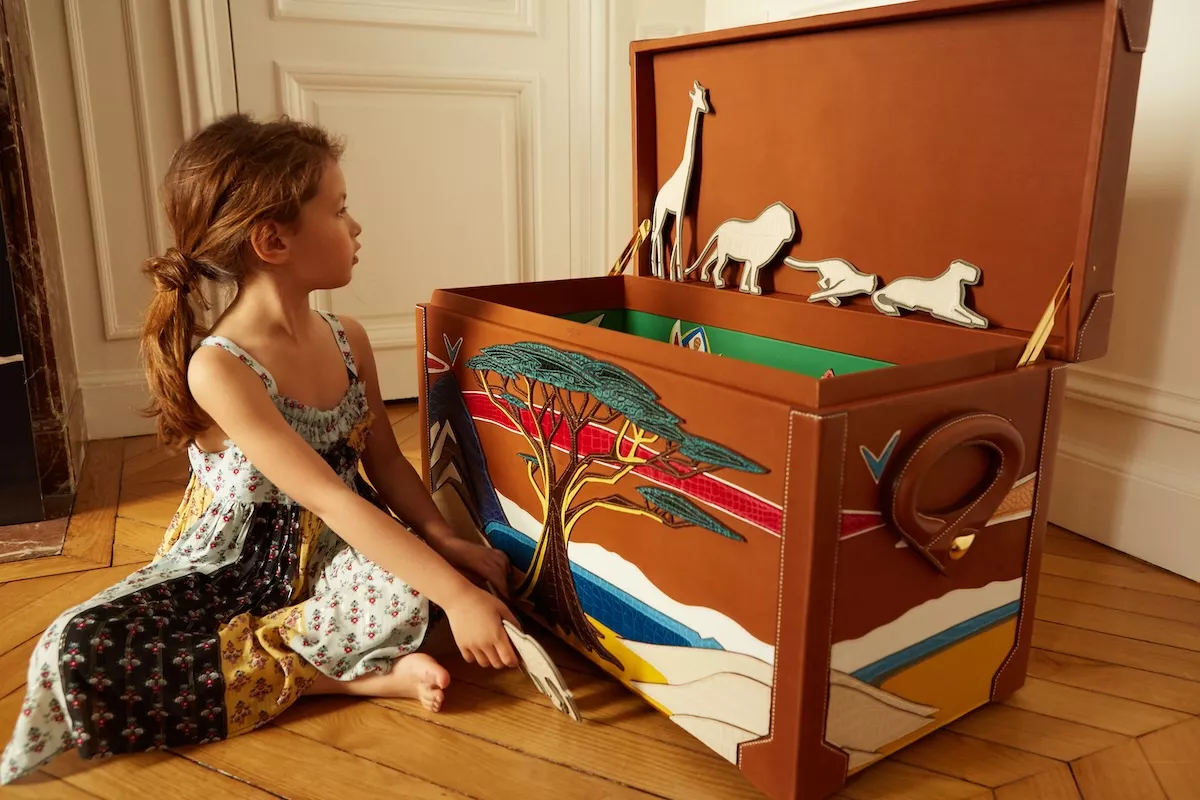
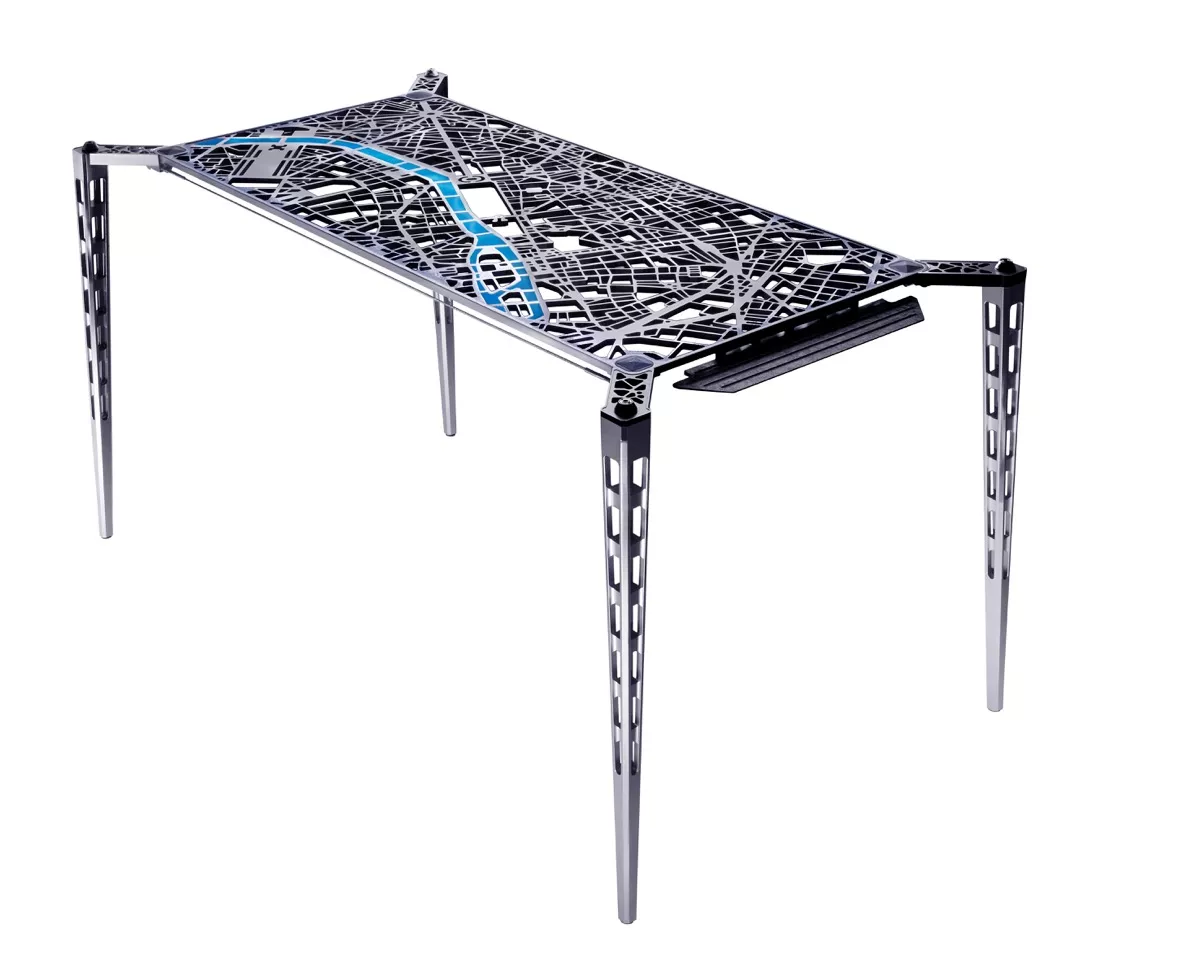
What emerges from that process has ranged from the intimate to the genuinely extraordinary. He has created what is believed to be the first functioning pistol crafted using moon rock. He has built bespoke furniture that encodes entire family histories — materials, engravings and hidden compartments carrying meaning only their owners fully understand. He has conceived haute joaillerie where each stone and setting maps a personal chronology: milestones, memories, symbols known only to the wearer. He has engineered treasure hunts in which the first clue is hidden inside the object itself.
Each project, he insists, involves rigorous research, collaboration with leading scientists or master artisans, and a philanthropic dimension. “I don’t want anybody to say, ‘Okay, yes, it’s pretty, but so what?’ I want it to be real. If we send a rose to space, then there is a scientific aspect. It’s not just a very beautiful poetry project. There is hard, strong science behind it.”
The art of listening
What makes Miniou different from a luxury concierge or a bespoke craftsman is something harder to define — an almost clinical ability to hear what is not being said.
He describes a client who came to him wanting an exceptional gift for his wife’s birthday. The man was well-intentioned but verbally opaque. “He couldn’t, by nature, give me anything personal about his wife. Then something slipped out: during lockdown, his wife had loved puzzles. She had forced him to play them, and he had hated every moment.
“I said, ‘Guy, you know what? That’s it.'”
What emerged was a party in which every guest arrived carrying a single piece of a puzzle. Together, assembled across the evening, the pieces formed an image close to the wife’s heart — meaningful only as a whole, each fragment alone carrying nothing. “You find the importance in the details that perhaps a lot of people would not necessarily see for themselves,” he reflects.
There is also the cigar trunk. A young woman came to him wanting something personal, something extraordinary. During their conversations, he sensed a particular closeness with her mother. A traditional hygrometer — the humidity gauge at the heart of any serious cigar cabinet — functions because of a simple physical fact: human hair expands and contracts with moisture, and that movement drives the dial. “It could be random hair,” Miniou told her. “Or it could be your mother’s hair.”
She is the only one who knows. Every time she opens that trunk, the connection is there.
What surprised him most in those early years was the emotional weight of the moment of delivery. Clients who had spent lifetimes acquiring extraordinary things were, on occasion, moved to tears. “I wasn’t expecting this,” he says.
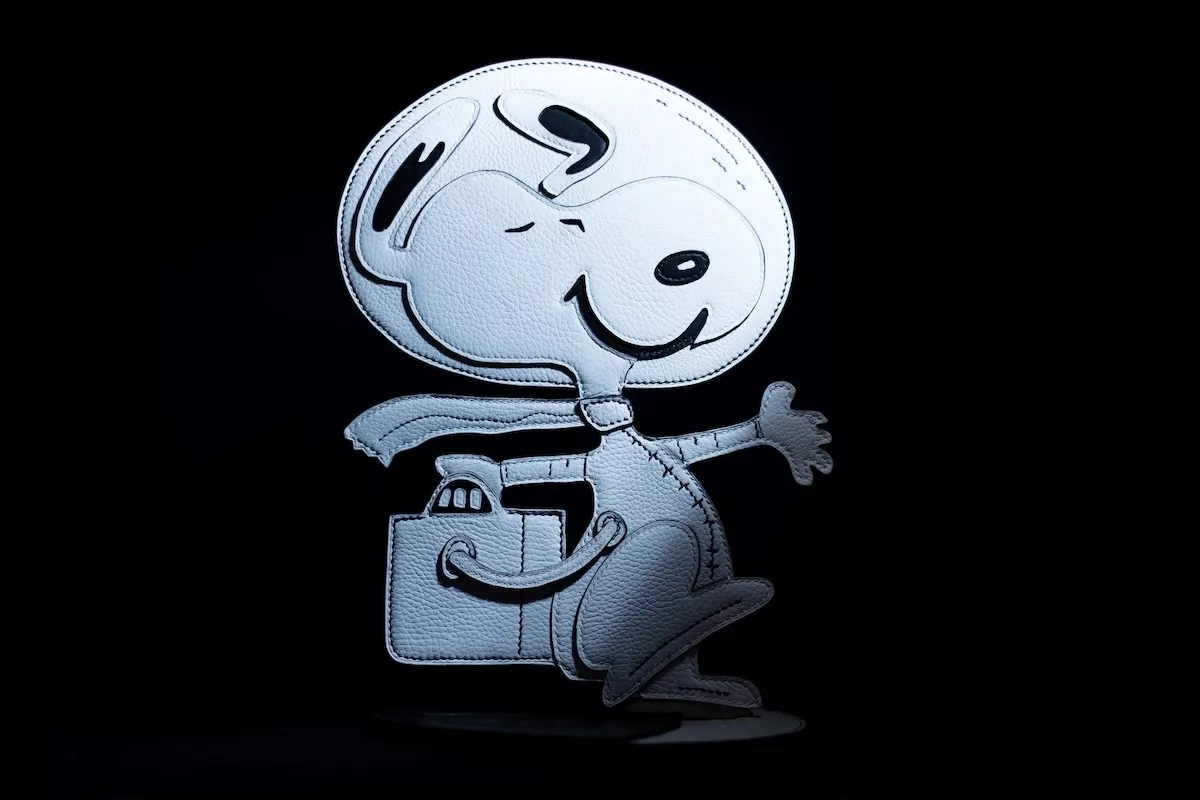
His most audacious unrealised concept — one he describes as his “crazy” idea — involves a marriage proposal in which the fiancée watches a live feed of a rover on the moon approaching a small greenhouse containing a rose, with the words “Would you marry me?” engraved inside. The code to unlock the ring box is, of course, the word ‘yes’.
“Don’t let anyone tell you your dreams are too big,” he says. “It’s a message I love to be able to spread.”
The rose and the princess
Princess Grace has been a presence in Miniou’s imagination for years. Through his membership of the Monaco Private Label and regular visits to the Principality with clients, he began to build relationships with Monaco’s institutions and government. He started sharing a dream — a passion project, the kind he almost never allows himself.
“Normally, I go into your heart and soul to seek what you really want,” he says. “For once, I decided I would like to catch my own dream.”

The project is this: the Meilland Princess de Monaco rose — the variety created in Princess Grace’s honour — will be sent into space, most likely aboard a SpaceX vehicle, with the International Space Station as an alternative depending on its operational timeline. The roses will spend between one month and six to eight months in orbit. They will not be grown in space; they will remain passive, exposed to conditions no rose has ever encountered in its evolutionary history.
“Microgravity is a stress the rose has never encountered in its entire history on Earth,” Miniou explains. “They experience differences of temperature, pressure, altitude — but the absence of gravity? Never. So by pushing them into this world where there is no gravity, they either die or they adapt.”
The scientific precedent gives him grounds for optimism. When grapevines were sent to space in a previous experiment, they returned demonstrably more resilient. They had developed a natural resistance of approximately 90 per cent to mildew — a disease that ordinarily requires heavy chemical treatment to suppress. Scientific papers have since been published on the results. Miniou expects analogous outcomes for the roses.
“If it works for roses, maybe it works for pears, apples, apricots. So poetic and scientific.”
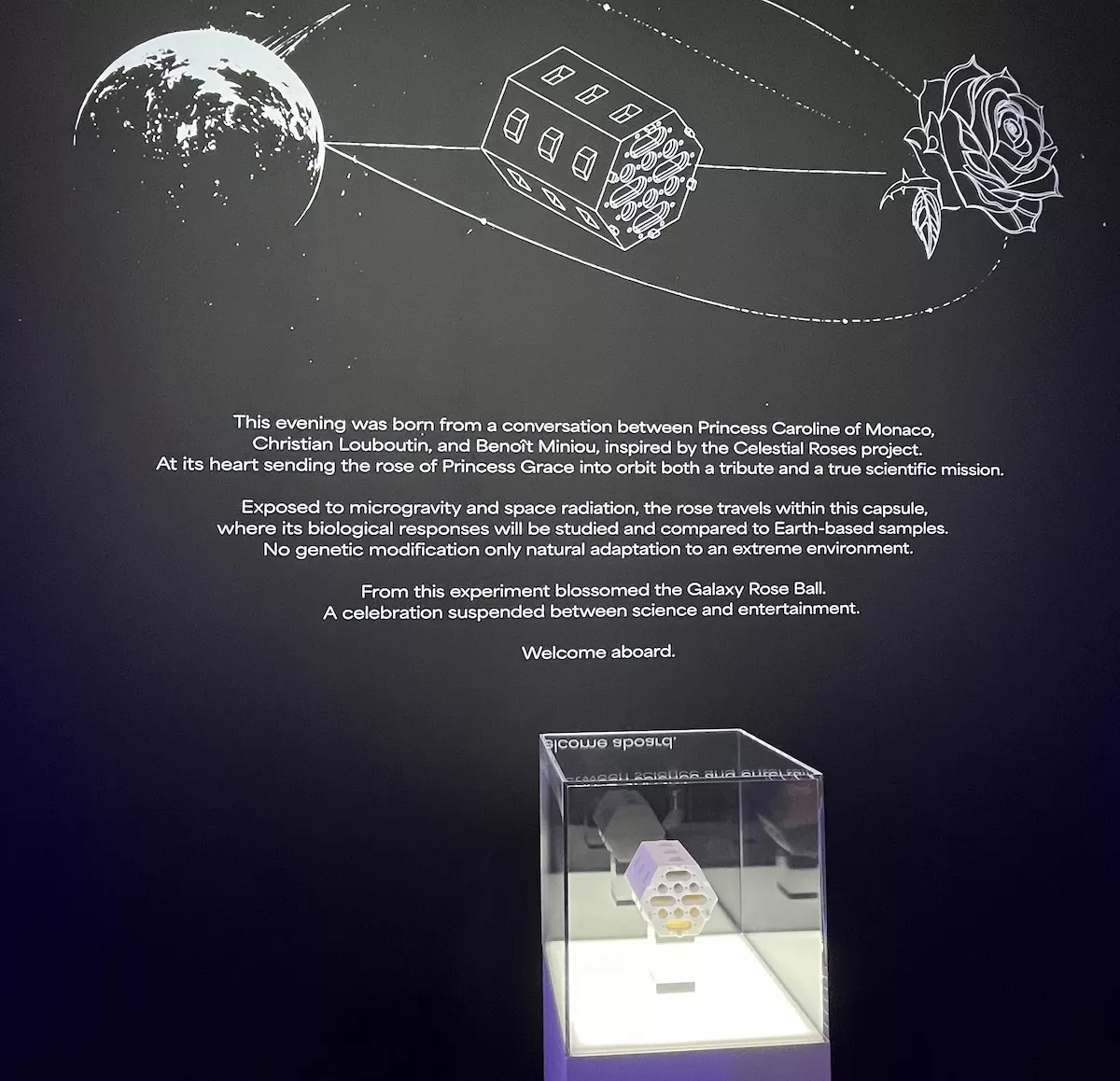
The roses are currently held in laboratory conditions in Germany, where they have been studied for over a year to establish baseline data. When they return from orbit, Miniou’s scientific team will examine what has occurred at the DNA, genomic and microbiological levels. Some of the surviving roses will be planted in significant gardens around the world — possibilities under discussion include the Robert Louis Stevenson School in Pebble Beach, California, and the Villa Albertine in New York, where a sculpture of Le Petit Prince now stands outside the library. In his most cherished scenario, one of the returned roses might eventually be planted in the Princess Grace Rose Garden in Monaco, where Prince Rainier III created it in her memory after her death in 1982.
Miniou emphasises that all resulting scientific data will be publicly accessible. “I want this research to belong to the world—to allow it to flourish, freely and without constraint,” he says.
The Bal de la Rose and a princess’s legacy
Grace Kelly inspires Miniou in ways that go beyond the botanical. She was an Oscar-winning actress who became a princess; an American who became Monaco’s most internationally recognisable figure; a woman of genuine cultural conviction who used her position in service of art, children and humanitarian causes. “She inspires us, even to this day,” he says simply.
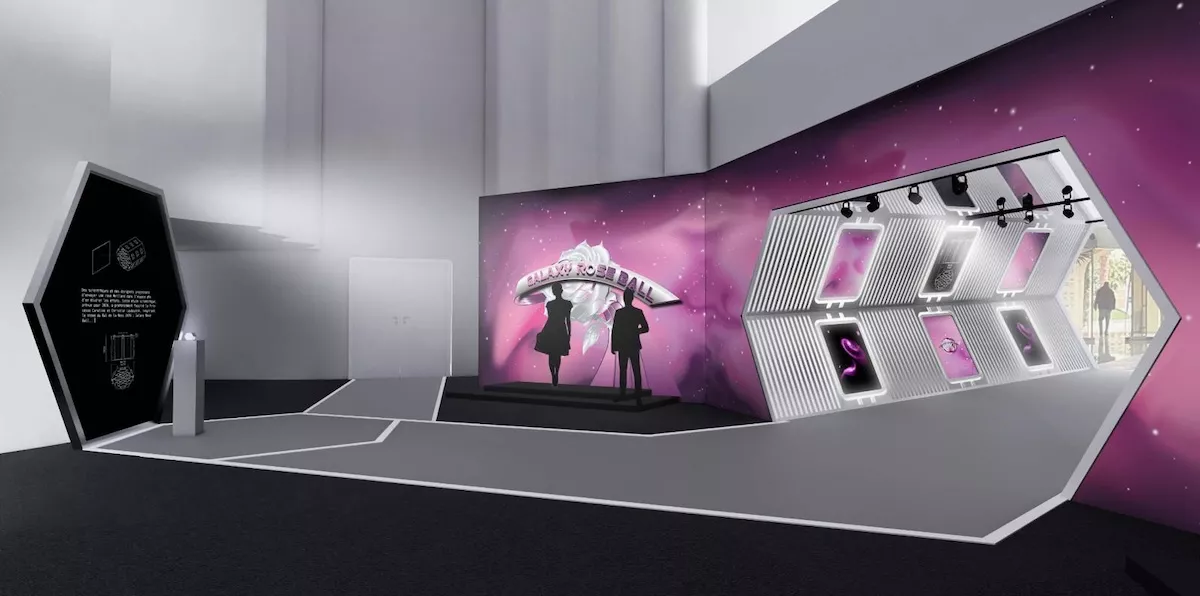
It was therefore significant when Princess Caroline of Monaco indicated that this year’s Bal de la Rose — the annual gala held in support of the Princess Grace Foundation, one of the most storied events in Monaco’s calendar — would take its theme from the rose-in-space project. Designer Christian Louboutin transformed the evening into something galactic.
The connection with Princess Grace feels, to him, not incidental but essential to the project’s spirit. “She loved roses. That’s why the Bal de la Rose is named after her passion for them. That’s why several roses are named after her. That’s why Prince Rainier created the rose garden to honour her memory.” Sending those roses into the sky she once admired carries, for Miniou, a weight that no brief can adequately capture, and sharing the scientific results with the world is what, he says, Princess Grace would be proud of.
Alone in the field
Asked whether anyone else does what he does, Miniou pauses. “So far, I think I’m the only one. I haven’t met anybody doing it.”
It is a statement that sounds implausible until you spend time understanding what the work actually involves: the years at Hermès, the scientific collaborators, the Egyptologists and ballistic engineers and master jewellers and space agency contacts accumulated over a decade and a half, the emotional intelligence required to make someone open up in ways they never have before, and the sheer nerve to return, each time, without knowing whether it will work.
“It’s like a high-level athlete — each time you go back on the field, you put your crown in the field and say, ‘Will I get it back or not?'” he says. “So far, each time, I have.”
Somewhere in a laboratory in Germany, a Princess Grace rose waits in careful cold, studied and measured, ready for a journey no rose has ever made. The dream catcher, for once, is catching his own dream — and taking it to space.
See also:
Photos: Inside the jaw-dropping galaxy-themed Rose Ball of 2026
All photos supplied