

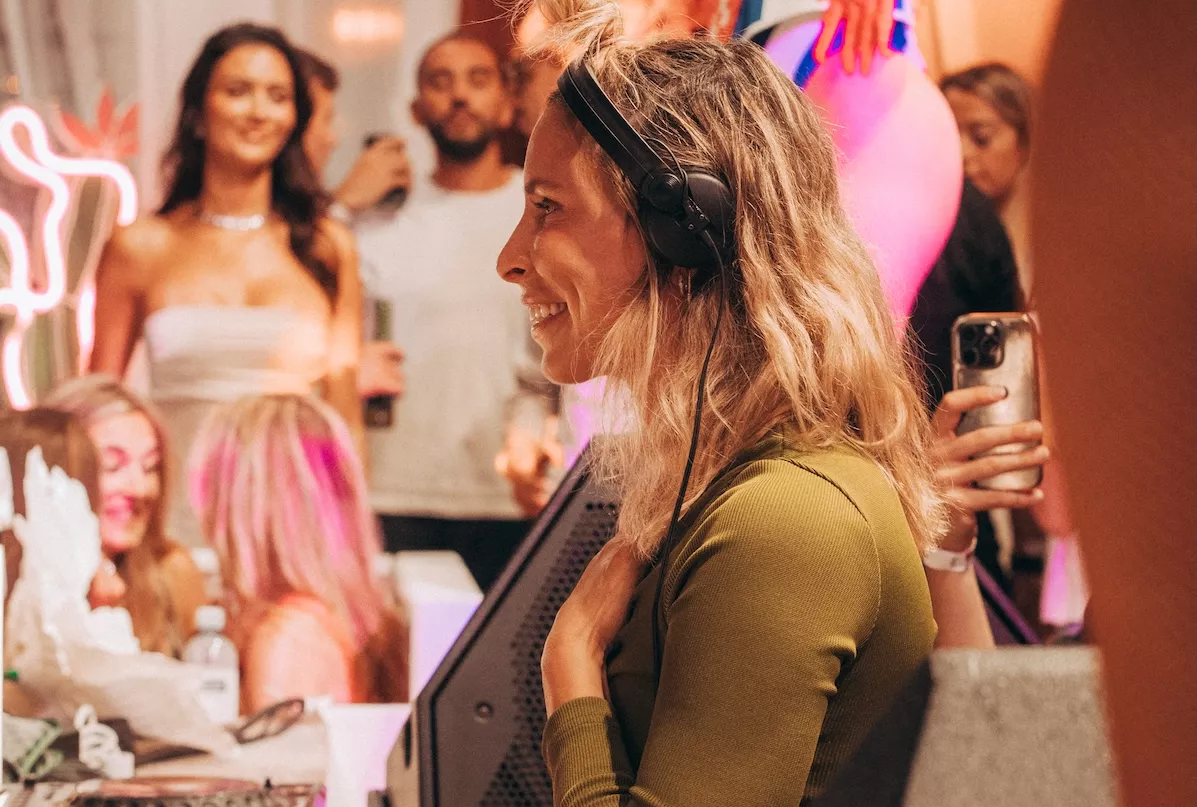
She splits her year between Ibiza and Miami, holds a residency at Pacha, has played Burning Man and Tomorrowland, founded a record label and a sustainability non-profit that has kept 325,000 single-use plastic bottles out of circulation, and is developing a cup made from bacteria.
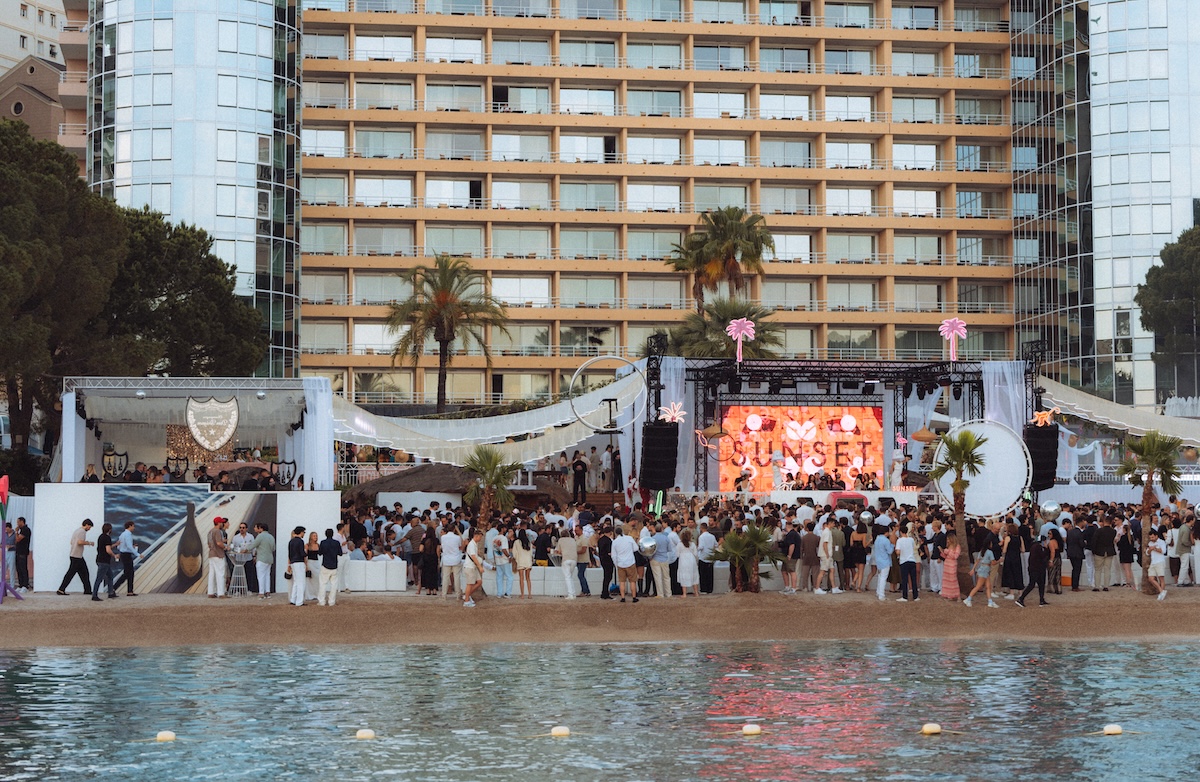
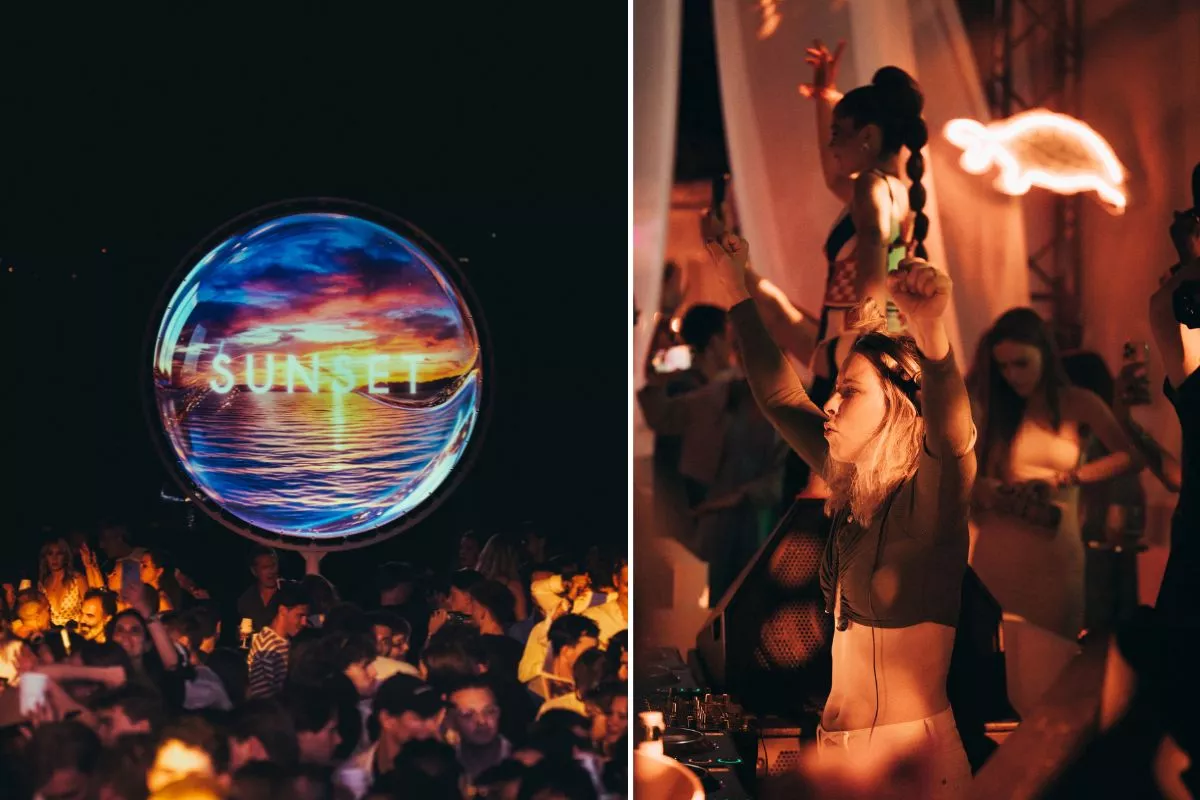
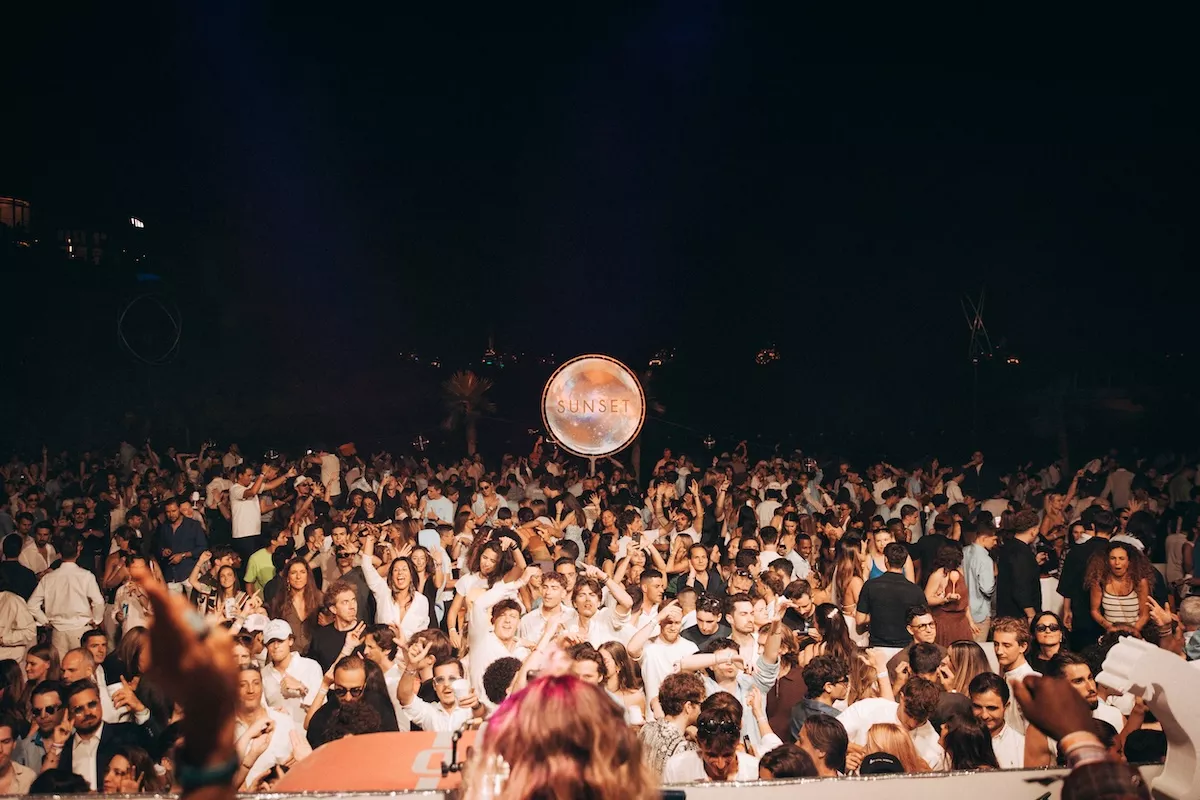
On the evening we spoke, Blond:ish — the stage name of Canadian-born DJ and producer Vivie-Ann Bakos — was preparing to play Sunset Monaco for the first time, an outdoor set on the terrace at Le Méridien Beach Plaza with the Mediterranean as a backdrop and the Grand Prix weekend in full swing around her.
It was the perfect setting for someone who has spent 15 years carving out a distinctive corner of the electronic music world — one defined less by a single sound than by a certain energy and a refusal to separate the music from the responsibility that comes with the platform.
From Montreal to Monaco
Vivie-Ann originally formed Blond:ish as a duo with Anstascia D’Elene Corniere, who she met in 2007. The pair performed together until 2019, when she began performing under the name alone. She specialises in upbeat, eclectic sets fusing house, techno, afro house and global rhythms.
The connection to Monaco and to Sunset organiser Cédric Houdrouge goes back to the early days. “I’ve known Cédric for a long time. We’ve been friends since our raver days.” Playing by the sea, she says, suits where she is right now. “These days I’m more in my feminine energy — lighter, more fun, happier. That’s the best offering I can give. So if it’s by the sea with the sunset, even better.”
Her father’s reel-to-reel
The origin story involves a sailor father and a basement full of vinyl. “My dad was obsessed with collecting vinyl and he loved old-school equipment. He had a reel-to-reel machine. He was a sailor, so he travelled all over the world — to Africa, Lebanon, everywhere — and he’d bring vinyl back to Canada. He would transfer all the vinyl onto the reel-to-reel so that at parties he didn’t have to keep changing records. Everyone could just keep dancing.”
She didn’t recognise the influence at the time. “When I became a teenager, I realised my dad was basically a DJ,” she said. “Both my parents loved music, but my dad was always searching for new records and sounds from around the world. I inherited that curiosity. That’s where it all started for me.”
The boys’ club
Ask Blond:ish about navigating a male-dominated industry and her answer is characteristically matter-of-fact. “I never really paid attention to it. When you put attention on something, you might manifest it. I was a tomboy my whole life. I always played with the boys, and this was just another boys’ club.” She pauses. “Now, with the way social media is, there’s room for anyone in music, however they want to approach it.”
That freedom, she believes, has transformed the industry. Artists are no longer confined by genre, image or convention, and success can take many different forms.
Recalling a show she played the night before with German artist Bunt, she points to the growing diversity of audiences and performance styles within electronic music. “Bunt does a concert more like a rapper or singer,” she says. “He goes out and does a 75-minute show playing very emotional music. His crowd is probably 70% women. They barely drink. That’s a completely different offering.”
Why EDM dying was good for music
The conversation turns to the evolution of electronic music and the growing crossover between genres. For Blond:ish, the shift can be traced back to the decline of EDM (Electronic Dance Music) — the commercially driven festival sound that dominated dance music during the early 2010s.
“For a long time there was a big elephant in the room, and that was EDM,” she says. “EDM kind of died a few years ago, and that enabled all the different genres and artists to start cross-collaborating again. That’s why you’re seeing everyone collaborate with each other now — the elephant in the room is gone.”
In its place, she sees a more open and creative landscape, where artists are free to move between genres and audiences are increasingly willing to embrace different sounds and styles.
Advice for aspiring DJs
Asked what she would tell a young woman in the crowd watching her perform and thinking about a career in music, she immediately reframes the question. “I like to answer that in a way that everyone can get value from it, not just females.”
“Consistency is more important than talent these days. Also, everything is energy. Find your own uniqueness — everyone has something unique about them. And learn to make decisions with your heart instead of for money or ego. That’s how I found my way in this industry, because it’s very ego-driven. There are politics. There’s a dark side and a light side. I learned to ask myself: does this make me feel happy and free? If the answer is yes, I go that way.”
A mountain of plastic bottles
While music remains at the centre of her career, Blond:ish has become equally well known for her efforts to make the industry more sustainable. Through Bye Bye Plastic, the non-profit organisation she co-founded in 2018, she has used her influence to challenge one of live music’s least glamorous realities: the vast amount of single-use plastic generated behind the scenes at festivals and events.
The initiative’s Eco-Rider — a sustainability clause incorporated into artists’ performance contracts — has now been adopted by more than 1,500 DJs worldwide, preventing more than 325,000 single-use plastic bottles from entering circulation.
The turning point arrived after a performance that highlighted the stark contrast between the beauty of the experience and the waste left behind. “I was playing the most beautiful show in the jungle, with an amazing sunrise and incredible energy,” she recalls. “At the end of the show I was on such a high, and then I saw this mountain of plastic water bottles and these exhausted cleaning staff dealing with the aftermath. That contrast felt completely out of balance.”
Convinced that someone within the industry had to take responsibility, she decided to act. “I had a eureka moment and thought, ‘I’m one phone call away from everyone in the music industry. I can actually do something about this.'”
What appeared to be a simple problem quickly revealed itself to be far more complex. “I thought it would be easy. It’s actually one of the hardest things we’ve ever done, because it’s not as simple as replacing bottles. There are procurement systems, logistics and so much infrastructure involved.”
The progress, however, has been significant. “When I started, none of my shows were plastic-free. Now around 90% of them are.”
A cup made from bacteria
The work has pushed her into territory she didn’t expect. Blond:ish and her team are now developing new materials to replace single-use plastics at scale — including a cup made from PHA, a biopolymer produced by bacteria. She has also made a vinyl record from the same material. “We’re nerds. We’re really into developing new materials.”
Despite becoming one of electronic music’s most visible environmental voices, Blond:ish remains reluctant to describe herself as an activist. “Some people call me an activist, but I’m really not. I just honestly see when things aren’t in balance, and I like putting them back into balance.”
It’s a philosophy that seems to underpin everything she does. From collecting inspiration through music to challenging the environmental footprint of the industry she loves, Blond:ish has built a career on questioning accepted norms and finding her own path.
As she heads towards the Sunset Monaco stage, with the Mediterranean shimmering behind her, it is clear that for her, success has never been about following trends. It’s about staying curious enough to create what comes next.
See also:
Why Mauro Colagreco’s beachside pop-up became one of Grand Prix weekend’s highlights
Stay updated with Monaco Life: sign up for our free newsletter, listen to our podcasts on Spotify, and follow us across Facebook, Instagram, LinkedIn, and Tik Tok.
Main photo credit: Anatole Vialard