

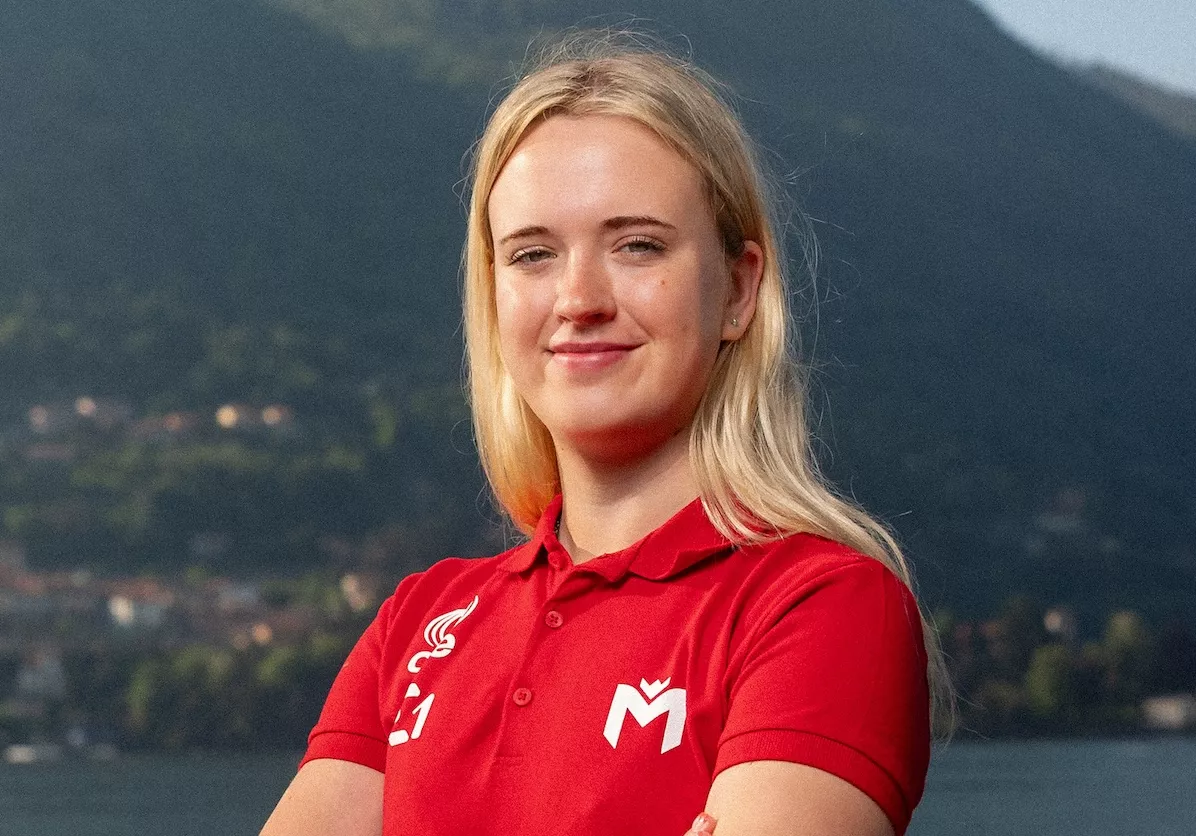
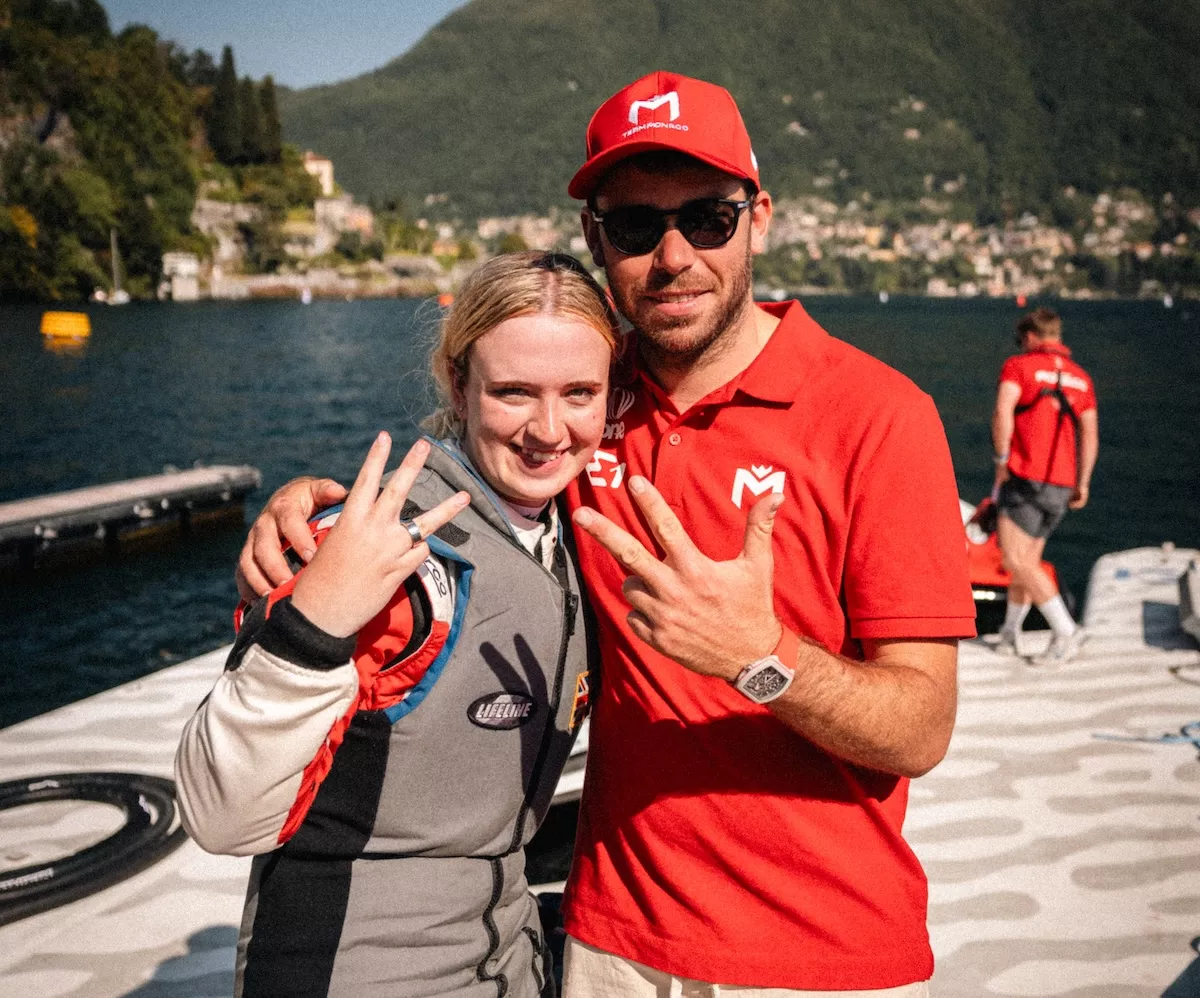
At 20, Oban Duncan is already the youngest pilot on the E1 grid and one of the very few women racing at the top level of any motorsport without a separate category of her own. Ahead of Team Monaco’s home race on 17th and 18th July, the British powerboat champion sat down with Monaco Life’s Cassandra Tanti to talk about life in the cockpit of the all-electric RaceBird.
Oban Duncan joined Team Monaco for the 2026 season after two years racing for Team Drogba, becoming the youngest driver in the championship in the process. It has not been a straightforward start. “The season has been tough because we’re a new team and there’s still so much to learn,” she says. “I’ve been involved in E1 since the beginning, but the whole team hasn’t, so it’s taken time to get everyone up to speed.”
Despite the growing pains, she describes the experience as a privilege rather than a burden. “We’ve really enjoyed it, though. We’ve loved the challenge of building something new and fresh, which I think is exactly what E1 needed. It’s been a great learning curve. We’ve had some ups and downs in terms of results, which is a shame because the team has been performing really well. Overall, it’s been a fantastic experience.”
What drew her to Team Monaco in the first place, she says, was a simple desire for a fresh start. “I wanted to join a new team that was genuinely excited about the series and determined to succeed,” she explains, crediting team principals Maxime Nocher and Chris Taylor directly. “Max and Chris were incredibly enthusiastic from the beginning. They wanted the team to enjoy what we were doing just as much as they wanted us to perform well. That level of support from the team owners was something I’d never experienced before.”
From Loch Lomond to the world stage
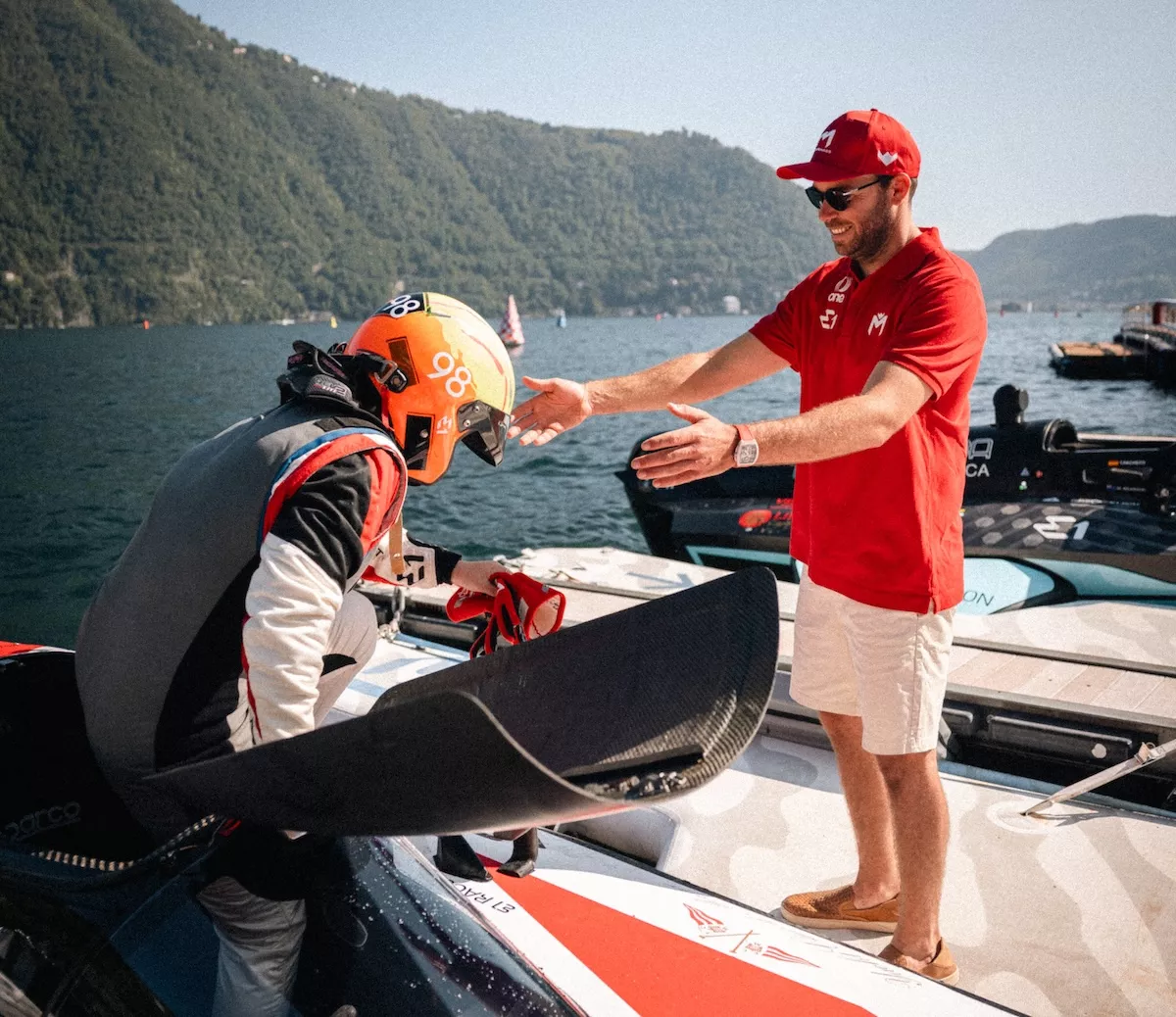
Duncan’s path into powerboat racing began almost by accident, at a water safety course her parents enrolled her in as a child. “My mum and dad have always owned boats, so I’ve grown up around the water,” she says. “One day we went to a training session for children that was designed to teach water safety and how to be safe around boats, which my parents thought was really important. Afterwards they told us there was also a junior boat racing competition and suggested I give it a go. It wasn’t something my family knew anything about beforehand, but that’s really where everything started.”
What followed was a rapid rise through the sport. “From there it just snowballed. The more people you meet, the more opportunities come along, and it’s been a complete whirlwind ever since. I still can’t quite believe I’m here racing in E1 with Team Monaco. It feels crazy, but it’s amazing.”
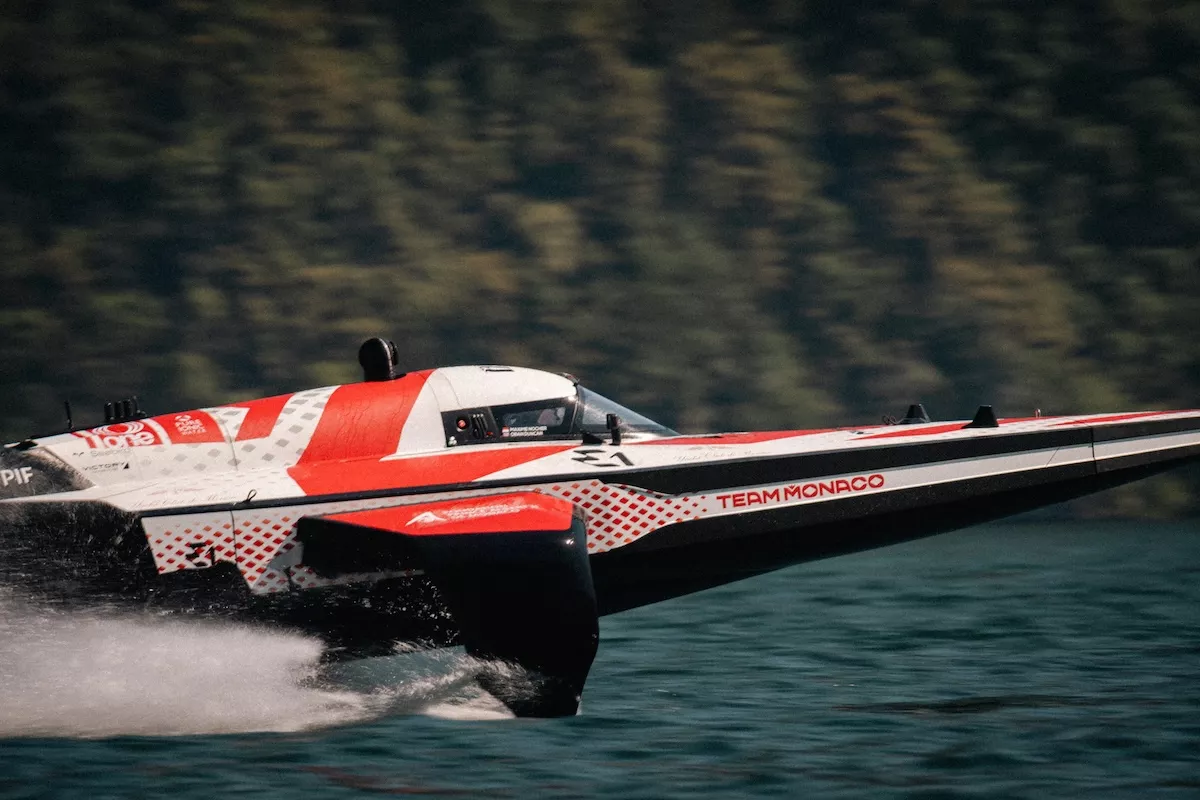
That early experience on traditional boats, she says, has proved unexpectedly useful in adapting to the RaceBird, E1’s electric hydrofoiling racer. “My boating background has definitely helped with the RaceBird. There are a lot of similarities between these boats and the ones I’ve raced before, although there are also plenty of differences. We’re all still learning about the boats, but having that experience on the water has really helped me get the most out of the RaceBird.”
Flying on foils
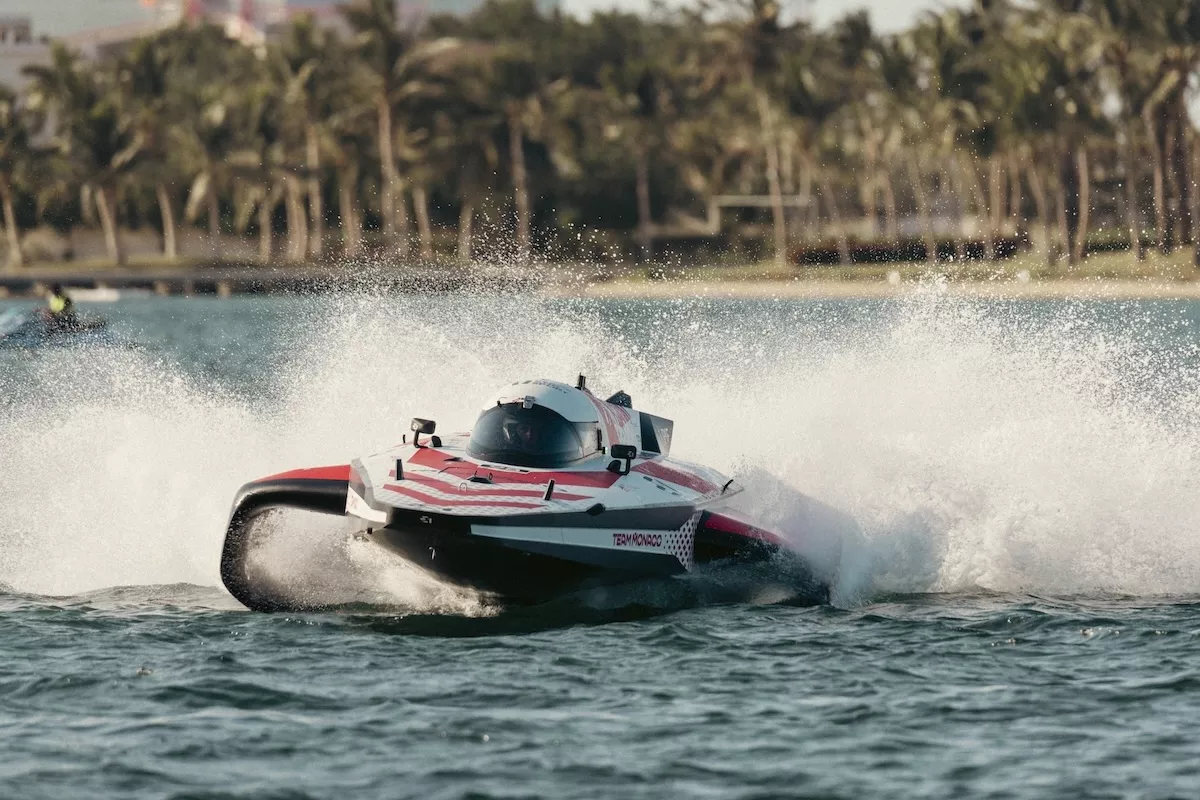
Even with that background, she says nothing fully prepared her for foiling. “Traditional race boats don’t use hydrofoils, so that’s probably the biggest difference. Driving on foils was a completely new experience for me. Max had previous experience with foiling boats, but I hadn’t, so there was a lot to learn.” The electric powertrain added another layer entirely. “The batteries, the electrical systems and the way the boat behaves are all very different from conventional powerboats.”
Now in the championship’s third season, Duncan says the boat still has secrets to reveal. “There are characteristics unique to the E1 RaceBird that you simply don’t find anywhere else. Even though we’re now in the third season, we’re still learning new things about the boat that we’ve never experienced before.” She is conscious of how rare her vantage point is. “That’s one of the reasons it’s such an exciting project to be involved in. Very few people in the world can say they’ve had the opportunity to drive one of these boats.”
On raw speed, Duncan puts the team’s fastest recorded mark at around 98 kilometres an hour, while stressing that velocity is not really the point. “There are certainly boats that go faster, but there aren’t many that can do it while being fully electric and as sustainable as we are. I think that’s a really important point.” She is matter-of-fact about the risks involved in racing this close to the limit. “The racing is still exciting, and the faster you go, the more dangerous it becomes. There’s a balance to strike between performance, safety and creating great racing. I don’t think the speed limits the competition in any way.”
A heartbreaking near-miss in Dubrovnik
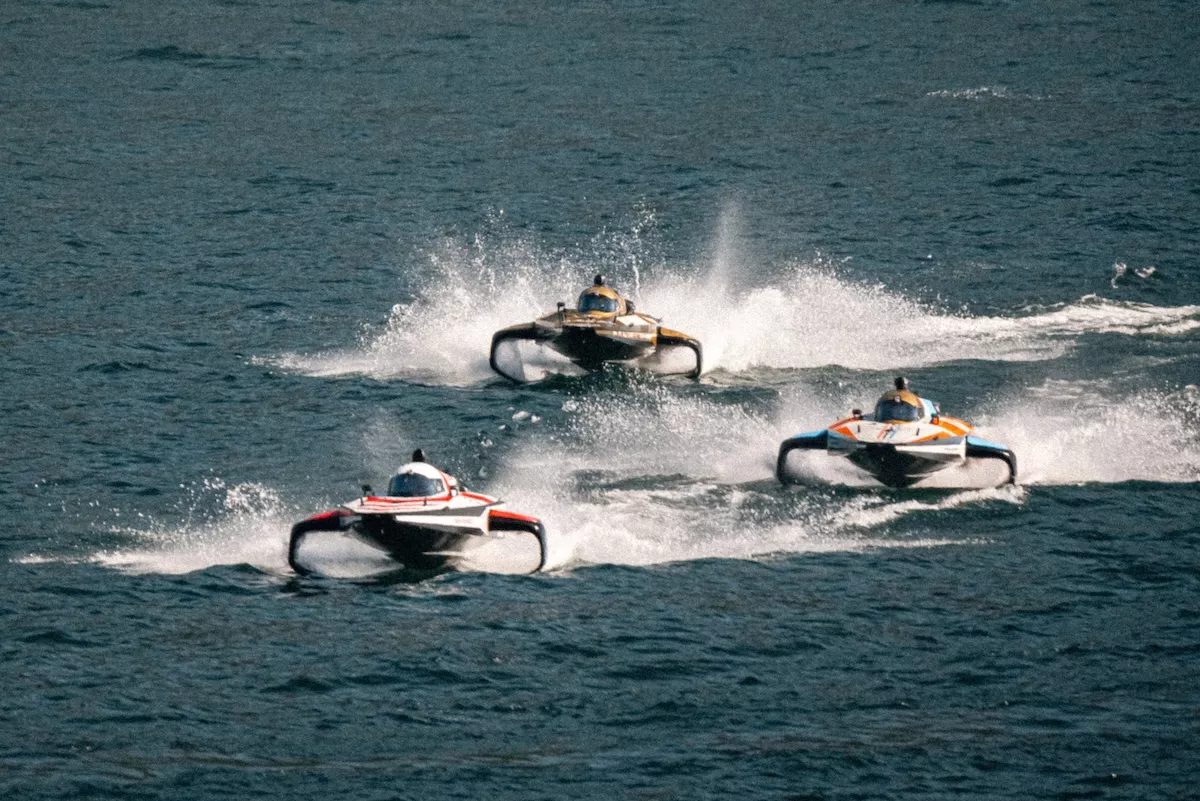
Team Monaco’s most recent outing, in Dubrovnik, brought the season’s sharpest disappointment. Running in podium position early in the final, the team’s hopes unravelled when rough water tore the screen cover from Duncan’s boat. “On the first straight we were right up there and the boat was performing really well. Then we hit a big wave. The conditions were extremely rough and, when we landed, the tear-off came off the screen, allowing a lot of water into the battery bay, which obviously isn’t ideal.”
She managed to keep racing for a short time before the call came to retire. “There was a fault somewhere in the high-voltage system and everything was starting to overheat. The electrical systems weren’t happy, so we had no choice but to stop.” The result still stings. “It was a real shame because I genuinely think we had a podium within our grasp. Hopefully we’ll save that result for Monaco instead.”
Asked whether Monaco’s home waters will be kinder than Dubrovnik’s, Duncan is careful not to make promises the sea cannot keep. “It depends entirely on the conditions. Monaco can be perfectly flat and provide fantastic racing, or it can be just as rough as Dubrovnik. You never really know until race weekend arrives. It can be one of the best places to race, but it can also be incredibly challenging depending on the weather and sea state.”
Racing for something bigger than results
Prince Albert II’s presence at the season-opening race in Jeddah, and his long-standing commitment to ocean conservation through his Foundation, clearly weighs on Duncan as more than ceremonial backing. “It was amazing to have the Prince there in Jeddah. It showed how seriously he takes the project and how much he wants the team to succeed,” she says. “I think it meant a great deal to everyone in the team to meet him. It also reminded us that we’re representing something much bigger than simply racing boats. We’re representing a cause that’s very close to the Prince’s heart, and we want to demonstrate that we’re doing the very best we can, both on and off the water.”
That sense of purpose extends to the wider mission of electric motorsport, which Duncan sees as proof that performance and sustainability are not in conflict. “It’s proving that people can still enjoy all the excitement of racing while reducing the impact on the environment, and I think that’s incredibly important.”
Levelling the playing field
E1’s requirement that every team field both a female and a male pilot, sharing equal driving duties, has placed Duncan at the centre of one of motorsport’s more meaningful experiments in equality. She is unsentimental about what that means in practice. “I’ve always wanted to be seen as equal to the guys, but the reality is there simply aren’t as many women competing. Personally, though, I’ve always wanted to beat everyone I’m racing against. It doesn’t matter who they are, but when you’re often the only woman in a class, it does make you even more determined to prove yourself.”
Watching the racing itself, she says, makes the point better than any statistic could. “When you’re watching the racing you can’t tell the difference between who’s in the boat. That’s exactly how it should be, and I’m really proud to be part of that.”
Asked what she would tell young girls in Monaco who might dream of following her path, she answers: “The biggest piece of advice I’d give is not to be afraid to talk to people. Sometimes that’s the hardest step, but if you’re interested in something, ask questions. Show people you’re excited and that you want to learn. In today’s world, people aren’t going to look down on you for asking. If anything, they’ll be much more willing to help because you’ve shown genuine interest. If you want to do something, just go and do it.”
Eyes on the podium
With the season roughly halfway through, Duncan’s ambitions for the Monaco weekend have not shifted despite Dubrovnik’s setback. “The plan was to get a podium in Dubrovnik and then win in Monaco. Unfortunately Dubrovnik didn’t work out the way we’d hoped, but the goal for Monaco hasn’t changed. We’re still aiming for the top step.”
Looking further ahead, she sees both the series and her own career still gathering momentum. “I see E1 continuing to expand by bringing in more countries, more venues and greater awareness of what the championship can achieve. I hope more people invest not only in the sport itself but also in everything it stands for, particularly sustainability and gender equality. We’re not just another sports team. We’re trying to represent something much bigger and make a positive impact beyond racing.”
See also:
Interview: Chris Taylor on building Team Monaco and bringing electric racing home
Stay updated with Monaco Life: sign up for our free newsletter, listen to our podcasts on Spotify, and follow us across Facebook, Instagram, LinkedIn, and Tik Tok.
Main photo credit: E1 Team Monaco / Opposite Land Productions