

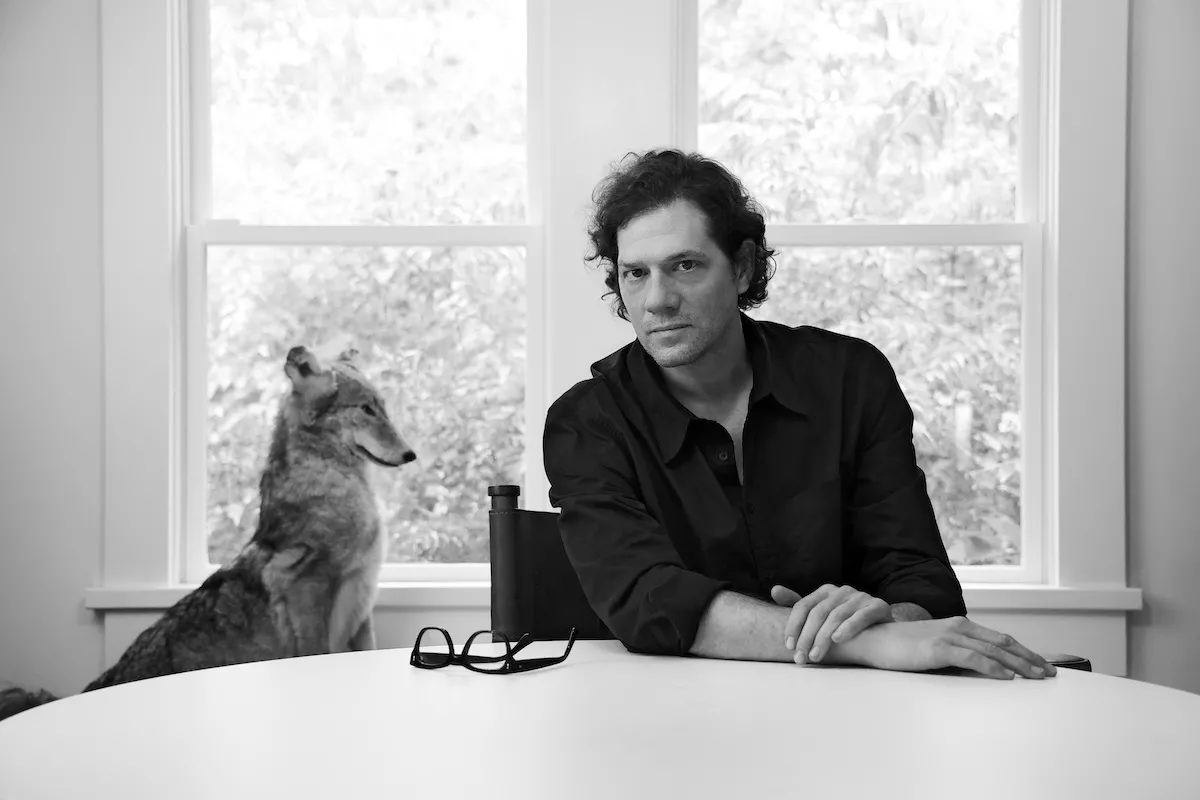
In partnership with the Princess Grace Foundation-USA, Monaco Life proudly presents a monthly series spotlighting the lives and artistic contributions of the Foundation’s remarkable Award winners.
What does it mean to commit your life to storytelling—knowing the path will be uncertain, the rewards often delayed, and the work itself demanding a fearless honesty? For playwright, novelist, filmmaker, and director Adam Rapp, it has meant following curiosity wherever it leads, even when the outcome is unclear.
Raised in the Midwest, Adam Rapp‘s work is known for its emotional intensity, moral complexity, and unflinching exploration of loneliness, class, grief, and survival. In 1999, at a moment when his future as an artist felt deeply uncertain, he received the Princess Grace Playwriting Fellowship—a turning point that helped affirm his voice and sustain his commitment to the craft.
In this candid conversation, Rapp reflects on his unlikely beginnings, the necessity that shaped his multidisciplinary career, the role of theatre as a provocative and meditative art form, and the questions that continue to drive him more than two decades into a prolific career. From Broadway to Steppenwolf, and from Illinois cornfields to imagined days in Monaco, Rapp reminds us why stories that unsettle us are often the ones we need most.
On beginnings and storytelling
Take us back to the beginning—when did storytelling first take hold of you?
It began with short fiction and poetry. I was a sophomore in college, a pre-med major, and things were not going well academically. I had to replace some dropped science credits to stay on the basketball team, and by chance, I wandered into a displaced poetry class near the registrar’s office. There was sitar music playing—Ravi Shankar—and about a dozen students doing an automatic writing exercise.
The professor invited me in and explained that the only rule was that your pencil couldn’t stop moving. I sat down, started writing, and something happened. It felt like discovering a portal inside myself—my imagination dilated for the first time. Twenty minutes later, I had pages of nonsense, but I was completely in love with writing. Soon after, I changed my major and abandoned the pre-med track entirely.
You grew up in Illinois, far from traditional cultural capitals. How did that shape your work?
The Midwest haunts a lot of my writing. I grew up surrounded by endless cornfields, prairie barns, metal silos, and punishing winters. I didn’t see an ocean until I was 27. Being landlocked during those long winters shaped my imagination—I think that’s why snow appears in many of my early plays.
On Career and Creative Process
You’ve worked across theatre, fiction, film, and television. How do those disciplines speak to one another?
The versatility came out of necessity. Early advances for novels and Off-Broadway work were modest, and I had to find ways to stay in New York and pay rent. Film and television became a natural progression—and I was shocked when my first TV paycheck equaled what I’d earned for my first novel. That reality changed how I thought about sustainability as an artist.
Your characters often feel deeply flawed yet profoundly human. Where do those stories come from?
Nothing I’ve written is directly autobiographical, but it all feels familiar. I’ve experienced loss, grief, trauma—like everyone. Bad things happen, and we endure as best we can. I think my work explores that endurance, charting emotional extremes and how people survive them.
What’s the hardest part of writing for you?
The second draft. The first draft often arrives in a kind of freefall—it’s messy but alive. Shaping that chaos into something coherent and precise is the hardest part.
On the Princess Grace Foundation–USA
You received the Princess Grace Playwriting Fellowship in 1999. What did that recognition mean at the time?
It meant everything. I was struggling, working day jobs, questioning whether writing had a future for me. I’d published my first novel, and no one read it. The fellowship was a huge shot in the arm—a reason to keep going. Early validation like that can be enormous, and it was for me.
How did you first learn you’d been selected?
One of the judges, a theatre critic from The Village Voice, emailed me to say he loved my play. I was shocked—I’d almost forgotten I applied.
How did that early support shape your path?
More than anything, it gave me confidence. It made me believe playwriting wasn’t a waste of time—that people were genuinely interested in what I had to say.
On Theatre Today
How do you see theatre’s role in today’s cultural landscape?
The world is deeply divided, and theatre has increasingly become a place of refuge. While that has value, I worry we’ve sometimes lost the impulse to provoke. Theatre is at its best when it’s a bear pit—when truthful conflict is on display. If I ever wrote a “palatable” play, I’d consider it a failure. The greatest sin in theatre is boredom.
In an age dominated by phones and short-term stimulation, theatre asks something different of us. It’s meditative. It requires effort. When people leave a great play, they should have questions—not answers. My responsibility is to provoke, to scare myself out of comfort, and to invite audiences into that trance-like space.
On Broadway & Beyond
Your Broadway debut The Sound Inside received critical acclaim. How did that experience compare to earlier work?
The scale was the biggest difference. I was used to audiences of 50 or 100 people. At Studio 54, it was nearly a thousand. The collective silence, laughter, and response at that level is incredibly powerful. I’ve always seen myself as an underdog—I never imagined Broadway would be part of my journey.
What themes are calling to you now?
I can’t stop thinking about classism in America—about communities left behind, especially after Covid. My upcoming play JACKALS, premiering at The New Group, grapples with that reality.
On Monaco & What’s Next
Have you had the chance to visit Monaco or the Princess Grace community abroad?
I’ve never been to Monaco, but it looks otherworldly—the light, the harbors. I’d love to spend weeks there without a plan, discovering cafés, architecture, and people. And I hear the seafood is incredible.
If one of your plays were performed in Monaco, which would you choose?
The Sound Inside. At its core, it’s about loneliness, connection, and the possibility of finding a soulmate—even across generations. It’s traveled well internationally, which tells me its themes resonate across cultures.
What are you working on now?
In addition to JACKALS, I’m premiering The Night Fawn at Steppenwolf. It’s about returning to the Midwest, confronting buried trauma, and examining how shame and morality shift in the face of revenge. I’ve also just begun a new novel.
Finally, what continues to drive you to tell stories?
I keep getting bothered by things. I’m still curious about what makes life meaningful—about human complexity, greatness, and tragedy. Life remains endlessly mysterious, and I keep wanting to write about it.
Stay updated with Monaco Life: sign up for our free newsletter, catch our podcast on Spotify, and follow us across Facebook, Instagram, LinkedIn, and TikTok.