

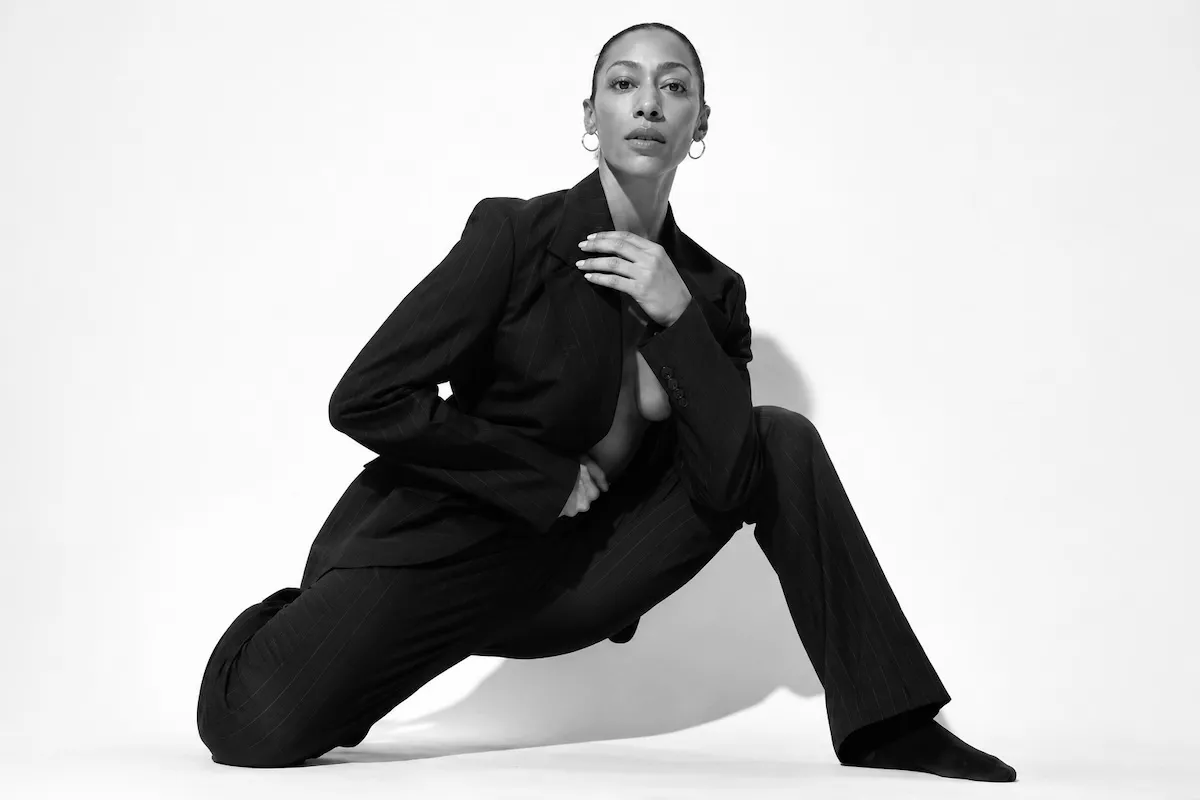
In partnership with the Princess Grace Foundation-USA, Monaco Life presents a monthly series spotlighting the lives and artistic contributions of the Foundation’s Award winners.
For dancer and choreographer Rena Butler, movement has always been a way of discovering what lies beyond the familiar. From her Chicago roots and studies in Taiwan to performing with A.I.M by Kyle Abraham, Bill T. Jones/Arnie Zane Company and Hubbard Street Dance Chicago, Butler has built a career shaped by curiosity, transformation and an openness to the unknown.
Since receiving the Princess Grace Award for Choreography in 2019, Butler has continued to expand her creative voice, creating work for leading dance companies and cultural institutions across the US and abroad, from Chicago and San Francisco to Canada, the Netherlands, France, Sweden and Germany.
In this conversation, she reflects on the experiences that shaped her as an artist, the power of being seen at a pivotal moment in her career, what dance has taught her about letting go, and why grace, both onstage and off, has come to mean something entirely different with time.
Leaving home
You grew up in Chicago and later trained in Taiwan and at SUNY Purchase. How did leaving home and experiencing dance in different cultures begin to shape the artist you became?
Being in new places, experiencing new sights, sounds and smells undoubtedly invigorates me, yet change, although constant, makes me feel incredibly uncomfortable. I think it is somewhere betwixt those two opposing feelings that the liminal space that continually imbues my character, my life and my artistry exists.
I grew up in Chicago, and leaving home to experience dance in Taiwan and later at SUNY Purchase exposed me to very different ways of seeing, moving, listening and understanding the world. But I don’t think the greatest transformation came simply from being in different places. It came from being continually asked to reconsider what I thought was familiar. Every new environment required a certain amount of surrender. I had to listen before I could understand, observe before I could participate, and become comfortable with not always knowing where I belonged.
Travelling and leaving home has, in many ways, become the most familiar pattern in my life, because it is the only pattern that has remained constant. There are always comings and goings, departures and arrivals, beginnings and endings. I am continually shape-shifting, as a dancer, traveller, artist, choreographer and person. Each place leaves something inside of me, and I leave something of myself behind.
Three stages of becoming
You danced with A.I.M by Bill T. Jones/Arnie Zane Company, Kyle Abraham’s Dance Vanguard, and Hubbard Street Dance Chicago – three very different artistic worlds. What did each teach you about finding your own voice?
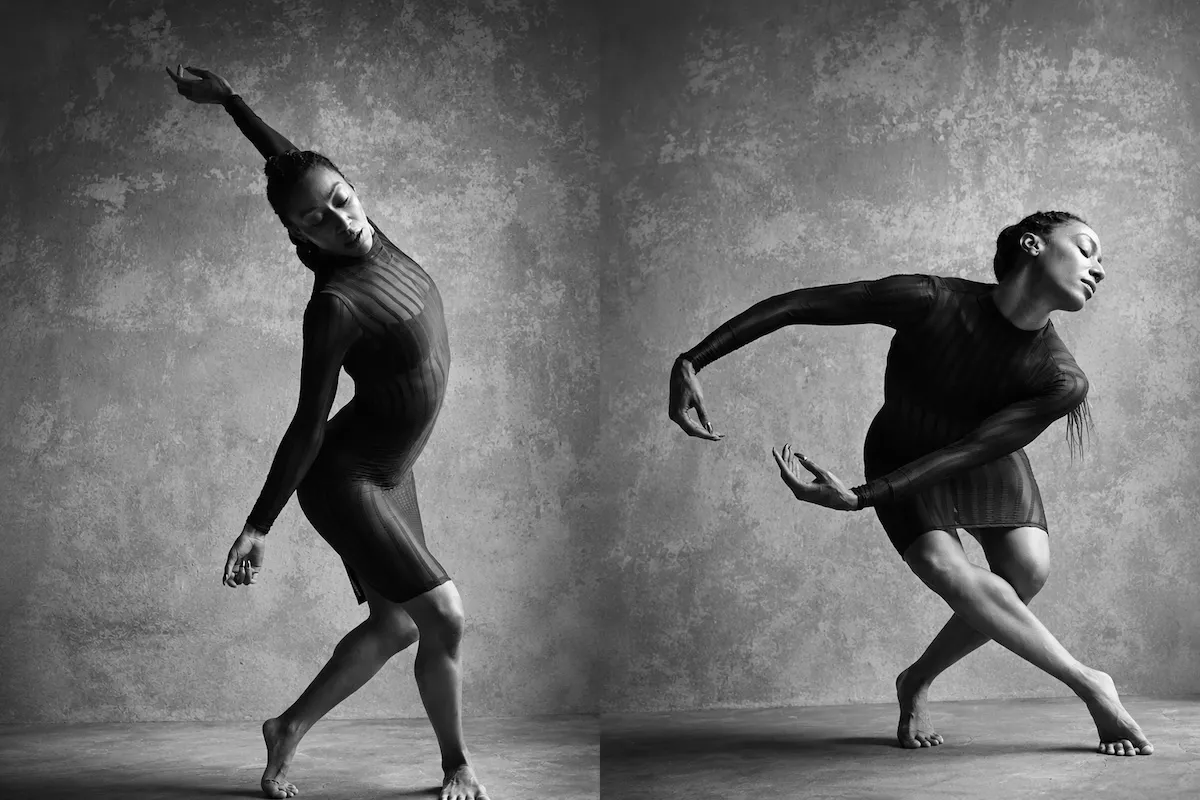
I feel incredibly fortunate that my career placed me inside three very different artistic ecosystems at such formative moments in my life. Looking back, I almost see them as three different stages of becoming. A.I.M taught me how to express myself, Bill T. Jones taught me how to think more deeply about what I was expressing, and Hubbard Street gave me the agency and freedom to truly begin authoring my own voice.
Was there a moment when you stopped thinking of yourself primarily as a dancer interpreting someone else’s vision, and realised you had something of your own to say as a choreographer?
The creator in me was there very early. I was about ten years old when MTV’s ‘Making the Video’ became a major obsession of mine. I was fascinated by the process of watching an idea become a world. I was also a huge Janet Jackson fan, and I remember thinking, I want to make things like this. I want to work with her.
My original dream was actually much broader than choreography. I imagined myself creating for television, music and film. Dance became the doorway through which I eventually entered that world.
As a dancer, I spent years learning how to interpret someone else’s vision, and eventually I became increasingly curious about what would happen if I built the vision myself. Hubbard Street was a major turning point because I was given the agency to choreograph and really explore my voice as a creator.
So although my life looks slightly different from the one the ten-year-old me imagined, in a beautiful way, a major part of that dream actually came true. I’m creating worlds. I’m working with dancers, musicians, filmmakers, designers and other artists. I’m telling stories through movement.
“To be seen in that moment meant everything”
In 2019, you received the Princess Grace Award for Choreography. Where were you when you learned you had won, and what did that recognition mean to you at that point in your career?
I was actually coming home from a solo surfing trip in Costa Rica. I remember receiving a phone call from Diana and completely breaking down in tears in the middle of my airport transfer. I was overwhelmed with emotion.
At that point in my career, I honestly didn’t believe prestigious awards like the Princess Grace Award were necessarily available to Black female creators like myself. It was, and still is, incredibly rare to see Black women consistently recognised as contenders for the highest levels of prestige within our field. The dance world is not separate from the larger society we live in, and those patterns of visibility, or invisibility, are deeply reflected within our arts institutions.
To be seen in that particular moment, in 2019, meant everything to me. I had become accustomed to holding my own visibility: believing in myself, advocating for myself, and essentially holding my own mirror, because there weren’t always many mirrors being held up to me. Receiving that recognition felt like a gigantic gust of fresh air.
New places, new bodies
Since then, your choreography has taken you from Hubbard Street to the Dutch National Ballet, the National Ballet of Canada and San Francisco Opera. When you enter a new company or a new country, how does that place, and the dancers you meet there, find its way into the work?
I have a very deep, curious appetite, and I think I’m constantly looking for environments that will satisfy it. When I enter a new place, I’m being invited to observe, listen, taste, smell, question and explore. The dancers become a huge part of that education too. Every body comes with its own history, intelligence, instinct and way of understanding movement, and I’m interested in discovering what happens when my language meets theirs.
I’m also very interested in the vulnerability of constantly being confronted with the new. It can be uncomfortable, but there is almost always something intriguing on the other side of that discomfort. Sometimes it finds its way directly into the choreography; sometimes it simply expands the way I see.
The art of letting go
Dance is one of the most fleeting art forms: something can take months to create and then exist fully for only a few minutes onstage. Is that impermanence part of what you love about it?
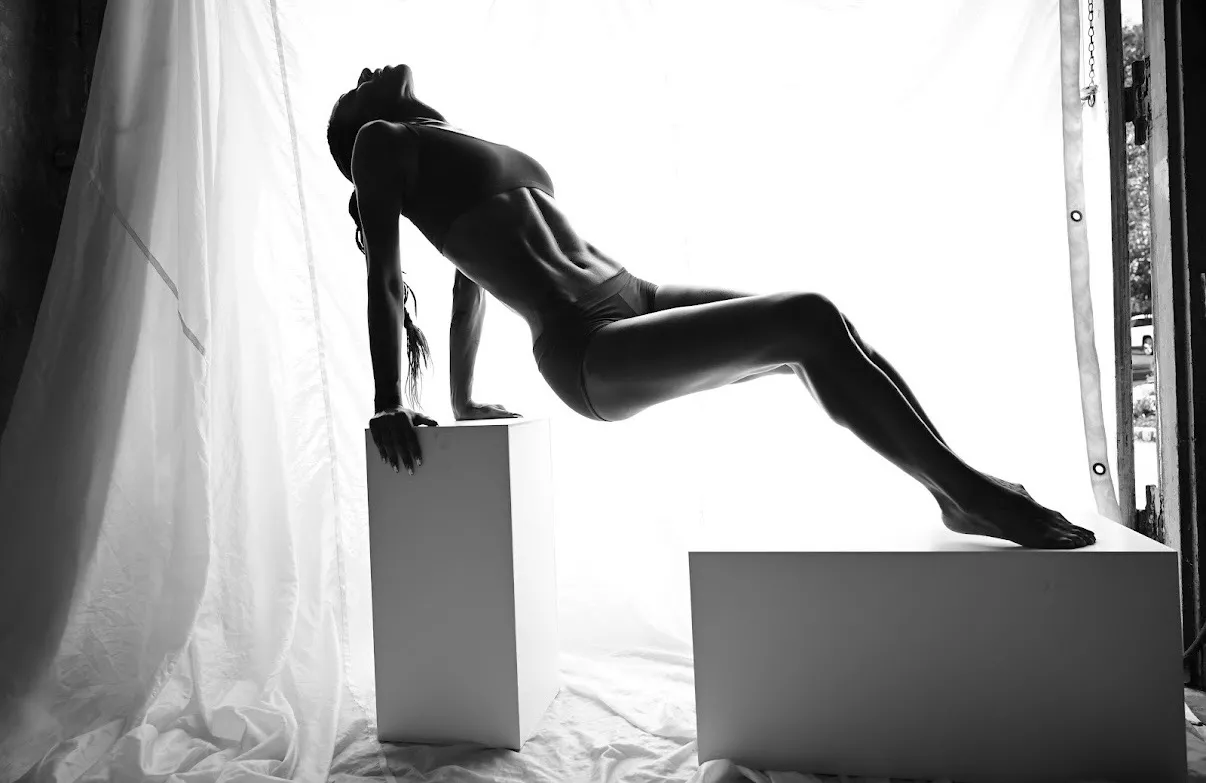
I think it’s a very bittersweet experience. There are some works you build that hold so much meaning. You nurture them for months, sometimes years, and when they leave you, there is a genuine sense of grief. You wish there could be some permanence to them, some way of holding on to the exact moment, the exact bodies, the exact energy that existed in that room.
But I also think dance continually teaches me the lesson of letting go. Life shepherds you towards that lesson over and over again: this was beautiful, and now you have to release it. There’s something almost cheeky about that wink from life. Yes, but let go. Let it flow.
Believing in talent
Princess Grace was a passionate supporter of the arts, and the Foundation created in her memory has carried that legacy forward for generations of artists. As one of its Award winners, has that influenced the way you think about mentorship, patronage and believing in talent before you know where it will lead?
Absolutely. Receiving the Princess Grace Award made me deeply aware of what it means for someone to believe in an artist before the full picture of their life and career has revealed itself. There is something incredibly powerful about being supported at a moment when you are still becoming.
I was still very much in the process of discovering who I was as a choreographer when I received the award. Someone looked at what I was making and essentially said, I see something here. I believe this is worth investing in. That kind of belief can alter the trajectory of an artist’s life. It gives you permission to take yourself seriously before you necessarily have all the evidence to do so.
It has made me think a lot about mentorship and patronage as forms of stewardship. Sometimes supporting an artist isn’t about knowing exactly what they will become. In fact, I think the beauty is in not knowing. It is about creating enough space, resources, encouragement and trust for someone to discover what is possible.
That has certainly influenced the way I show up for younger artists. I try to remember what it felt like to be the person still searching, still experimenting, still a little green. I want to be someone who can offer a mirror, but also a door: someone who can say, I see you. Keep going. There may be something here that you haven’t even discovered yet.
What grace means now
The word ‘grace’ belongs naturally to both Monaco and dance. What does grace mean to you now, not simply as a quality of movement, but as a human quality?
For a long time, I understood grace through the body: the refinement of a gesture, the ability to make something difficult appear effortless. But the older I get, the more I understand grace as a human quality. It is knowing when to hold on and when to let go, remaining curious in the face of uncertainty, and allowing yourself to evolve without needing to know exactly who you are becoming.
A dream day in Monaco
What does a dream day in Monaco look like to you?
My dream day in Monaco would begin slowly, with a good coffee, a view of the Mediterranean and nowhere to rush off to. I’d spend the morning swimming, wandering through the old town and taking in the architecture, history and beautiful surroundings. I love places that engage all my senses, so I’d happily spend hours exploring, perhaps stopping by the Oceanographic Museum to satisfy my curiosity.
In the afternoon, I’d treat myself to a luxurious spa experience before getting dressed for an evening at the opera or ballet. As someone who spends so much time creating performances, there’s something wonderful about simply sitting in the audience and enjoying someone else’s artistry.
I’d end the night with a delicious Mediterranean meal, good wine, even better conversation and a peaceful walk along the water. A little adventure, culture, indulgence, and plenty of time to simply enjoy being there.
Follow Rena Butler on Instagram @RenaButler.
Monaco Life is written by qualified journalists, writing original content. Sign up for our free newsletter, listen to our podcasts on Spotify, and follow us across Facebook, Instagram, LinkedIn, and Tik Tok.
Main photo credit: Theik Smith