

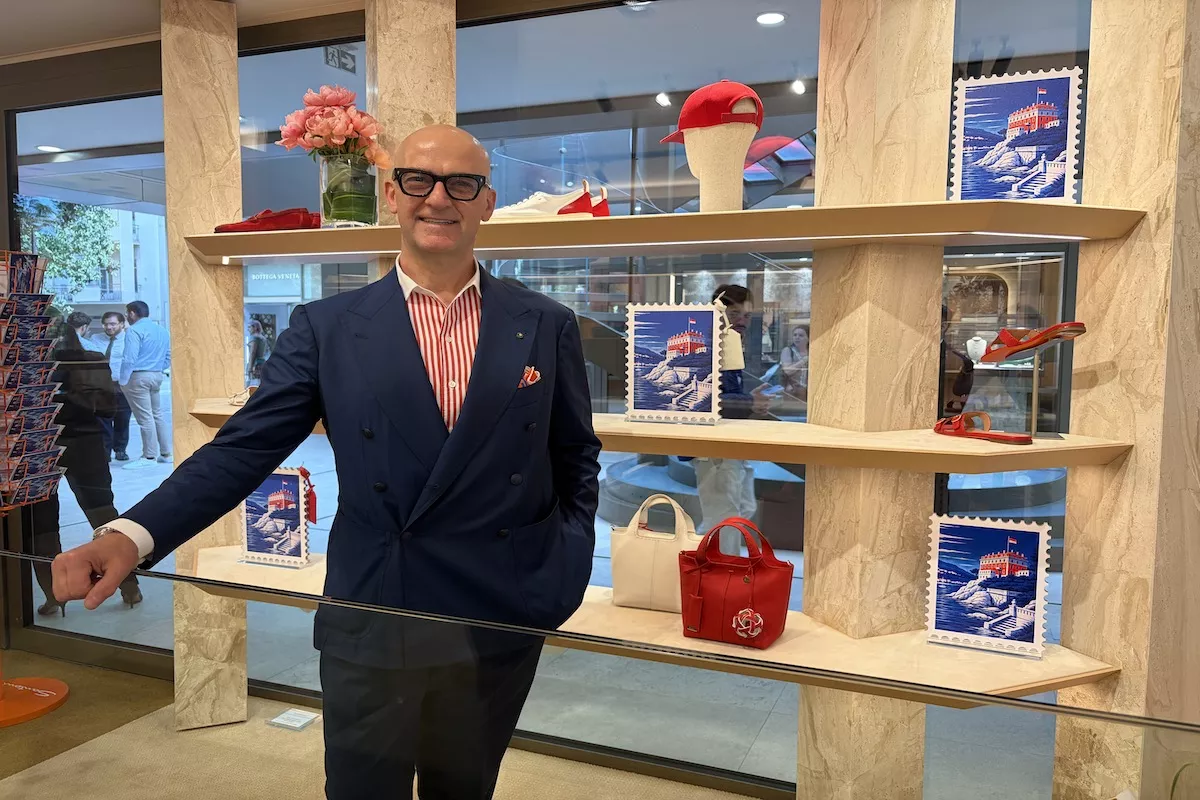
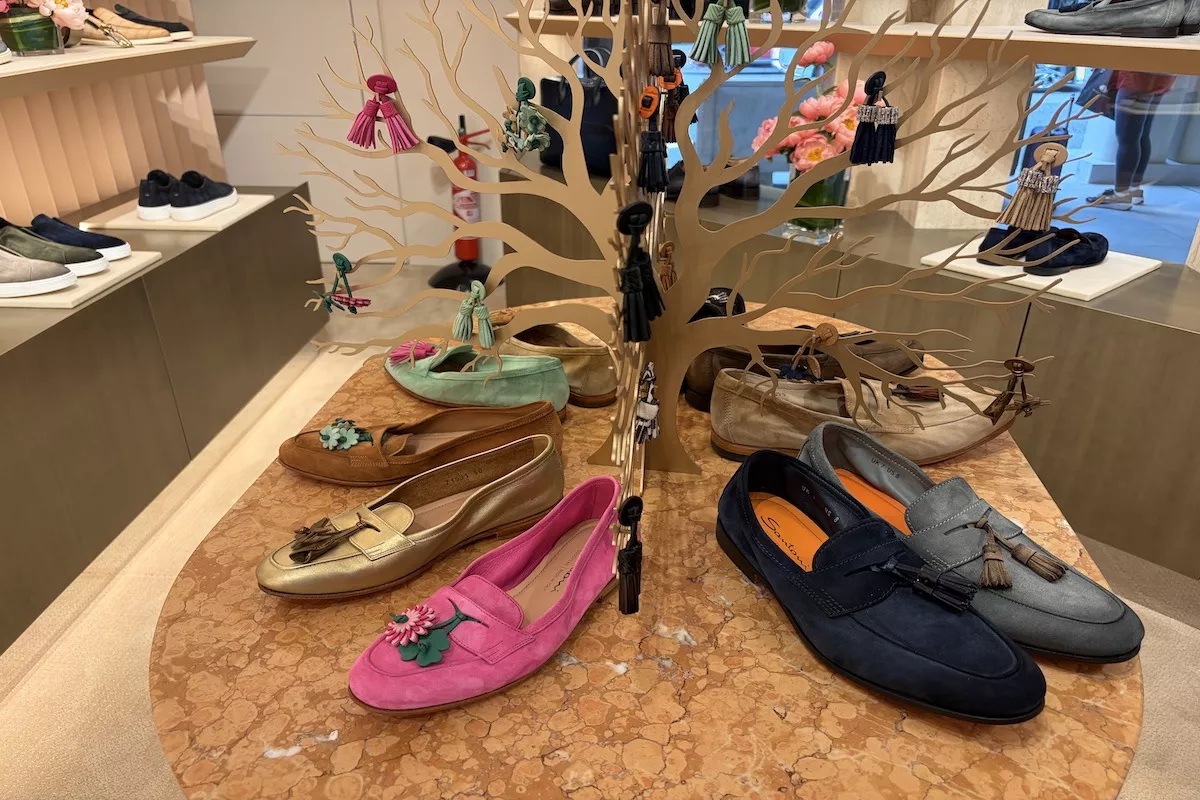
Every shoe that leaves Santoni’s factory in the Marche region of Italy starts its life white. The raw leather remains untreated until the shoe is fully constructed — only then do a team of decorators, recruited from fine art institutes, begin applying the colour by hand, layer by layer, in a technique borrowed from Renaissance painting.
That process, known as velatura, or colour glazing, is at the centre of what the Italian footwear maison presented to press in Monaco last month, as it opened a new flagship boutique in the Principality.
Craft at scale
The tension between artisanal production and commercial volume is one Santoni chairman Giuseppe Santoni addressed directly. “It is a beautiful fusion of the ‘engineered artisan’ and the ‘humanist engineer,'” he said. “The digital designer must understand that a human being will ultimately build the shoe by hand, accepting those natural physical limits. Meanwhile, the artisan follows a structured blueprint to maintain our standard.”
Around 200 decorators work at the brand’s 50,000-square-metre facility in Corridonia, in the Province of Macerata, where 90% of production is handled in-house. The workforce overall numbers close to 1,000 people. Digital engineering is used to design models, fits, and lasts, but the finishing remains manual — a system the brand describes as “replicable quality”.
The sustainability case for leather
Santoni used the Monaco launch to address the growing debate around synthetic alternatives to leather, with the chairman making a direct argument in favour of natural materials. “No animal is ever raised or slaughtered purely for footwear. The tanning industry actually rescues a byproduct of the food industry — it is, in reality, a form of recycling,” he said.
At the Corridonia factory, leather offcuts are ground down and repurposed into internal shoe components such as heels and reinforcements. All dyes used are water-based. Solar panels installed across the facility’s rooftops generate approximately two megawatts of electricity, and with energy storage batteries capturing power on non-working days, the company self-produces around two-thirds of its total energy needs.
Monaco capsule and bespoke services
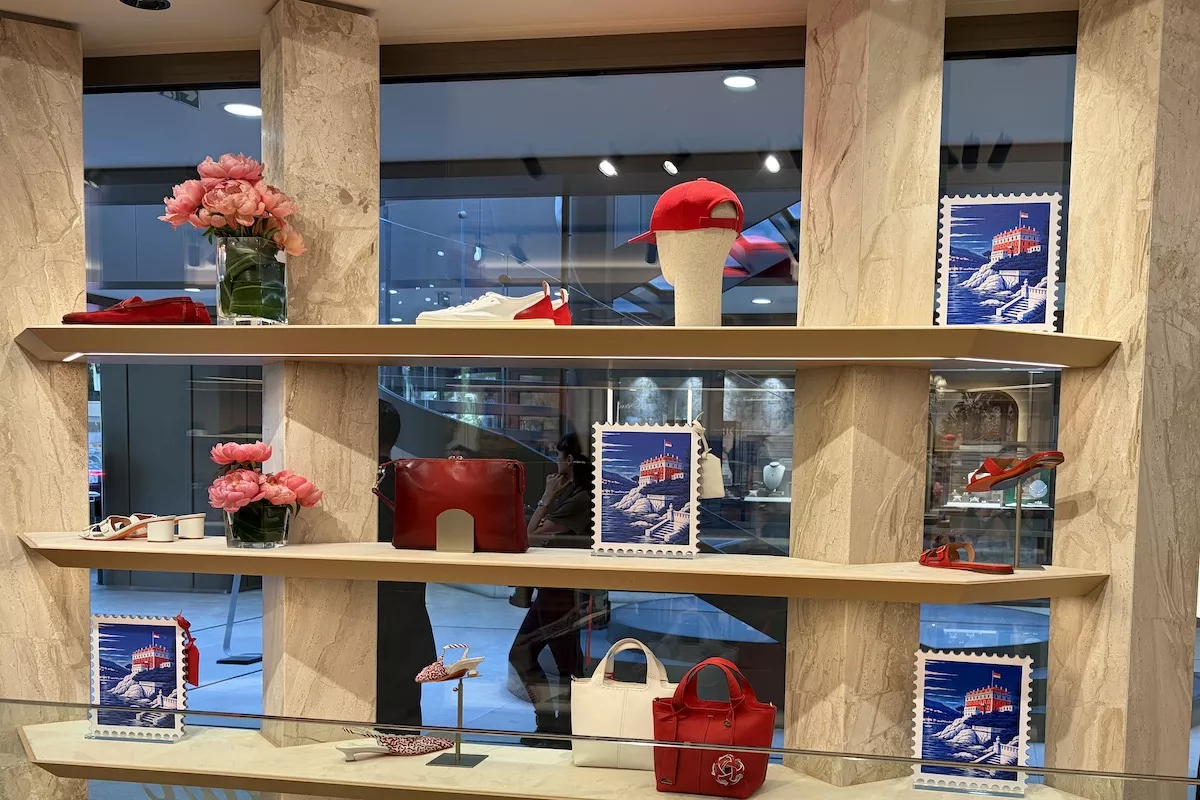
To mark the boutique opening, Santoni has produced a small capsule collection in the red and white of the Monegasque flag, including a Monaco-specific shade of red developed for the occasion. The new store also offers a made-to-order service and a fully bespoke option, in which a craftsman takes individual foot measurements and carves a custom wooden last, which is then archived in Italy for future orders.
Santoni’s Monaco opening adds the Principality to a retail presence that includes New York, Miami, Rome, and Capri.
Stay updated with Monaco Life: sign up for our free newsletter, listen to our podcasts on Spotify, and follow us across Facebook, Instagram, LinkedIn, and Tik Tok.
Photos by Monaco Life