

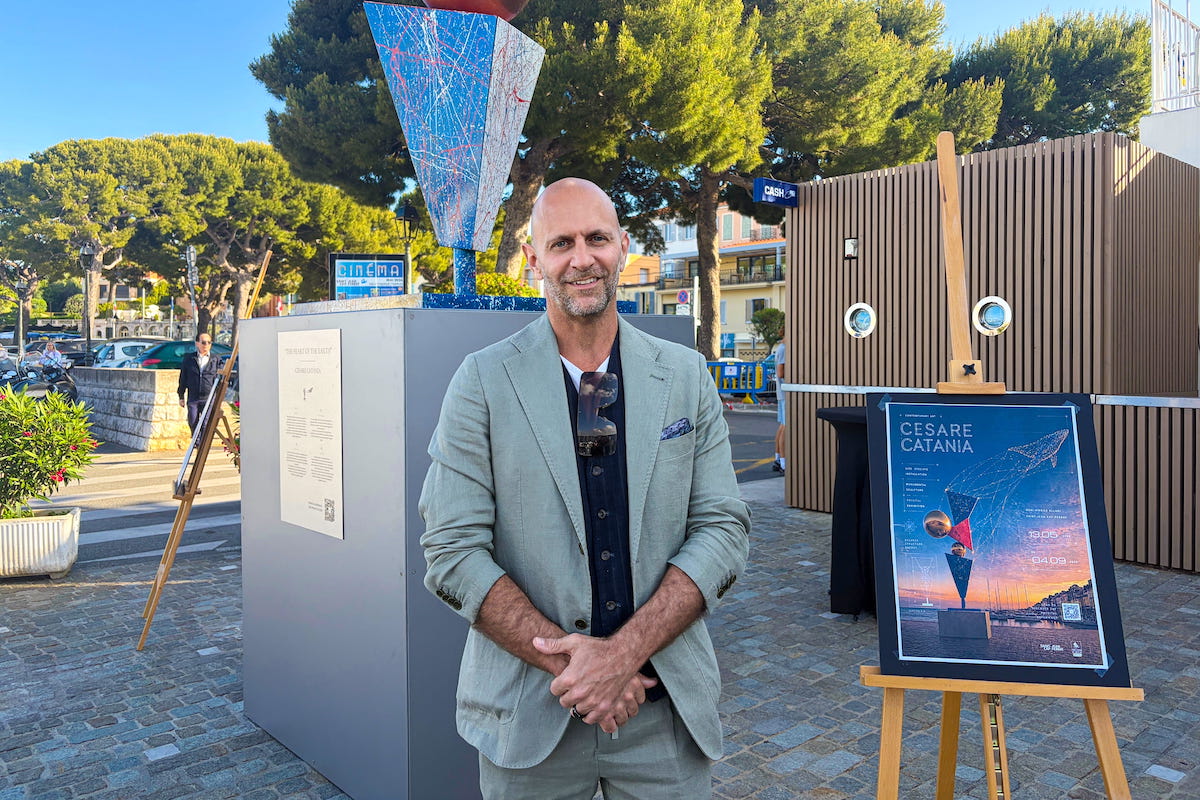
Art met the elements on Wednesday as Cesare Catania’s latest masterpiece, The Heart of the Earth, took centre stage at Quai Virgile Allari. The immersive monumental installation was inaugurated by Saint-Jean-Cap-Ferrat Mayor, Jean-François Dieterich, inviting residents and visitors to explore a ‘phygital’ journey that bridges the gap between physical sculpture and digital wonder.
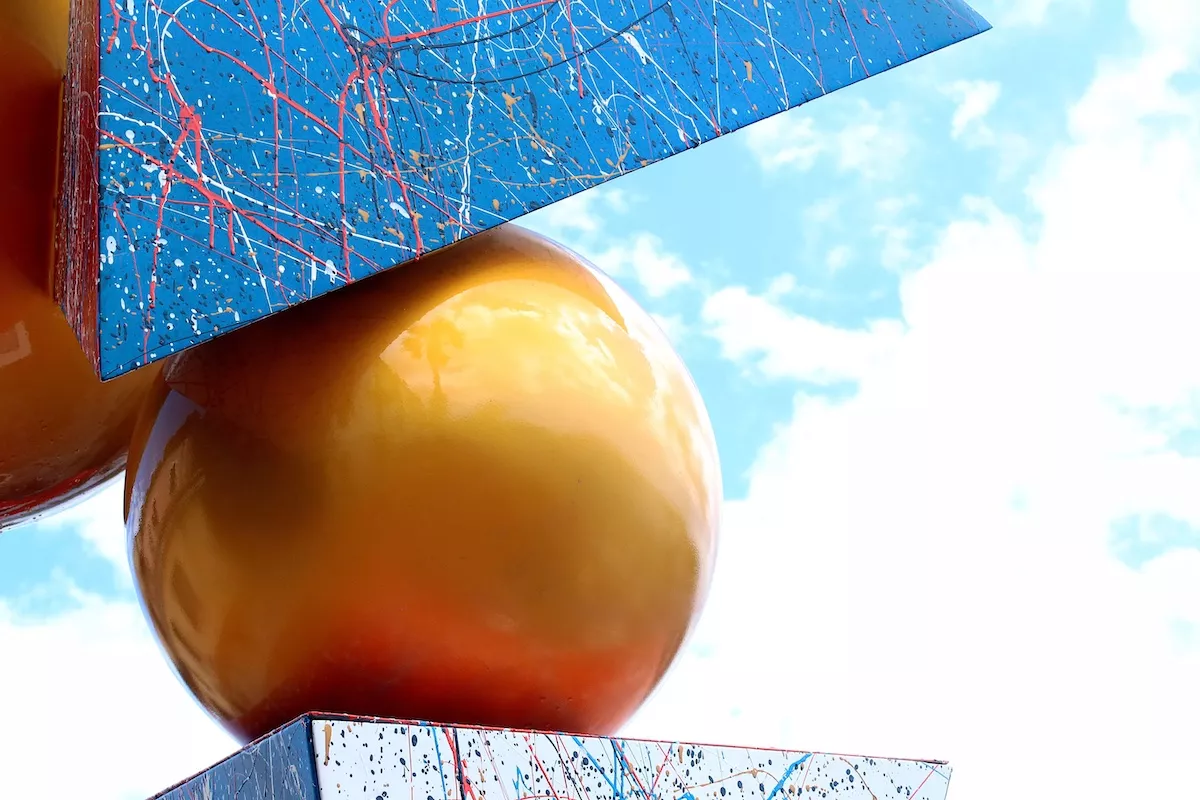
A five-metre steel monolith of spheres and pyramids, Cesare Catania’s The Heart of the Earth challenges the eye with its complex, precarious geometry. Its form appears to defy the laws of physics, compelling the observer to linger in a state of captivated tension, half-expecting the structure to yield to gravity at any second.
Yet, the logic behind this seemingly vulnerable structure is as sophisticated as it is profound. As Catania explains: “The spheres and pyramids exist in an unstable yet possible balance—much like our planet”. In this symbolic geometry, the spheres represent perfection and generative motion, embodying the feminine, while the pyramids and triangles represent the masculine. Together, they represent humanity, sustained by the essential harmony between men and women.
“In this sense, the artwork represents the human race”, says Catania. “Standing here, overlooking the Mediterranean, I wanted to highlight that our existence rests upon the delicate fragility of the ocean”.
On the ‘Phygital’ Experience
In recent years, Cesare Catania’s artistic research has ventured deep into the ‘phygital’ realm—a seamless fusion of the physical and digital worlds. Here, the digital component is far more than a mere overlay; it acts as a catalyst, activating a deeper layer of interpretation. Through augmented reality the work functions as a living, layered system that evolves alongside the viewer’s perception, revealing an invisible dimension of the sculpture and extending its interpretation far beyond its physical form.
Catania explained to Monaco Life how how the digital dimension of The Heart of the Earth alters the way visitors perceive the sculpture’s immense weight and gravitational presence within its maritime setting.
“The sculpture is a massive, physical undertaking”, Catania said. “For me, the digital dimension acts as a ‘booster’ for the physical experience. While some may not feel an immediate emotional connection to a static object, merging it with digital sensations allows us to unlock new depths of emotion. My goal is to use technology to help people truly feel the art”.
Engaging with this digital layer is effortless: visitors simply scan the QR code situated beside the sculpture to immerse themselves in Catania’s expanded vision.
Precise Passions: Inside the Mind of Cesare Catania
Beyond his acclaim as a contemporary painter and sculptor, Cesare Catania possesses a professional background in civil engineering. His artistic research is born from a compelling tension: the intersection of rigorous mathematical calculation and the desire to translate that data into a profound sensory experience.
For Catania, these two worlds are not in conflict, but in a constant, supporting dialogue. “I would say that engineering follows sensibility”, the artist explains. “The artistic vision always leads, and the engineering follows to bring that vision to life. Given the monumental scale of these sculptures, engineering is indispensable—it ensures they can physically stand and endure. It is the vital tool that supports the creative concept”.
In his practice, engineering is far more than a technical requirement; it is the very lens through which reality is observed, deconstructed, and reimagined. His works emerge as striking geometric configurations that, while appearing beautifully precarious, are anchored by a precise structural harmony. Here, the invisible language of forces, loads, and tensions is masterfully translated into a visual symphony of balance and form.
‘The Manifesto of Inclusivity’: Why Cesare Catania is Breaking the Gallery Walls
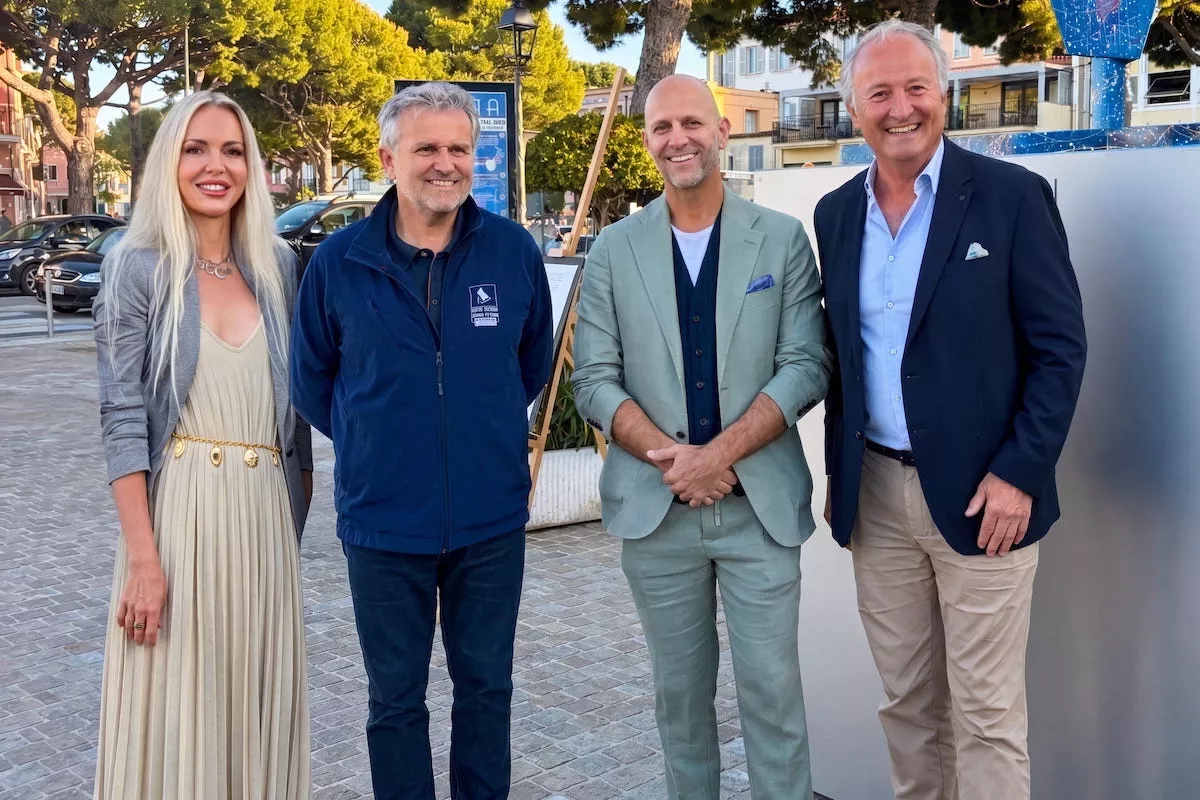
In 2024, Catania formalised his artistic philosophy in the ‘Manifesto of Democratic Art’, reimagining the artwork not as an isolated object, but as an open, accessible, and shared system. Within this framework, monumental sculpture and the ‘phygital’ dimension serve as complementary tools, designed to expand the audience’s engagement far beyond the restrictive confines of a traditional gallery.
When asked what connection he hopes to spark by placing an interactive work in a bustling public port rather than a private exhibition space, Catania’s response is as principled as the structure of the work itself.
“My ‘Manifesto’ is a flag I fly to propose a different way of perceiving art”, he explains. “The French Riviera is a truly international hub; it embraces every culture. This is why I prefer the term ‘Inclusive’ over merely ‘Democratic’. I want to reach everyone—not just the elite or the traditional art world. By choosing this location, the art is invited to be embraced by an international, inclusive public, making it a shared experience for all who pass by”.
The Perfect Canvas
This philosophy found its physical home in Saint-Jean-Cap-Ferrat. Described as a profound dialogue between the sea, the mountains, and the land, The Heart of the Earth draws directly from the unique energy of the peninsula. We were keen to discover what it was about this specific landscape that inspired Catania to anchor his exploration of tension and balance on these shores.
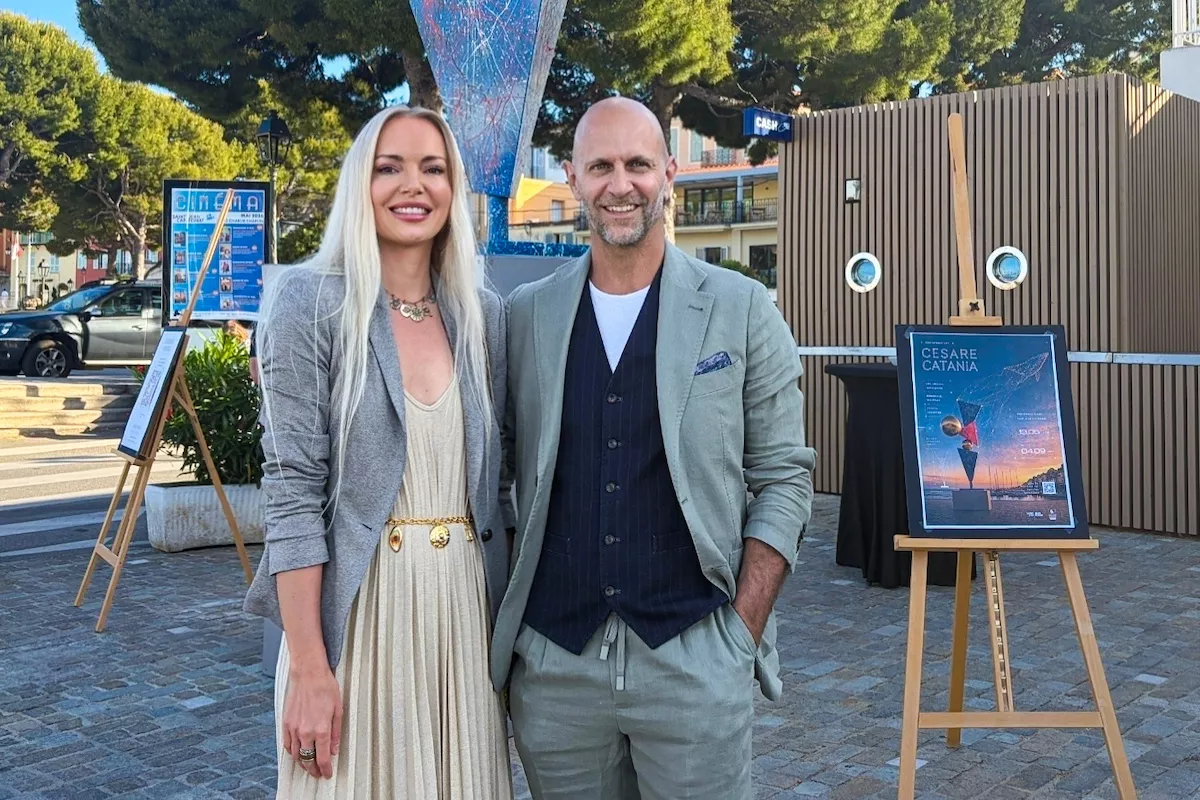
“This location possesses a rare alchemy—the mountains, the sea, and the village all converge here. It is a perfect crossroads”, Cesare reveals. “Saint-Jean-Cap-Ferrat, in particular, is a commune entirely committed to the arts. It offers a singular harmony of nature and culture, providing the ultimate ‘canvas’ for a project of this scale. It is, quite literally, the perfect setting”.
Stay updated with Monaco Life: sign up for our free newsletter, listen to our podcasts on Spotify, and follow us across Facebook, Instagram, LinkedIn, and Tik Tok.
Main photo by Virginia D’Umas