

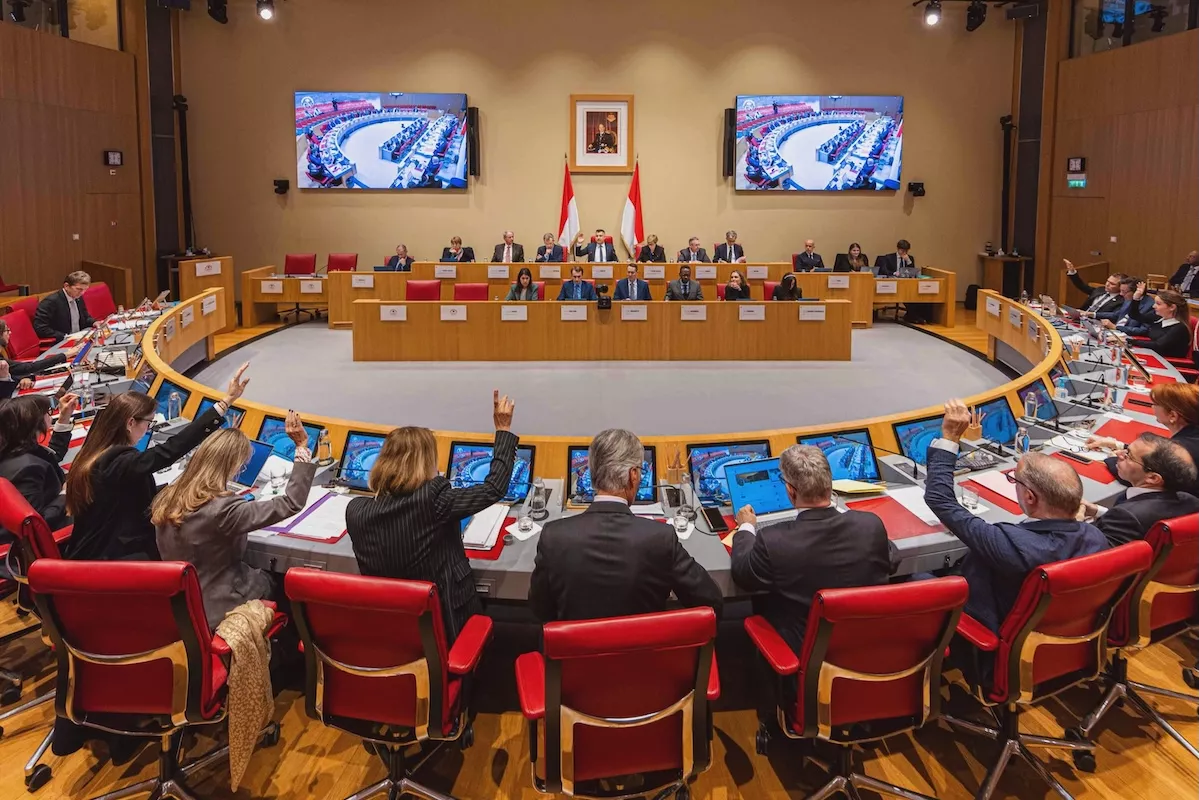
Monaco’s National Council has adopted two landmark laws strengthening protections for disabled people and formally recognising family carers for the first time, in what the government has described as a major new step in the Principality’s social policy.
Passed during a public session on Thursday 11th June, the legislation introduces significant changes to Monaco’s disability framework while creating a dedicated legal status for family members who care for elderly or dependent relatives. The reforms build on a series of measures introduced in recent years, including the government’s Handipact disability strategy and changes to disability benefits aimed at strengthening financial independence and inclusion.
End of the automatic transition to old-age status
One of the most significant changes concerns the long-standing rule that automatically transferred disabled people from disability status to old-age status at the age of 60.
The government argued that the system no longer reflected the reality of many situations, often disrupting personalised care plans and creating barriers to continued recognition of disability later in life. Under the new legislation, responsibility will now fall to the disability assessment commission to determine whether disability or age-related loss of autonomy is the predominant factor in each individual case.
The reform also broadens access to financial support designed to compensate for the daily effects of disability, extending assistance to individuals who previously did not qualify for coverage despite facing substantial costs linked to their condition.
New support for parents of disabled children
The law further introduces a new allowance for parents who are forced to leave employment in order to care for a disabled child.
While Monaco already provides financial assistance and personalised support plans for children with disabilities, the government acknowledged that some families continue to face situations in which one parent has little choice but to stop working. The new measure is intended to provide income support in those circumstances while also protecting future pension rights through state-funded retirement contributions.
“When a parent is forced to stop working to look after their disabled child, it is a failure — a failure of the state’s support network for these families,” Christophe Robino, Government Councillor-Minister for Health and Social Affairs, told the National Council. “That is why we are putting in place this new provision: to mitigate without incentivising.”
Family carers gain legal status
The second law establishes a formal legal status for family carers, recognising the role played by relatives who support elderly or dependent family members at home.
Until now, this role had no dedicated legal recognition under Monegasque law despite its growing importance in an ageing society. The new framework grants carers a series of rights intended to help them balance their caring responsibilities with their professional and personal lives.
The government has presented the measure as the foundation for further reforms to come, including a future respite system that would allow carers to take temporary breaks from their responsibilities while ensuring continuity of care.
“The goal today is above all to allow the family carer to fulfil their role without it affecting their health, their social connections or their future,” Robino said during the debate.
Responding to demographic realities
The reforms arrive as Monaco continues to grapple with the implications of having one of the world’s oldest populations. According to the latest figures from IMSEE, life expectancy in the Principality stands at around 87 years, among the highest globally.
Against that backdrop, the government has described the adoption of the two laws as an important milestone in the continued development of Monaco’s social model, strengthening support for vulnerable residents while recognising the crucial contribution of those who care for them on a daily basis.
Stay updated with Monaco Life: sign up for our free newsletter, listen to our podcasts on Spotify, and follow us across Facebook, Instagram, LinkedIn, and Tik Tok.
Photo source: National Council of Monaco