

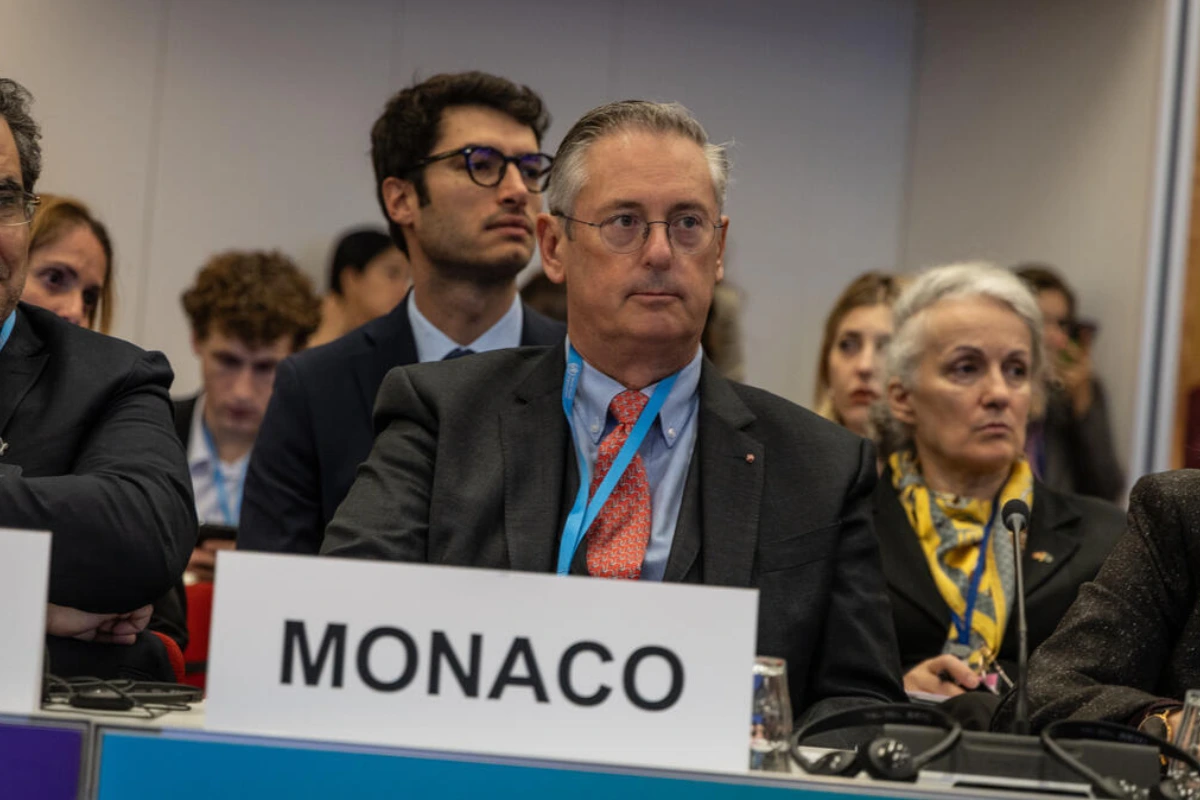
The potential impact of young people’s digital habits on their mental health was among the issues raised by Monaco at a World Health Organisation meeting in Copenhagen, where Health Minister Christophe Robino highlighted ongoing cooperation on the subject.
Robino led the Principality’s delegation to the 76th session of the World Health Organization’s (WHO) Regional Committee for Europe from Tuesday 27th to Thursday 29th October. The meeting brought together representatives of the region’s 53 member states to discuss European health priorities.
During the general debate, he highlighted cooperation between Monaco and WHO Europe on young people’s use of digital technology and its possible consequences for mental health.
Initiated through Monaco’s presidency of the Council of Europe’s Committee of Ministers, the collaboration brings together an approach based on children’s rights and the WHO’s public health expertise. According to the government, the work is also informing discussions within the Principality.
GROWING CONCERNS OVER ONLINE HABITS
WHO research published in September 2024 found that 11% of adolescents surveyed showed signs of problematic social media use in 2022, up from 7% in 2018. The study covered almost 280,000 young people aged 11, 13, and 15 across 44 countries and regions in Europe, central Asia, and Canada.
Problematic use included difficulty controlling time spent on social media, neglecting other activities, and experiencing negative consequences in everyday life. The WHO also reported associations with poorer mental and social wellbeing, less sleep, and later bedtimes.
The relationship is not simple, however. In a policy brief published in May 2025, WHO Europe explained that digital technology can have both positive and negative effects on young people’s wellbeing, with vulnerable young people disproportionately affected by the harms.
It also described a relationship that can work in both directions: increased screen time may exacerbate mental health difficulties, while those difficulties may lead to greater technology use.
HEALTHY AGEING AND RESPONSIBLE AI
Monaco’s delegation also contributed to discussions on healthy ageing and artificial intelligence in healthcare.
On ageing, the Principality stressed the need to adapt care pathways and strengthen healthcare professionals’ training to meet older people’s specific needs, supporting their autonomy and quality of care.
On artificial intelligence, Monaco called for responsible development that respects ethical principles and serves both healthcare professionals and patients.
Robino also expressed support for WHO reforms, while stressing the importance of protecting the organisation’s essential work amid financial constraints and multiple crises.
Monaco Life is written by qualified journalists, writing original content. Sign up for our free newsletter, listen to our podcasts on Spotify, and follow us across Facebook, Instagram, LinkedIn, and Tik Tok.
Photo provided