

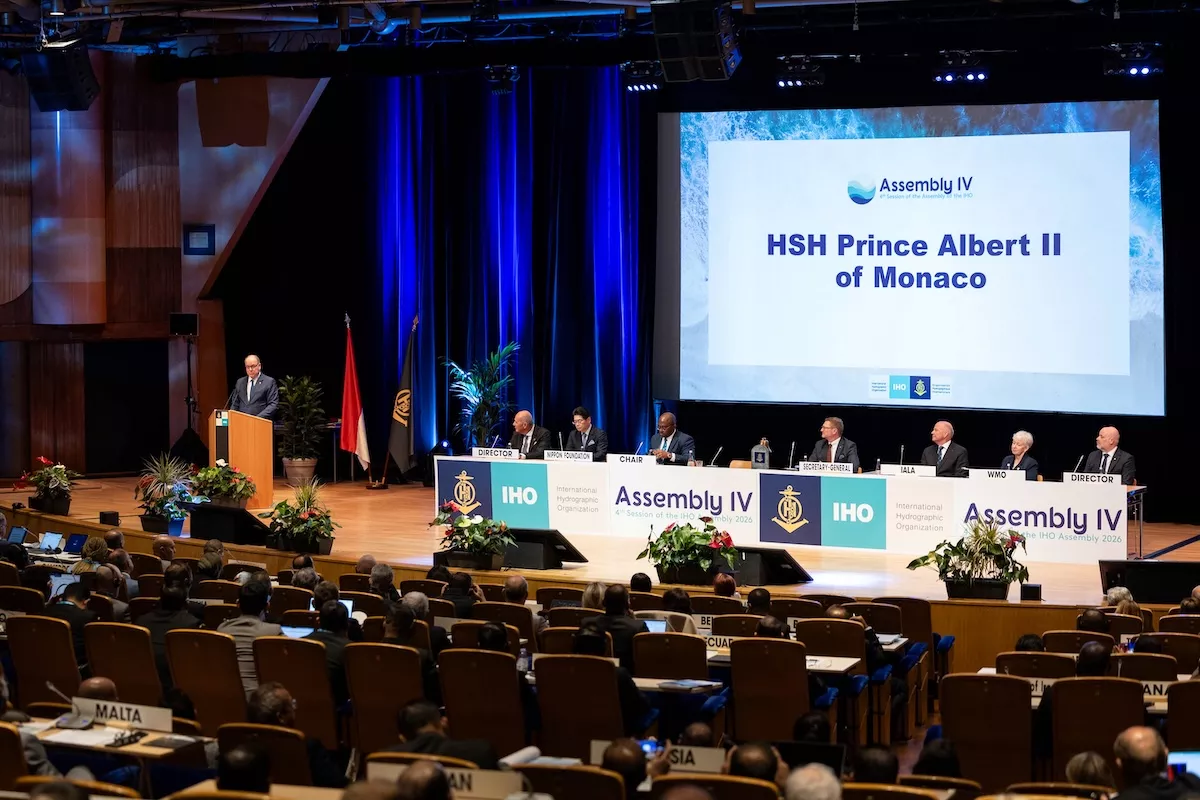
Monaco became an unlikely theatre of maritime spectacle from 20th to 23rd April as it hosted the fourth General Assembly of the International Hydrographic Organisation, drawing more than 500 delegates from 104 member states to the Rainier III Auditorium — and, rather more unexpectedly, setting the Riviera sky alight on the opening evening.
The assembly’s visual centrepiece was Port Hercule itself, where three highly specialised vessels were moored for the occasion: the Caio Duilio, a 152.9-metre Italian destroyer typically deployed on NATO operations; the USNS Marie Tharp, a 110-metre American oceanographic research vessel; and Spain’s Tofiño, dedicated to hydrographic surveying and seabed mapping. Completing the display was the DriX O-16, a 16-metre autonomous surface vehicle capable of operating for up to 30 days across 3,500 nautical miles, which conducted live demonstrations in the harbour.
On the opening evening, a wingsuit display involving five flyers dropped from a helicopter — three equipped with stage pyrotechnic jets — sent bright sparks across the twilight sky above Monaco, prompting a wave of social media speculation from residents across the Principality and the wider Riviera who were convinced they had witnessed a meteor. It was a fittingly dramatic introduction to a gathering that rarely makes headlines.
A serious mission
Founded in 1921 and headquartered in Monaco on Quai Antoine Ier, the IHO is responsible for ensuring that the world’s seas, oceans and navigable waters are surveyed and charted to consistent international standards — work that underpins maritime safety, environmental protection and global trade.
Prince Albert II opened the assembly on Monday morning, warning that the spirit of international cooperation on which the organisation depends was being tested. “Your mission engages not only the quality of our scientific knowledge, but also our collective capacity to act with lucidity, responsibility and determination,” he told delegates.
During the ceremony, the Prince presented the Albert I Medal for Hydrography to Dr Parry Oei of Singapore and welcomed six new member states — the Bahamas, Cabo Verde, Gambia, Kiribati, Lithuania and Panama — each invited to present their flag on stage.
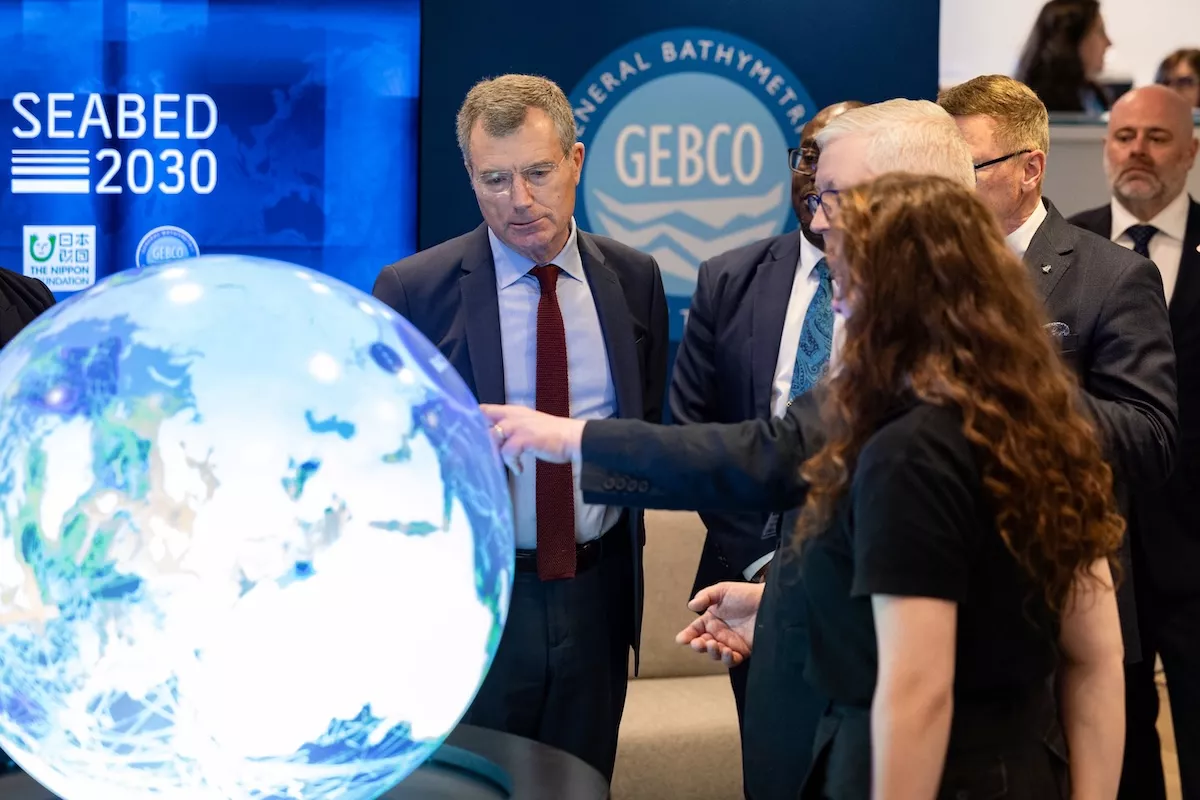
A centrepiece of the exhibition was the Bathysphère, an interactive globe presenting data from the General Bathymetric Chart of the Oceans, a programme initiated by Prince Albert I in 1903, offering a striking reminder of how much of the ocean floor remains unmapped and how much depends on the cooperation the assembly was convened to strengthen.
Thematic sessions covered smart navigation, GPS data reliability, ocean floor mapping, women’s representation in hydrographic science and the governance questions surrounding the collection and ownership of ocean data. The assembly closed with the election of Italy’s Luigi Sinapi as the IHO’s new Secretary General, succeeding Mathias Jonas, and New Zealand’s Adam Greenland as Director.
Stay updated with Monaco Life: sign up for our free newsletter, catch our podcast on Spotify, and follow us across Facebook, Instagram, LinkedIn, and Tik Tok.