

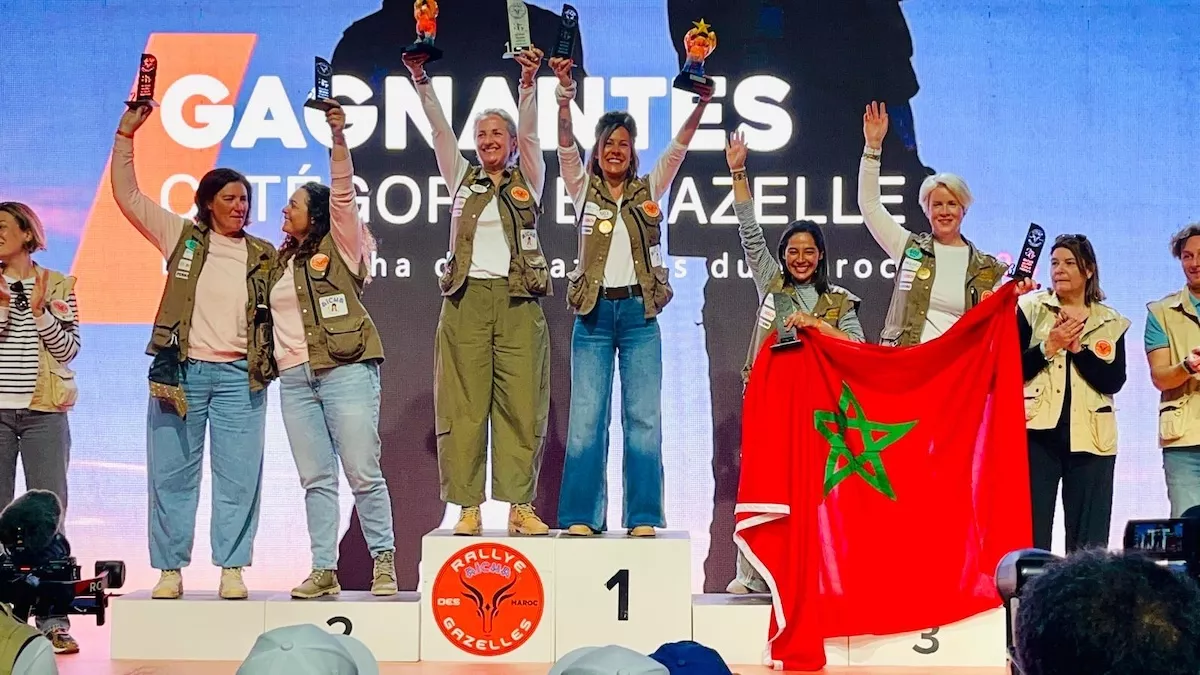
The crew representing Monaco Liver Disorder took the top spot of the electric vehicle category at the 2026 Rallye Aïcha des Gazelles, with pilot Armelle Médard, 51, and co-pilot Cindy Ribeiro, 38, completing eight stages across the Moroccan desert before arriving in Essaouira. Racing as crew 603 aboard a Volvo EX40, the pair donated a cheque of €6,000 to MLD on the back of their result.
The all-women rally-raid, now in its 35th edition, penalises competitors for covering excessive distance — precision navigation rather than outright speed determines the result — and the electric format added a further layer of complexity. With the battery pack housed beneath the chassis, protecting it from rock damage on the lunar terrain was a constant preoccupation. “If a stone goes through the battery block, it’s over,” Médard said.
Rather than driving in straight lines as conventional vehicles can, the pair had to find a subtler line across the terrain to protect the car. Range, however, proved no obstacle. “Our energy reserves were very wide. When we charged in the evening at the bivouac, we generally had 40% battery capacity remaining.”
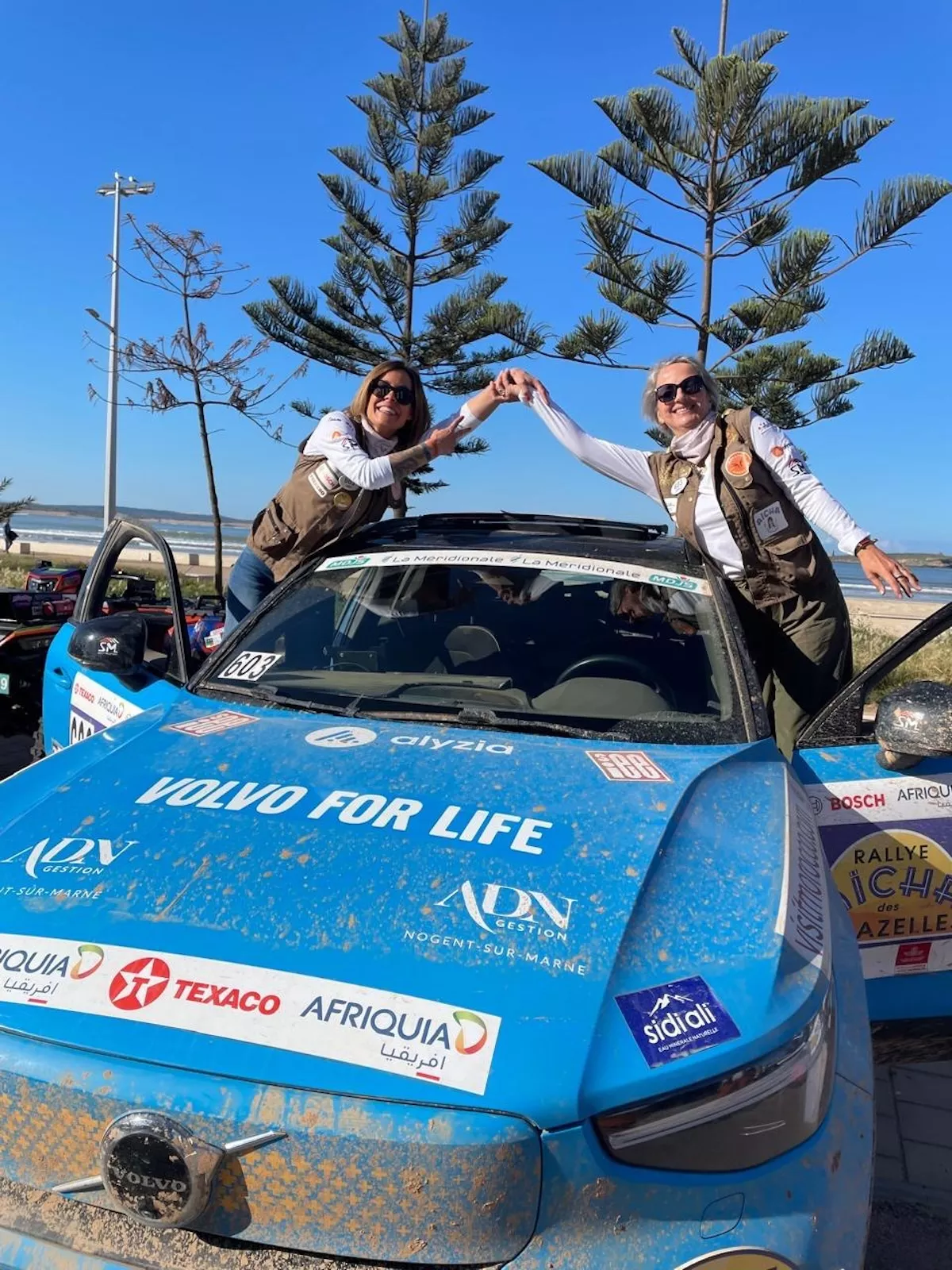
The spirit of the race
For Médard, competing for the 13th time and now the holder of nine podium finishes, the rally carries a significance well beyond sport. “This type of event reveals the sometimes hidden potential of each competitor,” she said. “Our rights are very fragile — exposure to risk brings out the best in each of us.”
She spoke with evident feeling about encounters with local communities during the crossing: shepherds, children asking for water, villages far removed from the infrastructure of modern life. The association Cœur de Gazelle, which operates a medical truck during the rally performing surgical procedures and distributing wheelchairs, medicines and essentials, gave practical expression to that solidarity on the ground.
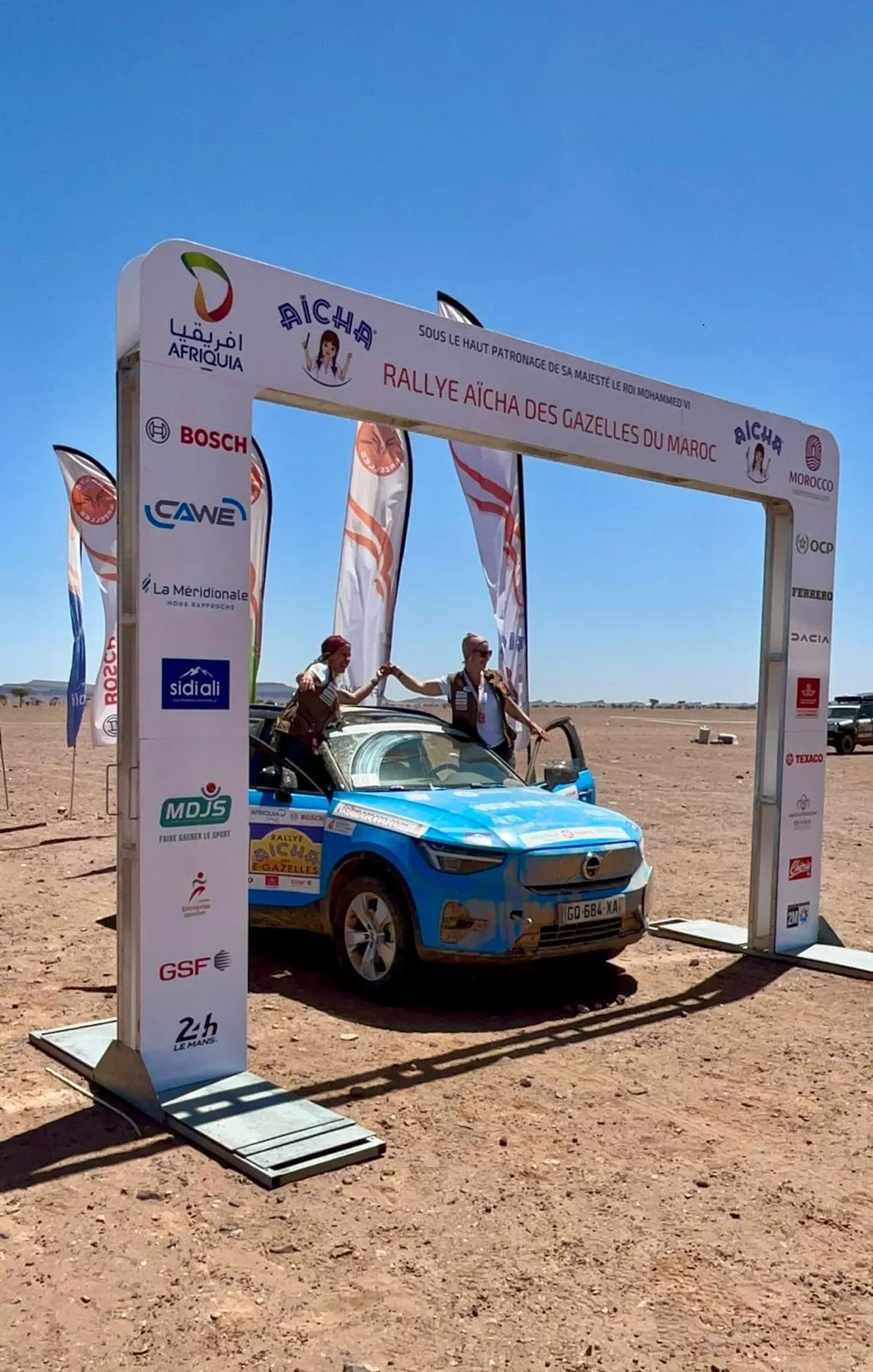
For Ribeiro, competing for the second time after her 2023 debut alongside Médard on the same electric platform, this edition was harder than the first. “The stages were more complex, longer in terms of navigation and emotionally,” she said. The pair navigated using maps without relief markings, requiring tactical decisions to be made with no visibility of what terrain lay ahead. “As a mother, I was very affected by the children and the poverty,” she said. “Racing for MLD — which works for sick children — makes complete sense in that moment. It gives the race its full meaning.”
Stay updated with Monaco Life: sign up for our free newsletter, catch our podcast on Spotify, and follow us across Facebook, Instagram, LinkedIn, and Tik Tok.
Photos provided