

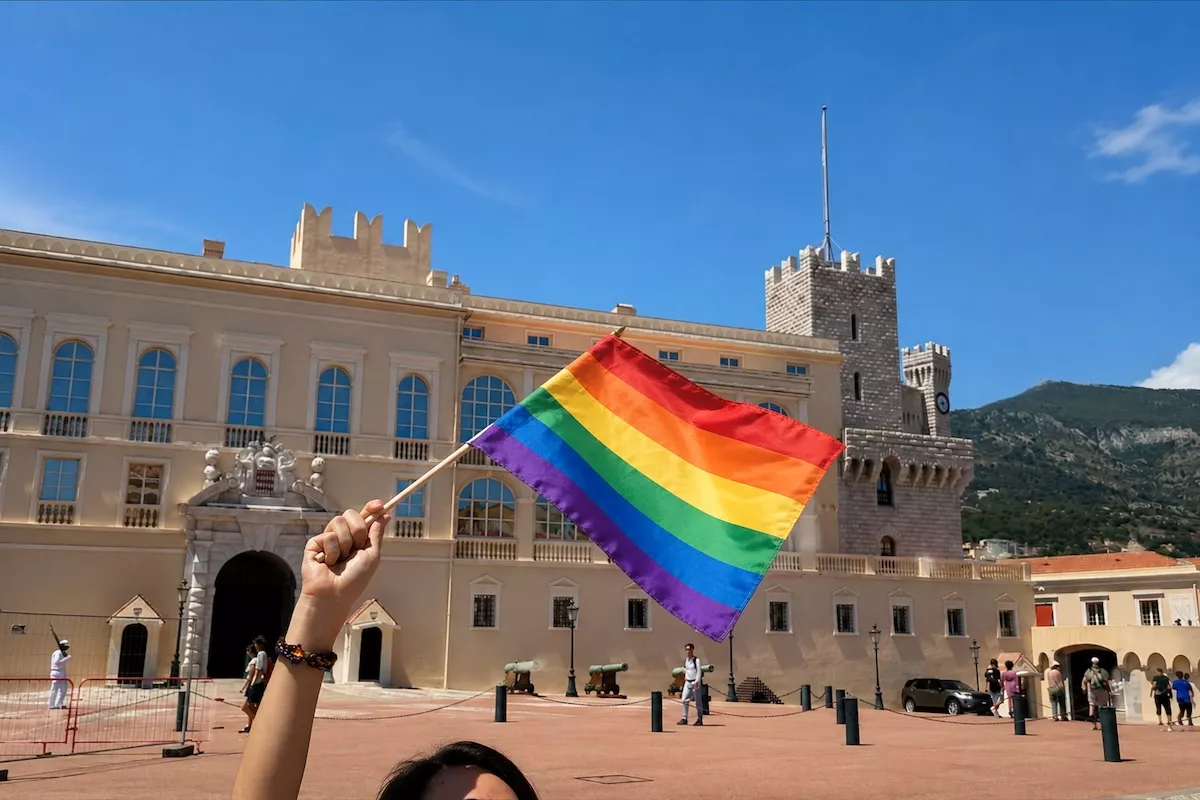
Monaco’s government is working on legislation to introduce civil unions for same-sex couples, Minister of State Christophe Mirmand told the National Council on Monday, alongside new rules on establishing parentage for children of same-sex parents. The announcement, made during a debate on pension reform, marks the government’s clearest signal yet that it intends to bring forward proposals before the end of 2026.
Mirmand told the chamber the government has been working for several months on reforms built around two main areas: stronger legal recognition for same-sex couples, and clearer rules on parentage for children born to same-sex parents. “This evolution of our legal framework would allow same-sex couples to benefit from recognition and adequate protection of their relationship, going beyond the foundation of rights and guarantees currently recognised through the civil solidarity contract created by Law No. 1.481 of 17 December 2019,” he said.
He confirmed the government’s preferred approach would be to create, through legislation, a “civil union” exclusively for same-sex couples, modelled on legislation in other Council of Europe member states, particularly Italy. The model rests on two principles: a union reserved for same-sex couples offering rights equivalent to marriage, which would continue to be defined as a union between a man and a woman, and a mechanism allowing same-sex marriages performed abroad to be reclassified as civil unions under Monégasque law.
“This approach would see two distinct regimes coexist,” Mirmand explained. “On one side, a civil union specific to same-sex couples; on the other, marriage between people of different sexes. Both would offer similar rights while imposing similar duties, such as the moral and material direction of the family and shared life.” He distinguished both from the existing civil solidarity contract, which he said remains limited to organising a couple’s shared finances. “This approach appears to us, at present, as the most relevant path to explore,” he said.
New rules on parentage for same-sex families
Mirmand said the government was also examining how parentage could be legally established in Monaco for children of same-sex couples, a question he linked directly to the principle of the child’s best interests. He noted that under the case law of the European Court of Human Rights, parentage established abroad for children of same-sex couples must be automatically recognised under domestic law, even where it might otherwise be considered contrary to domestic public order.
He said the government’s work is moving towards extending existing provisions of the Civil Code on voluntary recognition of parentage, regardless of the couple’s legal status or the parents’ sex. Under the approach being studied, parentage would be established for the mother who gave birth through the existing legal presumption, while the other parent, for instance the intended mother in cases of medically assisted reproduction, could establish parentage through voluntary recognition, an administrative procedure that already exists in Monégasque law for unmarried fathers. Where parentage could not be established abroad or through voluntary recognition, the government would look to extend access to simple adoption, a process requiring judicial intervention, regardless of whether the couple is married, in a civil solidarity contract, or in the proposed civil union.
Complex questions still ahead
Mirmand acknowledged the reforms would inevitably raise further questions, including around Monaco’s legal stance on surrogacy and medically assisted reproduction, which he described as complex and sensitive issues tied to fundamental principles around the protection of the human body. “All these subjects, at the crossroads of issues of liberty and equality, respect for private and family life, will lead us to question ourselves on an ethical level, but also on the meaning of our shared values,” he told the National Council.
He said the government did not wish to detail the proposals further on Monday evening, but committed to prioritising the drafting of legislation by the end of 2026, with the aim of bringing the texts before the National Council as soon as possible.
Stay updated with Monaco Life: sign up for our free newsletter, listen to our podcasts on Spotify, and follow us across Facebook, Instagram, LinkedIn, and Tik Tok.
Photo credit: Cassandra Tanti